Navigating the world of business casual can feel like walking a tightrope between too formal and too relaxed.
Whether you’re heading to the office, attending a client meeting, or working from a co-working space, finding that perfect balance of professionalism and comfort is essential for modern men.
This comprehensive guide on 27 Men’s Business Casual Inspiration You’ll Want to Save will transform your wardrobe approach with practical outfit combinations, styling techniques, and expert tips that work for various body types, seasons, and workplace environments.
From classic blazer pairings to contemporary smart-casual ensembles, you’ll discover versatile looks that elevate your professional image without sacrificing personal style.
Get ready to bookmark outfit ideas featuring chinos and button-downs, polo shirt combinations, layering strategies, footwear choices, and accessory recommendations that will make getting dressed for work effortlessly stylish every single day.
1. The Classic Navy Blazer and Chinos Combination
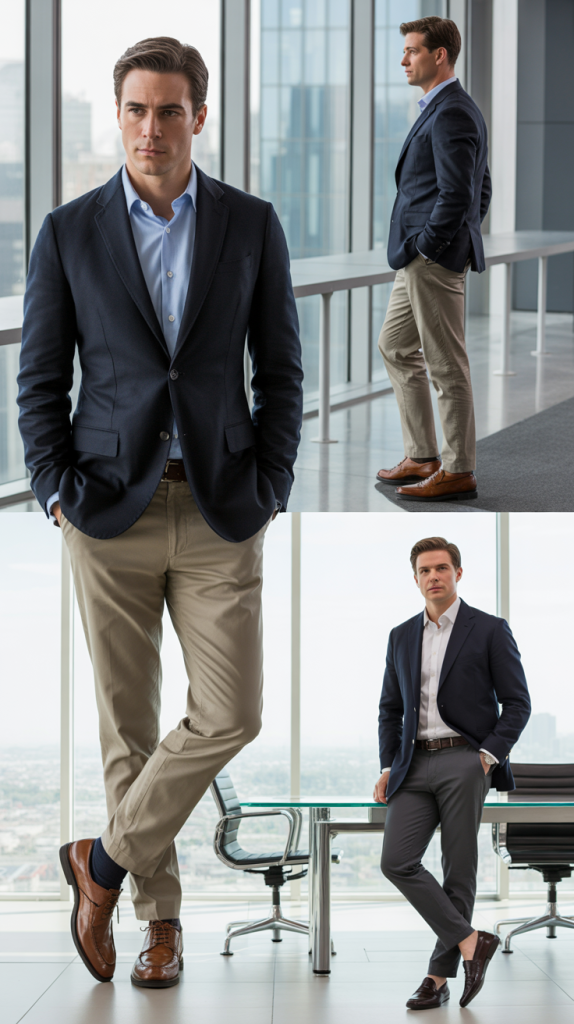
The navy blazer paired with chinos represents the cornerstone of business casual dressing, offering unmatched versatility and timeless appeal.
This combination works seamlessly across seasons and can be dressed up or down depending on your workplace requirements.
Key Elements:
- The navy blazer serves as a foundational piece that instantly elevates any casual outfit to business-appropriate territory.
- Choose chinos in neutral colors like khaki, stone, or grey for maximum versatility and easy pairing options.
- Opt for a tailored fit blazer that skims your shoulders properly and ends at your thumb knuckle when arms are relaxed.
- Select chinos with a slight taper for a modern silhouette that looks polished without being overly dressy.
- Pair with a crisp white or light blue dress shirt for traditional business casual settings.
- Alternative shirt options include oxford cloth button-downs or fine-knit polo shirts for more relaxed environments.
- Complete the look with brown leather loafers or suede desert boots for sophisticated footwear.
- Add a leather belt that matches your shoe color to create visual cohesion throughout the outfit.
2. Smart Polo Shirt Styling for Warm Weather
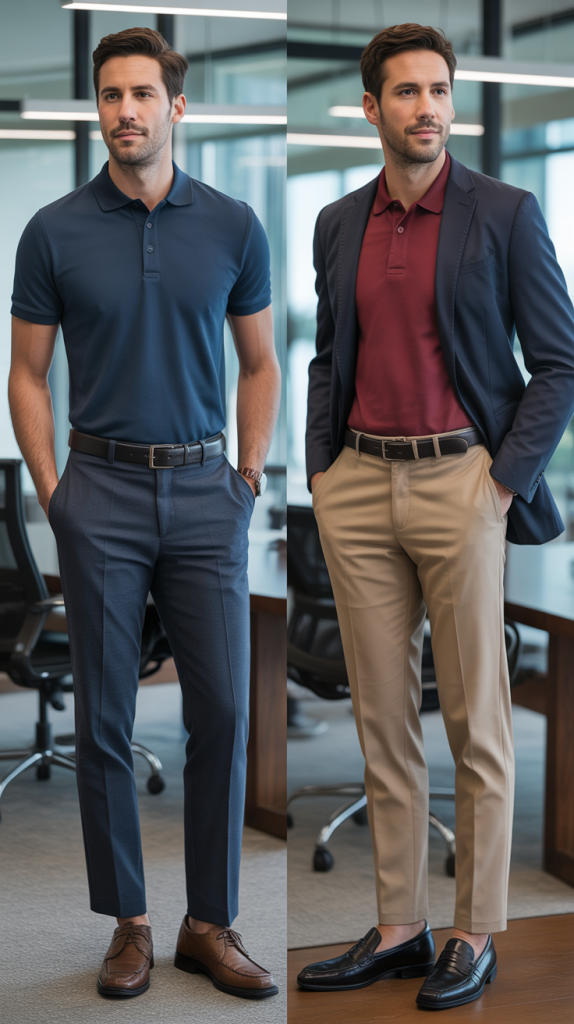
Polo shirts offer a refined alternative to traditional dress shirts when temperatures rise, providing comfort without compromising professionalism.
Understanding how to style polos appropriately ensures you maintain business casual standards even in casual-leaning workplaces.
Styling Guidelines:
- Choose polo shirts in solid colors like navy, black, grey, white, or burgundy for easier coordination with bottoms.
- Look for polos made from pique cotton or performance fabrics that resist wrinkles and maintain shape throughout the day.
- Ensure the polo fits well through the shoulders and chest without being too tight or overly loose.
- The sleeves should end mid-bicep, not too high on the shoulder or too low toward the elbow.
- Pair polos with tailored chinos or dress pants rather than jeans for maintaining business casual standards.
- Avoid wearing polos with shorts in professional settings unless explicitly permitted by your workplace culture.
- Layer a lightweight cardigan or blazer over polos during cooler mornings or air-conditioned offices.
- Keep the collar crisp and never pop it, as this appears too casual for business environments.
- Tuck in your polo when wearing it with dress pants for a more polished appearance.
3. The Power of Neutral Color Palettes
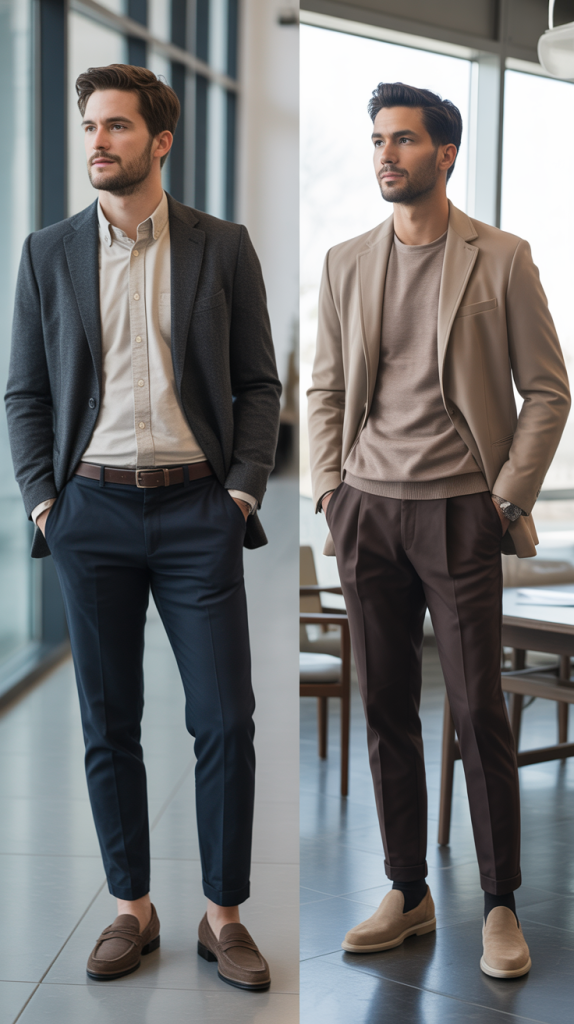
Building a business casual wardrobe around neutral colors creates endless outfit combinations while maintaining a cohesive, professional aesthetic.
Mastering neutral tones allows you to invest in quality pieces that work together seamlessly.
Neutral Color Strategy:
- Foundation neutrals include navy, grey, black, white, beige, and brown in various shades and tones.
- These colors complement each other effortlessly, reducing decision fatigue when getting dressed each morning.
- Invest in core pieces like blazers, trousers, and shirts in these neutral shades first.
- Add texture variation within neutral palettes through different fabrics like wool, cotton, linen, and cashmere.
- Layer different shades of the same color family for sophisticated monochromatic looks.
- Use lighter neutrals for spring and summer, transitioning to deeper tones for fall and winter.
- Introduce subtle patterns like pinstripes, windowpane checks, or herringbone while staying within neutral territory.
- Accent your neutral outfits with small pops of color through ties, pocket squares, or quality watches.
4. Elevating Your Look with Layering Techniques
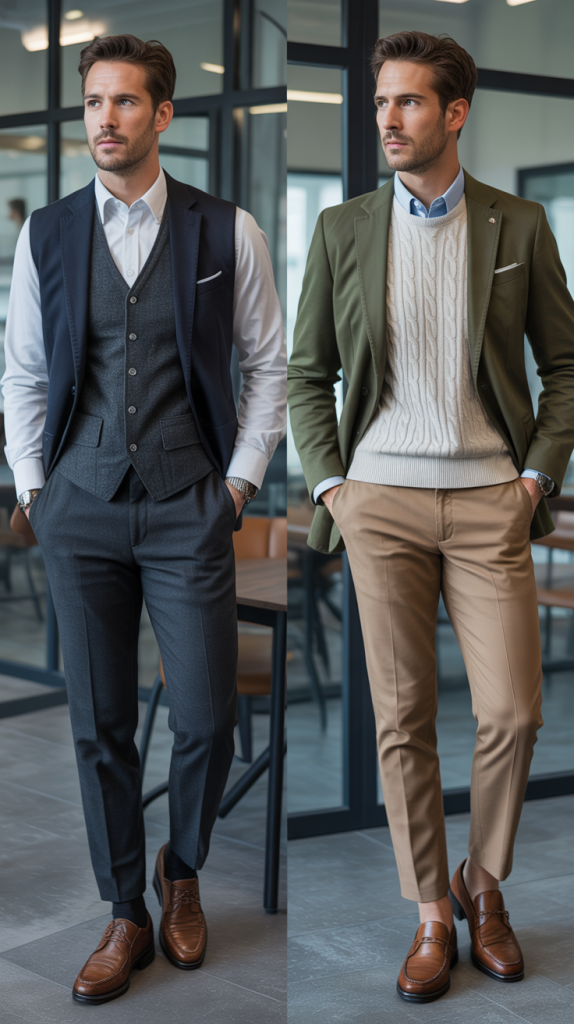
Strategic layering adds dimension and sophistication to business casual outfits while providing practical temperature regulation throughout the day.
Mastering the art of layering demonstrates attention to detail and style awareness.
Layering Essentials:
- Start with a quality base layer like a fitted dress shirt or fine-gauge knit in breathable fabrics.
- Add a middle layer such as a vest, cardigan, or lightweight sweater for visual interest and warmth.
- Top with an outer layer like a blazer, sport coat, or unstructured jacket when needed.
- Ensure each layer is slightly larger than the one beneath to avoid bunching and maintain clean lines.
- Choose complementary colors across layers rather than matching everything exactly for more sophisticated styling.
- V-neck sweaters work beautifully over collared shirts, showcasing the collar and tie if worn.
- Cardigans offer a more relaxed alternative to blazers while still maintaining professionalism.
- Remove layers as the day progresses or temperature changes without compromising your overall look.
- Pay attention to fabric weight, combining lighter and heavier materials appropriately for season and comfort.
5. Oxford Cloth Button-Down Excellence
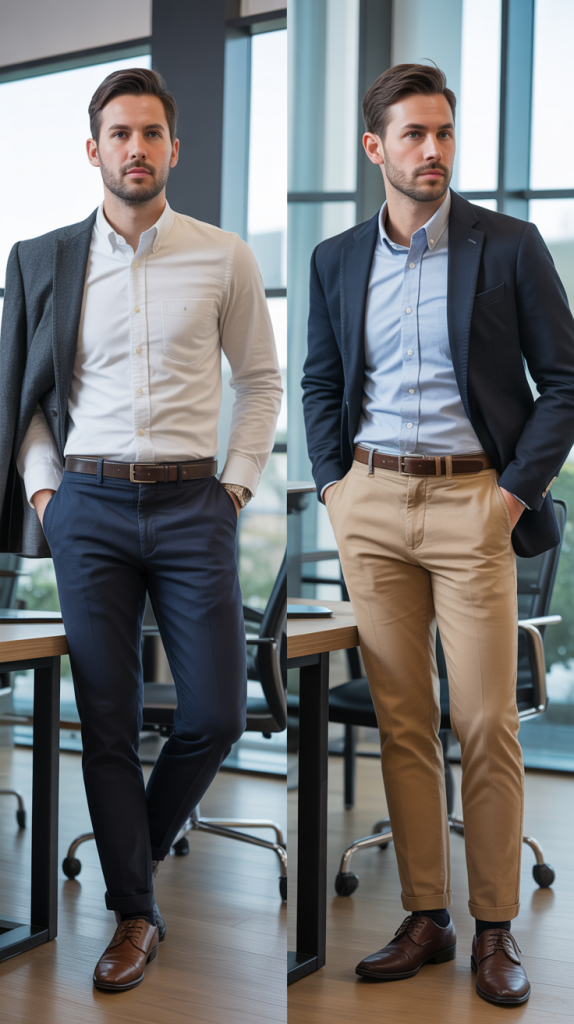
The Oxford Cloth Button-Down (OCBD) shirt represents a business casual staple that bridges formal and casual with effortless style.
Understanding how to select and wear OCBDs properly ensures you always look polished and put-together.
OCBD Selection and Styling:
- Oxford cloth features a basket-weave texture that’s more casual than dress shirt fabrics but more refined than casual cotton.
- Choose classic colors like white, light blue, pink, or university stripes for maximum versatility.
- The button-down collar adds casual refinement and can be worn with or without ties.
- Opt for a tailored or slim fit that follows your body shape without pulling or excessive fabric.
- OCBDs work equally well tucked into dress pants or worn untucked with chinos in less formal settings.
- Roll the sleeves to just below the elbow for a relaxed yet intentional business casual appearance.
- Pair with blazers for more formal business casual or wear alone with quality trousers for relaxed offices.
- Maintain crisp collars by using collar stays even though they button down naturally.
- Iron or steam regularly to keep the shirt looking fresh and professional throughout wearing.
6. Dress Pants Beyond the Suit
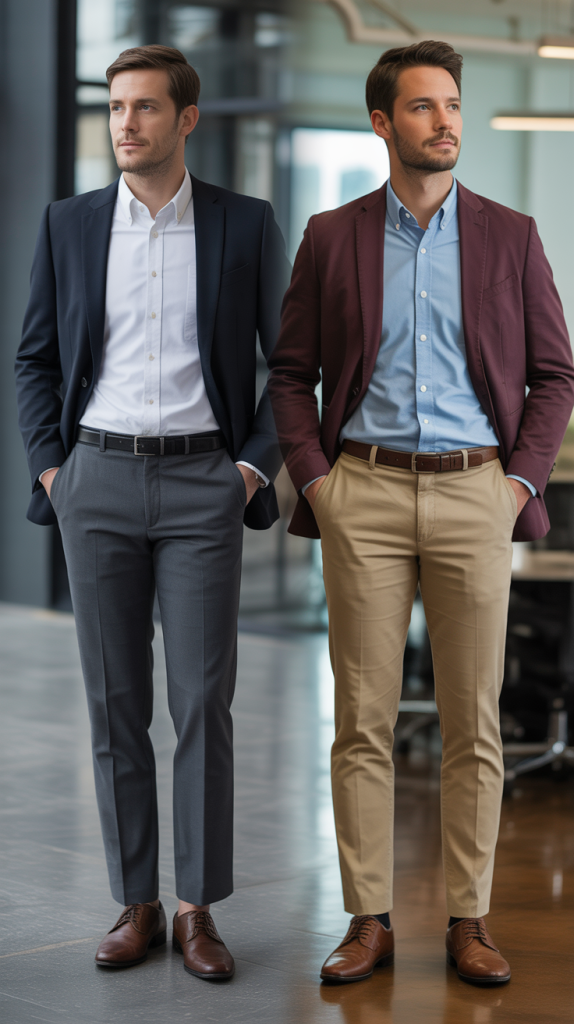
Dress pants worn separately from suit jackets offer sophisticated business casual options that maintain professionalism without full suit formality.
Selecting the right dress pants and pairing them thoughtfully creates polished, versatile outfits.
Dress Pants Guidelines:
- Choose dress pants in colours like charcoal, navy, grey, or tan that coordinate with multiple shirt and jacket options.
- Look for flat-front or single-pleat styles for a modern, streamlined appearance.
- Ensure proper fit with pants sitting at your natural waist and breaking slightly at the shoe.
- Wool or wool-blend fabrics offer year-round versatility with appropriate weight variations.
- Pair dress pants with button-down shirts, polos, or lightweight sweaters depending on office formality.
- Add a blazer in a contrasting color to create an intentional separates look rather than mismatched suit appearance.
- Consider dress pants with subtle textures or patterns like micro-checks for added visual interest.
- Maintain clean, pressed appearance through proper hanging and occasional dry cleaning.
7. The Versatility of Khaki Chinos
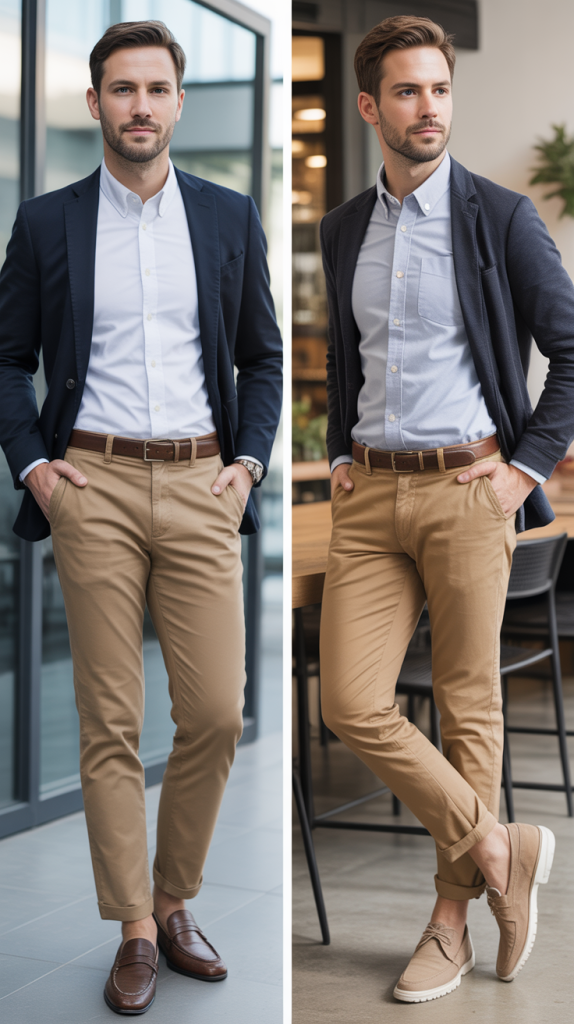
Khaki chinos serve as the ultimate business casual bottom, offering comfort, versatility, and professional appearance across countless outfit combinations.
Mastering khaki chino styling unlocks numerous wardrobe possibilities.
Khaki Chino Styling:
- Classic khaki color works with virtually every shirt, sweater, and jacket color in your wardrobe.
- Choose between lighter sand tones for summer and deeper camel shades for fall and winter.
- Ensure chinos fit properly through the waist, hips, and thighs with a slight taper to the ankle.
- Cotton or cotton-blend chinos offer breathability and comfort for all-day wear.
- Pair khakis with white, light blue, or pastel dress shirts for fresh, classic business casual looks.
- Navy blazers and khaki chinos create one of the most iconic and reliable business casual combinations.
- Experiment with different shirt colors like burgundy, forest green, or lavender against neutral khaki backdrop.
- Dress down khakis with quality polo shirts or dress them up with button-downs and sport coats.
- Complete outfits with brown leather shoes, belts, and accessories for cohesive, polished appearance.
8. Smart Sweater and Shirt Combinations
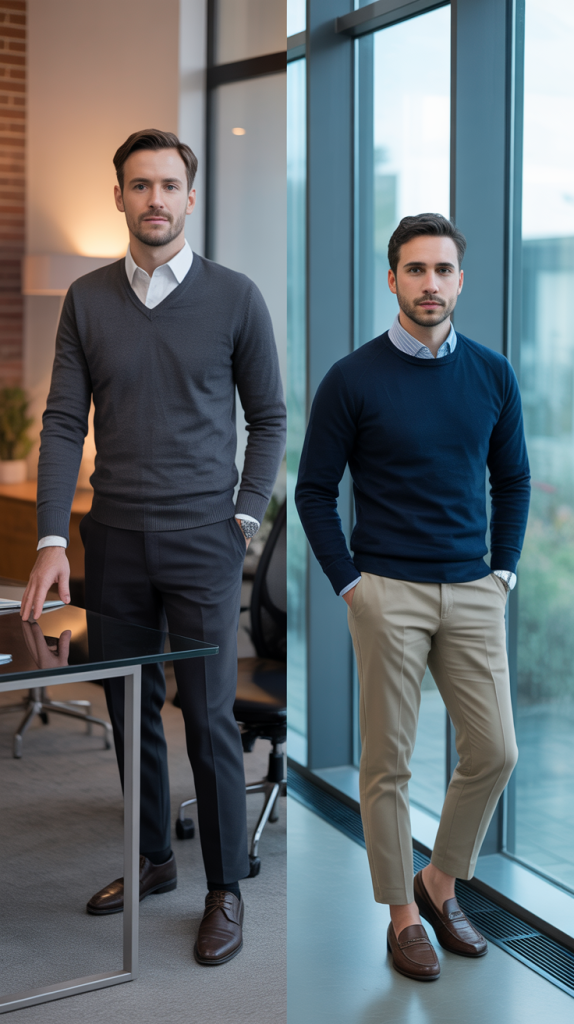
Combining sweaters with collared shirts creates refined, layered business casual looks perfect for cooler months.
Understanding proper sweater styling elevates your professional wardrobe significantly.
Sweater Styling Principles:
- V-neck sweaters showcase shirt collars beautifully and create clean lines when worn with ties.
- Crewneck sweaters offer a more casual alternative while still maintaining business-appropriate styling.
- Choose fine-gauge knits in merino wool or cashmere blends for sophisticated appearance and comfort.
- Ensure sweaters fit close to the body without tightness, avoiding overly bulky or loose silhouettes.
- Pair sweaters in neutral colors like navy, grey, or charcoal with patterned shirts for visual interest.
- Alternatively, wear patterned sweaters over solid-colored shirts for texture and dimension.
- Layer sweaters under blazers for additional warmth while maintaining professional polish.
- Roll or push up sweater sleeves slightly when wearing alone to create relaxed yet intentional styling.
- Keep collars neat and visible when wearing sweaters over button-down shirts.
9. The Unstructured Blazer Approach
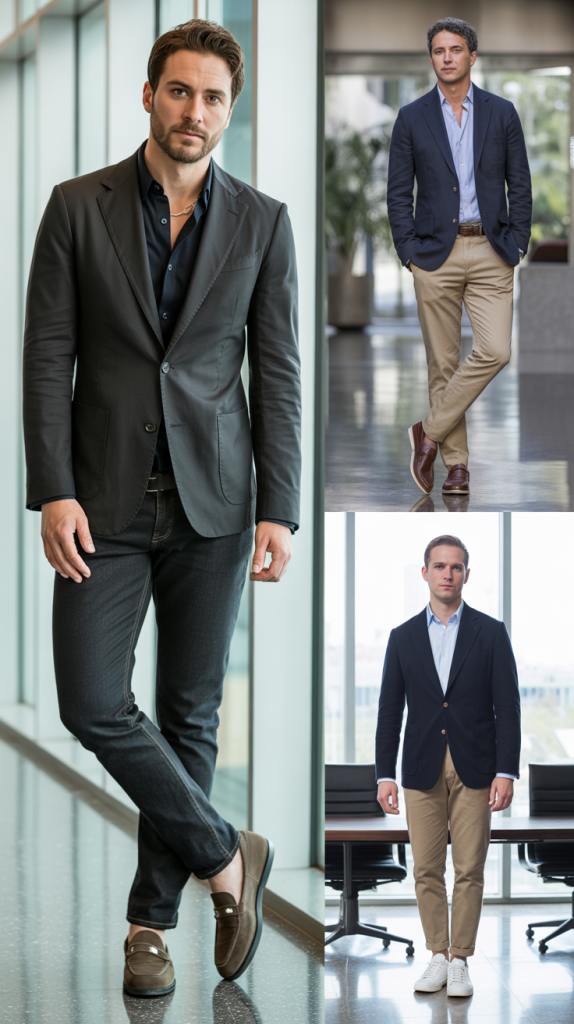
Unstructured or soft-shoulder blazers provide business casual sophistication with enhanced comfort and relaxed elegance.
These blazers bridge the gap between formal suiting and casual wear perfectly.
Unstructured Blazer Benefits:
- Unstructured blazers lack heavy shoulder padding and canvas construction for lighter, more comfortable wear.
- These blazers drape naturally on the body, creating a relaxed yet polished silhouette.
- Choose blazers in cotton, linen, or lightweight wool for appropriate seasonal wear.
- Navy, grey, and tan unstructured blazers offer maximum versatility across business casual wardrobes.
- Pair with everything from dress shirts and ties to polo shirts and crewneck tees.
- The casual construction pairs excellently with jeans in relaxed business casual or smart casual settings.
- Unstructured blazers work beautifully with chinos and loafers for classic business casual styling.
- Select patch pockets instead of flap pockets for even more casual, approachable appearance.
- These blazers travel well and resist wrinkling better than traditionally constructed suit jackets.
10. Quality Denim in Business Casual Settings
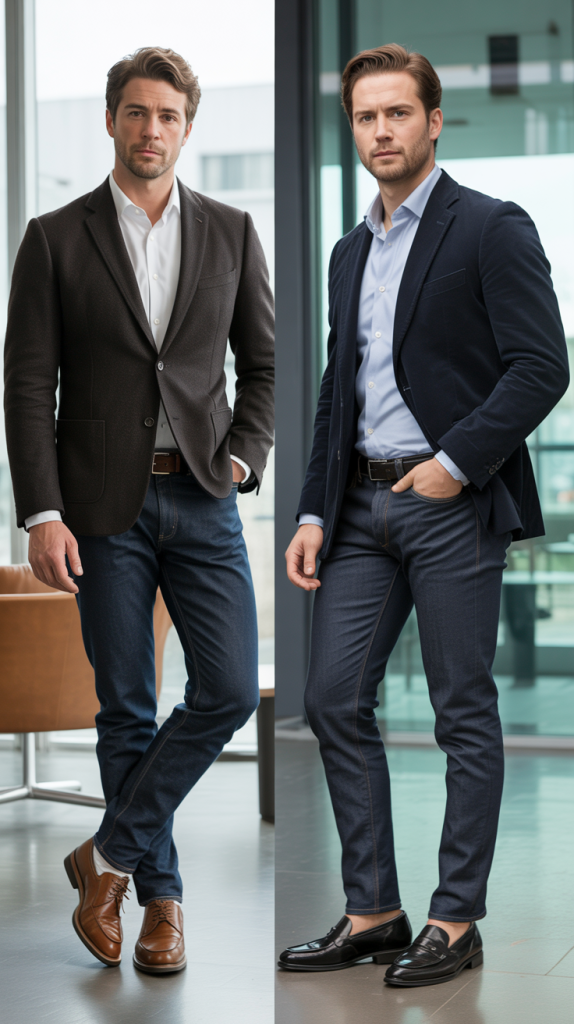
Dark denim jeans can work in business casual environments when styled appropriately and workplace culture permits.
Understanding how to elevate denim ensures professional appearance while enjoying comfortable fabric.
Business Casual Denim Guidelines:
- Choose dark indigo or black denim without distressing, fading, or decorative elements.
- Opt for straight or slim fit cuts that look tailored rather than overly casual or trendy.
- Ensure jeans are in excellent condition without wear marks, tears, or excessive fading.
- Pair dark denim with dress shirts, blazers, and leather shoes to elevate the overall outfit.
- Avoid wearing denim with casual sneakers or t-shirts in business casual settings.
- Consider raw or selvedge denim for richer color and more refined appearance.
- Dark denim works best for casual Friday or creative industry business casual environments.
- Always verify your workplace dress code explicitly permits denim before incorporating it.
- Maintain jeans through proper washing and care to preserve color and structure.
11. Mastering the Monochromatic Look
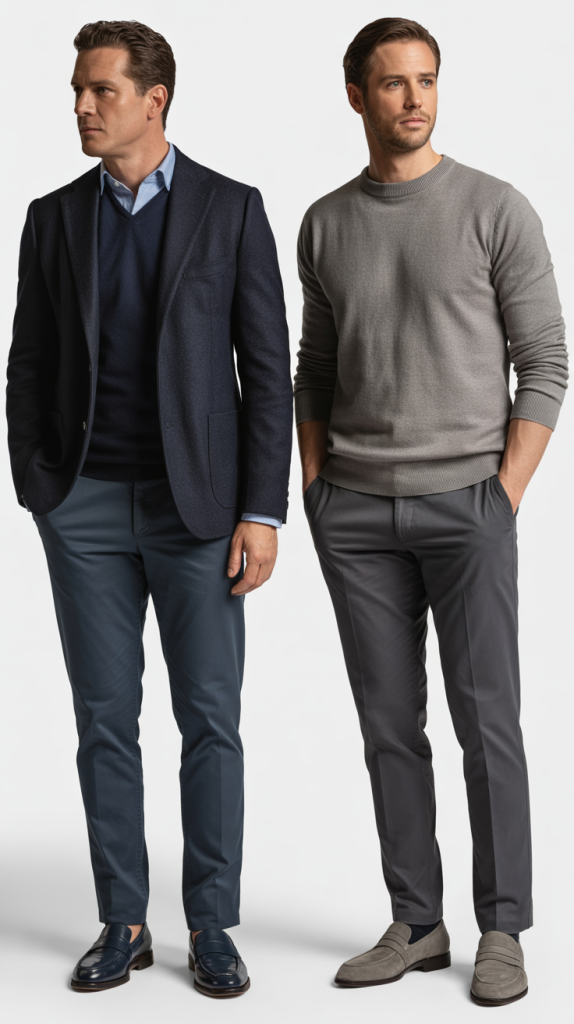
Monochromatic business casual outfits create sophisticated, elongating silhouettes while demonstrating advanced style awareness.
Building outfits in single color families offers modern elegance with minimal effort.
Monochromatic Styling:
- Select one color family and combine different shades and tones throughout your outfit.
- Vary textures and fabrics within the same color to create depth and visual interest.
- Navy monochromatic looks work exceptionally well, pairing navy blazers with lighter blue shirts and navy trousers.
- Grey monochromatic outfits range from charcoal to light grey for sophisticated, modern appearance.
- Ensure slight contrast between pieces rather than matching everything exactly the same shade.
- Add interest through patterns like subtle stripes or checks within your chosen color family.
- Break up monochromatic looks with contrasting accessories like brown leather belts and shoes.
- This approach creates a streamlined silhouette that appears taller and more cohesive.
12. The Perfect White Shirt Foundation
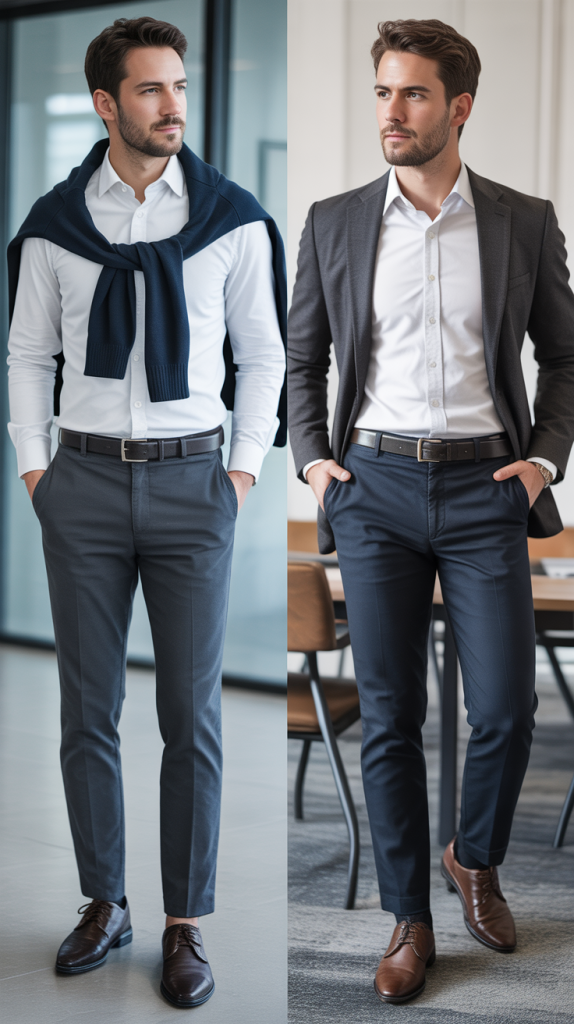
A perfectly fitted white shirt forms the foundation of countless business casual outfits, offering crisp professionalism and unlimited styling potential.
Investing in quality white shirts pays dividends across your entire wardrobe.
White Shirt Essentials:
- Every business casual wardrobe needs at least two to three quality white shirts in rotation.
- Choose between oxford cloth for casual settings and poplin or broadcloth for dressier occasions.
- Ensure proper fit through shoulders, chest, and waist with appropriate sleeve length.
- White shirts pair with every color of pants, blazers, and accessories in your closet.
- Wear white shirts alone with chinos or dress pants for clean, classic business casual.
- Layer under sweaters, cardigans, or blazers for additional styling options.
- Maintain brightness through proper washing techniques and avoiding excessive bleach.
- Consider different collar styles like spread, point, or button-down for variety.
- Keep white shirts crisp through regular ironing or professional laundering services.
13. Smart Footwear Choices That Elevate
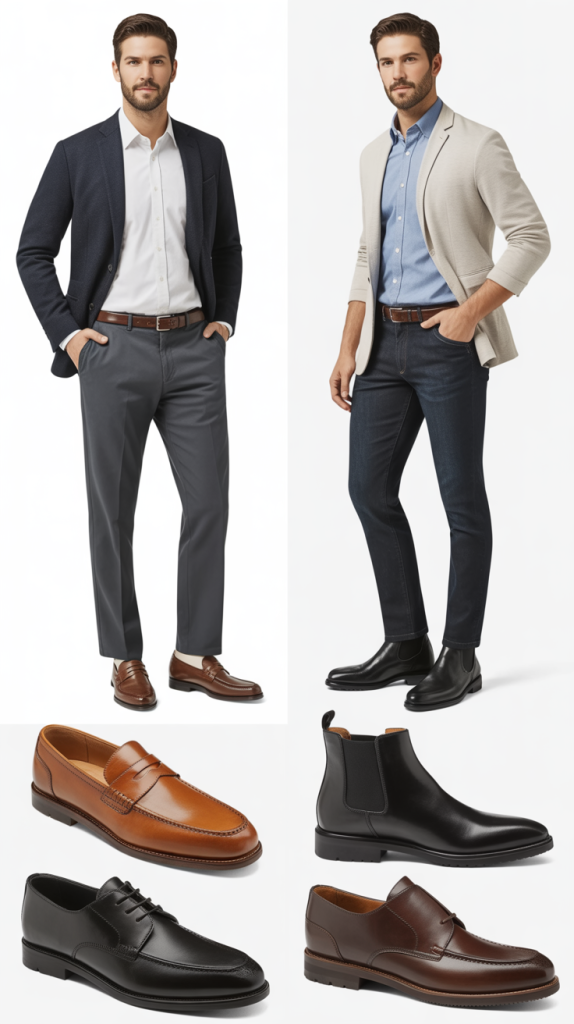
Appropriate footwear makes or breaks business casual outfits, with quality shoes elevating even simple combinations to professional standards.
Understanding footwear options ensures you always step confidently.
Business Casual Footwear:
- Brown leather Oxford or Derby shoes offer traditional, versatile business casual options.
- Loafers in leather or suede provide slip-on convenience with maintained sophistication.
- Monk strap shoes add unique style while remaining appropriately professional.
- Chelsea boots work excellently for business casual, particularly in fall and winter months.
- Desert boots in suede or leather offer casual refinement for relaxed business environments.
- Avoid sneakers unless your workplace explicitly embraces very casual footwear standards.
- Keep shoes well-maintained through regular polishing, cleaning, and proper storage.
- Match belt leather and color to your shoes for cohesive, polished appearance.
- Invest in quality footwear that lasts years rather than purchasing cheaper options frequently.
14. Seasonal Fabric Selection Strategy
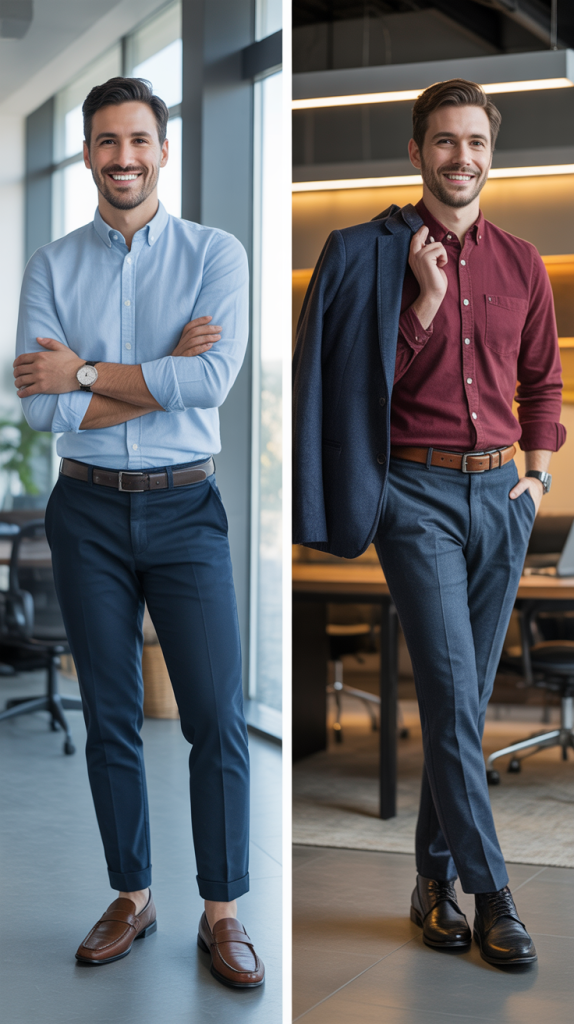
Choosing appropriate fabrics for each season ensures comfort while maintaining professional appearance year-round.
Strategic fabric selection demonstrates attention to detail and practical style awareness.
Seasonal Fabric Guide:
- Spring and summer call for lightweight cotton, linen, seersucker, and tropical wool fabrics.
- These breathable materials prevent overheating while maintaining crisp, professional appearance.
- Fall and winter require heavier wool, flannel, corduroy, and cashmere for warmth and texture.
- Transition seasons work well with mid-weight fabrics like cotton-wool blends and year-round worsted wool.
- Linen blazers and pants offer unbeatable summer comfort but wrinkle easily and look best slightly rumpled.
- Flannel trousers and shirts provide warmth and visual interest during colder months.
- Consider performance fabrics with moisture-wicking and wrinkle-resistant properties for traveling professionals.
- Mix fabric weights within outfits, pairing heavier blazers with lighter shirts for appropriate layering.
15. The Art of Pattern Mixing
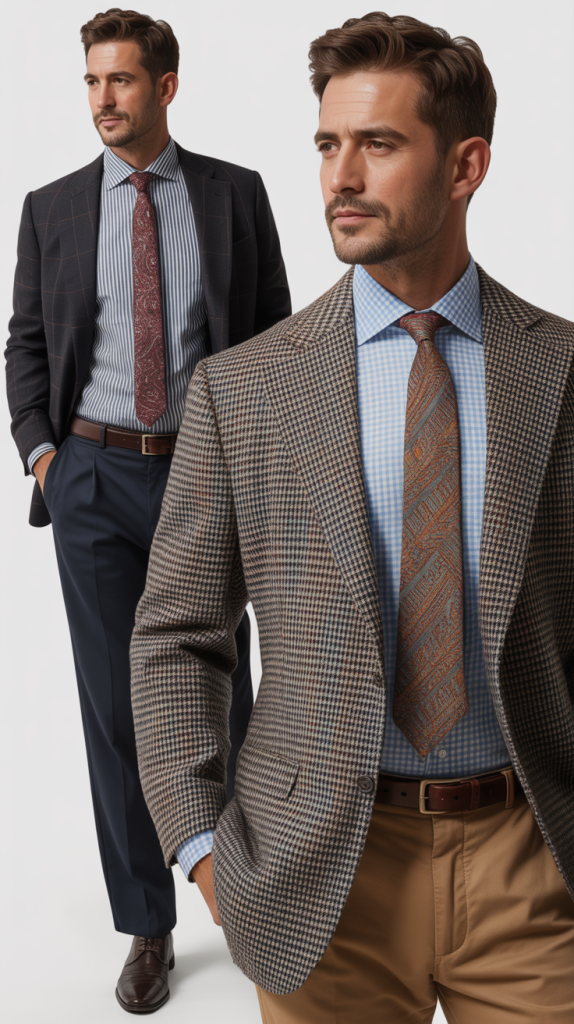
Skillfully mixing patterns creates visually interesting business casual outfits that demonstrate style confidence and sophistication.
Understanding pattern mixing principles prevents clashing while encouraging creative combinations.
Pattern Mixing Rules:
- Vary pattern scale by combining large, medium, and small prints for balanced visual impact.
- Stick to one dominant pattern and one or two subtle supporting patterns per outfit.
- Common successful combinations include striped shirts with checked blazers or patterned ties.
- Keep patterns within complementary color families for cohesive rather than chaotic appearance.
- Separate bold patterns with solid-colored pieces to prevent overwhelming visual competition.
- Ensure at least one element in your outfit remains solid for grounding the overall look.
- Classic combinations include windowpane check jackets with fine striped shirts.
- Practice pattern mixing with lower-contrast combinations before attempting bolder pairings.
16. Accessorizing with Purpose and Restraint
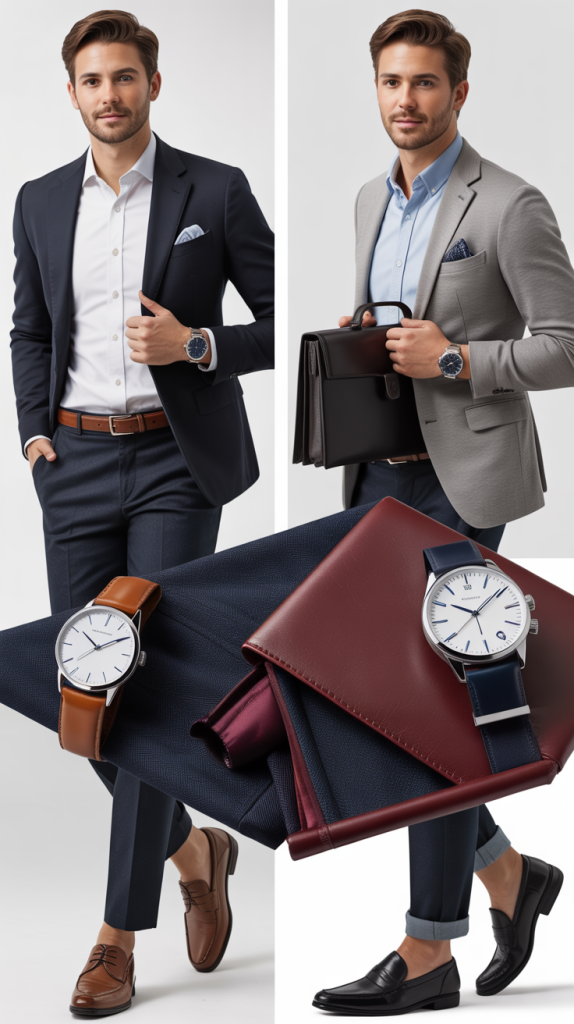
Thoughtful accessories complete business casual outfits while adding personality and polish.
Understanding which accessories enhance professional appearance ensures you never over-accessorize.
Essential Business Casual Accessories:
- Quality leather belts in brown and black coordinate with appropriate footwear choices.
- Watches serve as the primary jewelry piece for most men in business casual settings.
- Choose classic watch styles with leather or metal bands rather than sports watches.
- Minimal jewelry like wedding bands or simple bracelets maintains professional boundaries.
- Pocket squares add color and personality to blazer outfits when folded simply.
- Ties remain optional in business casual but can elevate outfits when wearing blazers.
- Leather bags or briefcases complete professional appearance more effectively than backpacks.
- Sunglasses in classic styles serve practical purpose while maintaining sophisticated image.
- Avoid excessive accessories, following the “less is more” principle for business settings.
17. The Casual Friday Strategy
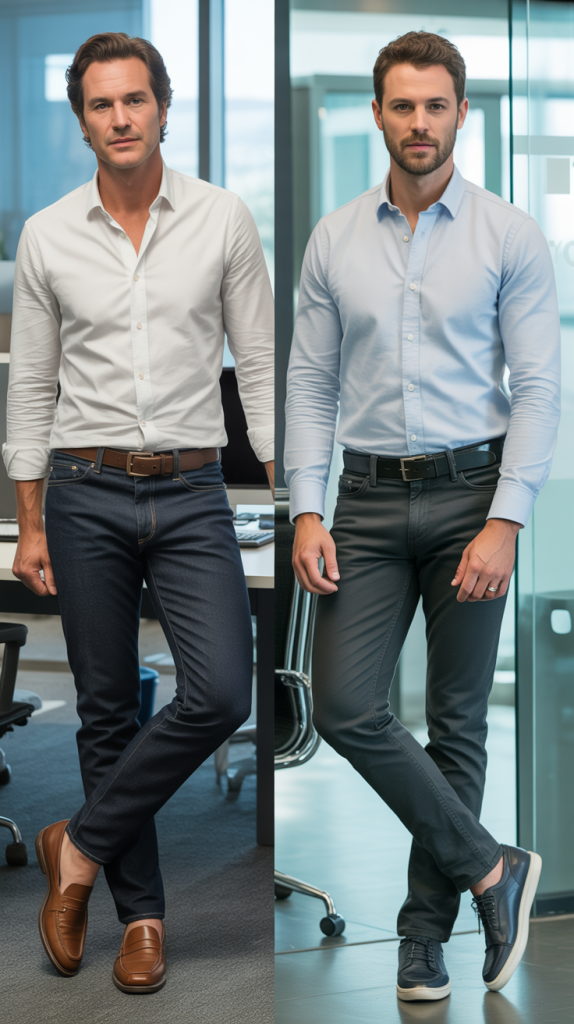
Casual Friday allows slightly relaxed business casual standards while maintaining professional appearance.
Navigating this balance ensures you look polished without appearing overdressed compared to colleagues.
Casual Friday Approach:
- Casual Friday doesn’t mean sloppy or overly relaxed clothing choices.
- Consider well-fitted dark jeans paired with button-down shirts or quality polo shirts.
- Blazers become optional but still elevate your appearance if worn.
- Loafers or clean leather sneakers can replace formal Oxfords depending on office culture.
- Maintain grooming standards and overall put-together appearance despite relaxed dress code.
- Avoid shorts, flip-flops, graphic t-shirts, or athletic wear unless explicitly permitted.
- Observe what senior colleagues and leadership wear for appropriate guidance.
- Use Casual Friday to introduce slightly bolder colors or patterns within professional boundaries.
18. Investment Pieces Worth Prioritizing
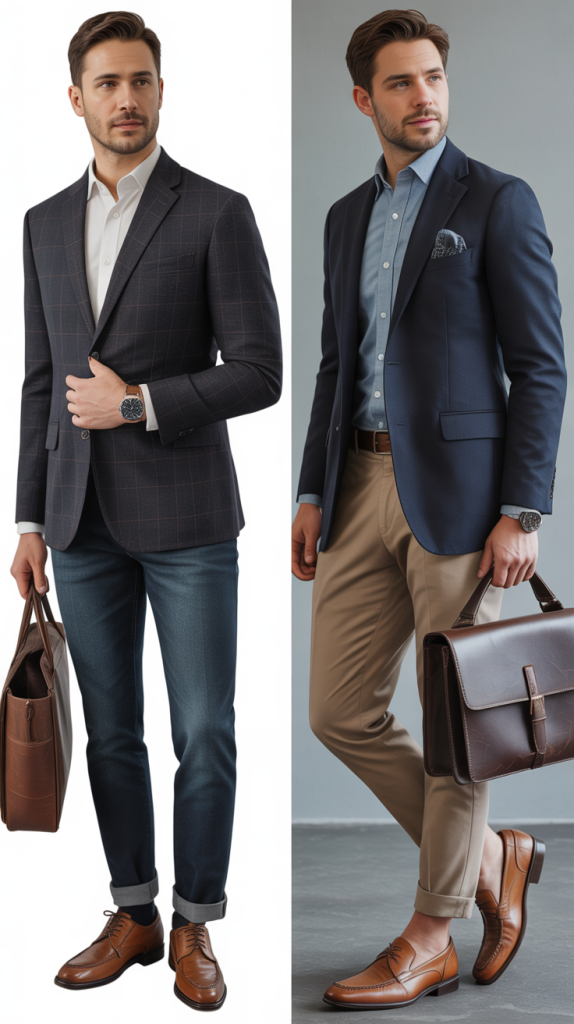
Strategic wardrobe investments in quality staples provide better long-term value than accumulating numerous cheaper alternatives.
Understanding which pieces deserve higher budgets optimizes your business casual wardrobe.
Investment Priorities:
- Quality blazers in navy and grey serve as foundations worth significant investment.
- Well-constructed dress shoes last years when properly maintained, justifying higher initial cost.
- Premium white and light blue dress shirts withstand frequent wearing and washing better than cheaper versions.
- Classic leather belts from quality makers last decades with proper care.
- Versatile chinos and dress pants in neutral colors deserve investment in proper fit and fabric.
- A quality watch becomes a daily wear item that projects professionalism and attention to detail.
- Cashmere or merino sweaters provide superior comfort and longevity compared to synthetic alternatives.
- Tailoring costs for proper fit represent worthwhile investments that transform off-the-rack pieces.
19. Body Type Specific Styling Advice
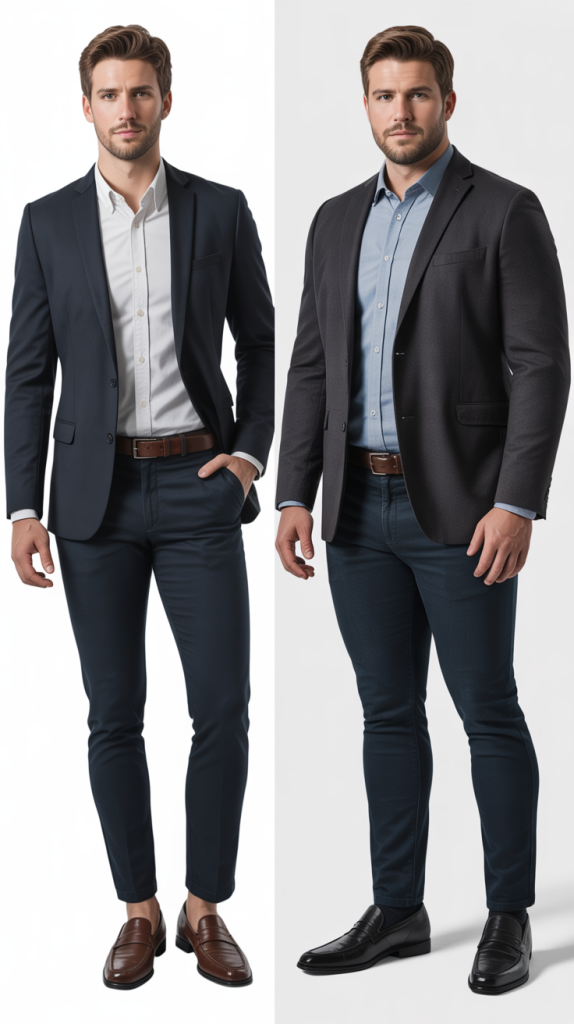
Understanding your body type and dressing accordingly maximizes the impact of business casual outfits.
Tailored approaches to different physiques ensure flattering, professional appearance.
Body Type Considerations:
- Athletic builds benefit from tailored fits that accommodate broader shoulders without excess fabric elsewhere.
- Slim body types should choose fitted rather than tight clothing, avoiding overly baggy silhouettes.
- Tall men can carry bolder patterns and longer jackets while ensuring proper sleeve and pant length.
- Shorter statures benefit from monochromatic looks, higher trouser rises, and well-proportioned jackets.
- Heavier builds look best in structured garments with proper fit rather than oversized clothing.
- Vertical patterns and details create elongating effects for most body types.
- Professional tailoring adjusts off-the-rack clothing to work with individual body proportions.
- Proper fit matters more than brand names or fashion trends for flattering appearance.
20. The Business Casual Capsule Wardrobe
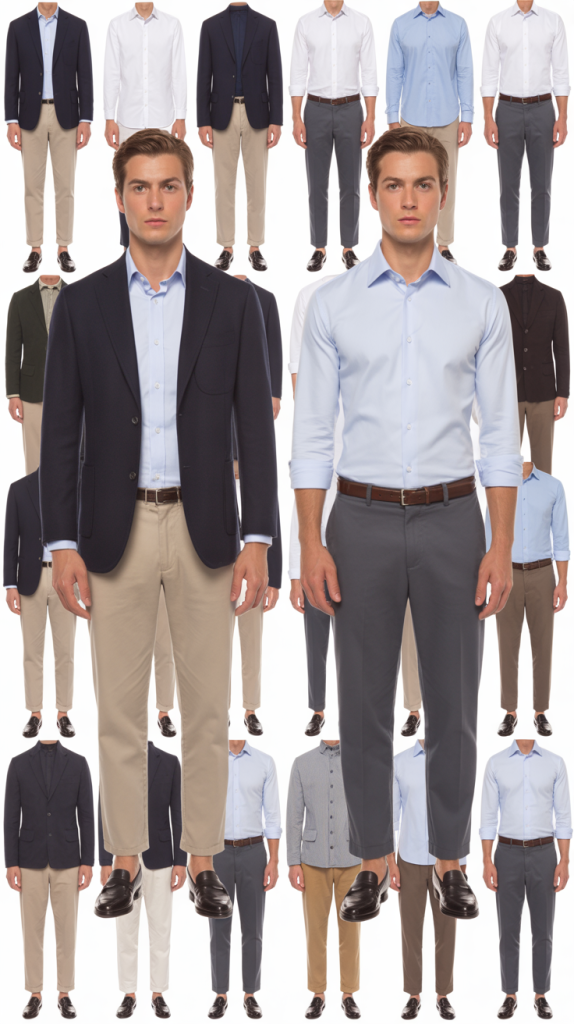
Creating a capsule wardrobe of essential business casual pieces ensures you always have appropriate outfit options while minimizing decision fatigue.
Strategic selection maximizes combinations from minimal items.
Capsule Wardrobe Components:
- Two blazers in navy and grey provide foundational layering pieces for numerous outfits.
- Three pairs of pants including grey dress trousers, khaki chinos, and navy chinos cover most situations.
- Five shirts including two white, one light blue, one patterned, and one polo offer variety.
- Two sweaters in complementary colors provide layering options for different seasons.
- Three pairs of shoes including brown Oxfords, loafers, and suede boots cover various formality levels.
- Essential accessories include two belts, one quality watch, and optional ties and pocket squares.
- This approximately 15-piece foundation creates dozens of different outfit combinations.
- Gradually expand with additional pieces in complementary colors and styles as needed.
21. Color Coordination Principles
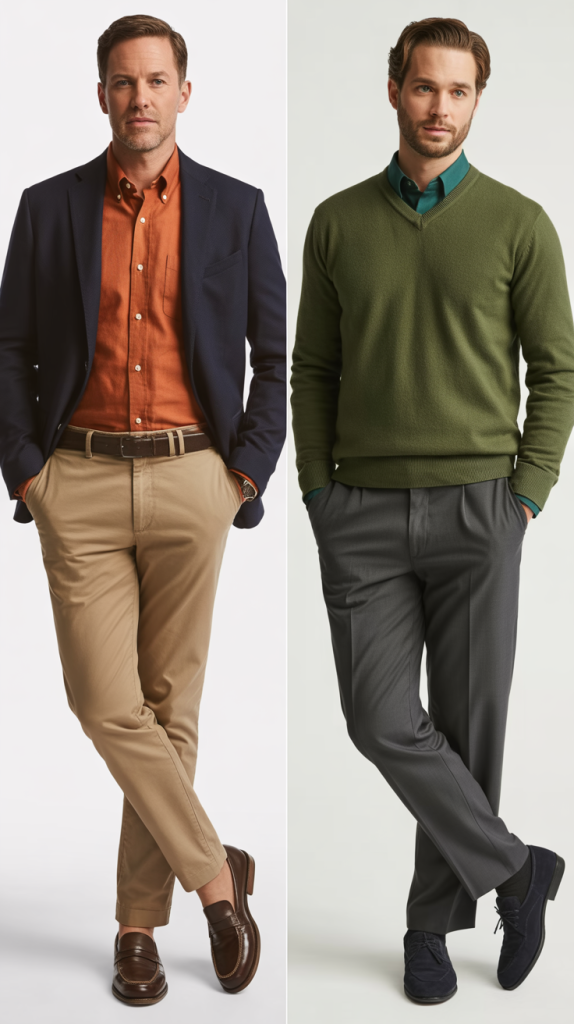
Understanding color theory and coordination creates harmonious business casual outfits that appear intentional and polished.
Mastering basic color principles eliminates guesswork from daily outfit selection.
Color Coordination Guidelines:
- Complementary colors sit opposite on the color wheel and create bold, energetic combinations.
- Analogous colors sit adjacent on the wheel and produce harmonious, easy-to-wear pairings.
- Navy pairs beautifully with brown, burgundy, white, pink, and most other colors.
- Grey serves as a neutral backdrop that works with virtually every color in your wardrobe.
- Earth tones including browns, tans, olives, and rust create naturally coordinating palettes.
- Limit outfits to three main colors plus neutral accents for cohesive appearance.
- Use the 60-30-10 rule: 60% dominant color, 30% secondary color, 10% accent color.
- When uncertain, stick to neutral foundations and add one complementary accent color.
22. Maintaining Professional Appearance Throughout the Day
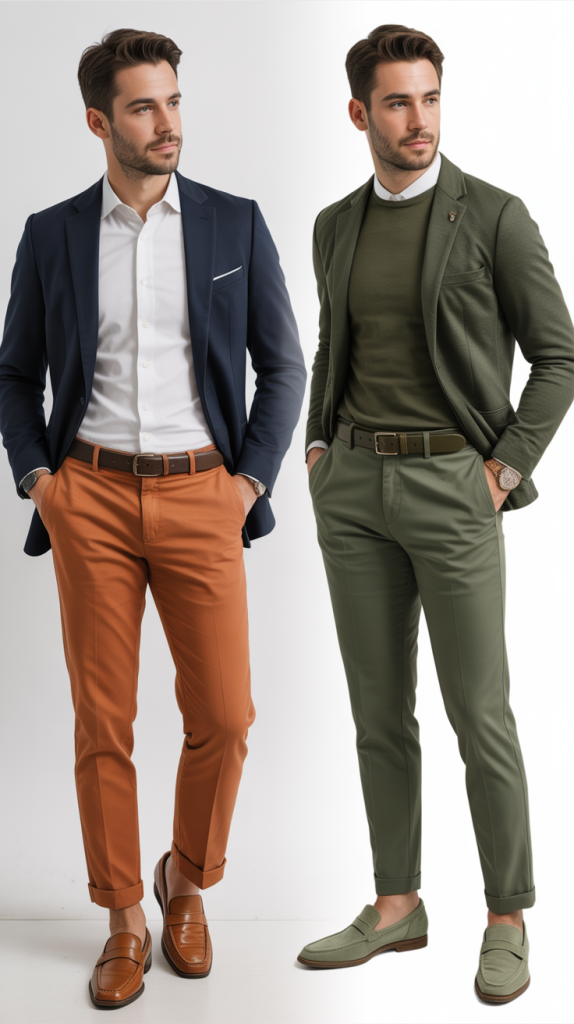
Business casual outfits must withstand full workdays while maintaining fresh, professional appearance.
Strategic choices and simple maintenance habits keep you looking sharp from morning through evening.
All-Day Appearance Tips:
- Choose wrinkle-resistant fabrics or blends that maintain crisp appearance without constant attention.
- Keep a lint roller at your desk for quick touch-ups throughout the day.
- Hang blazers and jackets rather than draping over chairs to prevent wrinkles and creasing.
- Select quality undershirts that prevent sweat visibility and keep dress shirts fresh longer.
- Bring backup collar stays and maintain shirt collars’ crisp appearance during long days.
- Choose shoes with good construction that remain comfortable during extended wear periods.
- Avoid overly tight clothing that becomes uncomfortable and looks strained after hours of wear.
- Consider keeping spare shirts or accessories at office for unexpected meetings or emergencies.
23. Transitioning Business Casual to After-Work Events
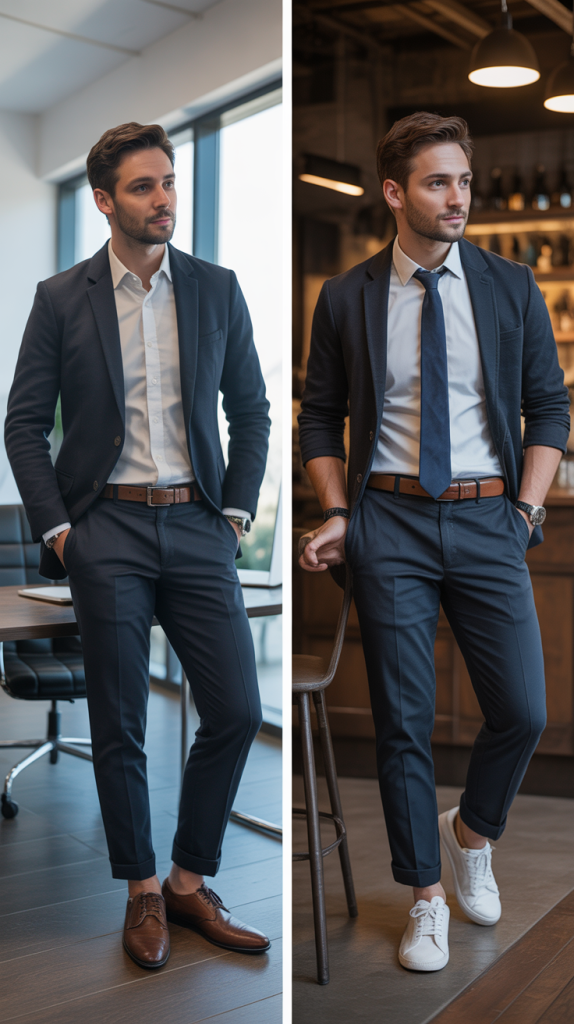
Business casual outfits can transition seamlessly to after-work social events with minor adjustments.
Understanding how to modify daytime looks saves time while maintaining appropriate style for different occasions.
Transition Strategies:
- Remove blazers and roll shirt sleeves for more relaxed evening appearance.
- Swap dress shoes for clean leather sneakers or loafers if heading to casual venues.
- Change from dress pants to dark denim for more social-appropriate styling.
- Add a pocket square or swap to a more interesting tie for elevated evening appearance.
- Keep a versatile casual jacket at the office for transitioning from business to social settings.
- Simple grooming touch-ups refresh your appearance for post-work activities.
- Adjust outfit formality based on planned evening activities and companions.
- Build business casual wardrobe with versatile pieces that work across multiple contexts.
24. Budget-Friendly Business Casual Building
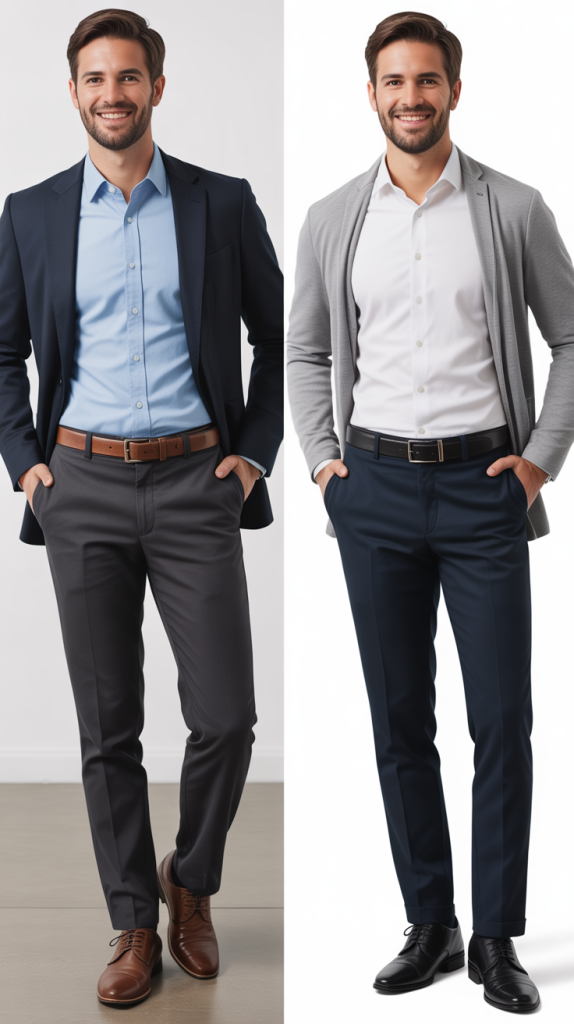
Developing a professional business casual wardrobe doesn’t require unlimited budgets when you shop strategically and prioritize wisely.
Smart shopping and maintenance extend wardrobe value significantly.
Budget-Conscious Strategies:
- Focus initial investments on versatile neutral pieces that coordinate with multiple items.
- Shop end-of-season sales for quality pieces at significant discounts for following year.
- Choose classic styles over trendy pieces that quickly become outdated.
- Invest in proper tailoring for affordable off-the-rack pieces to achieve custom fit appearance.
- Maintain clothing properly to extend lifespan through correct washing, storage, and repairs.
- Build gradually rather than purchasing entire wardrobes at once, spreading costs over time.
- Consider quality secondhand and consignment options for premium brands at reduced prices.
- Focus budget on items worn most frequently like shoes, pants, and shirts.
25. Industry-Specific Business Casual Variations
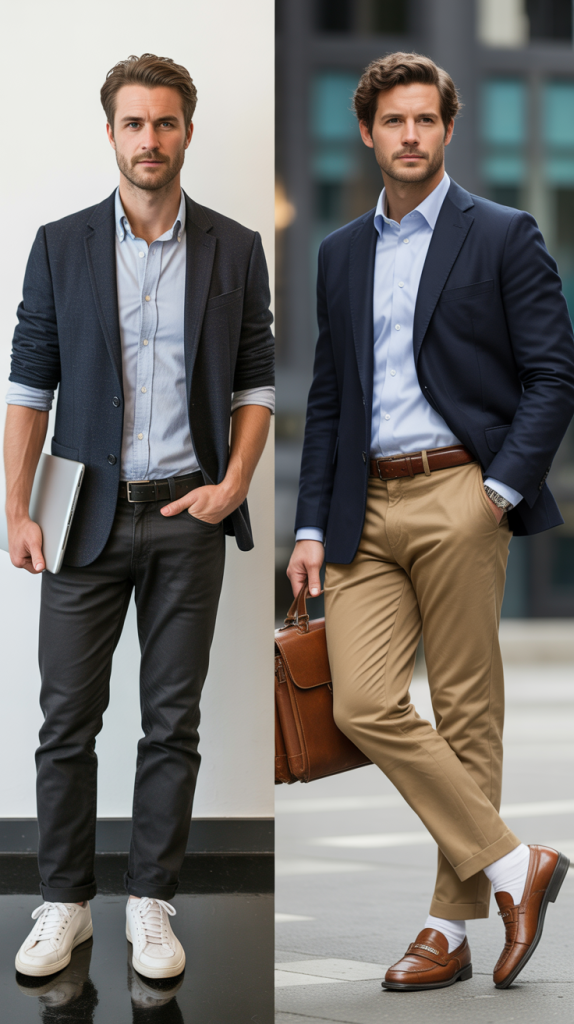
Business casual standards vary significantly across industries, requiring tailored approaches to different professional environments.
Understanding your industry’s specific expectations ensures appropriate dressing for your workplace.
Industry Considerations:
- Creative industries typically embrace more relaxed business casual with unique personal style expression.
- Financial services maintain stricter business casual standards leaning toward traditional formality.
- Tech companies often blur business casual and smart casual lines with very relaxed standards.
- Legal and consulting environments require polished business casual that borders on traditional business dress.
- Healthcare and education settings balance professional appearance with practical, comfortable clothing.
- Sales and client-facing roles demand sharp business casual that builds trust and credibility.
- Observe industry leaders and successful colleagues for appropriate style guidance within your field.
- When uncertain, err on the side of slightly more formal until you understand office culture clearly.
26. Grooming and Personal Care Integration
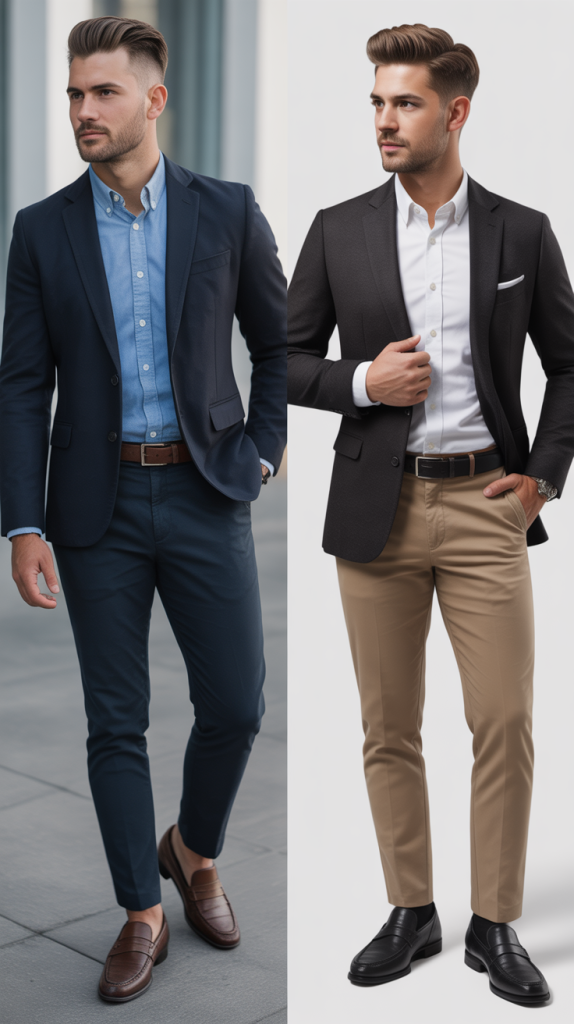
Business casual dressing extends beyond clothing to encompass complete personal presentation including grooming and hygiene.
Comprehensive attention to appearance details creates truly professional impression.
Grooming Essentials:
- Maintain well-groomed hair with regular haircuts appropriate for your professional environment.
- Keep facial hair neatly trimmed and shaped if worn, or maintain clean-shaven appearance.
- Ensure fingernails are clean and trimmed regularly as part of professional presentation.
- Use minimal, appropriate fragrance or cologne rather than overwhelming scents.
- Maintain dental hygiene for fresh breath and confident interactions throughout workday.
- Iron or steam clothing regularly to maintain crisp, professional appearance.
- Pay attention to shoe cleanliness and polish, as shoes significantly impact overall impression.
- Complete grooming routine before arriving at work rather than rushing through mornings.
27. Building Confidence Through Proper Fit and Style
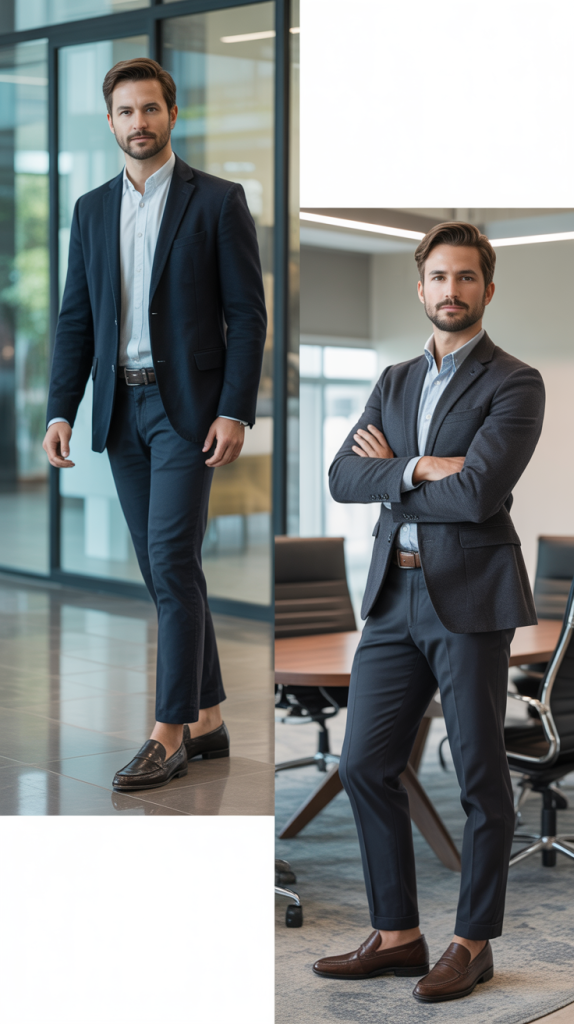
Ultimately, business casual success comes from wearing clothes that fit properly and make you feel confident and comfortable.
Personal confidence translates directly to professional presence and effectiveness.
Confidence Building Approach:
- Invest time in finding correct sizes and fits rather than settling for close-enough options.
- Work with professional tailors to adjust clothing to your specific body measurements.
- Choose styles that align with your personal preferences while remaining professionally appropriate.
- Wear clothes you genuinely like rather than forcing uncomfortable trendy pieces.
- Build gradually toward wardrobe that reflects your authentic professional style.
- Pay attention to how different fits and styles make you feel throughout the day.
- Develop personal uniform of go-to combinations that consistently work well for you.
- Remember that confidence in your appearance positively impacts your professional interactions and success.
Conclusion
Mastering business casual dressing opens doors to professional confidence, workplace success, and personal style expression within appropriate boundaries.
This comprehensive guide on 27 Men’s Business Casual Inspiration You’ll Want to Save has equipped you with practical outfit formulas, styling techniques, color coordination principles, and industry-specific insights that transform your approach to professional dressing.
From foundational pieces like navy blazers and khaki chinos to advanced concepts like pattern mixing and body-type specific styling, you now have the knowledge to build a versatile wardrobe that serves you across seasons, occasions, and career stages.
Remember that business casual success ultimately comes from understanding your workplace culture, investing in quality staples, ensuring proper fit, and developing personal style confidence that translates into professional presence.
Take these inspirations, adapt them to your unique situation, and create a business casual wardrobe that makes getting dressed for work an effortless, enjoyable part of your daily routine while projecting the polished, competent image that advances your professional goals.
