Navigating the world of dress codes can feel like decoding a secret language, especially when terms like “smart casual” and “business casual” are thrown around interchangeably.
Yet understanding the distinction between these two styles is crucial for modern men who want to dress appropriately for every occasion, from office meetings to weekend brunches.
In this comprehensive guide on 23 Smart Casual vs Business Casual: Best Outfit Ideas for Men, you’ll discover the fundamental differences between these dress codes, learn how to build versatile wardrobes for both styles, and explore 23 practical outfit combinations that will eliminate guesswork from your daily routine.
Whether you’re preparing for a job interview, planning your work wardrobe, or simply wanting to elevate your personal style, this article will equip you with the knowledge and inspiration to dress confidently in any professional or semi-formal setting.
1. Understanding the Core Difference Between Smart Casual and Business Casual
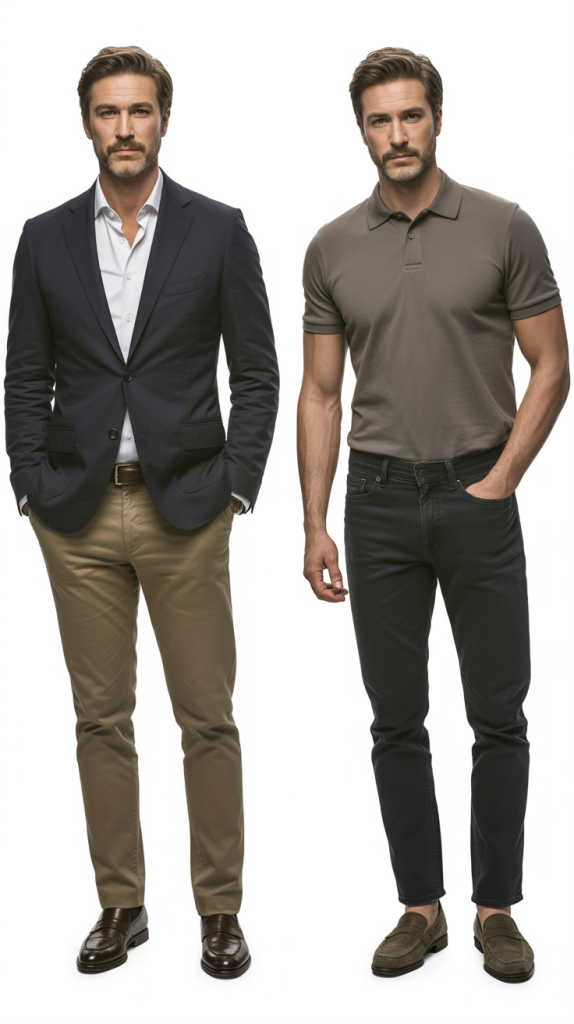
Before diving into specific outfit ideas, it’s essential to grasp what separates smart casual from business casual.
While these terms are often confused, they serve different purposes in different contexts and carry distinct levels of formality.
Business Casual Defined
- Business casual sits closer to traditional business wear on the formality spectrum, maintaining a professional appearance while offering more flexibility than formal business attire.
- This dress code typically appears in corporate environments, client-facing positions, and professional office settings where maintaining credibility is paramount.
- The foundation of business casual revolves around structured pieces like blazers, dress shirts, tailored trousers, and leather dress shoes.
- Colors tend toward neutrals and conservative tones—navy, charcoal, black, white, and subtle patterns that convey professionalism.
- Business casual eliminates the tie requirement from traditional business formal but maintains the polished, put-together aesthetic expected in professional environments.
Smart Casual Defined
- Smart casual represents a step down in formality, blending relaxed pieces with refined elements to create an elevated yet comfortable look.
- This style works perfectly for creative workplaces, social events, casual Fridays, dinner dates, and situations that call for looking sharp without appearing overly formal.
- Smart casual allows for more personal expression through color choices, textures, and contemporary styling while still maintaining a neat, intentional appearance.
- Denim, polo shirts, casual button-downs, chinos in varied colors, and even clean sneakers can find their place in smart casual wardrobes.
- The key to smart casual is balance—pairing one casual element with more polished pieces to avoid looking too relaxed or sloppy.
Key Distinction Summary
| Aspect | Business Casual | Smart Casual |
|---|---|---|
| Formality Level | Higher (office-appropriate) | Moderate (versatile social settings) |
| Typical Setting | Corporate offices, meetings | Creative workplaces, social events |
| Jacket/Blazer | Often expected | Optional accent piece |
| Shirt Options | Dress shirts, structured polos | Casual button-downs, polos, quality tees |
| Pants | Dress trousers, chinos (neutral) | Chinos (all colors), dark jeans |
| Footwear | Leather dress shoes | Loafers, clean sneakers, casual leather |
| Accessories | Conservative, minimal | More expressive, personality-driven |
2. Essential Wardrobe Pieces for Business Casual
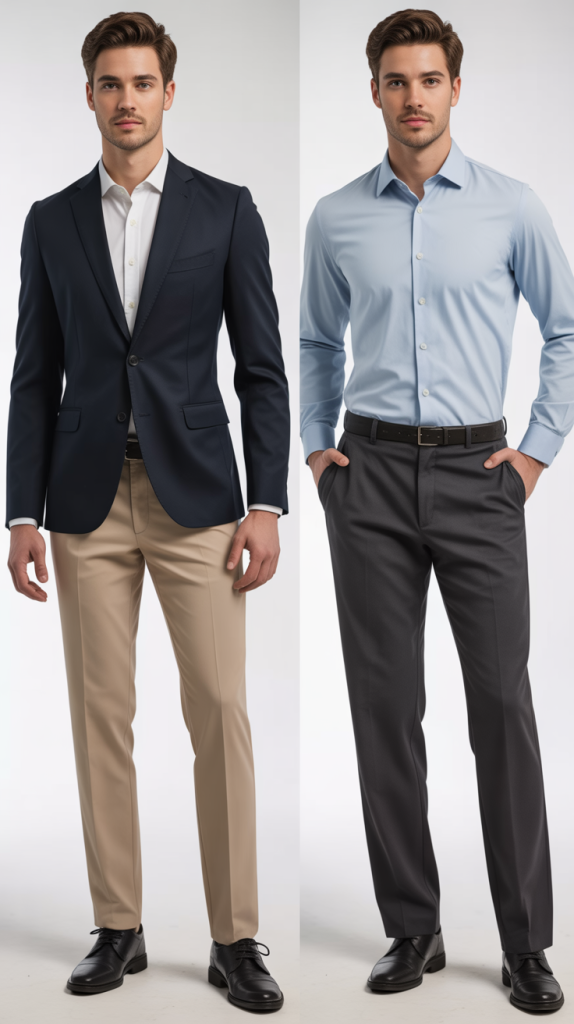
Building a functional business casual wardrobe requires investing in versatile, high-quality staples that can be mixed and matched across multiple outfits.
These foundational pieces form the backbone of professional dressing.
The Blazer Collection
- Every business casual wardrobe needs at least two well-fitted blazers in navy and charcoal gray, as these colors pair effortlessly with virtually any shirt and trouser combination.
- Choose blazers with structured shoulders and a tailored fit that skims your body without pulling or excess fabric.
- Consider fabrics like wool, cotton-linen blends for warmer months, and heavier wool for winter to ensure year-round versatility.
- A third blazer in a lighter shade like tan or a subtle pattern can expand your options for less formal business casual environments.
Dress Shirts and Button-Downs
- White and light blue dress shirts are non-negotiable essentials that work under blazers or on their own for slightly relaxed business casual days.
- Add pattern variety with subtle checks, pinstripes, or micro-patterns in colors that complement your blazers.
- Fit matters tremendously—ensure shirts fit properly at the neck, shoulders, and through the torso without billowing or straining.
- Oxford cloth button-downs offer a slightly more relaxed texture while maintaining professional appearance.
- Long sleeves are standard, though high-quality short-sleeve dress shirts can work in extremely casual business environments during summer.
Trousers and Chinos
- Dress trousers in charcoal, navy, and gray provide the most formal business casual pant options and pair perfectly with blazers.
- Chinos in neutral tones (khaki, stone, olive) offer slightly more relaxed alternatives while maintaining professional appearance.
- Proper fit includes appropriate rise, comfortable waist, clean lines through the leg, and appropriate break at the shoe.
- Avoid overly slim or baggy fits—modern tailored cuts that follow your natural shape work best for business casual.
Professional Footwear
- Leather Oxford shoes in black or brown serve as the most formal business casual footwear option.
- Derby shoes, monk straps, and quality loafers provide excellent alternatives with slightly less formality.
- Maintain shoes in excellent condition—scuffed, worn footwear undermines even the best-planned business casual outfit.
- Match leather belts to shoe color for a cohesive, polished appearance.
3. Essential Wardrobe Pieces for Smart Casual
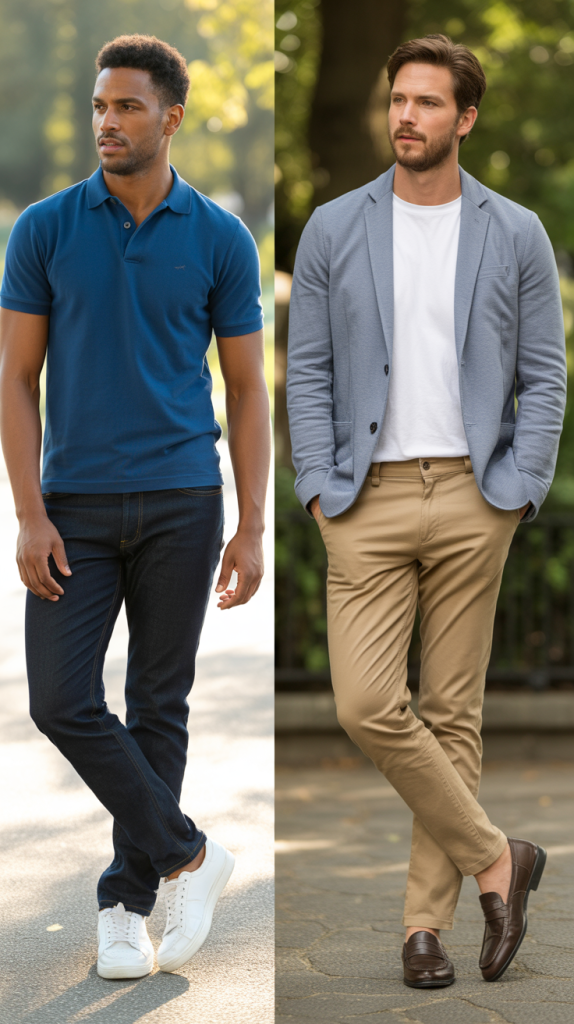
Smart casual wardrobes prioritize versatility and personal style while maintaining a refined aesthetic. These pieces allow for creative expression without sacrificing sophistication.
Versatile Tops
- Quality polo shirts in solid colors and subtle patterns bridge the gap between casual tees and dress shirts perfectly.
- Casual button-down shirts in chambray, linen, or oxford cloth offer relaxed sophistication for smart casual occasions.
- Premium crew-neck and V-neck t-shirts in elevated fabrics can work under unstructured blazers or sport coats.
- Henley shirts provide textural interest and work beautifully in layered smart casual outfits.
- Knit sweaters and cardigans add dimension and warmth while maintaining the polished smart casual aesthetic.
Smart Casual Bottoms
- Dark-wash jeans without distressing or fading serve as the foundation of smart casual dressing when paired with refined tops and footwear.
- Chinos in colors beyond neutrals—burgundy, forest green, camel—allow for personality expression while remaining sophisticated.
- Five-pocket pants that resemble jeans but in non-denim fabrics offer interesting alternatives to standard chinos.
- Proper hem length ensures pants rest cleanly on shoes without excessive bunching or dragging.
Relaxed Outerwear
- Unstructured blazers and sport coats in textured fabrics like tweed, herringbone, or cotton provide smart casual polish without business formality.
- Bomber jackets, suede jackets, and quality denim jackets can elevate smart casual outfits for cooler weather.
- Field jackets and casual topcoats offer practical warmth while maintaining sophisticated appearance.
Contemporary Footwear
- Minimalist leather sneakers in white or neutral tones have become smart casual staples when kept immaculately clean.
- Loafers, driving shoes, and boat shoes provide classic smart casual footwear options with timeless appeal.
- Suede desert boots and chukka boots add texture and casual refinement to smart casual outfits.
- Chelsea boots bridge smart casual and business casual, working effectively in both contexts depending on styling.
4. Business Casual Outfit Ideas 1-5
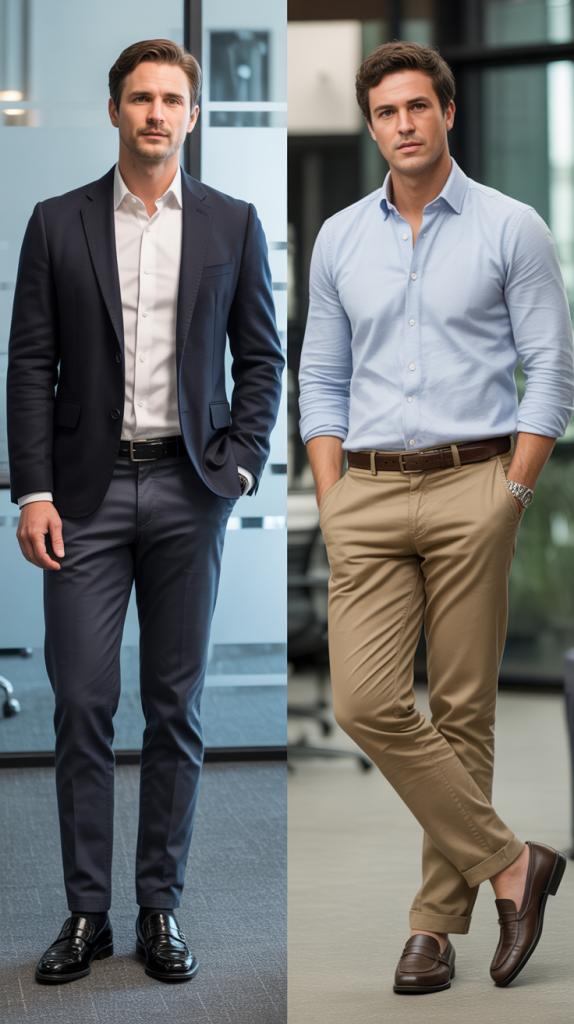
These business casual combinations demonstrate how to create professional, polished looks appropriate for traditional office environments and client meetings.
Outfit 1: The Classic Navy Foundation
- Navy blazer paired with crisp white dress shirt creates the quintessential business casual base that works for virtually any professional situation.
- Gray dress trousers complement the navy and white combination while maintaining conservative professionalism.
- Black leather Oxford shoes and matching belt complete this timeless business casual outfit.
- Minimal accessories like a simple watch keep the focus on the clean, professional silhouette.
Outfit 2: The Light Blue Approach
- Light blue dress shirt serves as the centerpiece of this outfit, offering subtle color while maintaining professional appearance.
- Charcoal gray trousers provide dark contrast that grounds the lighter shirt.
- Brown leather Derby shoes add warmth and work perfectly with the blue-gray color palette.
- Optional navy blazer can be added for meetings requiring additional formality.
Outfit 3: The Pattern Play
- Subtle checked or striped dress shirt in blue and white adds visual interest without overwhelming professionalism.
- Navy or charcoal chinos offer slightly more relaxed alternative to dress trousers while maintaining business casual appropriateness.
- Cognac leather loafers provide sophisticated footwear that pairs beautifully with the pattern and neutral bottoms.
- Simple leather belt in matching cognac ties the outfit together cohesively.
Outfit 4: The Khaki Combination
- White or light pink dress shirt provides fresh foundation for this warm-toned business casual outfit.
- Khaki or stone-colored chinos offer classic business casual bottoms that work across seasons.
- Navy blazer adds structure and formality, elevating the khaki chinos to appropriate business casual territory.
- Brown leather monk strap shoes introduce subtle detail while maintaining professional appearance.
Outfit 5: The Monochromatic Professional
- Charcoal blazer paired with lighter gray trousers creates sophisticated tonal dressing within business casual parameters.
- White dress shirt provides crisp contrast against the gray-on-gray foundation.
- Black leather Chelsea boots offer modern footwear alternative that maintains business casual polish.
- Silver or stainless steel watch adds refined finishing touch to the monochromatic palette.
5. Business Casual Outfit Ideas 6-10
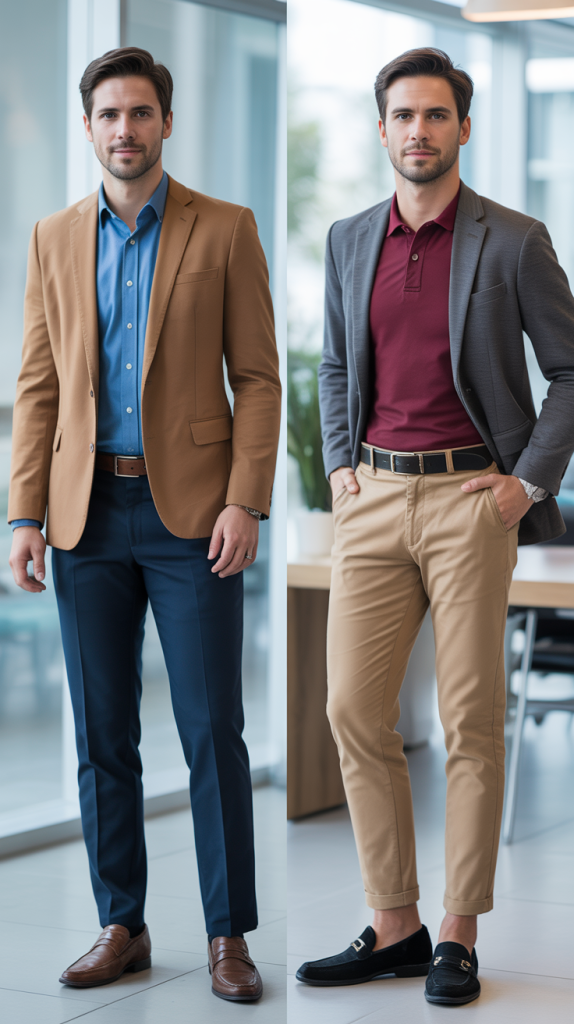
These additional business casual combinations explore versatility within professional dress codes while maintaining workplace-appropriate standards.
Outfit 6: The Tan Blazer Alternative
- Tan or camel blazer provides lighter, more approachable business casual option perfect for spring and summer months.
- Light blue dress shirt continues the warm, accessible color scheme.
- Navy dress trousers ground the lighter top half while maintaining professional formality.
- Tan or cognac leather loafers create cohesive color story from head to toe.
Outfit 7: The Structured Polo Approach
- High-quality polo shirt in burgundy or navy offers slightly less formal business casual option for relaxed office environments.
- Gray blazer adds necessary structure to elevate the polo into business casual territory.
- Khaki or stone chinos complement the polo without appearing too casual.
- Brown leather Derby shoes maintain professional footwear standards even with the more relaxed polo top.
Outfit 8: The Olive Variant
- White or cream dress shirt provides neutral base for this earth-toned business casual combination.
- Olive green chinos introduce color while remaining sophisticated and office-appropriate.
- Navy blazer creates classic contrast with the olive bottoms.
- Brown leather Oxford shoes complete the warm, natural color palette.
Outfit 9: The Business Casual Friday
- Casual button-down shirt in chambray or light denim fabric offers relaxed texture appropriate for end-of-week business casual.
- Charcoal gray trousers maintain professional lower half even as the shirt relaxes slightly.
- Optional navy or gray blazer can be added or removed depending on schedule.
- Brown leather loafers provide comfortable yet polished footwear for casual Friday.
Outfit 10: The Layered Professional
- Light blue dress shirt forms the foundation of this layered business casual outfit.
- Lightweight V-neck sweater in navy or charcoal adds dimension and warmth.
- Gray or navy dress trousers maintain professional standards.
- Black leather Derby shoes and belt provide classic finishing touches.
- This combination works exceptionally well in air-conditioned offices or transitional weather.
6. Smart Casual Outfit Ideas 11-15
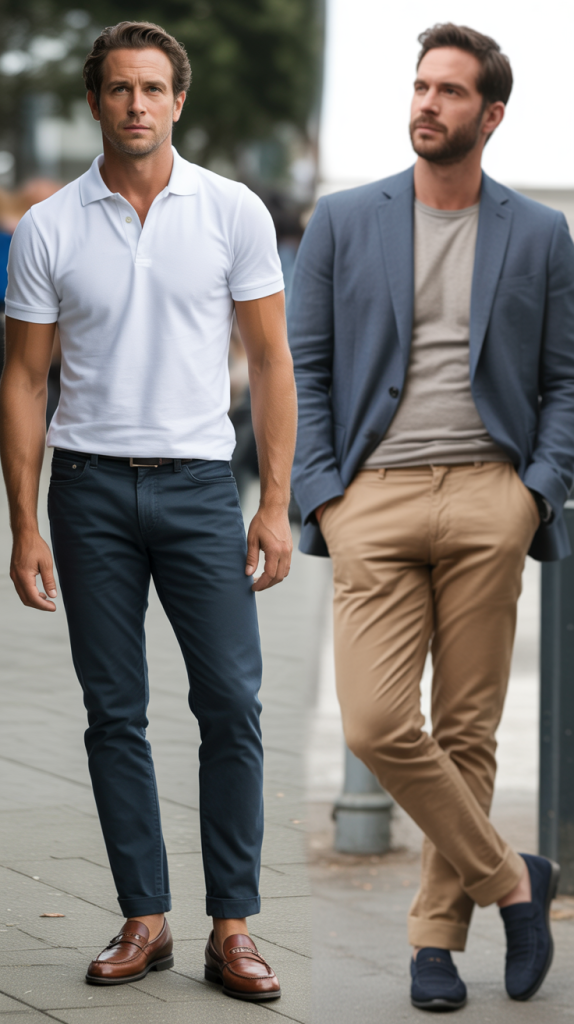
These smart casual combinations demonstrate how to balance relaxed comfort with refined styling for versatile social and workplace situations.
Outfit 11: The Dark Denim Foundation
- Dark indigo jeans without distressing provide the casual foundation that can be elevated with smart styling choices.
- White or light gray polo shirt adds refinement while maintaining comfortable, approachable aesthetic.
- Brown leather loafers instantly elevate jeans from purely casual into smart casual territory.
- Optional casual blazer in navy or gray can be added for occasions requiring additional polish.
Outfit 12: The Elevated T-Shirt Look
- Premium crew-neck t-shirt in white, gray, or navy serves as surprisingly versatile smart casual foundation when styled correctly.
- Unstructured blazer in textured fabric like linen or cotton adds necessary sophistication to elevate the t-shirt.
- Olive or camel chinos provide interesting color while maintaining smart casual appropriateness.
- White leather sneakers or suede loafers complete this modern smart casual approach.
Outfit 13: The Chambray Combination
- Chambray button-down shirt offers relaxed texture and casual appeal while maintaining smart styling.
- Dark brown or olive chinos complement the blue chambray beautifully.
- Tan suede desert boots add earthy texture that works perfectly with the casual shirt and chinos.
- Rolled sleeves and slight untuck can work in very casual smart casual environments.
Outfit 14: The Sweater Style
- Lightweight crew-neck sweater in burgundy, forest green, or navy provides color and texture for smart casual dressing.
- White or light blue casual button-down collar showing at neck and cuffs adds layered dimension.
- Dark jeans or navy chinos provide versatile smart casual bottoms.
- Brown leather Chelsea boots introduce refined footwear that bridges casual and smart elements.
Outfit 15: The Henley Approach
- Long-sleeve henley in heathered gray, navy, or olive provides casual foundation with subtle detail from the button placket.
- Camel or burgundy chinos add color interest while maintaining smart casual standards.
- Navy casual blazer elevates the henley into appropriate smart casual territory.
- White leather sneakers or cognac loafers complete this comfortable yet polished outfit.
7. Smart Casual Outfit Ideas 16-20
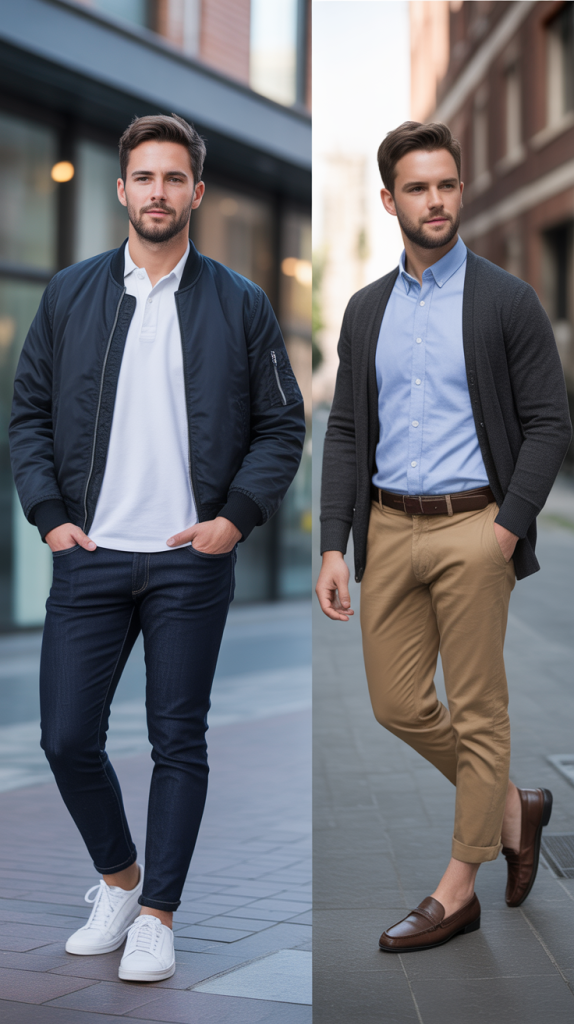
These smart casual combinations explore additional styling possibilities that maintain sophistication while prioritizing comfort and personal expression.
Outfit 16: The Bomber Jacket Style
- Navy or olive bomber jacket provides contemporary outerwear that works perfectly in smart casual contexts.
- Gray or white polo shirt underneath maintains refined casual aesthetic.
- Dark jeans or black chinos create streamlined lower half.
- Minimalist white leather sneakers complete this modern smart casual approach.
Outfit 17: The Cardigan Layer
- Shawl-collar or button-front cardigan in gray, navy, or oatmeal adds textural warmth to smart casual outfits.
- Casual button-down shirt in white or light blue underneath provides collared structure.
- Khaki or olive chinos complement the layered top half.
- Brown suede chukka boots add casual refinement perfect for the cardigan’s relaxed sophistication.
Outfit 18: The Monochrome Casual
- Black or charcoal crew-neck sweater creates sleek foundation for monochromatic smart casual styling.
- Black jeans continue the dark palette while maintaining smart casual appropriateness through fit and styling.
- White leather sneakers provide essential contrast and keep the outfit from appearing too dark or heavy.
- Simple silver accessories prevent the monochrome look from feeling stark.
Outfit 19: The Summer Smart Casual
- Linen button-down shirt in white, light blue, or natural linen color offers breathable smart casual option for warm weather.
- Stone or light khaki chinos complement the relaxed summer vibe while maintaining sophistication.
- Brown leather boat shoes or loafers provide classic warm-weather footwear.
- Rolled sleeves and slight untuck work in very casual smart casual environments during summer months.
Outfit 20: The Textured Approach
- Textured knit polo or waffle-knit henley adds visual interest through fabric choice.
- Burgundy or forest green chinos introduce rich color that complements textured tops.
- Tan suede jacket or blazer adds additional texture and warmth for transitional weather.
- Brown leather loafers or boots complete the texture-rich smart casual outfit.
8. Smart Casual Outfit Ideas 21-23
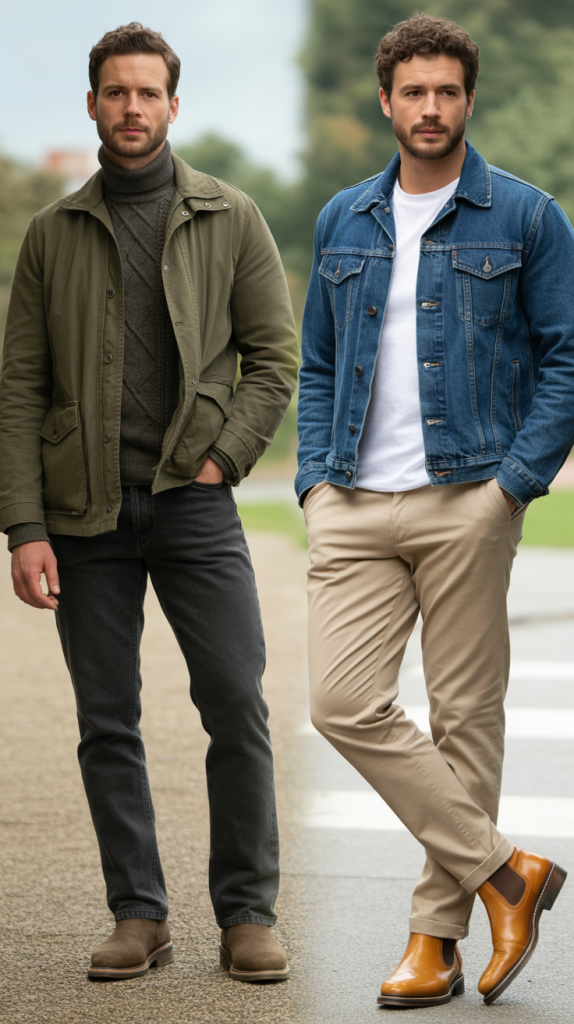
These final smart casual combinations demonstrate creative styling approaches while maintaining the balance between casual comfort and refined appearance.
Outfit 21: The Turtleneck Sophistication
- Lightweight turtleneck in black, navy, or charcoal provides sleek, refined foundation with European-inspired smart casual aesthetic.
- Dark jeans or charcoal chinos maintain the sophisticated color palette.
- Tan or olive field jacket adds casual element while the turtleneck maintains polish.
- Black or brown Chelsea boots complete this elevated smart casual approach.
Outfit 22: The Denim Jacket Style
- Quality denim jacket in classic blue or black denim serves as iconic casual outerwear that can be styled smartly.
- White or gray crew-neck t-shirt underneath keeps the focus on the jacket.
- Camel or olive chinos provide color contrast and elevate the casual denim jacket.
- Brown leather Chelsea boots or white leather sneakers complete the outfit depending on desired formality level.
Outfit 23: The Sport Coat Combination
- Unstructured sport coat in herringbone, windowpane, or subtle pattern adds personality to smart casual dressing.
- Casual button-down in complementary color provides collared structure without dress shirt formality.
- Dark jeans styled with the sport coat create interesting mix of casual and refined elements.
- Cognac leather loafers bridge the casual jeans and smart sport coat perfectly.
- This combination works exceptionally well for dinner dates, creative workplace environments, and social events.
9. Fabric Choices and Seasonal Considerations
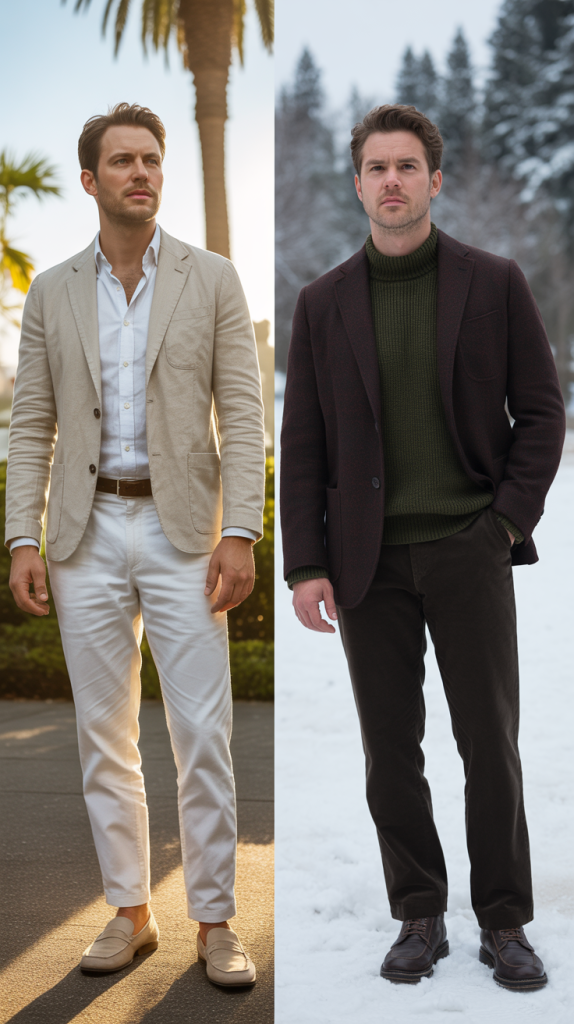
Understanding appropriate fabrics and seasonal adaptations ensures your business casual and smart casual wardrobes remain comfortable and appropriate throughout the year.
Summer Fabric Selections
- Lightweight cotton, linen, and cotton-linen blends provide breathability essential for maintaining professional appearance in warm weather.
- Tropical wool offers surprising breathability for business casual blazers during summer months.
- Seersucker and chambray provide textural interest while maintaining coolness in hot conditions.
- Unlined or half-lined blazers reduce heat retention compared to fully lined alternatives.
- Lighter colors in both business and smart casual reflect heat and create seasonally appropriate aesthetic.
Winter Fabric Considerations
- Heavier wool, flannel, and wool-cashmere blends provide necessary warmth for cold weather business and smart casual dressing.
- Corduroy offers textural warmth perfect for smart casual pants and blazers during winter months.
- Knit sweaters, cardigans, and vests create essential layering options for maintaining warmth without bulk.
- Fully lined blazers and pants provide additional insulation for harsh winter conditions.
- Darker, richer colors—burgundy, forest green, charcoal—create appropriate visual weight for winter months.
Transitional Season Versatility
- Cotton blazers and medium-weight wool work perfectly for spring and fall when temperatures fluctuate.
- Layering becomes crucial during transitional seasons—sweaters over shirts, casual jackets over polos.
- Chinos in various weights provide year-round versatility with appropriate seasonal styling.
- Keep both lightweight and heavier accessories available to adapt to unpredictable transitional weather.
10. Fit and Tailoring Fundamentals
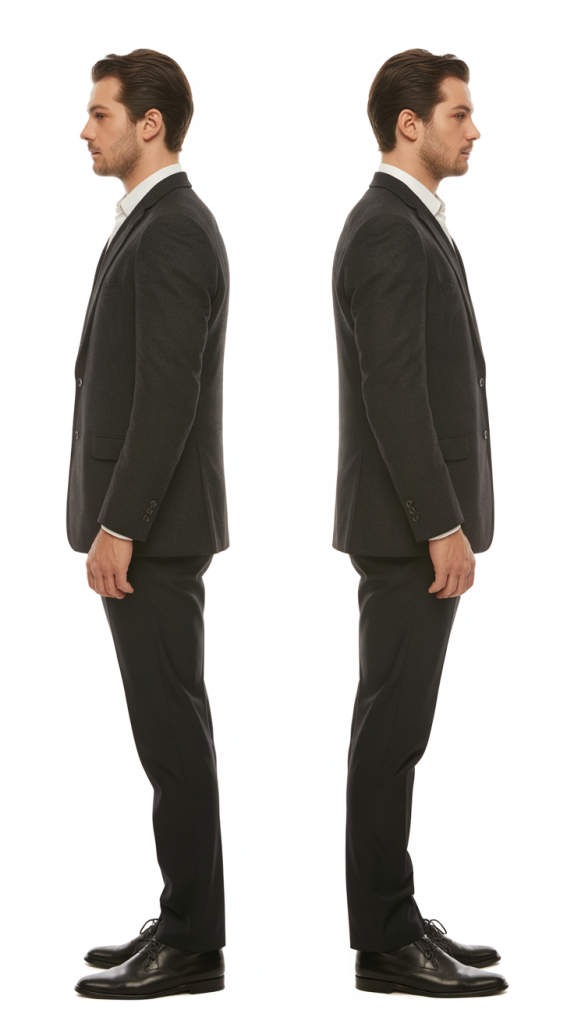
Proper fit separates mediocre business and smart casual outfits from truly polished, professional appearances.
Understanding fit principles and investing in tailoring transforms standard clothing into custom-looking wardrobes.
Blazer Fit Essentials
- Shoulders should align precisely with your natural shoulder line without extending beyond or falling short.
- Collar should hug your neck without gaping away when wearing a shirt underneath.
- Sleeves should end at your wrist bone, allowing approximately half an inch of shirt cuff to show.
- Body should skim your torso with enough room to button comfortably without pulling or excess fabric.
- Length should cover your seat, with the bottom hem falling around mid-zipper or just below.
Shirt Fit Principles
- Collar should allow two fingers to fit comfortably between neck and fabric when buttoned.
- Shoulders seams should sit at the edge of your shoulders, not drooping down your arms or pulling across your back.
- Chest and torso should allow comfortable movement without billowing fabric or straining buttons.
- Sleeves should end at your wrist bone for long sleeves, allowing watch face to show.
- Proper shirt length allows tucking that stays secure throughout the day without constant adjustment.
Trouser and Chino Fit
- Waist should sit comfortably at your natural waist or slightly below without requiring a belt to stay up.
- Rise (distance from crotch seam to waistband) should be comfortable when sitting and standing without pulling or sagging.
- Seat should follow your natural shape without appearing baggy or overly tight.
- Thighs should allow comfortable movement while maintaining clean lines without excessive fabric.
- Leg opening should be proportional to your shoe size—typically between 7 to 8 inches for balanced modern fit.
- Break (fabric bunching at shoe) should be minimal to none for contemporary look, or slight for classic styling.
When to Visit a Tailor
- Off-the-rack blazers almost always benefit from sleeve shortening to achieve proper length and cuff exposure.
- Trouser hemming ensures perfect break and length for your specific inseam and shoe preference.
- Waist suppression on blazers creates custom-tailored silhouette that fits your specific body shape.
- Pant waist adjustments ensure perfect fit without relying solely on belts.
- Quality tailoring transforms affordable clothing into expensive-looking wardrobes, making it one of the best style investments.
11. Color Coordination and Pattern Mixing
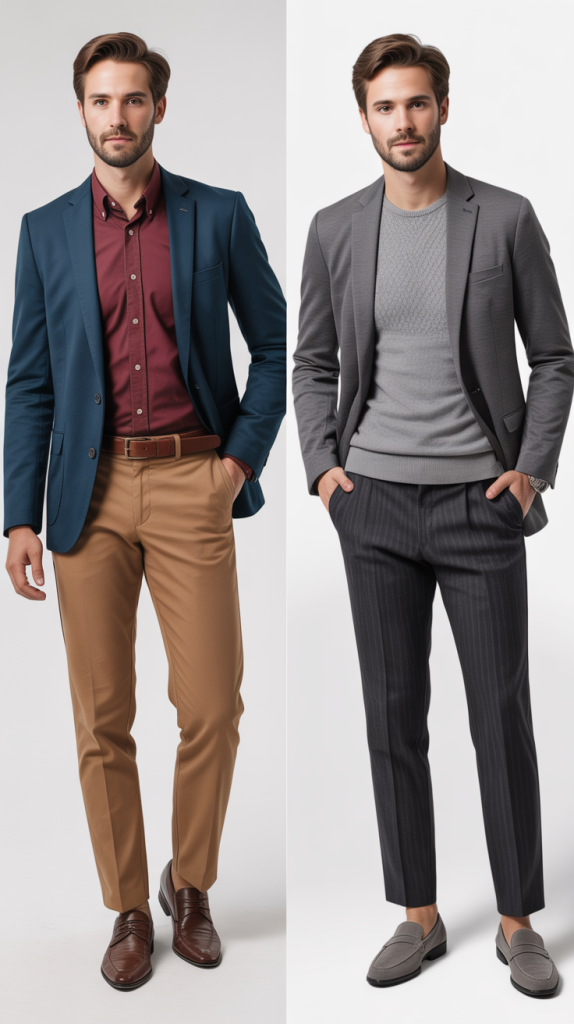
Mastering color coordination and pattern mixing elevates business and smart casual outfits from basic to sophisticated while maintaining appropriate professional standards.
Foundational Color Principles
- Neutral colors—navy, charcoal, gray, black, white, tan, khaki—form the versatile foundation for both business and smart casual wardrobes.
- These neutrals combine effortlessly with each other and serve as anchors for introducing accent colors.
- The 60-30-10 rule provides helpful guidance: 60% dominant color (usually pants), 30% secondary color (shirt/sweater), 10% accent (accessories, shoes).
- Complementary colors (opposite on color wheel) create dynamic outfits: navy and tan, burgundy and forest green, brown and blue.
- Analogous colors (adjacent on color wheel) produce harmonious, sophisticated combinations: blues and greens, browns and oranges.
Pattern Mixing Guidelines
- Vary pattern scales when mixing—pair large checks with fine stripes, or bold patterns with micro-patterns.
- Keep colors coordinated even when mixing patterns—patterns should share at least one common color.
- Limit patterns to two, maximum three elements in a single outfit to avoid visual chaos.
- Solid-colored pieces provide essential visual breaks between patterns.
- Classic pattern combinations include striped shirts with checked blazers, or patterned ties (business formal) with subtle shirt patterns.
Business Casual Color Approach
- Conservative color palettes dominate business casual: navy, charcoal, white, light blue, with occasional burgundy or forest green.
- Pattern should remain subtle—fine stripes, micro-checks, understated plaids.
- Avoid bright, saturated colors or bold patterns that draw excessive attention in professional environments.
- Seasonal color adaptation works within professional parameters: lighter grays and blues for summer, deeper charcoals and burgundies for winter.
Smart Casual Color Freedom
- Smart casual allows broader color exploration: mustard, rust, olive, burgundy, forest green, camel.
- Patterns can be bolder and more expressive while maintaining tasteful limits.
- Denim introduces blue in varied washes that pair with warm browns, tans, and earth tones.
- Seasonal colors can be more pronounced: pastels and bright whites for summer, deep jewel tones for winter.
12. Accessories: The Finishing Details
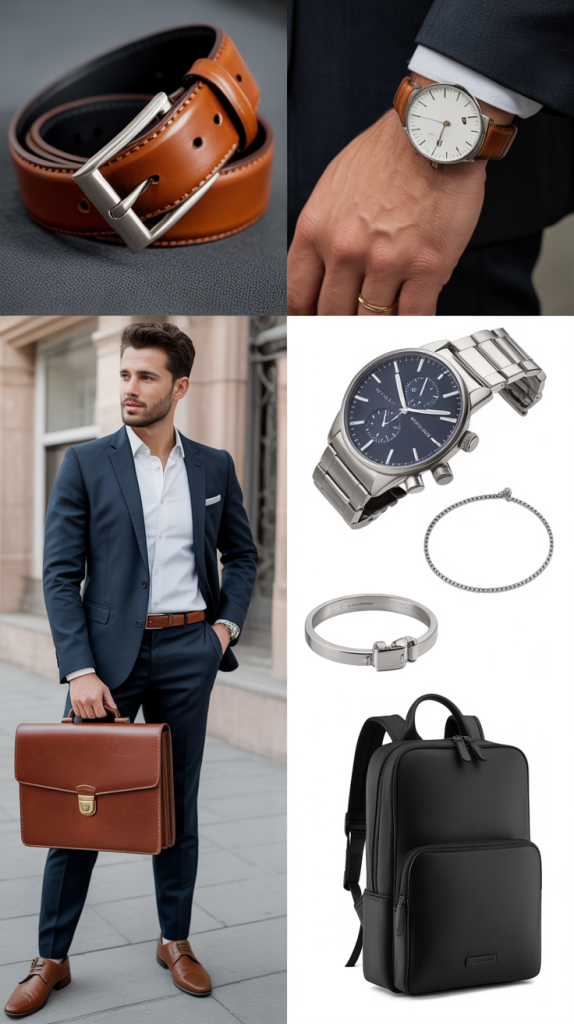
Thoughtful accessories complete business and smart casual outfits while providing opportunities for personal expression within professional parameters.
Business Casual Accessories
- Leather belt should match shoe color (brown with brown shoes, black with black shoes) and feature simple, classic buckle.
- Dress watch with leather strap or metal bracelet provides professional timepiece appropriate for business casual.
- Watch should be proportional to your wrist size and outfit formality—avoid oversized sports watches in business casual.
- Leather briefcase or professional messenger bag completes business casual while providing functional document transport.
- Tie becomes optional in business casual but when worn should be conservative in pattern and color.
- Pocket square in business casual should be simple white linen or subtle pattern that complements without overwhelming.
Smart Casual Accessories
- Casual leather or fabric belt with simpler hardware works for smart casual contexts.
- Watches can be more varied—dive watches, field watches, or casual leather-strap watches all work in smart casual.
- Minimalist jewelry like simple bracelets or rings adds personal expression without appearing excessive.
- Canvas, leather, or quality nylon bags provide functional smart casual alternatives to formal briefcases.
- Sunglasses when needed should be classic styles—aviators, wayfarers—rather than sporty wraparound designs.
- Scarves in cooler weather add texture and color while serving practical warmth function.
Accessory Quality Over Quantity
- Invest in fewer, higher-quality accessories rather than accumulating many mediocre pieces.
- Classic leather goods age beautifully and develop character, making them worthwhile long-term investments.
- Quality watches last decades with proper care and maintain value better than fast-fashion alternatives.
- Simple, timeless accessory choices remain relevant across changing trends and fashion cycles.
13. Common Mistakes to Avoid
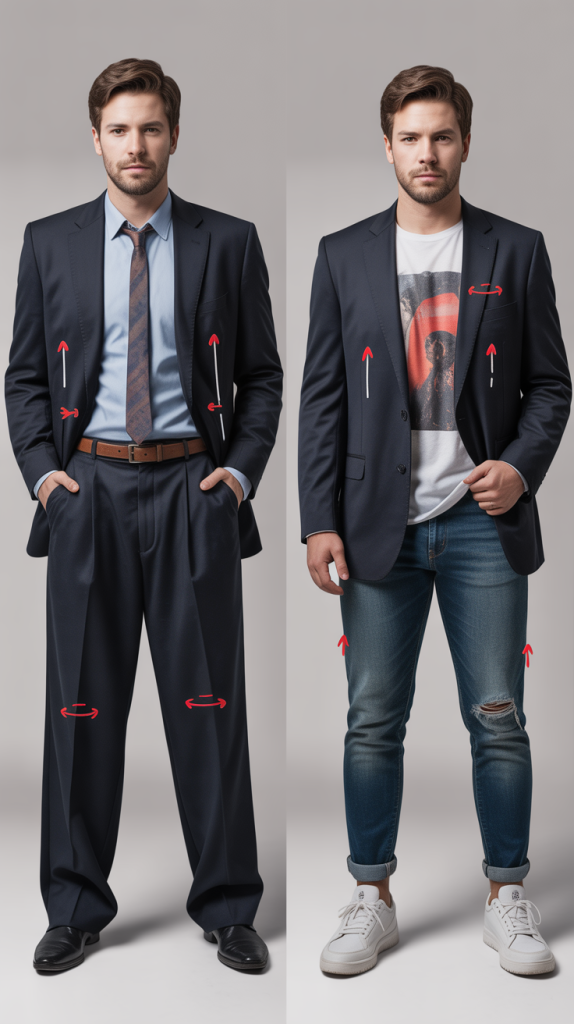
Understanding frequent business and smart casual mistakes helps you refine your style and maintain polished, appropriate appearances in all professional contexts.
Fit-Related Errors
- Wearing clothing too large creates sloppy, unprofessional appearance regardless of how expensive the pieces are.
- Overly tight clothing appears desperate and uncomfortable while restricting natural movement.
- Ignoring sleeve length results in too much or too little shirt cuff showing, disrupting visual proportion.
- Incorrect trouser break creates messy, dated appearance—aim for minimal to no break in modern styling.
- Skipping tailoring when off-the-rack clothes don’t fit perfectly wastes the potential of otherwise good pieces.
Style Misinterpretation Mistakes
- Confusing smart casual with athletic casual—sneakers should be leather/canvas fashion sneakers, not running shoes.
- Wearing graphic tees or logos in business casual contexts undermines professional credibility.
- Choosing overly distressed jeans for smart casual creates inappropriately casual appearance.
- Pairing formal dress shoes with very casual clothes creates disconnected, unbalanced outfit.
- Wearing shorts, sandals, or tank tops in business or smart casual environments shows fundamental dress code misunderstanding.
Grooming and Maintenance Oversights
- Neglecting shoe care results in scuffed, worn footwear that undermines even excellent outfits.
- Wearing wrinkled shirts or pants demonstrates lack of attention to detail and preparation.
- Ignoring proper garment care (dry cleaning blazers, proper storage) shortens clothing lifespan and appearance quality.
- Overlooking personal grooming—neat hair, trimmed facial hair, clean nails—contradicts polished clothing choices.
Color and Pattern Mistakes
- Matching too precisely (identical color shoes and belt down to exact shade) appears overly coordinated and unnatural.
- Mixing too many patterns without common color threads creates chaotic visual confusion.
- Wearing brown leather with black pants (or vice versa) creates disconnected color story.
- Choosing overly bold colors or patterns in conservative business casual environments shows poor context awareness.
Conclusion
Understanding the nuanced differences between smart casual and business casual empowers you to dress confidently for any professional or social occasion.
Through this exploration of 23 Smart Casual vs Business Casual: Best Outfit Ideas for Men, you’ve gained comprehensive knowledge of wardrobe essentials, outfit combinations, styling principles, and common pitfalls to avoid.
Remember that business casual maintains closer ties to traditional professional wear with structured blazers, dress shirts, and conservative colors, while smart casual embraces more relaxed elements like quality polos, dark jeans, and creative layering.
The key to mastering both dress codes lies in understanding context, investing in proper fit, building a versatile wardrobe foundation, and paying attention to the finishing details that elevate good outfits into great ones.
Whether you’re navigating corporate environments or creative workspaces, these outfit ideas and principles provide the roadmap for developing your personal style within appropriate professional parameters.
Start by assessing your specific needs, invest in quality basics, and gradually build your wardrobe with pieces that reflect both the dress code requirements and your individual aesthetic preferences.
