Having a larger forehead doesn’t mean you’re limited in your hairstyle choices—in fact, it opens up a world of strategic, stylish options that can completely transform your appearance.
Many men with prominent foreheads struggle to find cuts that balance their facial proportions, often defaulting to styles that actually draw more attention to the very feature they want to minimize.
This comprehensive guide on Big Forehead Hairstyles for Men That Actually Look Good will walk you through proven techniques, specific cuts, and styling methods that work with your natural features rather than against them.
You’ll discover how texture, length, fringe variations, and strategic layering can create the illusion of a more balanced face shape while keeping you looking modern and confident.
From celebrity-inspired looks to practical everyday styles, we’ll cover everything you need to know about choosing, styling, and maintaining the perfect haircut for your face structure.
1. Understanding Your Forehead and Face Shape
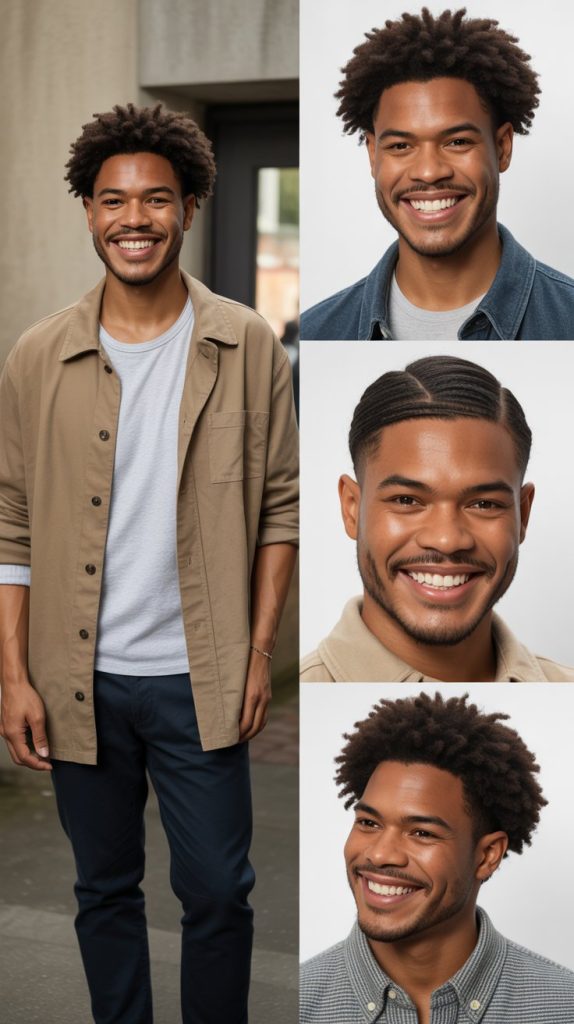
Before selecting any hairstyle, you need to understand the relationship between your forehead size and overall face shape. This knowledge forms the foundation for making informed decisions that enhance your natural features.
Key Points:
- A forehead is typically considered large when it measures more than four fingers width from your eyebrows to your hairline
- Face shapes with larger foreheads include oval, oblong, and inverted triangle variations
- The goal isn’t to hide your forehead completely but to create visual balance across your entire face
- Understanding your hair’s natural growth pattern, texture, and density will influence which styles work best for you
- Certain face shapes actually benefit from styles that partially expose the forehead rather than covering it entirely
- Professional hairstylists use the golden ratio principle—your forehead should ideally be one-third of your total face length
- Hair texture plays a crucial role: thick hair provides more coverage options while fine hair requires strategic layering
2. The Textured Fringe Cut
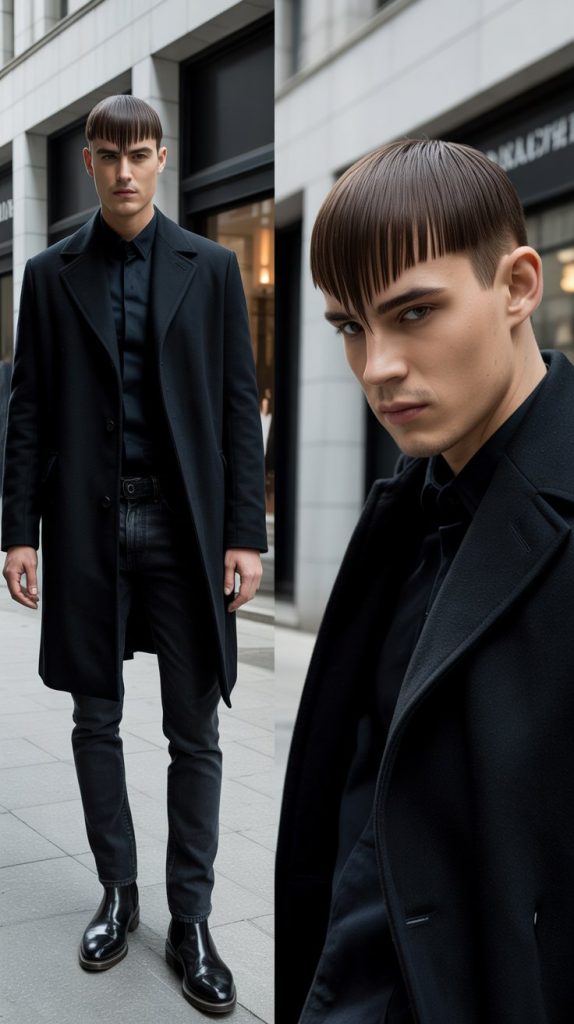
The textured fringe is one of the most versatile and effective solutions for men with larger foreheads.
This style introduces dimension and movement that naturally draws the eye away from forehead size while maintaining a contemporary aesthetic.
Key Points:
- The textured fringe works by creating irregular, piece-y sections that fall across the forehead without looking heavy or deliberate
- This cut typically features hair that’s 2-4 inches long on top with shorter, textured sides
- Unlike blunt bangs, textured fringes have varied lengths that create a more natural, effortless appearance
- The style works exceptionally well with wavy or slightly curly hair as the natural texture enhances the intended effect
- Styling requires minimal product—usually just a small amount of matte clay or texture paste
- The fringe should ideally cover about one-third to one-half of your forehead, not the entire area
- This cut requires trimming every 4-6 weeks to maintain the proper length and texture
- Face shapes that benefit most include oval, oblong, and rectangular structures
3. The Side-Swept Undercut
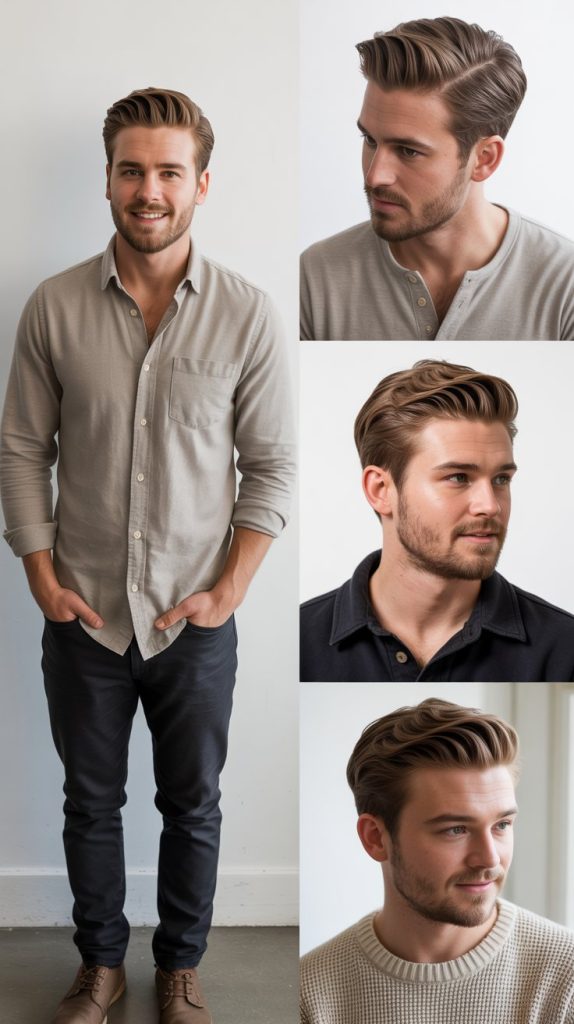
The side-swept undercut combines modern edge with strategic forehead coverage, making it an excellent choice for creating diagonal lines that minimize forehead prominence.
Key Points:
- This style features significantly shorter sides (usually clipper grades 1-3) with longer top hair swept dramatically to one side
- The sweeping motion creates a diagonal line across the forehead that breaks up its visual width
- Hair on top should be at least 4-6 inches long to achieve the proper sweep and hold
- The contrast between short sides and long top draws attention to the overall style rather than any single facial feature
- Works particularly well for men with straight to slightly wavy hair that can hold a side part
- Requires daily styling with blow-drying and medium to strong hold pomade or gel
- The dramatic difference in length creates a masculine, contemporary look that’s appropriate for professional settings
- Can be adjusted seasonally—more dramatic sweep in cooler months, slightly relaxed in summer
4. The Messy Quiff
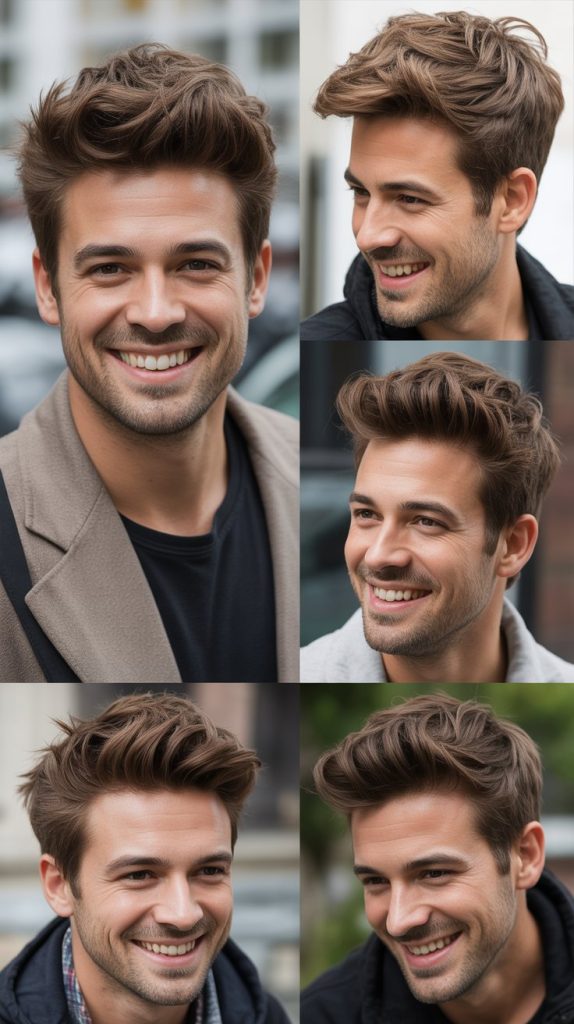
The quiff adds vertical height while bringing forward volume that naturally reduces the appearance of forehead length through proportional balance.
Key Points:
- A messy quiff involves brushing hair upward and back from the forehead with deliberate, textured volume
- The upward lift creates visual interest at the hairline, drawing eyes to the styling rather than forehead size
- This style requires hair that’s 3-5 inches long on top for proper volume and shape
- The “messy” element is controlled chaos—it should look effortless but still intentional
- Works best with naturally thick or medium-density hair that can support volume without excessive product
- Styling involves blow-drying hair up and back, then using fingers to create texture with matte paste or clay
- The height of the quiff should be proportional to your face—too high can actually elongate the appearance
- Maintenance includes regular trims to prevent the style from becoming too heavy and losing its lift
5. The Caesar Cut with Forward Fringe
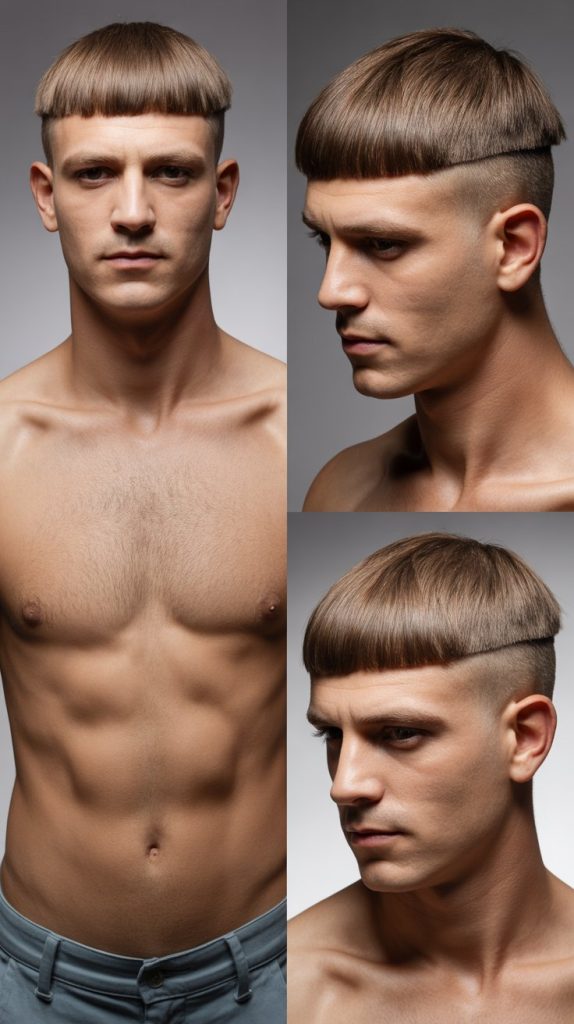
The Caesar cut is a classic style that has stood the test of time specifically because it’s designed to minimize forehead exposure through a short, horizontal fringe.
Key Points:
- Named after Julius Caesar, this cut features uniform short length (1-2 inches) all around with a small fringe brushed forward
- The fringe sits just above the eyebrows, creating a horizontal line that shortens the forehead’s appearance
- This low-maintenance style is ideal for men who prefer simple, wash-and-go grooming routines
- Works exceptionally well with straight or slightly wavy hair; curly hair may not achieve the clean horizontal line
- The cut creates a youthful appearance and works across age groups from twenties through fifties
- Can be customized with faded or tapered sides for a more modern interpretation
- Requires minimal styling product—often just a small amount of light pomade or none at all
- Perfect for men with active lifestyles or professional environments requiring conservative appearance
6. The Medium-Length Layered Cut
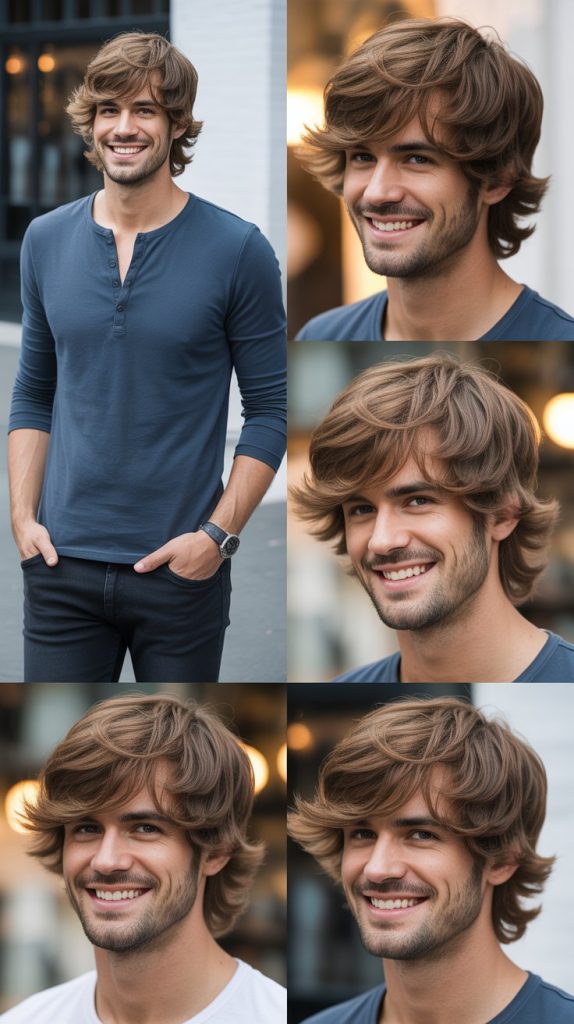
Medium-length layered styles provide coverage and versatility while maintaining enough length for various styling options that can adapt to different occasions.
Key Points:
- This cut features hair that’s 4-6 inches throughout with strategic layering that creates movement and reduces bulk
- Layers prevent the hair from lying flat, which can actually emphasize forehead size
- The length allows for multiple styling variations—swept back, side-parted, or forward-falling depending on preference
- Particularly effective for men with wavy or curly hair as natural texture enhances the layered effect
- Can incorporate face-framing pieces that fall forward, strategically covering portions of the forehead
- Requires more maintenance than shorter cuts with styling time of 5-10 minutes daily
- Works well with air-drying for casual looks or blow-drying for more polished appearances
- Suitable for oval, heart-shaped, and round face shapes seeking balance
7. The Faux Hawk with Textured Top
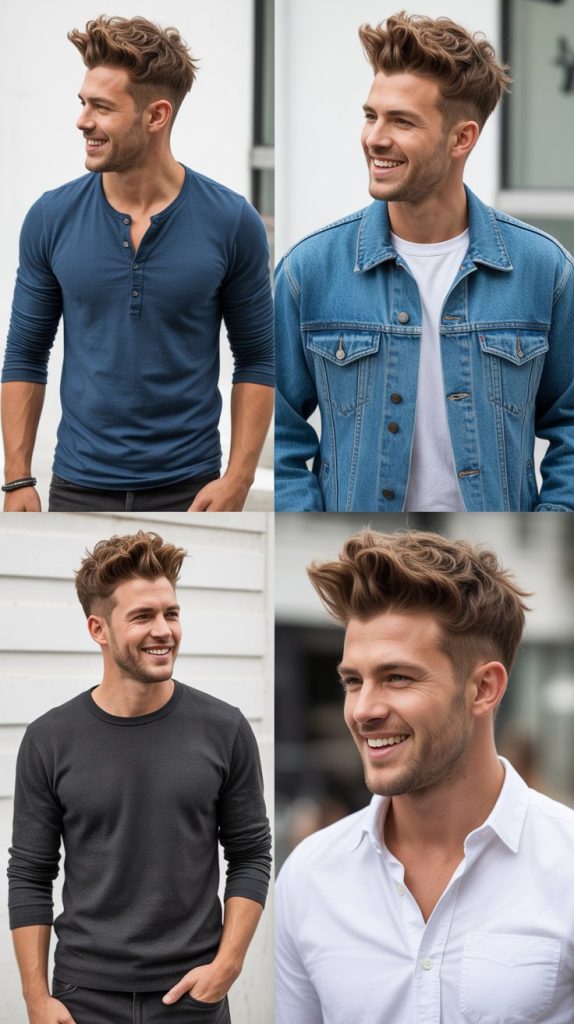
The faux hawk creates a central focal point that redirects attention from the forehead to the styled peak running along the head’s center.
Key Points:
- This style features gradually shorter sides with a textured, elevated strip of hair running from front to back
- Unlike a traditional mohawk, the faux hawk is workplace-appropriate and less extreme in contrast
- The central elevation creates vertical interest that balances out horizontal forehead width
- Works best with hair that’s 3-4 inches on top and clipper-cut sides (grades 2-4)
- Styling requires blow-drying upward and using strong-hold products to maintain the elevated center
- The textured top prevents the style from looking too rigid or outdated
- Can be styled more dramatically for evenings out or toned down for professional settings
- Best suited for angular face shapes including square, rectangular, and diamond structures
8. The Brushed Forward Crop

The brushed forward crop is a contemporary style that directly addresses forehead coverage through deliberate forward styling while maintaining clean, modern lines.
Key Points:
- This cut features uniform length on top (typically 1-3 inches) with hair deliberately brushed and cut to fall forward
- Creates a soft, natural fringe that covers a portion of the forehead without appearing like traditional bangs
- The crop works particularly well with straight or fine hair that naturally falls forward
- Sides can be faded, tapered, or kept slightly longer for a more relaxed interpretation
- Requires minimal daily styling—often just a quick brush-forward motion with damp hair
- The blunt edge creates a horizontal line that visually shortens forehead length
- More subtle than dramatic fringes, making it suitable for conservative professional environments
- Best for men seeking low-maintenance coverage that still looks intentionally styled
9. The Long Slicked-Back Style
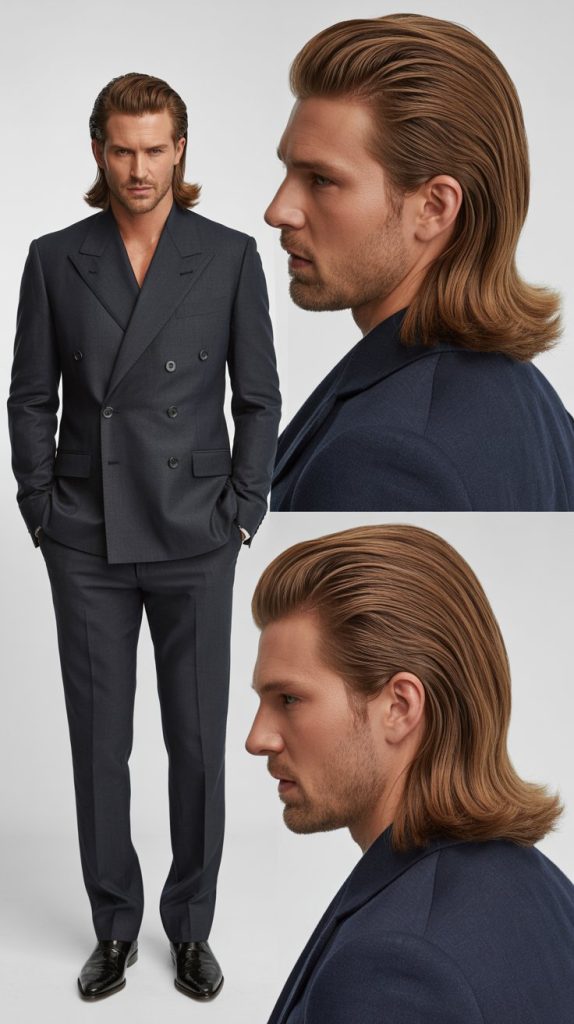
The slicked-back look might seem counterintuitive, but when executed properly with adequate length and volume, it creates a sophisticated appearance that balances proportions.
Key Points:
- This style requires hair that’s at least 6-8 inches long to achieve proper slicked-back effect with volume
- The key is maintaining volume at the roots while slicking back—flat slicked hair will emphasize the forehead
- Works by creating a prominent hairstyle that becomes the focal point rather than the forehead
- Best suited for men with thick, healthy hair that can support slicked styling without looking greasy
- Requires daily washing and styling with blow-drying for volume followed by medium-hold pomade or gel
- The length and backward motion elongate the head’s profile, creating better overall proportions
- Particularly effective for formal occasions, business settings, and sophisticated social events
- Can be adapted with side parts or textured variations to suit different personal styles
10. The Curly Fringe Style
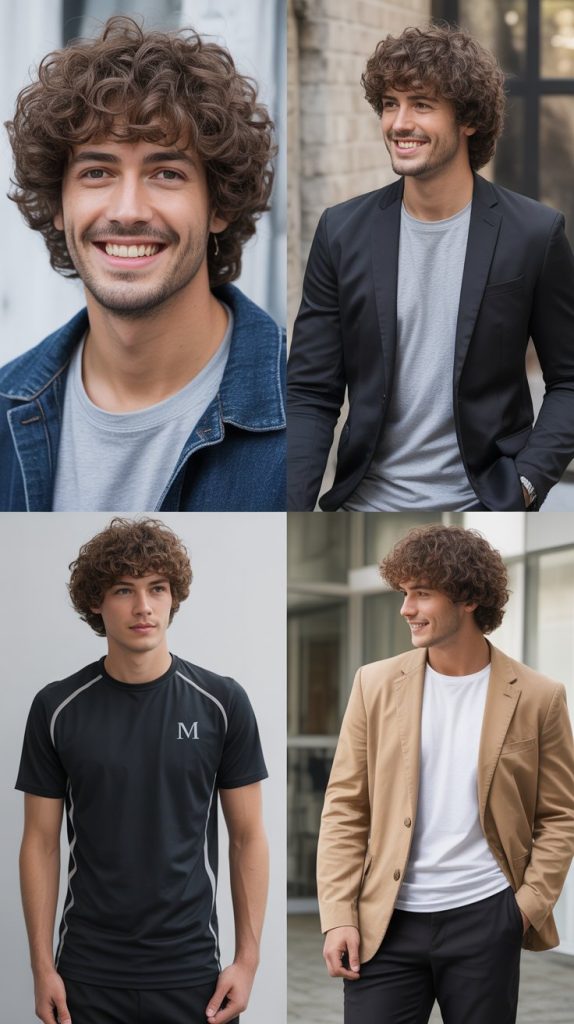
For men with naturally curly hair, embracing the texture while directing it forward creates organic coverage that appears completely natural and effortless.
Key Points:
- This style works with natural curl patterns rather than fighting them, allowing curls to fall forward across the forehead
- Curls create visual texture and dimension that naturally disguises forehead size without looking deliberate
- The cut should be customized to your specific curl pattern—loose waves require different treatment than tight coils
- Length can vary from 2-5 inches depending on curl tightness and desired coverage
- Minimal styling required—typically just curl-enhancing cream or mousse applied to damp hair
- The organic nature of curls prevents the style from looking too calculated or self-conscious
- Regular moisturizing treatments essential to keep curls healthy and defined
- Works across all face shapes but particularly flattering for angular structures that benefit from softening
11. The Ivy League Cut
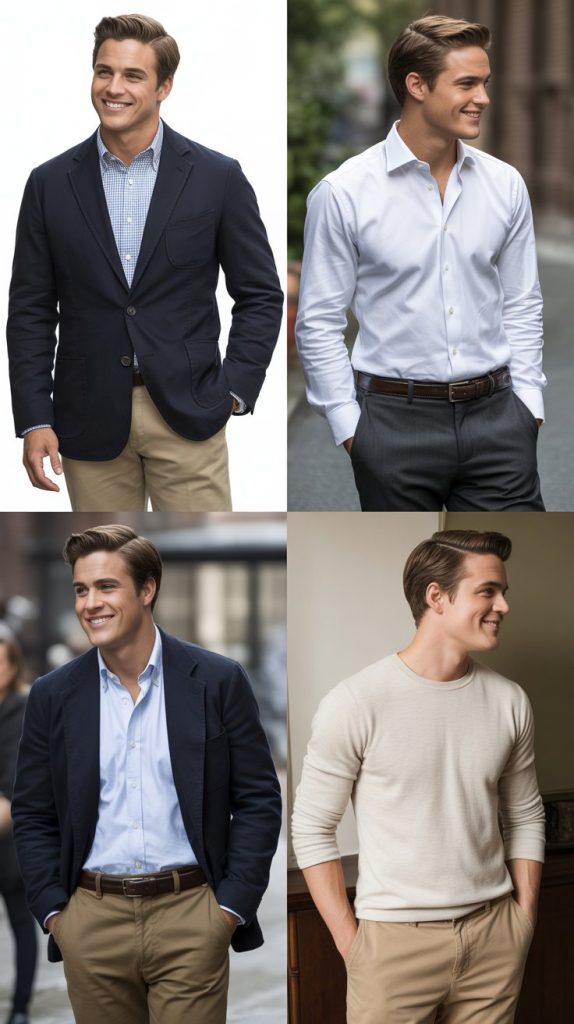
The Ivy League cut is a refined, classic style that provides subtle forehead coverage through a side-parted approach with just enough length for strategic styling.
Key Points:
- This cut features short sides (clipper grade 2-4) with 1-2 inches of length on top that’s side-parted and brushed over
- The side part creates a diagonal line across the forehead that breaks up its width
- Length on top is sufficient to provide some coverage while maintaining a clean, professional appearance
- Considered one of the most versatile cuts for professional environments across industries
- Styling takes 2-3 minutes daily with a small amount of pomade or cream
- The cut works well with straight to slightly wavy hair; very curly hair may not achieve the clean part
- Can be adjusted by varying the height of the part—lower parts provide more coverage
- Appropriate for all age groups from college students to senior executives
12. The Pompadour

The pompadour creates dramatic upward and backward volume that transforms the overall head profile, effectively reducing the forehead’s prominence through proportional balance.
Key Points:
- This bold style features hair swept upward from the forehead and back, creating significant volume and height
- Requires 4-6 inches of length on top with significantly shorter or faded sides
- The upward sweep at the forehead creates a curve that visually shortens the forehead’s appearance
- Works best with thick, healthy hair that can support the volume without excessive product
- Daily styling involves blow-drying with a round brush followed by strong-hold pomade or gel
- The height should be proportional—overly tall pompadours can elongate the face
- Modern interpretations can be more relaxed and textured compared to traditional slick versions
- Best suited for confident individuals comfortable with a statement hairstyle
13. Styling Products and Tools for Big Forehead Hairstyles

The right products and tools are essential for achieving and maintaining styles that effectively balance larger foreheads through proper hold, texture, and volume.
Key Points:
- Matte clay or paste works best for textured, natural-looking styles like fringes and messy quiffs
- Pomades provide shine and hold for slicked styles like pompadours and classic side parts
- Texture sprays add volume and grip to fine hair that needs more body
- A quality blow dryer is essential for creating volume and directing hair into desired positions
- Round brushes help create volume at roots while styling longer hair into pompadours or quiffs
- Sea salt spray enhances natural texture and creates the “lived-in” look for casual styles
- Strong-hold hairspray locks styles in place for all-day wear without touch-ups
- Heat protectant spray is crucial when regularly blow-drying or using hot styling tools
| Product Type | Best For | Hold Level | Finish |
|---|---|---|---|
| Matte Clay | Textured styles, fringes | Medium-Strong | Natural/Matte |
| Pomade | Slicked styles, pompadours | Medium-Strong | Glossy/Shiny |
| Texture Paste | Messy quiffs, casual looks | Light-Medium | Natural/Slight Shine |
| Styling Gel | Structured styles, wet looks | Strong | High Shine |
| Sea Salt Spray | Beach waves, volume | Light | Matte/Natural |
| Mousse | Curly styles, volume | Light-Medium | Natural |
14. Common Mistakes to Avoid

Understanding what doesn’t work is just as important as knowing what does when selecting and styling hairstyles for larger foreheads.
Key Points:
- Completely slicking hair straight back with no volume flattens the profile and emphasizes forehead size
- Extremely short buzz cuts or crew cuts remove all coverage options and can make the forehead more prominent
- Center parts can draw attention to forehead symmetry and width rather than minimizing it
- Overly long, heavy bangs that completely cover the forehead can look juvenile or like you’re hiding something
- Neglecting the sides—keeping too much length on sides can create an unbalanced, bottom-heavy appearance
- Using too much product makes hair look greasy and weighs down volume needed for balance
- Cutting your own fringe at home often results in blunt, unnatural lines that draw more attention
- Ignoring your natural hair texture and growth patterns leads to styles that require excessive effort to maintain
15. Professional Styling Tips and Maintenance
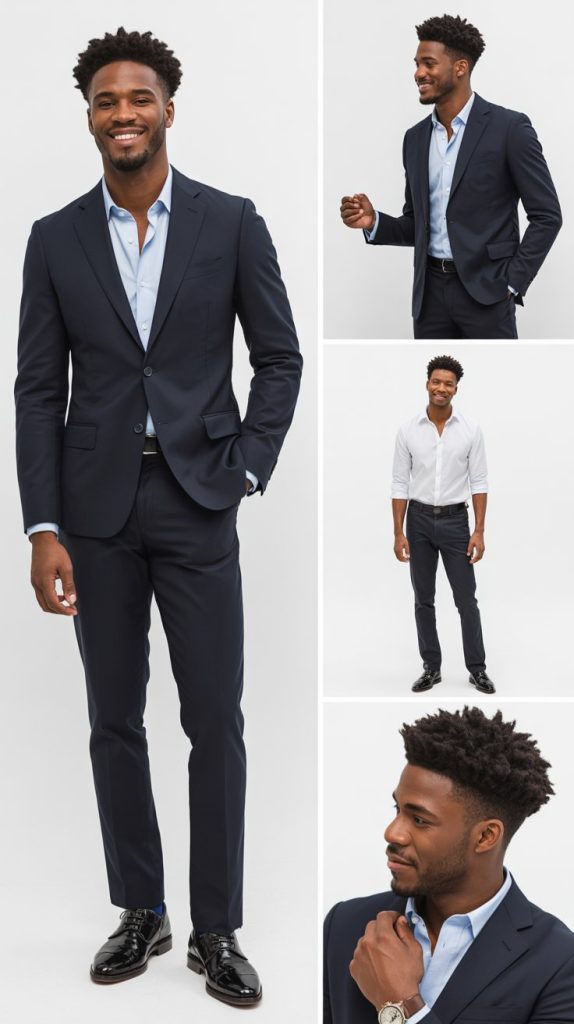
Proper maintenance and styling techniques ensure your chosen hairstyle consistently delivers the forehead-balancing benefits you’re seeking.
Key Points:
- Schedule haircuts every 3-6 weeks depending on your style—fringes and crops need more frequent trims
- Communicate clearly with your barber or stylist about your forehead concerns and desired coverage level
- Bring reference photos of styles you like to ensure you and your stylist have aligned expectations
- Invest in a quality blow dryer as it’s the single most important tool for creating volume and direction
- Style hair when it’s about 70-80% dry—completely wet or completely dry hair is harder to manipulate
- Use products sparingly—start with a small amount and add more if needed to avoid over-application
- Wash hair 3-4 times per week maximum to maintain natural oils that support styling
- Consider your lifestyle when choosing styles—low-maintenance cuts for active routines, more involved styles for desk jobs
- Learn your hair’s natural growth pattern and work with it rather than constantly fighting against it
- Touch up styles mid-day if needed with dry shampoo for volume or a small amount of product for hold
Conclusion
Choosing the right hairstyle when you have a larger forehead is about understanding balance, proportion, and working with your natural features rather than attempting to hide them completely.
The Big Forehead Hairstyles for Men That Actually Look Good covered in this guide offer proven solutions that range from low-maintenance crops to more involved styled looks, ensuring there’s an option for every lifestyle, hair type, and personal preference.
The key takeaway is that strategic length placement, texture, and styling direction can create visual interest that draws attention away from forehead size while enhancing your overall appearance.
Whether you choose a textured fringe, side-swept undercut, classic Caesar cut, or bold pompadour, the most important factor is selecting a style that makes you feel confident and aligns with your daily routine.
With the right cut, proper products, and consistent maintenance, your hairstyle becomes an asset that frames your face perfectly rather than a source of self-consciousness.
Remember that confidence in how you present yourself matters more than any single facial feature, and the right hairstyle is simply one tool in projecting that confidence to the world.
