Finding the right business casual attire when you’re a plus-size man shouldn’t feel like an impossible task.
The fashion industry has evolved, and today’s market offers sophisticated, well-fitting options that combine professional polish with genuine comfort.
This comprehensive guide to 21 Plus-Size Business Casual Outfits for Men That Fit Perfectly will walk you through versatile outfit combinations, styling strategies, and practical shopping advice designed specifically for bigger frames.
Whether you’re dressing for client meetings, casual Fridays, or everyday office wear, you’ll discover how to build a wardrobe that makes you look sharp and feel confident.
From selecting the right fabrics and fits to understanding which colors and patterns work best for your body type, every section is crafted to help you navigate business casual dressing with ease.
Get ready to transform your professional wardrobe with outfits that actually fit your lifestyle and your body.
1. The Classic Navy Blazer with Chinos
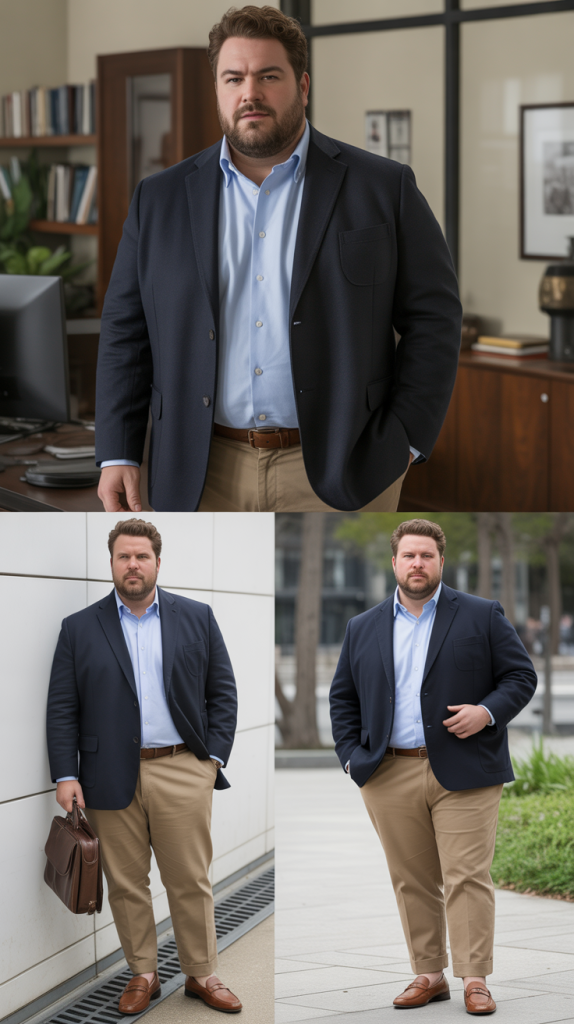
The navy blazer paired with chinos represents the cornerstone of business casual dressing for plus-size men.
This timeless combination offers flexibility, professionalism, and effortless style that works across virtually any business setting.
- Choose a structured navy blazer in a stretch fabric blend that accommodates movement without pulling at the buttons or creating stress points across the shoulders.
- Opt for flat-front or single-pleat chinos in neutral tones like khaki, stone, or light gray that create a streamlined silhouette.
- Ensure the blazer sleeves end at your wrist bone, allowing about half an inch of shirt cuff to show for proper proportion.
- Select chinos with a mid-rise waist that sits comfortably at your natural waistline without requiring a belt to hold them up.
- Pair this combination with leather dress shoes or suede loafers in brown or burgundy for a polished finish.
2. The Polo Shirt and Dress Pants Ensemble
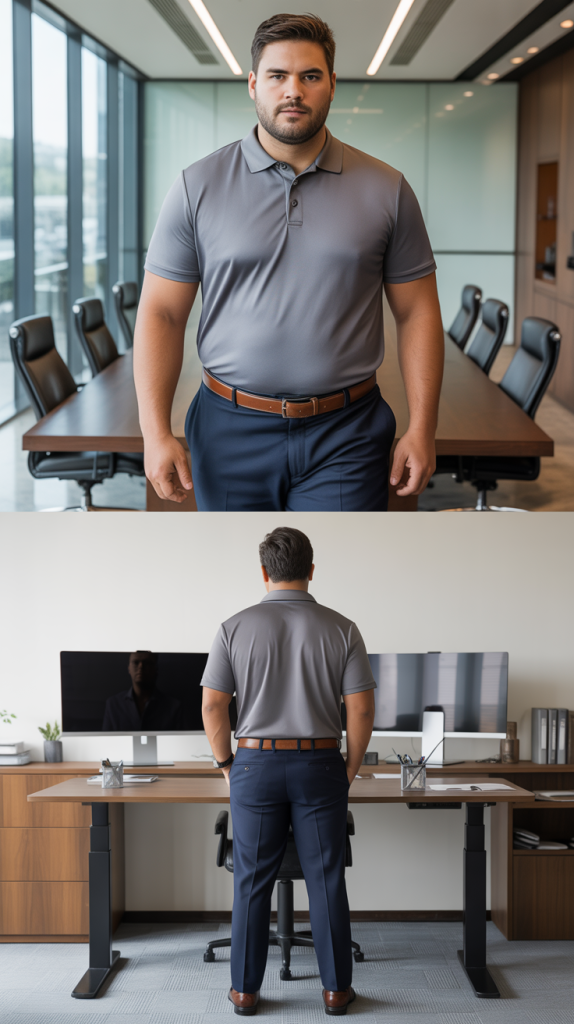
A well-fitted polo shirt combined with dress pants strikes the perfect balance between casual comfort and professional appearance.
This outfit works exceptionally well for warmer months or less formal office environments.
- Invest in performance polo shirts with moisture-wicking properties that prevent visible sweat marks and keep you comfortable throughout the day.
- Look for polos with a longer torso length that stays tucked in without constant adjustment during movement.
- Choose dress pants with a comfortable waistband that doesn’t dig into your midsection, preferably with some stretch content.
- Avoid polos that are too tight across the chest or stomach, as this creates unflattering horizontal pulling lines.
- Match darker dress pants with lighter polo colors to create visual balance and a more refined appearance.
3. The Button-Down Shirt with Dark Jeans

Dark denim paired with a crisp button-down shirt offers a relaxed yet sophisticated approach to business casual that’s become increasingly accepted in modern workplaces.
- Select dark-wash jeans without distressing, fading, or embellishments to maintain a professional aesthetic.
- Choose button-down shirts with a tailored or modern fit rather than slim fit, which provides comfort without excess fabric.
- Ensure your shirt has adequate length to stay tucked in, with at least 2-3 inches of extra fabric below your belt line.
- Look for jeans with a straight or slightly tapered leg opening that creates a clean line from hip to ankle.
- Add a leather belt that matches your shoe color to tie the entire outfit together cohesively.
4. The Sweater Over Button-Down Combination
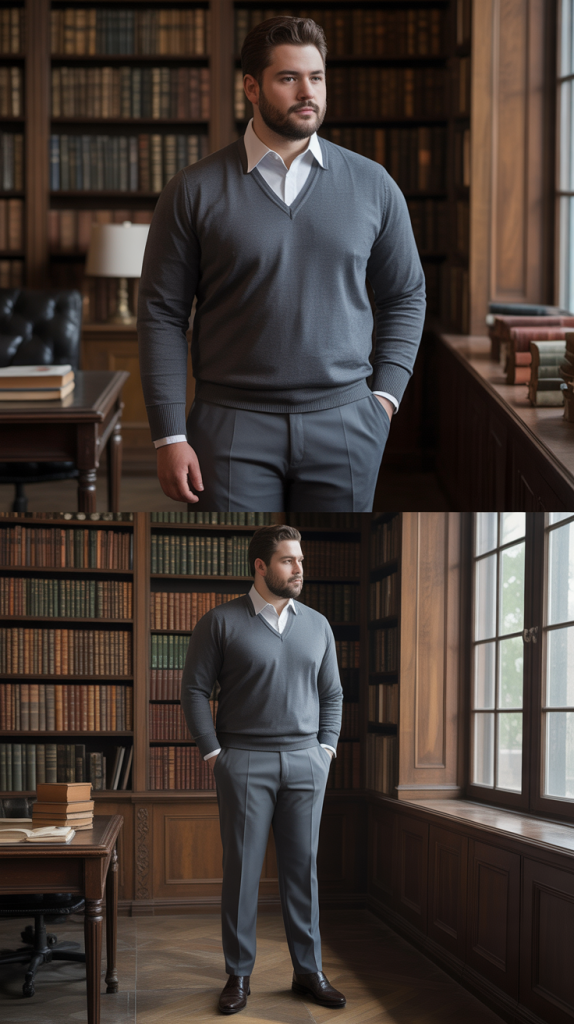
Layering a sweater over a collared shirt creates dimension and visual interest while providing practical warmth and a sophisticated business casual appearance.
- Choose V-neck or crew neck sweaters in merino wool or cotton blends that drape smoothly without clinging to your body.
- Ensure the collar of your button-down shirt sits neatly above the sweater neckline without bunching or folding awkwardly.
- Select sweaters in darker, solid colors like navy, charcoal, or burgundy that have a slimming effect and hide any imperfections.
- Avoid overly thick or chunky knit sweaters that add unnecessary bulk to your frame.
- Make sure both the shirt and sweater are long enough to stay tucked in when you sit or reach.
5. The Sport Coat with Dress Shirt and No Tie
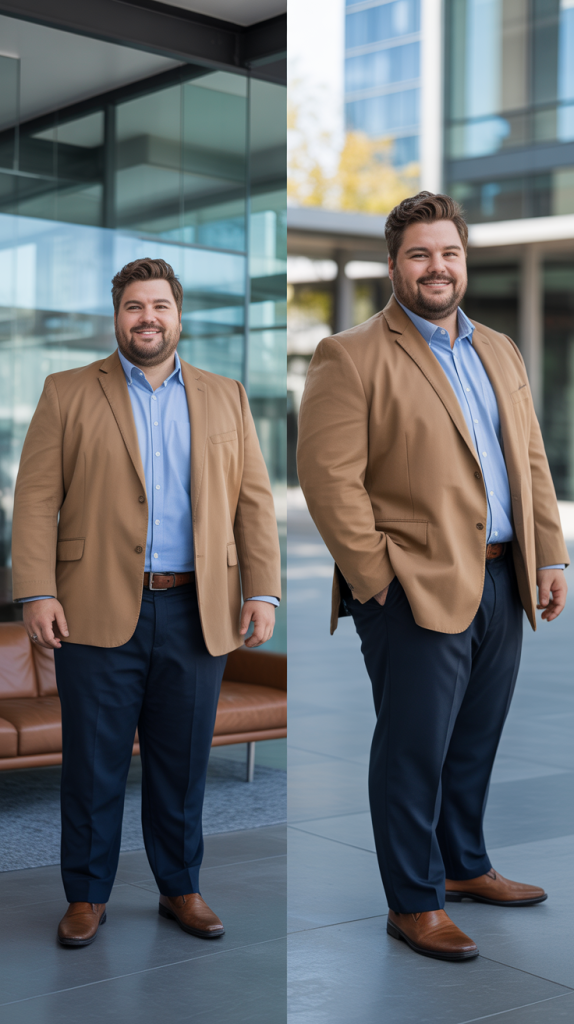
A sport coat worn with an open-collar dress shirt creates an approachable yet polished look that communicates professionalism without formality.
- Choose sport coats with a softer construction than traditional blazers, which provides comfort and a more casual appearance.
- Look for fabrics with some stretch or texture like linen blends, cotton, or wool-cotton mixtures for movement and visual interest.
- Ensure the sport coat shoulders align with your natural shoulder line without extending beyond or falling short.
- Select dress shirts with a collar that holds its shape when worn open, avoiding wide-spread collars that look sloppy.
- Keep the top two buttons of your shirt undone for a relaxed yet intentional look.
6. The Henley Shirt with Trousers
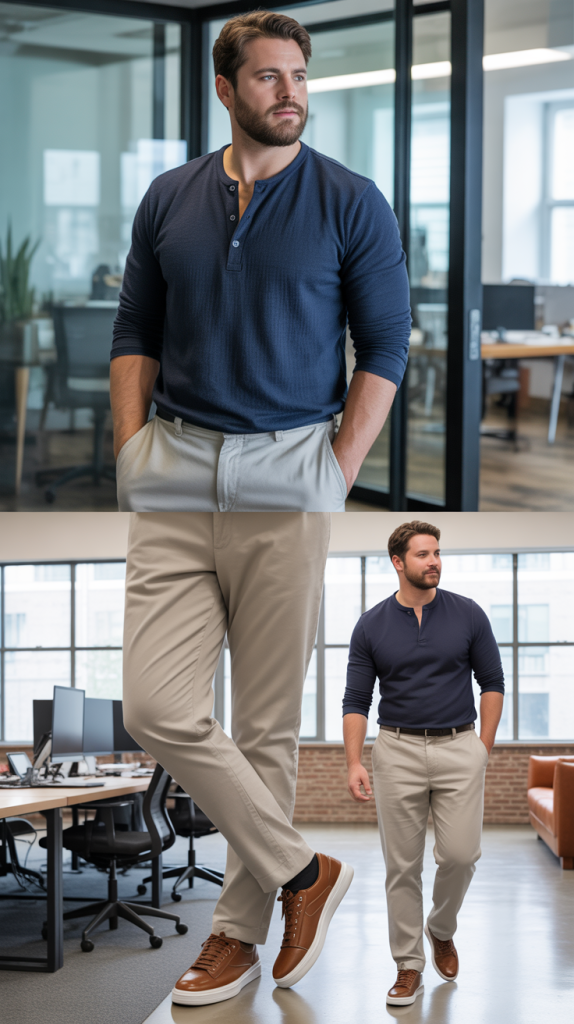
Henley shirts offer a smart alternative to traditional button-downs while maintaining business casual appropriateness, especially in creative or tech-forward work environments.
- Select henleys in substantial fabrics like thick cotton or cotton-blend knits that provide structure and opacity.
- Choose darker colors for the henley to create a streamlined appearance and minimize attention to the midsection.
- Pair with well-fitted trousers in complementary neutral tones that balance the casual nature of the henley.
- Ensure the henley length is adequate to stay tucked or long enough to wear untucked without looking sloppy.
- Keep the henley buttons fastened or leave only the top one undone for a polished look.
7. The Chambray Shirt with Khakis
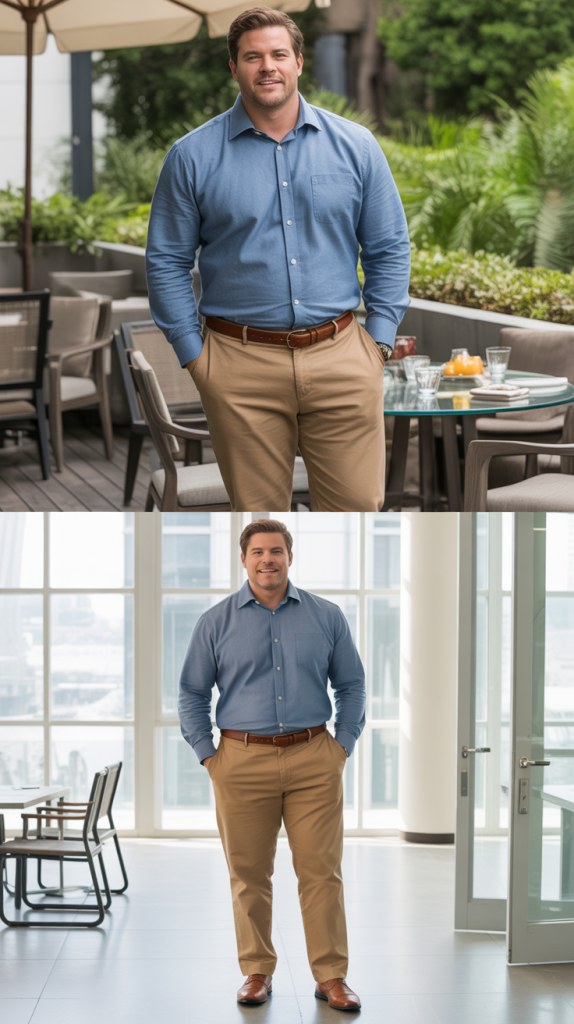
Chambray shirts provide the structure of denim with the refinement of a dress shirt, making them an excellent middle-ground option for business casual settings.
- Invest in chambray shirts with a slightly relaxed fit that doesn’t pull across the chest or create button gaps.
- Match lighter chambray shades with darker khakis, or darker chambray with lighter khakis for appropriate contrast.
- Roll the sleeves to just below the elbow for a polished casual look that works well in warmer weather.
- Choose khakis with a flat front and tapered leg to complement the textured, casual nature of chambray.
- Add leather accessories like a quality watch or belt to elevate the overall sophistication of the outfit.
8. The Quarter-Zip Pullover with Dress Pants
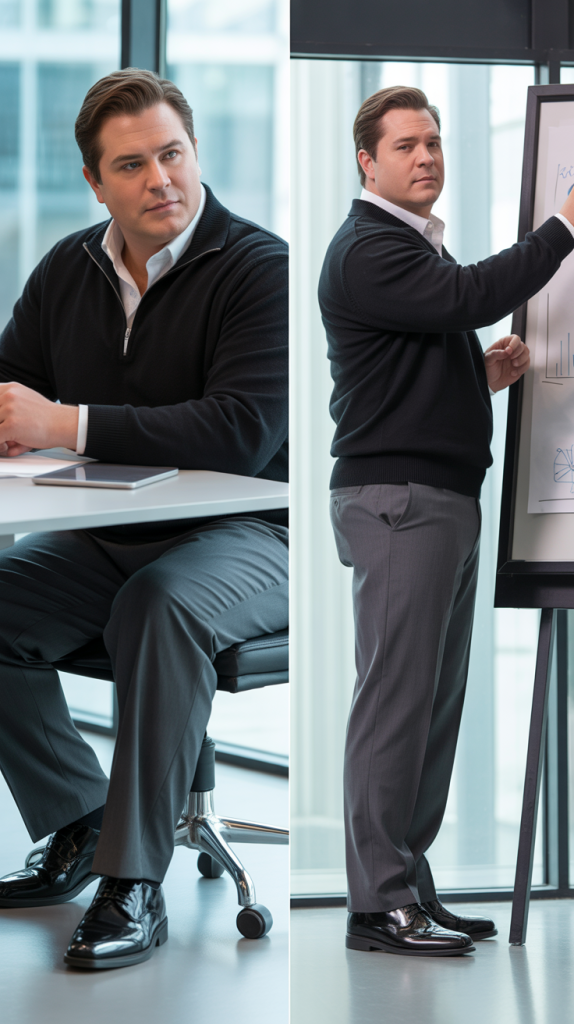
Quarter-zip pullovers offer a contemporary alternative to traditional sweaters while maintaining appropriate coverage and professional appearance for business casual environments.
- Select quarter-zips in performance fabrics like merino wool or technical blends that regulate temperature and resist wrinkling.
- Layer over a collared shirt with the collar neatly arranged over the pullover neckline for added polish.
- Choose solid colors or subtle patterns that don’t draw excessive attention to the torso area.
- Ensure the pullover has adequate length to stay tucked in comfortably or is designed to be worn untucked with a straight hem.
- Pair with dress pants in coordinating colors to create a cohesive, professional ensemble.
9. The Casual Blazer with T-Shirt and Chinos
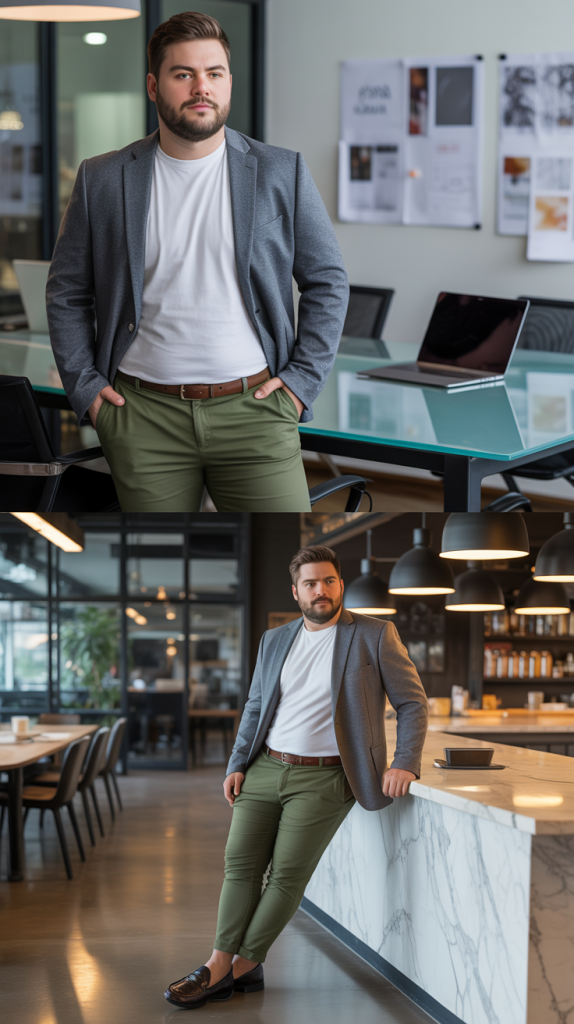
Pairing a casual blazer with a quality t-shirt and chinos creates an effortlessly stylish look that bridges the gap between relaxed and refined.
- Choose a premium t-shirt in thick, structured cotton or cotton-blend fabric that holds its shape and doesn’t look like underwear.
- Select blazers in more casual fabrics like cotton, linen, or textured weaves rather than traditional wool suiting.
- Ensure the t-shirt has a crew neck or V-neck that sits appropriately under the blazer lapels without bunching.
- Match the formality level by wearing leather shoes rather than sneakers to maintain business casual standards.
- Keep colors coordinated with neutral tones or complementary color schemes to avoid a disjointed appearance.
10. The Oxford Shirt with Corduroy Pants
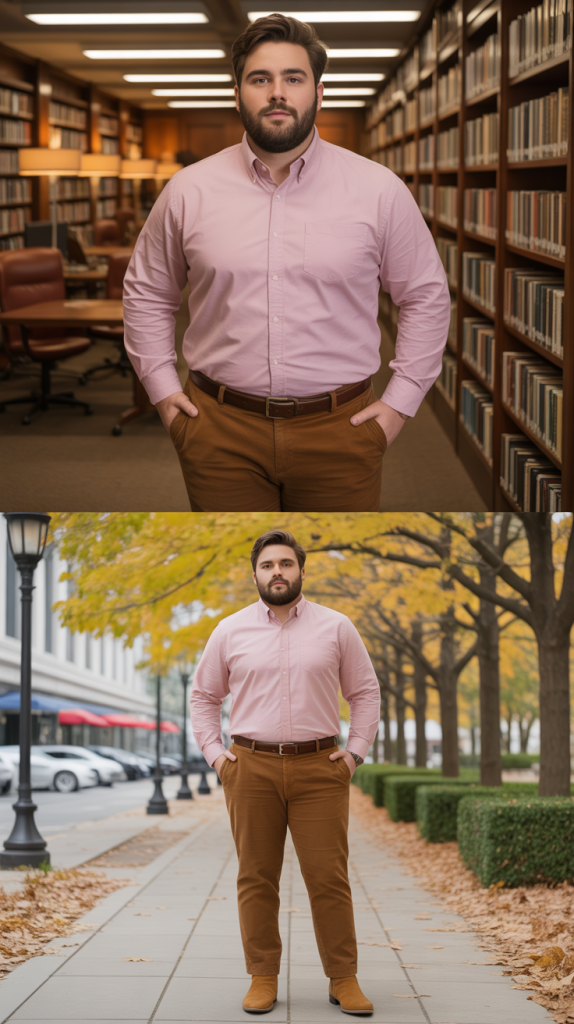
Oxford cloth button-down shirts paired with corduroy pants create a textured, sophisticated business casual outfit perfect for fall and winter months.
- Select oxford shirts with a button-down collar that adds structure and a slightly preppy, polished appearance.
- Choose corduroy pants with a finer wale (thinner ridges) rather than wide-wale corduroy for a more refined look.
- Ensure the oxford shirt has a regular or classic fit that provides room through the chest and midsection without excess fabric.
- Match earth-tone corduroys like brown, olive, or burgundy with complementary shirt colors for cohesive autumn-inspired outfits.
- Add leather accessories and boots to complete the textured, seasonal aesthetic.
11. The Cardigan with Shirt and Trousers
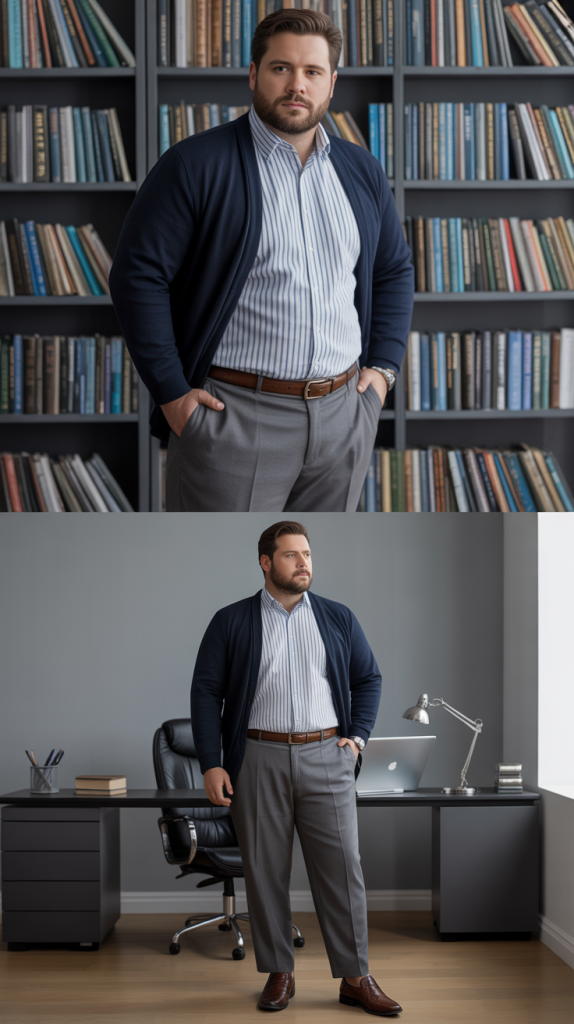
Cardigans provide versatile layering options that add sophistication and warmth while maintaining a professional business casual appearance throughout the day.
- Choose cardigans with a shawl collar or V-neck style that creates vertical lines and elongates your silhouette.
- Select medium-weight knits that provide structure without adding bulk or appearing overly casual.
- Layer over dress shirts or polo shirts with the cardigan either buttoned or left open depending on the desired formality level.
- Ensure the cardigan length falls at or slightly below your hip for proper proportion and coverage.
- Coordinate cardigan colors with your overall outfit palette, using darker tones for a slimming effect.
12. The Flannel Shirt with Dark Chinos
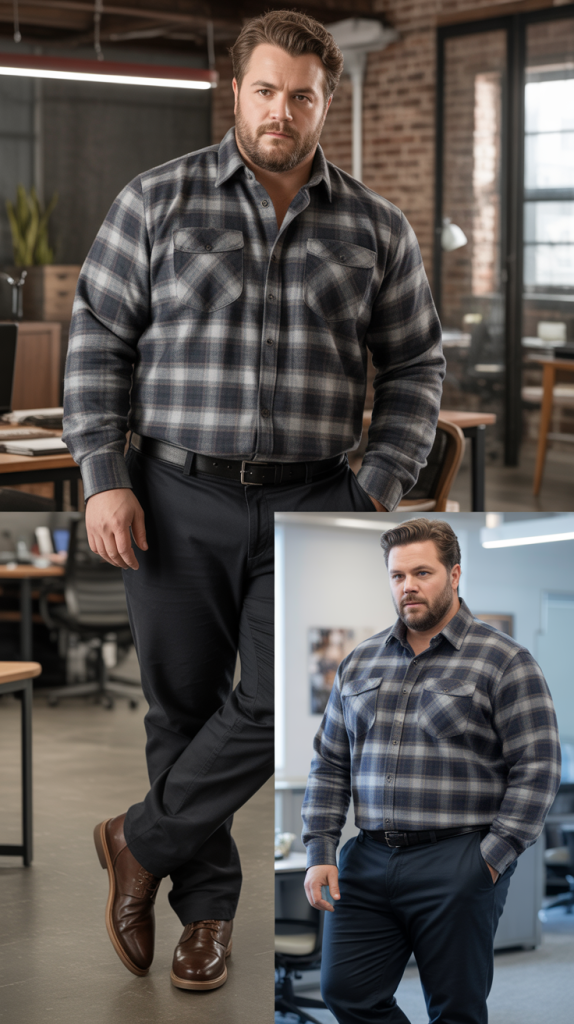
Flannel shirts, when styled appropriately, can transition into business casual territory while maintaining comfort and a relaxed professional aesthetic.
- Select flannel shirts in subtle plaids or checks with muted color palettes rather than bright, lumberjack-style patterns.
- Ensure the flannel has a tailored fit through the shoulders and torso without being restrictive or too loose.
- Pair with dark chinos in black, navy, or charcoal to ground the casual nature of flannel with more formal elements.
- Keep the flannel tucked in and add a leather belt to elevate the overall professionalism of the outfit.
- Layer a vest or blazer over flannel for added polish in more formal business casual environments.
13. The Turtleneck with Blazer
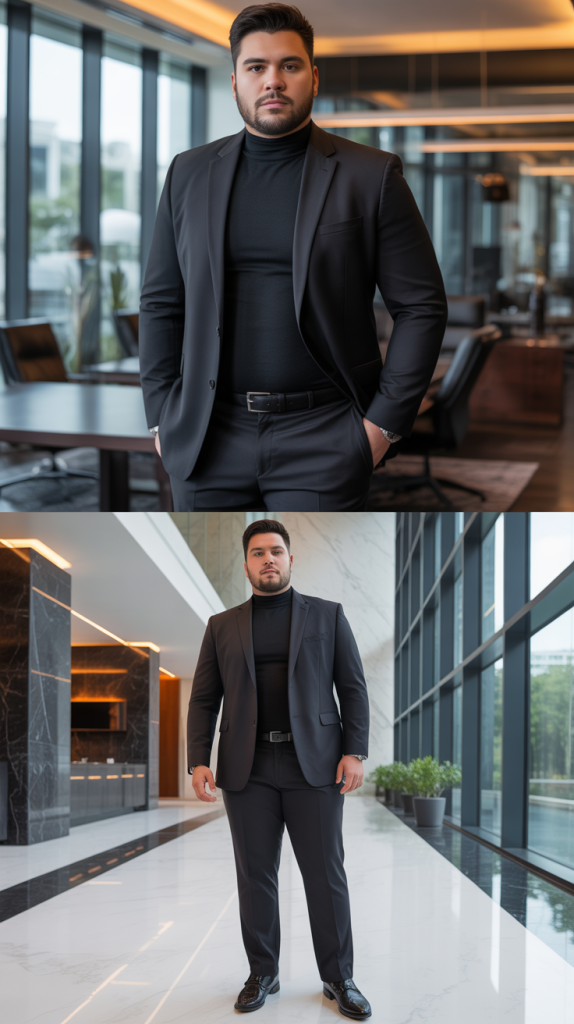
Turtlenecks paired with blazers create a sleek, sophisticated alternative to traditional shirt-and-tie combinations while providing excellent coverage and warmth.
- Choose fitted but not tight turtlenecks in fine-gauge knits that lay smoothly under a blazer without bunching.
- Select solid colors in darker tones like black, navy, or charcoal for a streamlined, slimming appearance.
- Ensure the turtleneck has adequate length to stay tucked in throughout the day without constant adjustment.
- Match with blazers in complementary colors to create tonal or contrasting combinations that suit your style.
- Complete the look with dress pants and leather shoes to maintain appropriate business casual formality.
14. The Patterned Shirt with Solid Trousers
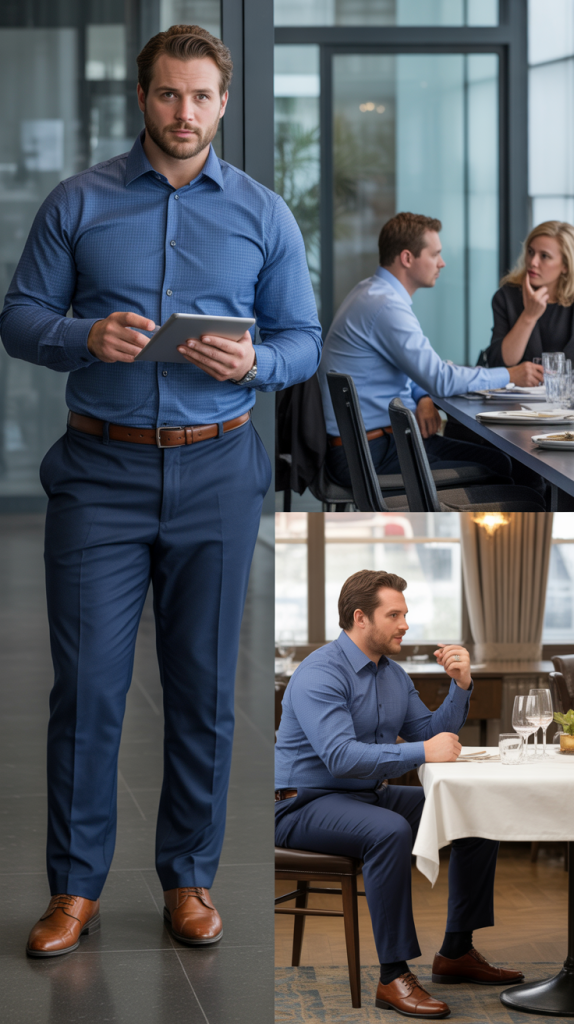
Incorporating patterned shirts into your business casual wardrobe adds visual interest and personality while maintaining professional appropriateness when balanced with solid bottoms.
- Choose patterns with vertical elements like stripes or small checks that create lengthening visual lines.
- Avoid overly bold or large-scale patterns that can overwhelm your frame and draw attention to width.
- Balance patterned shirts with solid-colored trousers in neutral tones that ground the outfit.
- Ensure the shirt fit is appropriate with no pulling or gaping at the buttons, which becomes more noticeable with patterns.
- Limit additional patterns in the outfit to avoid visual chaos—keep belts, shoes, and accessories solid.
15. The Mock Neck Sweater with Dress Pants
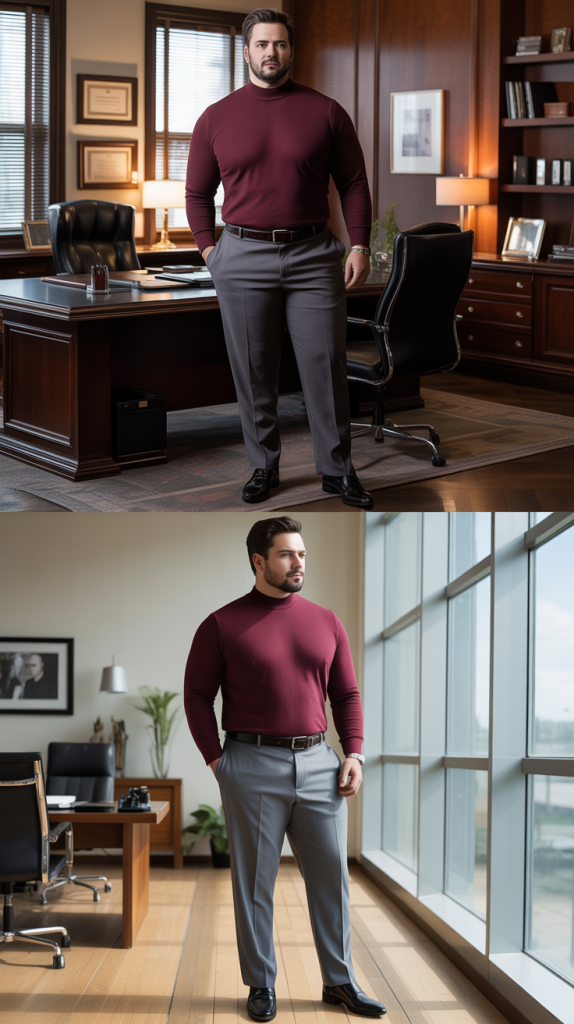
Mock neck sweaters provide a refined alternative to traditional crew necks while offering the coverage and sophistication appropriate for business casual settings.
- Select mock neck sweaters in fine or medium-gauge knits that provide structure without excessive bulk around the neck.
- Choose solid colors or subtle textures that create visual interest without overwhelming your silhouette.
- Pair with dress pants in complementary or contrasting colors to create balanced, intentional outfit combinations.
- Ensure the sweater has adequate torso length to stay tucked in comfortably or a straight hem designed for untucked wear.
- Add a watch and leather belt to complete the polished business casual appearance.
16. The Vest Over Shirt Combination
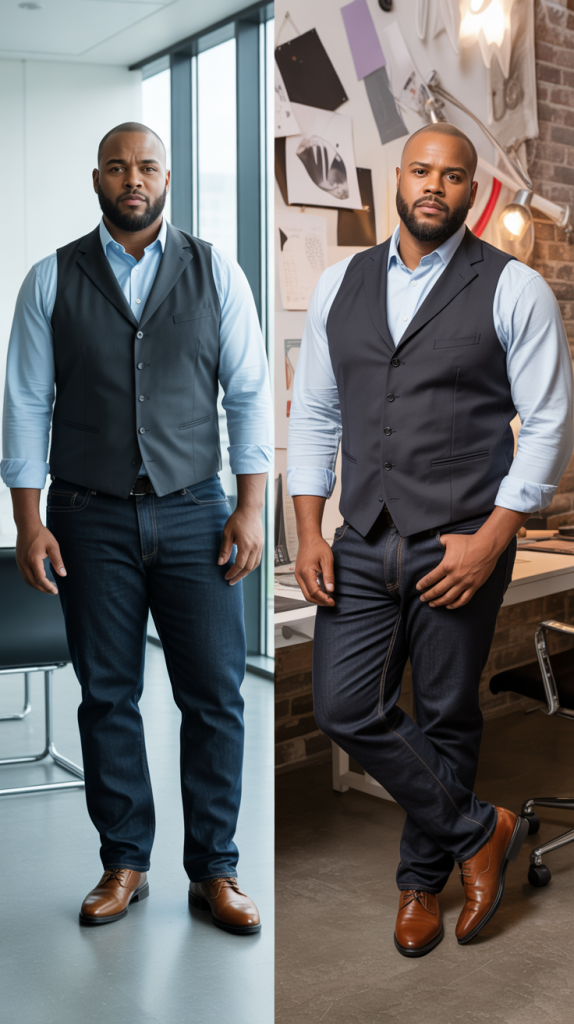
Adding a vest over a dress shirt creates dimension and a put-together appearance while providing practical coverage and a distinctive style element.
- Choose vests in wool, cotton, or blended fabrics that complement the formality level of your workplace.
- Ensure the vest fits properly with no pulling at the buttons and adequate length to cover your waistband completely.
- Layer over dress shirts with the collar neatly arranged and the shirt cuffs visible beyond the vest armholes.
- Select vest colors that coordinate with your pants while creating appropriate contrast with your shirt.
- Keep the bottom vest button unfastened according to traditional styling conventions.
17. The Linen Shirt with Cotton Pants
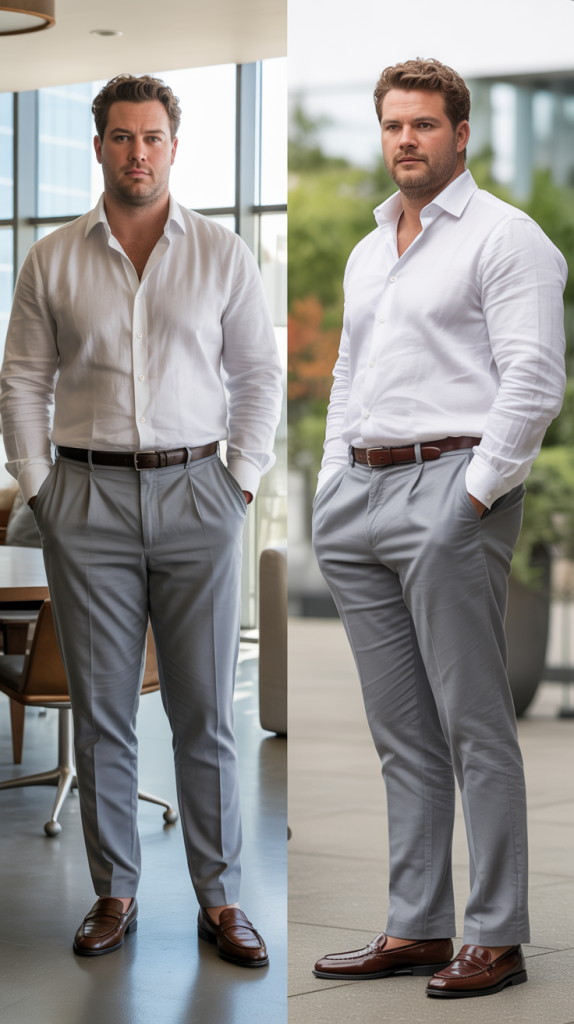
Linen shirts paired with cotton pants create a breathable, sophisticated warm-weather business casual outfit that maintains professionalism while maximizing comfort.
- Select linen shirts in lighter colors that reflect heat and complement the natural, slightly rumpled aesthetic of linen fabric.
- Accept and embrace the natural wrinkling of linen as part of its character rather than trying to maintain a perfectly pressed appearance.
- Pair with cotton pants in complementary neutral tones that balance the casual texture of linen.
- Ensure both pieces have comfortable, relaxed fits that allow air circulation without looking oversized or sloppy.
- Roll sleeves to three-quarter length for a polished warm-weather look that’s still business appropriate.
18. The Sweater Polo with Chinos
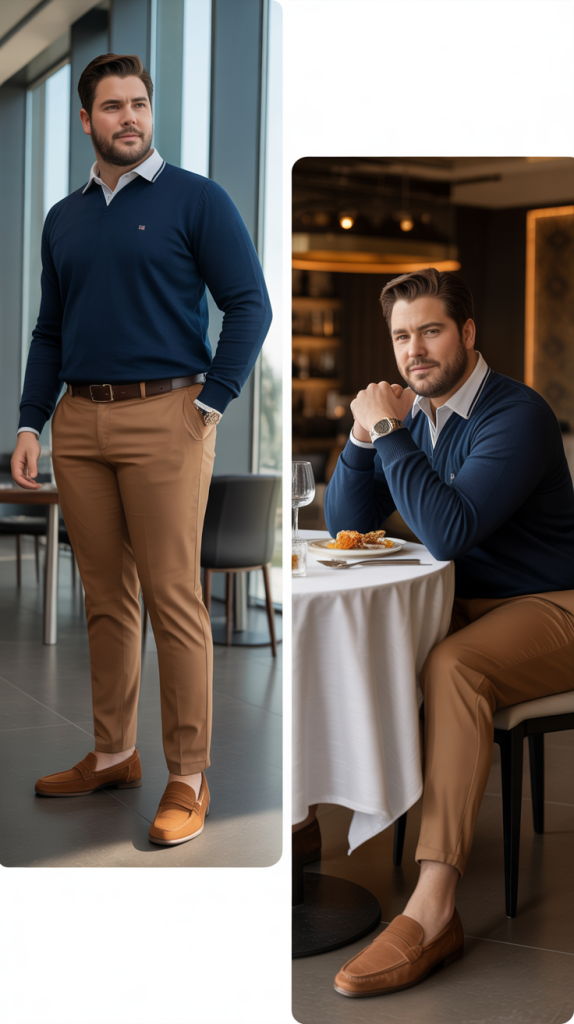
Sweater polos combine the collar structure of traditional polos with the sophistication of knit sweaters, creating a unique business casual option.
- Choose sweater polos in fine-gauge knits that provide structure and polish beyond standard cotton polos.
- Select solid colors or subtle patterns that maintain professionalism while adding texture to your outfit.
- Pair with chinos or dress pants in complementary colors that balance the smart-casual nature of sweater polos.
- Ensure the fit is comfortable through the shoulders and chest without being tight or creating pulling.
- Complete the look with leather shoes and a coordinating belt for appropriate business casual refinement.
19. The Untucked Dress Shirt with Tailored Trousers
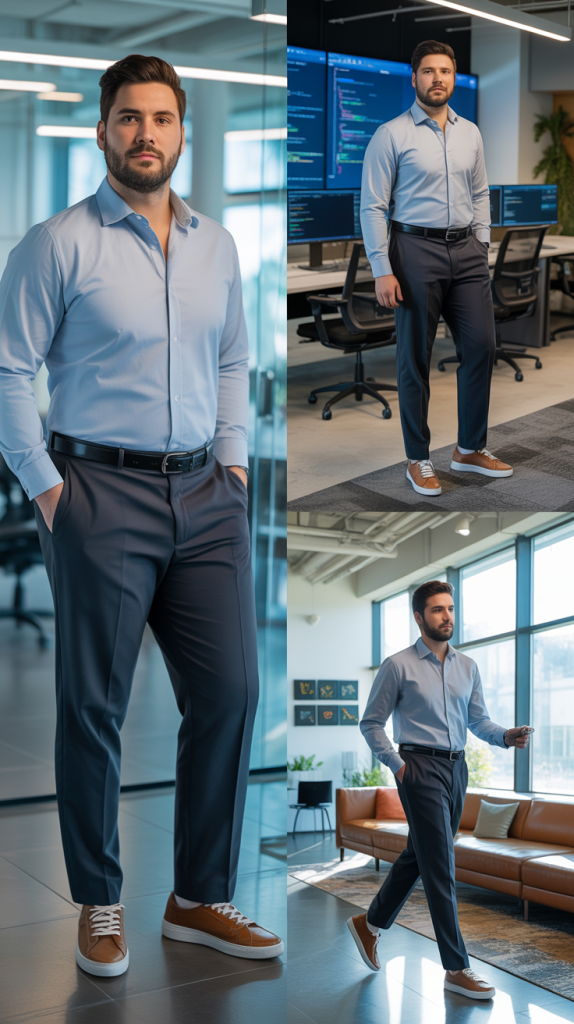
Properly designed untucked dress shirts paired with tailored trousers create a contemporary business casual look that’s both comfortable and stylish.
- Select dress shirts specifically designed with a straight hem and appropriate length for untucked wear, not standard dress shirts.
- Ensure the shirt length falls at mid-fly to just below the belt line for proper proportions when worn untucked.
- Choose tailored trousers with a modern fit that balances the relaxed nature of the untucked shirt.
- Avoid overly casual bottoms like distressed jeans, which clash with the refinement of a dress shirt.
- Keep the look polished with quality leather shoes or refined sneakers depending on your workplace culture.
20. The Performance Fabric Blazer with Tech Pants
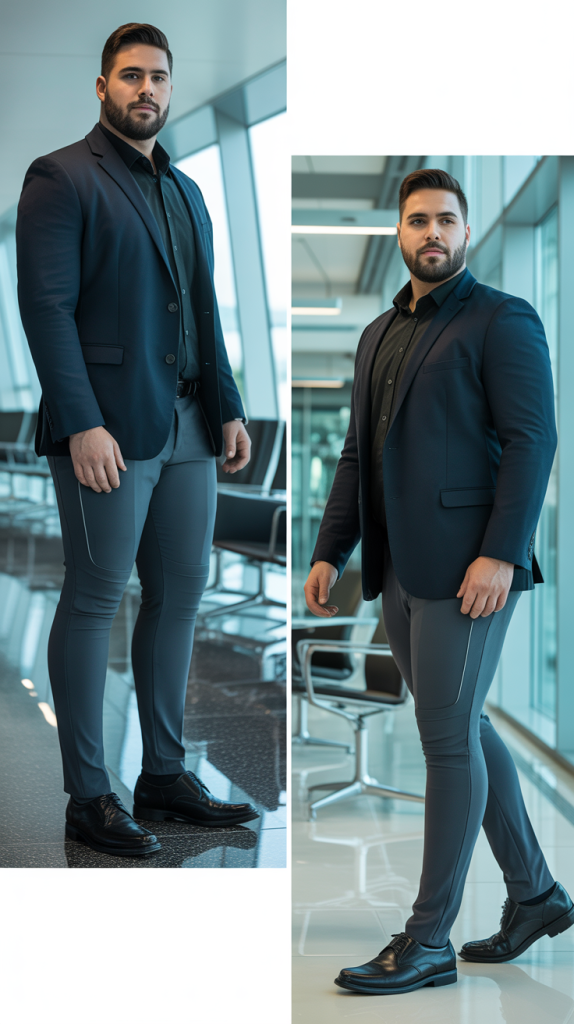
Modern performance fabrics in blazers and pants create business casual outfits that prioritize comfort, movement, and wrinkle resistance without sacrificing style.
- Invest in blazers made from stretch wool blends, performance polyester, or technical fabrics that move with your body.
- Choose tech pants with built-in stretch, moisture-wicking properties, and wrinkle resistance for all-day comfort.
- Look for garments with features like hidden flex panels, articulated knees, or gusseted crotches that enhance mobility.
- Select styles with traditional business casual aesthetics despite their technical construction to maintain workplace appropriateness.
- Prioritize darker colors in performance fabrics as they typically photograph and present more professionally than lighter shades.
21. The Neutral Monochrome Outfit
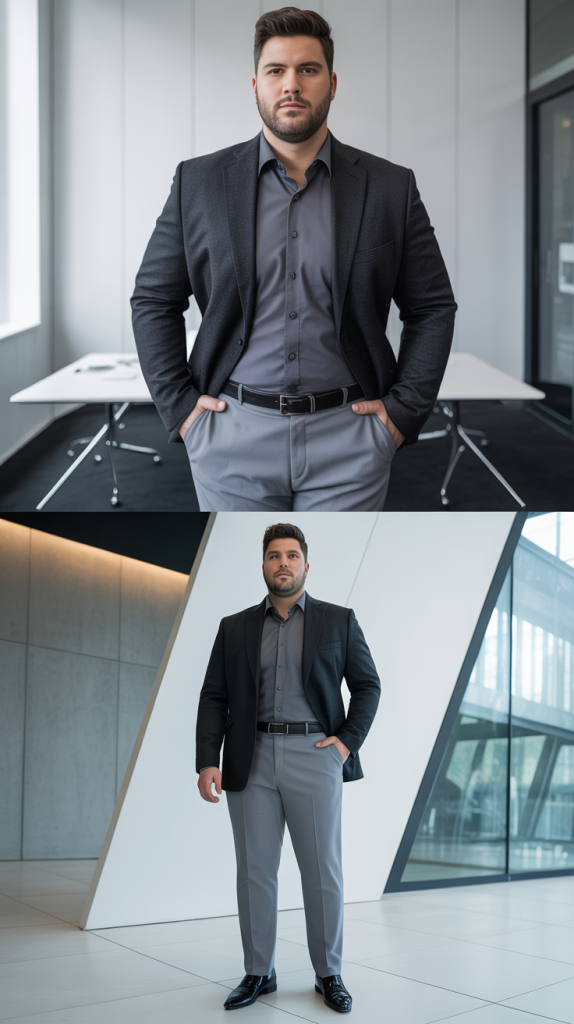
Creating outfits in various shades of the same neutral color family produces a sophisticated, elongating effect that’s particularly flattering for plus-size men.
- Choose different shades and textures within the same color family to create depth and visual interest.
- Build monochrome outfits around neutral colors like gray, navy, or tan that are versatile and professional.
- Incorporate texture variations through different fabrics to prevent the outfit from appearing flat or one-dimensional.
- Use slightly darker tones on areas you want to minimize and lighter tones to draw attention upward toward your face.
- Complete monochrome looks with accessories in complementary or contrasting colors to add intentional focal points.
Essential Sizing and Fit Guidelines
Understanding proper fit is crucial for plus-size men to look polished and feel comfortable in business casual attire. These guidelines will help you identify well-fitting garments.
| Garment Area | Proper Fit Indicators | Common Fit Problems to Avoid |
|---|---|---|
| Shirt Shoulders | Seam sits at natural shoulder point | Seam extends past shoulder or pulls inward |
| Shirt Chest | Smooth fabric with no pulling at buttons | Gaping buttons or excessive fabric bunching |
| Pants Waist | Comfortable fit without belt dependency | Waistband digs in or requires constant adjustment |
| Jacket Length | Covers your seat, ends at knuckles | Too short (shows too much shirt) or too long (covers hands) |
| Sleeve Length | Ends at wrist bone, shows 1/2″ of shirt cuff | Covers hands or ends mid-forearm |
| Pant Break | Slight break at shoe or no break for modern fit | Excessive pooling at ankles or floods above shoes |
- Always try garments on before purchasing, as sizing varies significantly between brands and even within product lines.
- Invest in tailoring for key pieces like blazers and dress pants to achieve a custom fit at a fraction of bespoke prices.
- Pay attention to fabric content and choose materials with some stretch (2-5% elastane) for comfort and better fit.
- Don’t size down hoping to appear slimmer—clothes that are too tight actually make you look larger and uncomfortable.
- Consider made-to-measure or custom options for shirts and pants if you consistently struggle with off-the-rack fit.
Fabric Selection for Comfort and Style
Choosing the right fabrics impacts both how you look and how comfortable you feel throughout your workday.
- Select natural fibers like cotton, wool, and linen that breathe better than synthetic materials and regulate temperature effectively.
- Look for performance blends that combine natural fibers with small amounts of stretch materials for improved comfort and recovery.
- Avoid fabrics that are too thin or lightweight, as they can cling to your body and reveal more than you’d like.
- Choose fabrics with structure and body that drape smoothly rather than cling to create a more polished silhouette.
- Invest in wrinkle-resistant or wrinkle-free fabrics if you have a long commute or sit for extended periods.
- Consider seasonal fabrics like wool and flannel for winter months and cotton and linen blends for warmer weather.
- Test how fabrics respond to movement before purchasing by sitting, reaching, and bending in the fitting room.
Color Strategies for Plus-Size Men
Strategic color choices can enhance your business casual wardrobe by creating flattering visual effects and expressing personal style.
- Build your foundation wardrobe around versatile neutrals like navy, charcoal, gray, tan, and black that mix easily.
- Use darker colors on areas you want to visually minimize and save lighter colors for accents or upper body focus.
- Incorporate vertical color blocking through contrast between tops and bottoms to create lengthening visual lines.
- Experiment with color in shirts, sweaters, and accessories while keeping pants in neutral tones for maximum versatility.
- Don’t avoid all light colors—strategic use of lighter tones near your face can brighten your complexion and draw attention upward.
- Consider monochromatic or tonal outfits in similar color families to create an elongating, streamlined effect.
- Learn which colors complement your skin tone and incorporate those shades regularly to look more vibrant and healthy.
Shopping Resources and Brand Recommendations
Finding quality plus-size business casual clothing requires knowing which retailers and brands prioritize extended sizing with proper proportions.
- Research brands that specifically design for bigger bodies rather than simply scaling up standard sizes, as proportions differ significantly.
- Explore specialty retailers that focus on big and tall sizing with knowledgeable staff who understand fit challenges.
- Consider online retailers with detailed size charts, customer reviews with fit information, and generous return policies.
- Look into made-to-measure and custom shirt services that create garments based on your specific measurements at accessible price points.
- Check department stores’ dedicated big and tall sections, which often carry multiple brands in one location for comparison shopping.
- Join online communities and forums where plus-size men share brand recommendations and fit experiences.
- Take advantage of in-store tailoring services offered by many retailers to achieve perfect fit on key pieces.
- Keep a list of your measurements handy when shopping online to compare against brand-specific size charts.
Building a Versatile Business Casual Capsule Wardrobe
Creating a strategic capsule wardrobe maximizes outfit possibilities while minimizing closet clutter and decision fatigue.
- Start with 3-4 pairs of well-fitting pants in versatile colors like navy, gray, khaki, and black that form your foundation.
- Add 5-7 tops including dress shirts, polos, and sweaters in colors that coordinate with all your pants.
- Include 2 blazers or sport coats in different weights and colors for layering and formality adjustment.
- Select 3-4 pairs of quality shoes in brown, black, and possibly burgundy that work across multiple outfits.
- Incorporate layering pieces like cardigans, quarter-zips, and vests that extend the versatility of your base items.
- Choose accessories including belts, watches, and bags that complement your wardrobe color palette.
- Focus on quality over quantity, investing in fewer, better-made pieces that last longer and fit better.
- Aim for pieces that can create at least 3-5 different outfit combinations to maximize cost-per-wear value.
Conclusion
Mastering business casual style as a plus-size man is entirely achievable when you understand fit principles, make strategic wardrobe choices, and invest in quality pieces that work for your body.
This guide to 21 Plus-Size Business Casual Outfits for Men That Fit Perfectly has provided you with diverse outfit formulas, practical styling advice, and the confidence-building knowledge needed to dress professionally every day.
Remember that great style isn’t about conforming to a single ideal but about finding what makes you look sharp and feel comfortable in your own skin.
By applying these principles—from selecting the right fabrics and fits to building a versatile capsule wardrobe—you’ll develop a personal style that serves your professional goals while celebrating who you are.
The business casual dress code offers tremendous flexibility, and with these twenty-one outfit combinations as your foundation, you’re equipped to navigate any workplace environment with confidence and sophistication.
