Mastering business casual can feel like navigating a dress code minefield, but it doesn’t have to be complicated.
The 23 Men’s Business Casual Style Guide for Work & Meetings breaks down everything you need to know about striking that perfect balance between professional polish and relaxed confidence.
Whether you’re preparing for your first day at a new job, a client meeting, or simply want to elevate your workplace wardrobe, this comprehensive guide covers essential clothing pieces, styling techniques, color combinations, and common mistakes to avoid.
You’ll discover how to build a versatile business casual wardrobe that works for various professional settings, learn the subtle differences between business casual and other dress codes, and understand how to adapt your style for different industries and company cultures.
This guide will transform the way you approach workplace dressing, giving you the knowledge and confidence to look sharp and feel comfortable in any professional environment.
1. Understanding Business Casual vs. Business Professional

Business casual occupies the middle ground between formal business attire and casual weekend wear, offering flexibility while maintaining professionalism.
- Business professional typically requires a full suit, dress shirt, tie, and polished dress shoes for a formal corporate appearance.
- Business casual eliminates the tie and often the suit jacket, allowing for more relaxed combinations like dress shirts with chinos or slacks.
- The key distinction lies in the level of formality—business casual maintains professionalism without the rigid structure of traditional business wear.
- Industry context matters significantly, as tech companies may interpret business casual more loosely than law firms or financial institutions.
- Business casual still demands attention to fit, quality, and coordination, just with more breathable fabrics and relaxed silhouettes.
2. Essential Business Casual Wardrobe Pieces

Building a functional business casual wardrobe starts with investing in versatile, high-quality foundation pieces that mix and match effortlessly.
- A collection of 5-7 dress shirts in white, light blue, and subtle patterns forms the backbone of any business casual wardrobe.
- Three to four pairs of well-fitted chinos or dress trousers in navy, gray, khaki, and charcoal provide versatile bottom options.
- Two sport coats or blazers in navy and gray can instantly elevate any business casual outfit for important meetings.
- Quality leather shoes including oxfords, derbies, and loafers in brown and black are non-negotiable for completing professional looks.
- A leather belt that matches your shoe color, a simple watch, and minimal accessories round out the essential pieces.
3. Choosing the Right Dress Shirts
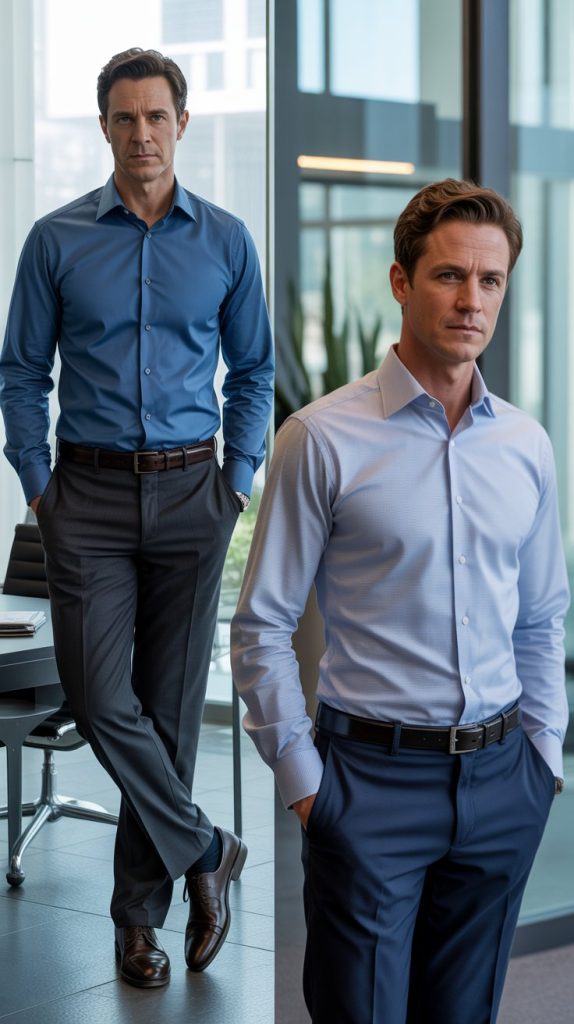
The dress shirt serves as the foundation of most business casual outfits, and selecting the right styles makes all the difference.
- Opt for shirts with a tailored fit that follows your body’s natural lines without being too tight or billowy.
- Classic colors like white, light blue, and lavender work universally, while subtle patterns like micro-checks or thin stripes add visual interest.
- Button-down collars offer a slightly more relaxed appearance, while spread collars provide a sharper, more polished look.
- Cotton or cotton-blend fabrics breathe well and maintain structure throughout the workday without excessive wrinkling.
- Long sleeves are standard for business casual, though you can roll them neatly to the forearm for a smart-casual appearance in less formal settings.
4. Mastering Chinos and Dress Trousers
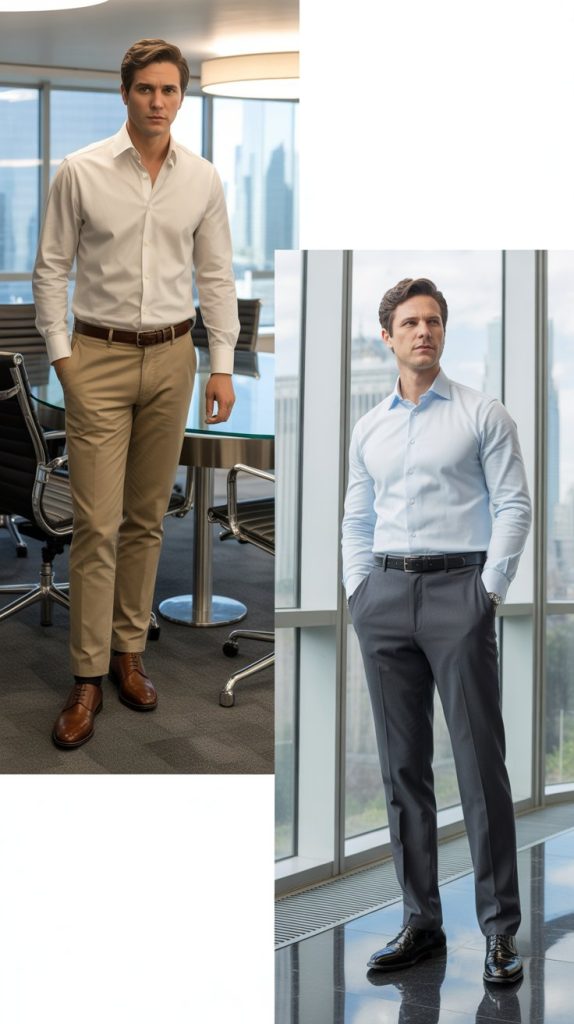
The right trousers can make or break your business casual look, offering comfort and style when chosen correctly.
- Chinos in neutral colors provide a less formal alternative to dress trousers while maintaining professional appropriateness.
- Look for a slim or straight fit that sits comfortably at the waist without sagging or pulling.
- The hem should break slightly at the shoe, with no more than one fold of fabric resting on top of your footwear.
- Dress trousers in wool or wool-blend fabrics elevate your look for client meetings and presentations.
- Avoid cargo pants, distressed fabrics, or overly casual materials like jersey knit even in relaxed business casual environments.
5. Blazers and Sport Coats Essentials

A well-fitted blazer transforms any business casual outfit from ordinary to exceptional with minimal effort.
- The shoulder seam should align perfectly with where your shoulder ends for the most flattering fit.
- Sleeve length should allow about half an inch of your shirt cuff to show beyond the jacket sleeve.
- Navy and charcoal gray blazers offer the most versatility, pairing seamlessly with almost any shirt and trouser combination.
- Unstructured or partially lined blazers provide comfort for all-day wear while maintaining a polished silhouette.
- Reserve heavily textured or patterned sport coats for less formal business casual settings to avoid appearing too casual.
6. Footwear Fundamentals
Your shoes can elevate or undermine your entire business casual ensemble, making quality footwear a critical investment.
- Leather oxfords and derby shoes in brown or black represent the most traditional and widely accepted business casual footwear.
- Loafers offer a slightly more relaxed option that works well in creative industries and less formal office environments.
- Monk strap shoes provide a distinctive middle ground between formal and casual with their unique buckle closure.
- Ensure your shoes are clean, polished, and free from scuffs to maintain a professional appearance.
- Sneakers generally remain inappropriate for business casual unless your workplace explicitly embraces a very relaxed dress code.
7. Color Coordination and Combinations

Understanding color theory helps you create cohesive, visually appealing outfits that look intentional rather than accidental.
| Color Base | Complementary Colors | Best For |
|---|---|---|
| Navy | White, light blue, burgundy, tan | Universal professional settings |
| Gray | Pink, purple, navy, white | Conservative to creative environments |
| Khaki | Navy, white, light blue, forest green | Smart casual workplace settings |
| Charcoal | Light blue, pink, white, burgundy | Client-facing meetings |
- Start with neutral base colors for trousers and build your outfit with complementary shirt and jacket colors.
- The rule of three suggests limiting your outfit to three colors maximum for a clean, coordinated appearance.
- Analogous colors (those next to each other on the color wheel) create harmonious, easy-to-wear combinations.
- Contrast creates visual interest—pair light shirts with dark trousers or vice versa for balanced proportions.
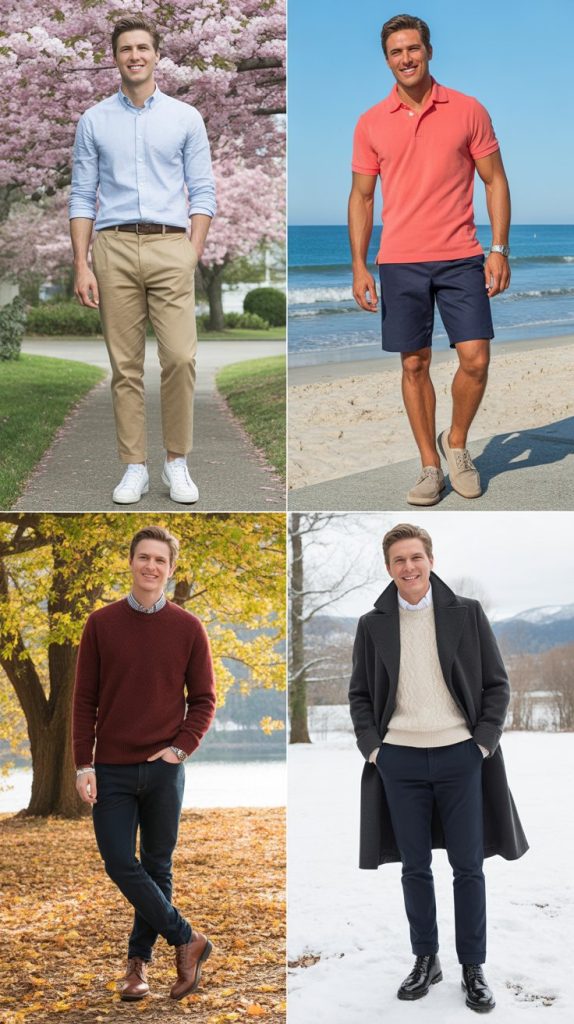
- Seasonal colors matter: lighter shades work better in spring and summer, while deeper tones suit fall and winter.
8. Pattern Mixing Guidelines
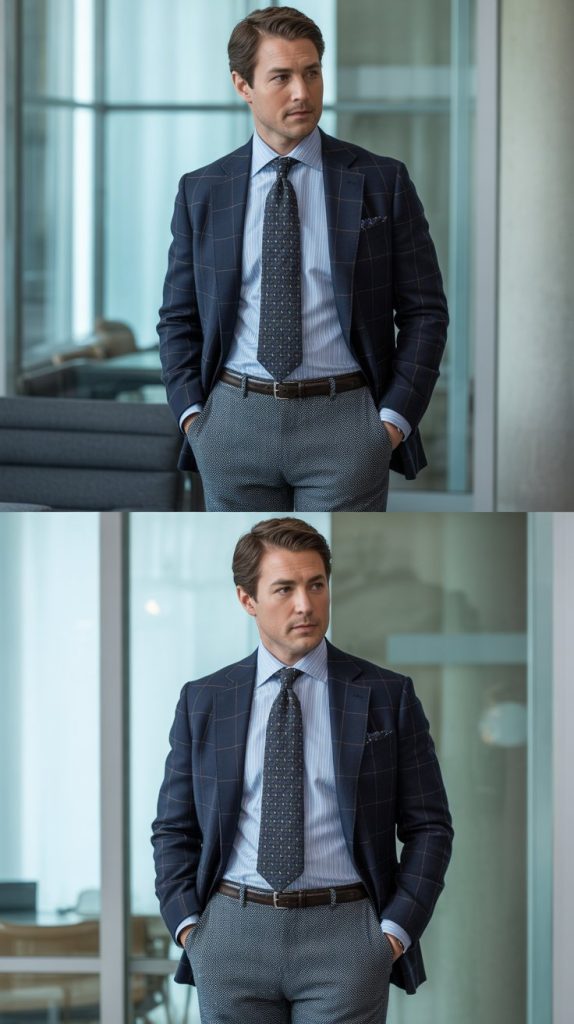
Combining patterns adds personality to business casual outfits when done with strategic restraint and careful consideration.
- Mix patterns of different scales, such as pairing a small gingham shirt with a larger windowpane blazer.
- Limit yourself to two patterns maximum to avoid creating visual chaos that distracts from your professional presence.
- Ensure patterns share at least one common color to create cohesion and intentionality in your outfit.
- When combining patterns, vary the intensity—pair a bold pattern with a subtle one rather than competing strong patterns.
- Beginners should start with one patterned piece and solid companions before graduating to pattern mixing.
9. The Role of Accessories
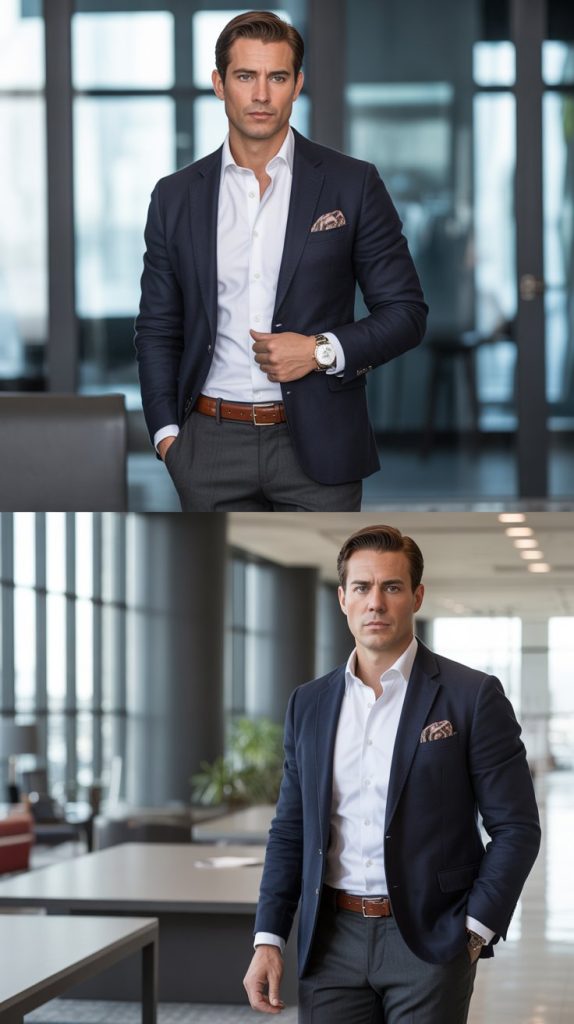
Thoughtful accessories complete your business casual look without overwhelming your professional appearance.
- A quality watch serves as the cornerstone accessory, projecting professionalism and attention to detail.
- Your belt should always match your shoe color—brown with brown, black with black—for visual continuity.
- A simple leather wallet, briefcase, or laptop bag in coordinating colors maintains the polished aesthetic.
- Pocket squares add subtle personality to blazers without crossing into overly formal territory when folded simply.
- Minimize jewelry to a watch and wedding band if applicable, avoiding anything that jingles or distracts during meetings.
10. Seasonal Business Casual Adaptations

Adapting your business casual wardrobe to different seasons ensures comfort while maintaining year-round professionalism.
- Summer business casual incorporates breathable fabrics like cotton and linen in lighter colors to combat heat.
- Winter layering includes wool trousers, cashmere or merino sweaters, and heavier blazers for warmth without bulk.
- Spring and fall transition seasons call for versatile pieces like lightweight wool trousers and unlined blazers.
- Seasonal color palettes shift from pastels and earth tones in warmer months to deeper jewel tones in colder seasons.
- Always consider your office temperature—many modern buildings maintain consistent climate control requiring minimal seasonal adjustment.
11. Fit and Tailoring Importance
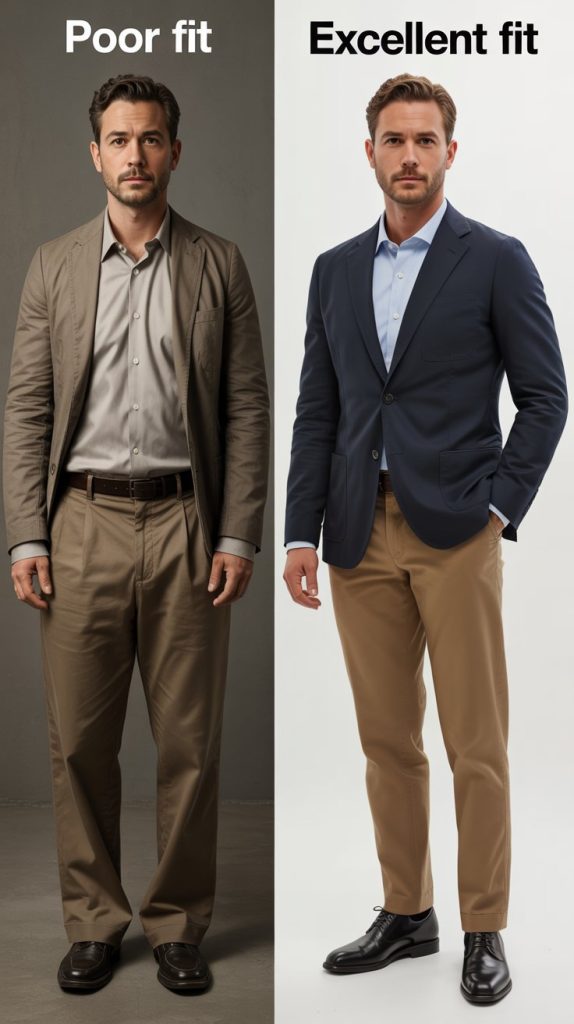
Proper fit transforms average clothing into exceptional business casual attire that commands respect and confidence.
- Shoulders should fit naturally without extending beyond your frame or pulling across your back.
- Shirt sleeves should end at your wrist bone, allowing the cuff to show slightly when wearing a jacket.
- Trouser waistbands should sit comfortably at your natural waist without requiring a belt to hold them up.
- Invest in professional tailoring for off-the-rack purchases to achieve custom-fitted appearance at fraction of bespoke costs.
- Well-fitted clothing in moderate quality fabrics outperforms expensive items with poor fit every time.
12. Fabric Selection and Quality
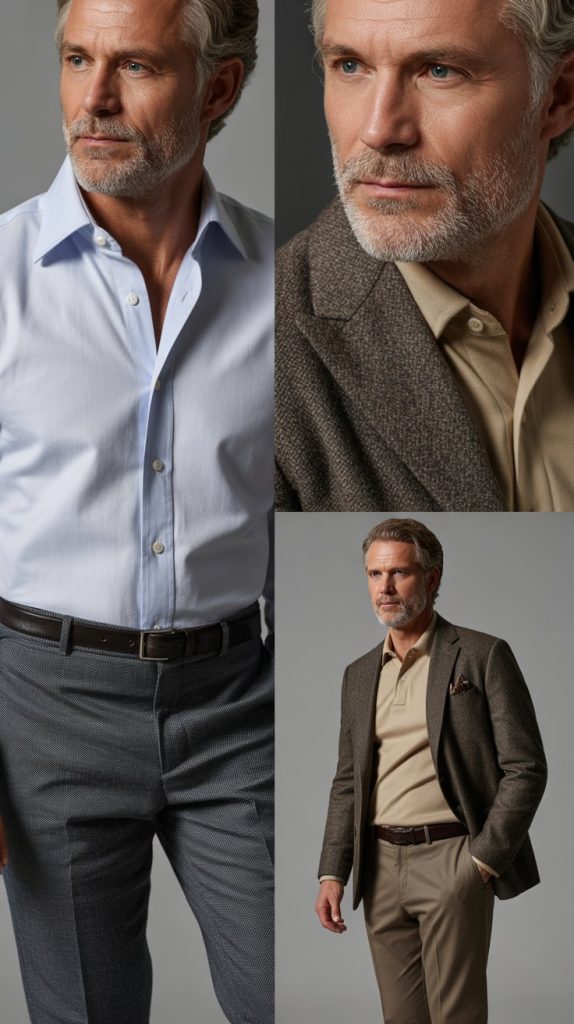
Understanding fabric characteristics helps you select business casual pieces that perform well and last longer.
- Cotton offers breathability and easy care, making it ideal for dress shirts and warm-weather trousers.
- Wool provides natural wrinkle resistance, temperature regulation, and professional drape for trousers and blazers.
- Blended fabrics combine benefits of multiple materials, such as cotton-polyester for durability and wrinkle resistance.
- Avoid purely synthetic fabrics that don’t breathe well and can appear cheap under office lighting.
- Higher thread counts in shirts and tighter weaves in trousers generally indicate better quality and longevity.
13. Business Casual for Different Industries
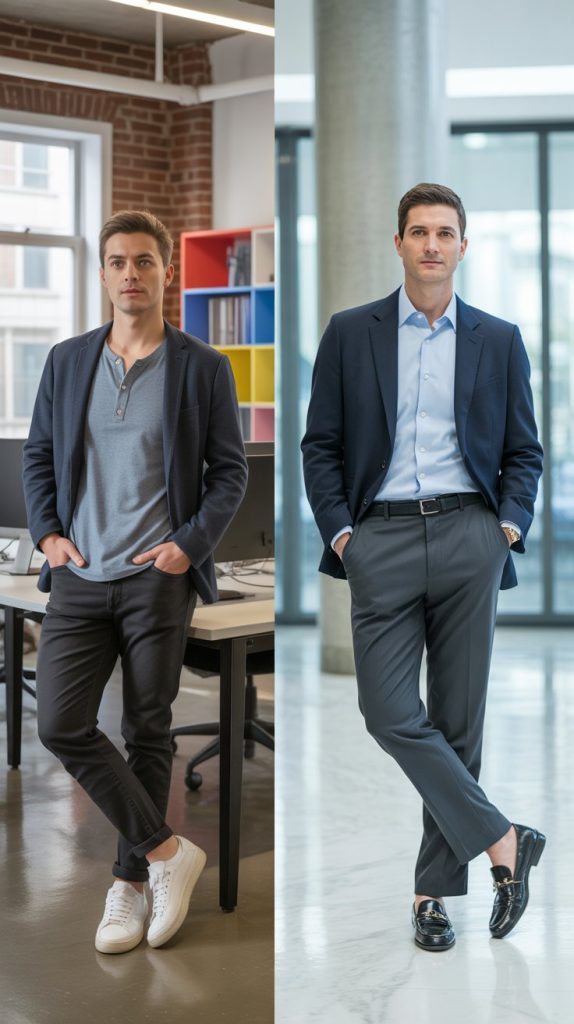
Industry context dramatically influences appropriate business casual interpretation and execution.
| Industry | Typical Standards | Key Pieces |
|---|---|---|
| Tech/Startups | Most relaxed interpretation | Dark jeans sometimes acceptable, polo shirts, minimal blazers |
| Finance/Legal | Conservative approach | Always blazers, dress trousers, traditional colors |
| Creative/Marketing | Moderate flexibility | Bolder colors/patterns acceptable, fashion-forward cuts |
| Healthcare | Clean, professional | Solid colors, conservative fits, practical fabrics |
- Research your specific company culture through observation and asking colleagues before making assumptions.
- When in doubt, dress slightly more formally for your first week and adjust based on what you observe.
- Client-facing roles typically require more conservative business casual than internal positions.
- Regional differences matter—coastal cities often embrace more relaxed interpretations than Midwest corporate centers.
14. Common Business Casual Mistakes to Avoid
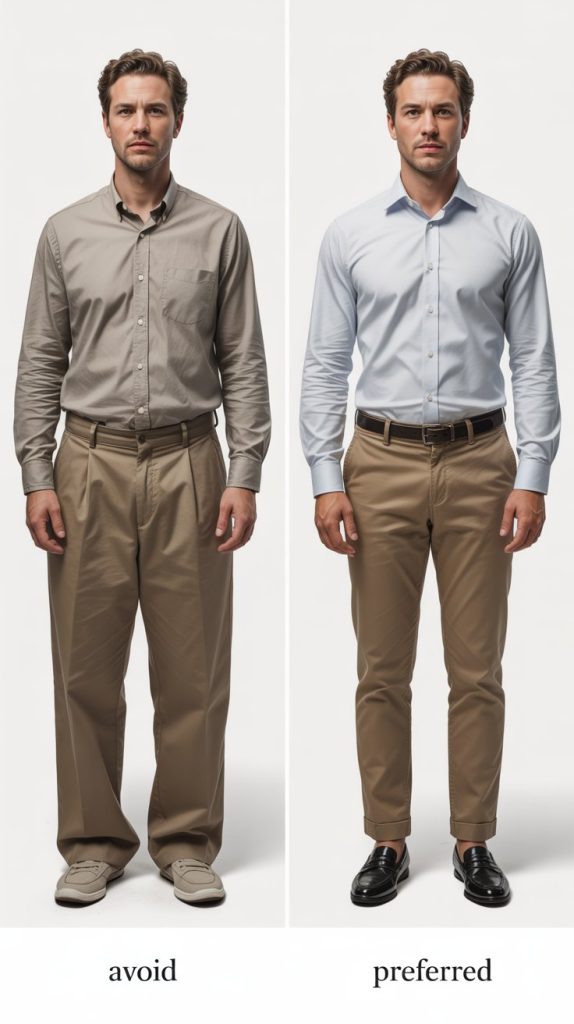
Recognizing and avoiding frequent business casual errors prevents unprofessional appearances and awkward situations.
- Wearing clothing that’s too tight or too loose creates an unprofessional silhouette that distracts from your competence.
- Neglecting proper grooming and garment care undermines even the most expensive business casual wardrobe.
- Treating business casual as an excuse to wear damaged, stained, or worn-out clothing damages your professional reputation.
- Overdressing with full suits and ties when colleagues wear relaxed business casual makes you appear out of touch.
- Showing too much skin through short sleeves in summer or overly casual footwear crosses professional boundaries.
15. Building a Capsule Business Casual Wardrobe
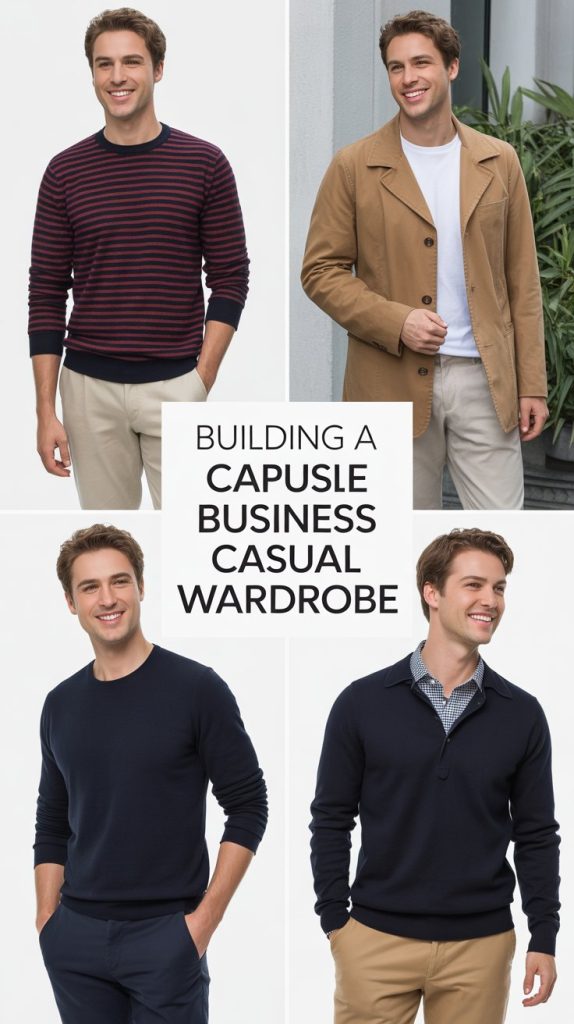
A strategic capsule wardrobe maximizes outfit combinations while minimizing closet clutter and decision fatigue.
- Start with 5 dress shirts in versatile colors that coordinate with all your trousers and blazers.
- Add 3-4 pairs of trousers in complementary neutral colors that work across seasons.
- Include 2 blazers in navy and gray that elevate any shirt-trouser combination instantly.
- Select 3 pairs of quality shoes that cover all bases—brown oxfords, black derbies, and brown loafers.
- This 15-piece foundation creates dozens of outfit combinations suitable for any business casual environment.
16. Smart Casual vs. Business Casual
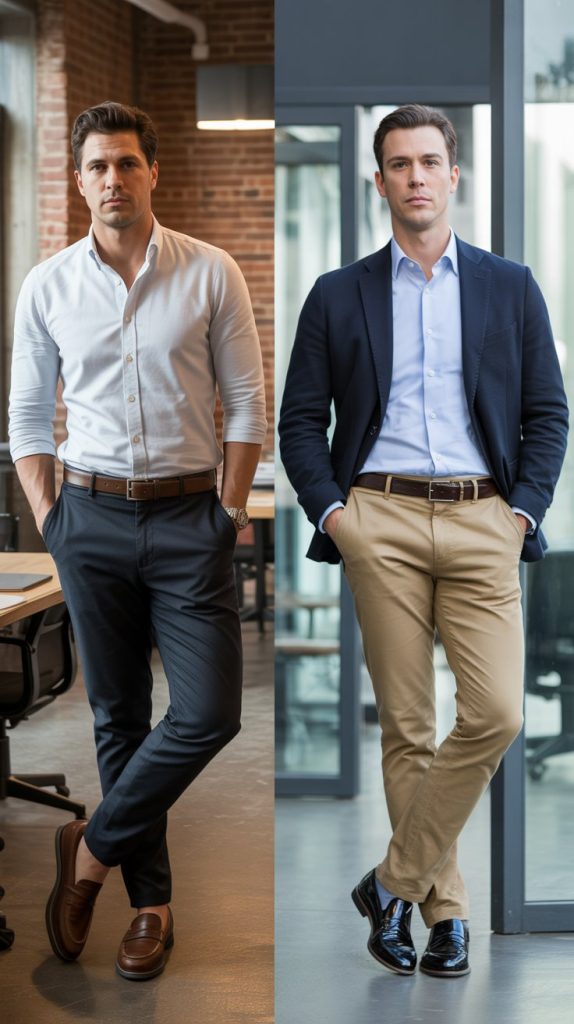
Understanding the distinction between smart casual and business casual prevents inappropriate outfit choices for specific occasions.
- Business casual maintains clear professional boundaries appropriate for traditional workplace environments.
- Smart casual incorporates more personal style elements and relaxed pieces like quality dark denim or casual button-downs.
- Business casual always requires closed-toe leather shoes, while smart casual may accept high-quality sneakers in some contexts.
- The event context determines which dress code applies—client meetings demand business casual while team outings may permit smart casual.
- When invitations specify “smart casual,” confirm expectations with hosts or colleagues to avoid miscalculation.
17. Grooming and Personal Presentation
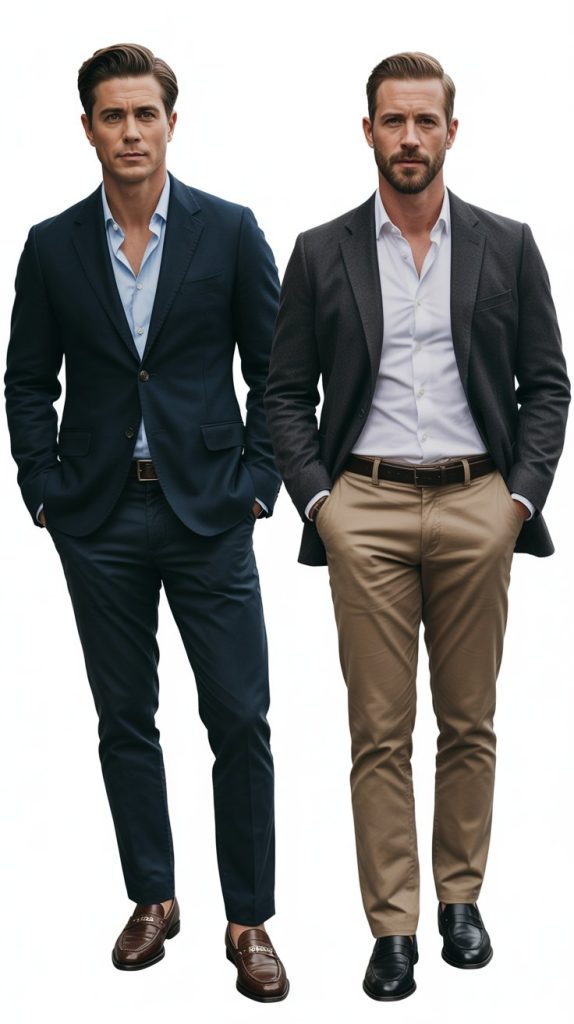
Your clothing represents only one aspect of business casual success—personal grooming completes the professional package.
- Maintain neat, regularly trimmed hair that looks intentional and professional rather than unkempt or overgrown.
- Facial hair should be either clean-shaven or deliberately styled and maintained with clear boundaries.
- Keep fingernails trimmed and clean, as hands are highly visible during handshakes and presentations.
- Use subtle or no fragrance in professional settings to avoid overwhelming colleagues with sensitivities.
- Ensure clothing is freshly laundered, pressed, and free from pet hair, lint, or other visible debris.
18. Business Casual on a Budget

Building a professional business casual wardrobe doesn’t require unlimited funds when you shop strategically and prioritize quality basics.
- Invest more in foundation pieces like trousers and blazers that you’ll wear repeatedly, saving on trendy items.
- Shop end-of-season sales at reputable retailers for significant discounts on quality business casual staples.
- Focus on fit over brand names—properly tailored affordable items outperform poorly fitted designer pieces.
- Build gradually rather than purchasing everything at once, adding 2-3 quality pieces per season.
- Proper care extends garment life significantly, making cost-per-wear of quality items surprisingly economical.
19. Transitioning from Casual Friday

Understanding how to adapt business casual standards for end-of-week relaxation without losing professionalism.
- Casual Friday still requires clean, intentional outfit choices that maintain baseline professional standards.
- Dark, undamaged jeans may be acceptable on Fridays when paired with dress shirts or quality polos and leather shoes.
- Avoid graphic tees, athletic wear, shorts, and sandals unless your workplace explicitly permits these items.
- When uncertain about Friday flexibility, observe senior colleagues and match their level of formality.
- Client-facing employees should maintain standard business casual even on Fridays regardless of internal policies.
20. Weather-Appropriate Business Casual
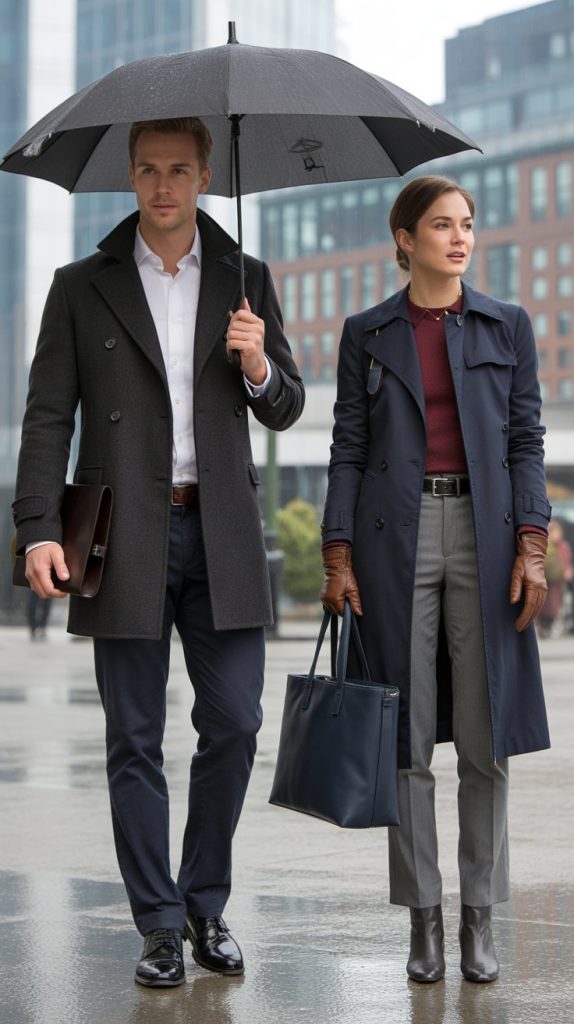
Adapting your business casual wardrobe to weather conditions ensures comfort without sacrificing professional appearance.
- Invest in a quality raincoat or trench coat in navy or khaki that layers over business casual without bulk.
- Weather-resistant leather shoes or treated suede options prevent water damage during inclement conditions.
- In extreme cold, wool overcoats and scarves in neutral colors maintain professional appearance during commutes.
- Keep an extra dress shirt at the office for unexpected weather changes or spills during your workday.
- Avoid bringing weather-protection items like umbrellas into meetings—leave them at your desk or designated areas.
21. Business Casual for Remote and Hybrid Work
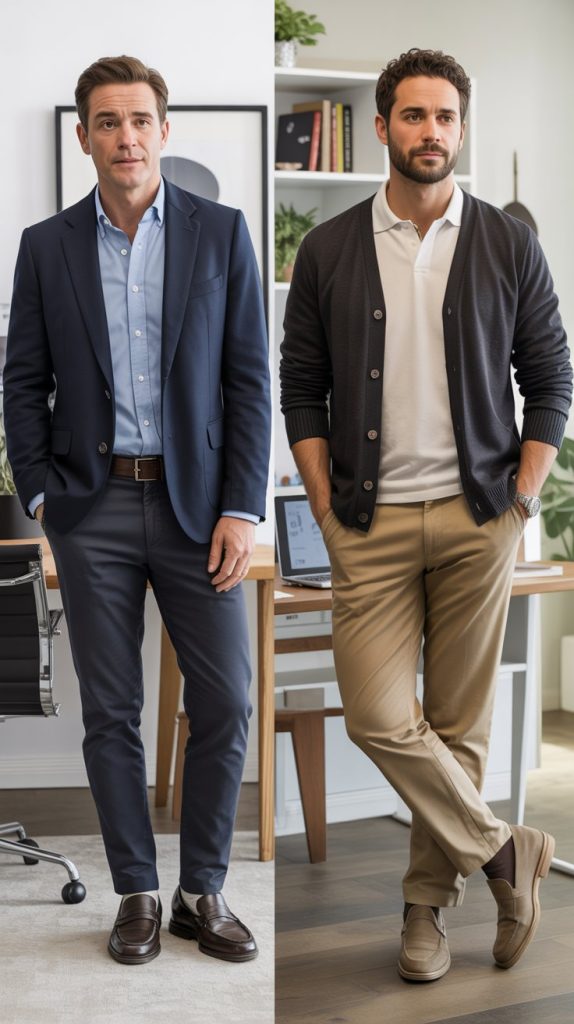
Modern work arrangements require strategic business casual approaches that balance comfort with professional video presence.
- Video calls demand camera-appropriate business casual from the waist up at minimum for professional credibility.
- Solid colors and subtle patterns photograph better on camera than complex designs that create visual noise.
- Maintain full business casual attire for in-office days even in hybrid arrangements to preserve professional culture.
- Keep a blazer nearby during remote work for unexpected video calls with clients or senior leadership.
- Resist the temptation to completely abandon business casual standards at home—professional dress supports productive mindset.
22. Age-Appropriate Business Casual Evolution

Business casual style naturally evolves across career stages, balancing current trends with age-appropriate sophistication.
- Younger professionals can incorporate slightly more fashion-forward elements while respecting business casual boundaries.
- Mid-career professionals benefit from investing in higher-quality classics that project established competence.
- Senior executives often adopt more conservative business casual that emphasizes authority and timeless style.
- Avoid trying to appear younger through overly trendy clothing that undermines professional gravitas.
- Focus on fit, quality, and contemporary cuts rather than chasing youth-oriented fashion trends.
23. Building Confidence in Business Casual
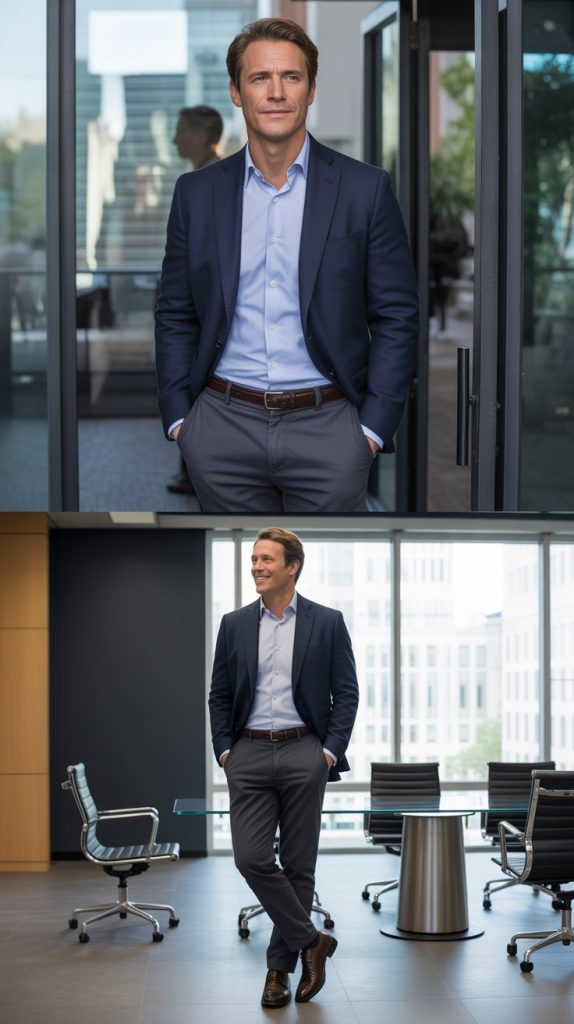
True business casual mastery comes from understanding principles, developing personal style, and wearing outfits with authentic confidence.
- Practice your business casual combinations on weekends or evenings to build familiarity and comfort.
- Take photos of successful outfits for future reference when building your morning routine.
- Notice what senior successful colleagues wear and adapt elements that align with your personal style.
- Remember that confidence stems from preparation—knowing your outfit works allows you to focus on your work.
- Business casual should feel like a professional uniform that supports your goals rather than a costume that constrains you.
Conclusion
The 23 Men’s Business Casual Style Guide for Work & Meetings provides you with comprehensive knowledge to navigate professional dress codes with confidence and style.
From understanding fundamental wardrobe pieces to mastering color coordination, seasonal adaptations, and industry-specific nuances, you now have the tools to create polished business casual looks for any professional situation.
Remember that successful business casual dressing balances professionalism with personal comfort, prioritizes proper fit over expensive labels, and adapts thoughtfully to your specific workplace culture.
As you build and refine your business casual wardrobe, focus on quality foundation pieces that mix effortlessly, maintain impeccable grooming standards, and develop your personal style within professional boundaries.
The confidence that comes from knowing you look appropriate and polished allows you to focus entirely on what matters most—performing excellently in your career and making meaningful professional connections.
