Navigating the world of business casual attire can feel like walking a tightrope between too formal and too relaxed.
Whether you’re stepping into a corporate office, attending a client meeting, or working in a creative agency, mastering business casual dress codes opens doors to professional success and personal confidence.
This comprehensive guide to 30 Men’s Business Casual Looks Perfect for Work breaks down versatile outfit combinations, styling tips, and wardrobe essentials that will transform your workday wardrobe.
From classic blazer pairings to modern smart-casual ensembles, you’ll discover how to dress appropriately while expressing your personal style, ensuring you look polished and professional in any business setting.
1. The Classic Navy Blazer with Chinos
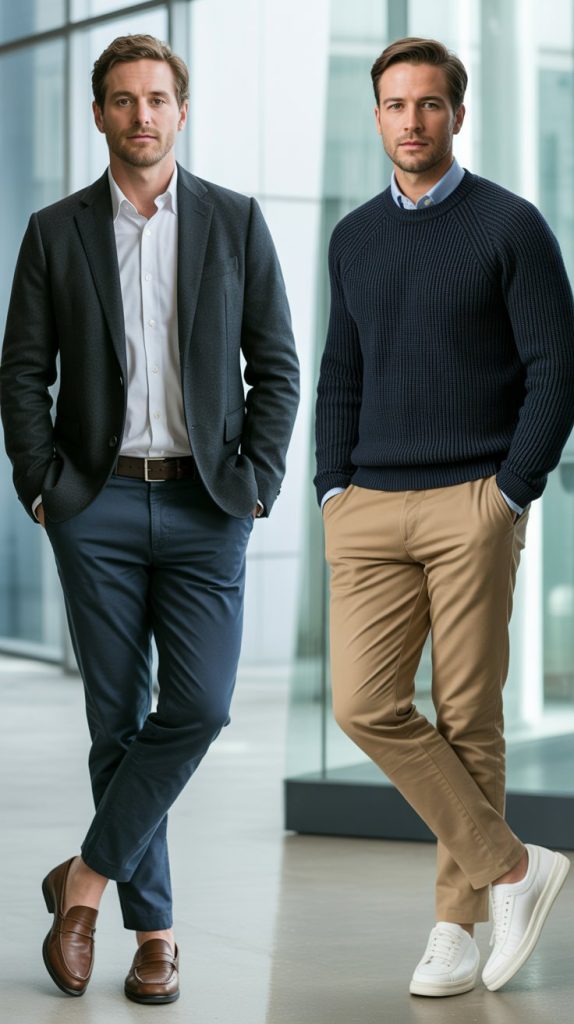
The navy blazer paired with chinos represents the foundation of business casual excellence.
This combination strikes the perfect balance between professional polish and approachable style, making it suitable for virtually any workplace environment that doesn’t require a full suit.
Key Styling Elements:
- Choose a well-fitted navy blazer in wool or cotton blend that sits properly on your shoulders without pulling or sagging.
- Opt for chinos in neutral colors like beige, khaki, grey, or navy that complement rather than match your blazer exactly.
- Pair with a crisp white or light blue button-down shirt for maximum versatility and professional appearance.
- Complete the look with brown or burgundy leather dress shoes and a matching belt for cohesive styling.
- Keep the blazer unbuttoned when standing and button only the top button when sitting for proper etiquette.
- Add subtle accessories like a leather watch or simple tie to elevate the ensemble without overwhelming it.
2. Button-Down Shirt with Dress Trousers
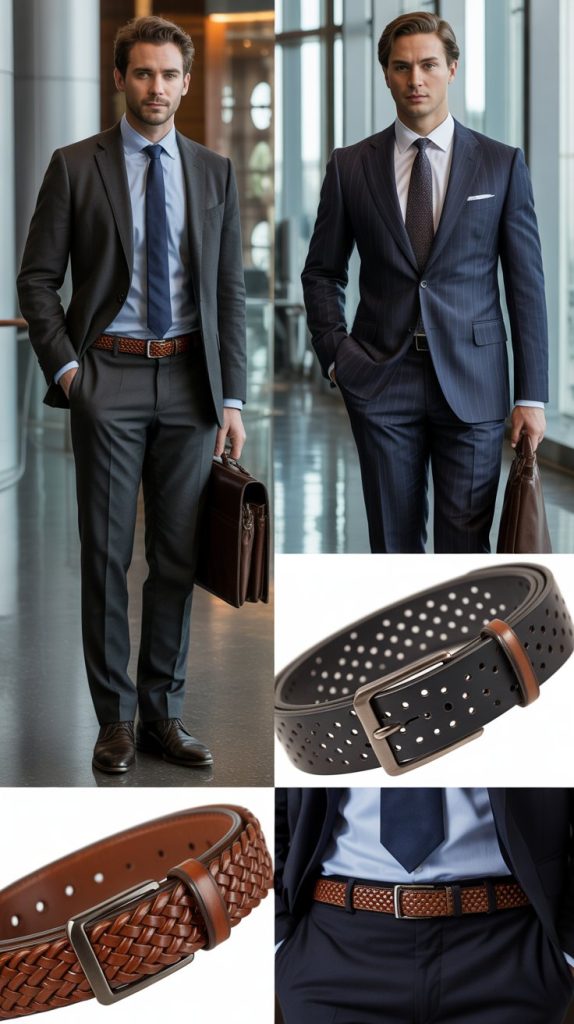
The button-down shirt and dress trousers combination offers refined sophistication without the formality of a full suit.
This pairing works exceptionally well for offices with stricter dress codes while maintaining business casual flexibility.
Essential Components:
- Select button-down shirts in solid colors, subtle patterns, or fine stripes that align with your workplace culture.
- Choose dress trousers with a tailored fit that sits at your natural waist and breaks slightly at the shoe.
- Invest in quality fabrics like cotton, linen blends, or wool that maintain their shape throughout the workday.
- Ensure shirts are properly pressed and tucked in neatly to maintain a polished appearance.
- Match your belt color to your shoe color for a coordinated and intentional look.
- Consider adding a pocket square or stylish watch to introduce personality without compromising professionalism.
3. Sweater Over Collared Shirt Combination

Layering a sweater over a collared shirt creates visual interest while providing practical warmth in climate-controlled office environments.
This classic combination demonstrates attention to detail and sophisticated styling sensibility.
Layering Strategy:
- Choose sweaters in complementary colors to your shirt, avoiding exact matches that create a monotonous appearance.
- Opt for V-neck sweaters to show more of your collar and tie if wearing one, or crewneck for a cleaner neckline.
- Select fine-gauge knits like merino wool or cashmere blends that drape well without adding bulk.
- Ensure your collar points are tucked under the sweater neatline for a tidy presentation.
- Keep the sweater fitted but not tight, allowing comfortable movement throughout your workday.
- Pair with dress trousers or dark chinos to maintain the business casual aesthetic.
4. The Polo Shirt Alternative
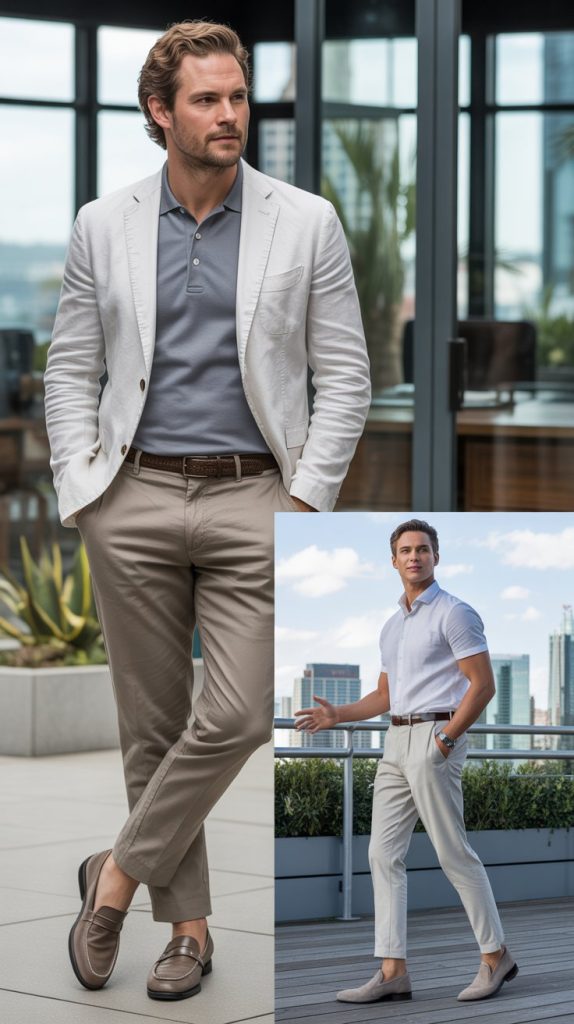
Polo shirts offer a smart-casual option for more relaxed business environments while maintaining a level of professionalism above standard t-shirts.
This versatile piece bridges the gap between casual comfort and workplace appropriateness.
Polo Shirt Guidelines:
- Invest in premium polo shirts made from pique cotton or performance fabrics that resist wrinkles and maintain structure.
- Choose solid colors or subtle patterns over loud logos or graphics for professional credibility.
- Ensure the fit is neither too tight nor too loose, with sleeves ending mid-bicep and hem hitting at the hip.
- Pair with chinos, dress trousers, or dark jeans depending on your office’s specific dress code requirements.
- Select leather loafers, boat shoes, or clean leather sneakers to complement the smart-casual vibe.
- Keep the collar flat and properly shaped, avoiding curled or worn-looking edges that appear sloppy.
5. Sport Coat with Dark Jeans
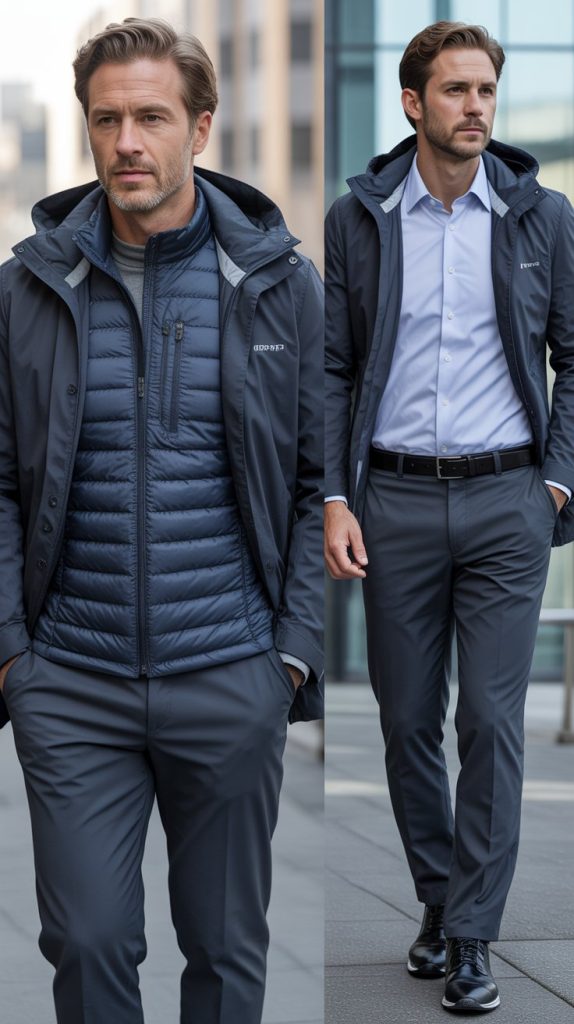
The sport coat and dark jeans combination represents modern business casual at its finest, particularly suitable for creative industries and contemporary workplaces.
This pairing demonstrates style awareness while maintaining professional boundaries.
Contemporary Styling:
- Select dark-wash jeans without distressing, fading, or embellishments that could appear too casual for work.
- Choose sport coats in textured fabrics like herringbone, tweed, or houndstooth that distinguish them from suit jackets.
- Ensure jeans fit properly with a straight or slight taper, avoiding overly skinny or baggy silhouettes.
- Pair with button-down shirts or high-quality knit tops rather than graphic tees or casual shirts.
- Opt for leather dress shoes or refined Chelsea boots instead of sneakers to elevate the overall look.
- Keep the sport coat unstructured or partially constructed for a more relaxed yet polished appearance.
6. Oxford Shirt with Khaki Pants
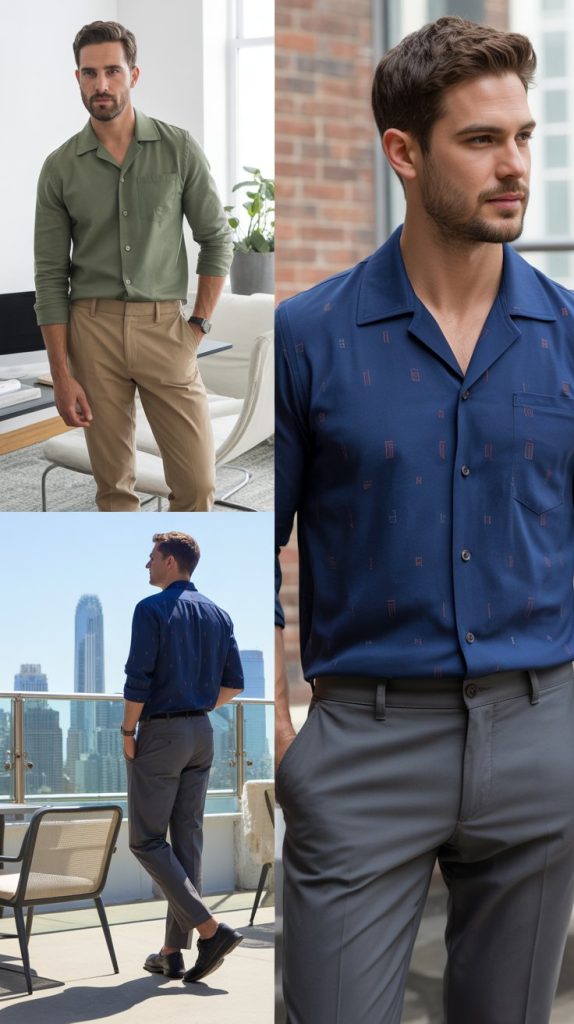
The Oxford shirt and khaki pants combination is a timeless business casual staple that never goes out of style.
This reliable pairing works across industries and seasons, offering both comfort and professional presentation.
Classic Execution:
- Choose Oxford cloth button-down shirts (OCBD) with proper collar structure and quality fabric weight.
- Select khaki pants in traditional tan, beige, or stone colors that coordinate with your shirt selection.
- Ensure pants fit properly at the waist without requiring a belt to hold them up, though belts add polish.
- Iron shirts carefully or opt for wrinkle-resistant treatments to maintain a crisp appearance throughout the day.
- Pair with brown leather shoes in oxford or derby styles for traditional business casual appeal.
- Roll sleeves neatly to the forearm for a slightly more relaxed yet still professional appearance when appropriate.
7. Vest Over Button-Down Look

Adding a vest to your button-down shirt creates a distinguished three-piece look without the full formality of a suit.
This sophisticated styling choice demonstrates fashion awareness and attention to professional presentation.
Vest Styling Principles:
- Choose vests that complement rather than match your trousers exactly, creating intentional separates rather than failed suit attempts.
- Ensure proper fit with the vest sitting close to your body without pulling or gaping at the buttons.
- Leave the bottom button of your vest unfastened, following traditional menswear etiquette.
- Pair with dress trousers in coordinating colors like charcoal, navy, or grey for sophisticated combinations.
- Select dress shirts in solid colors or subtle patterns that don’t compete with vest textures or patterns.
- Add a tie for more formal occasions or skip it for a cleaner, modern business casual aesthetic.
8. Chambray Shirt Combinations
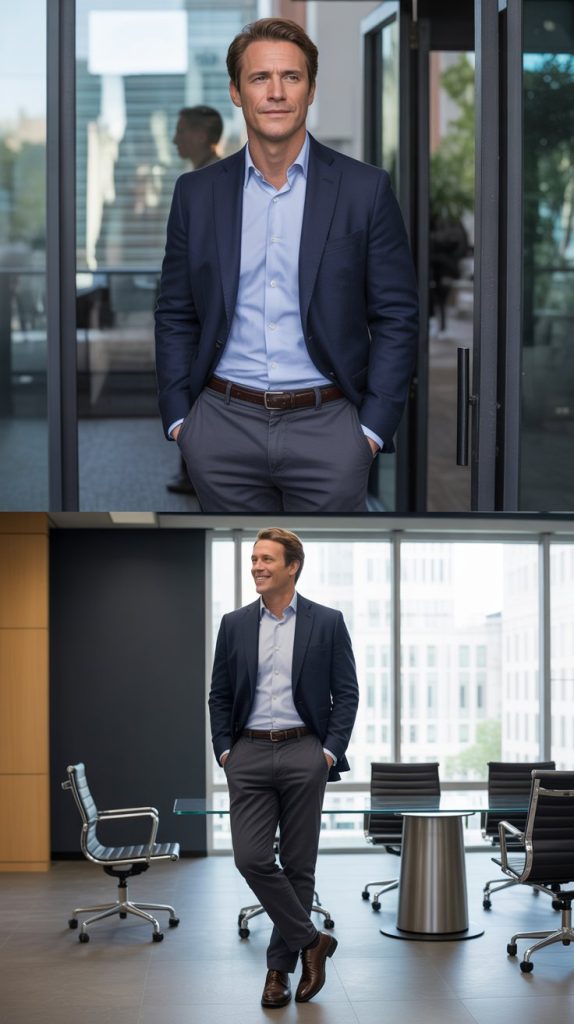
Chambray shirts offer a casual alternative to traditional dress shirts while maintaining enough structure for business casual environments.
This denim-like fabric provides texture and visual interest without crossing into overly casual territory.
Chambray Styling:
- Choose chambray shirts in classic blue or branch out to grey, white, or even black for variety.
- Pair with chinos, dress trousers, or even dark jeans depending on your workplace’s dress code flexibility.
- Layer under blazers or cardigans for added dimension and professional polish in cooler weather.
- Keep the look clean by ensuring the chambray is wrinkle-free and properly pressed before wearing.
- Select leather shoes or clean minimal sneakers based on your office’s casualness tolerance.
- Avoid pairing chambray shirts with jeans in similar washes, which creates a dated Canadian tuxedo effect.
9. Blazer with Turtleneck

The blazer and turtleneck combination exudes European sophistication and modern style sensibility. This pairing works particularly well in fall and winter, offering warmth without sacrificing professional appearance.
Image Prompt: Realistic 2 full body image collage showing men wearing blazers over fine-gauge turtlenecks in black, navy, and grey with dress trousers in sophisticated office environments
Turtleneck Integration:
- Select fine-gauge turtlenecks in merino wool or cashmere that sit smoothly under blazers without bunching.
- Choose neutral turtleneck colors like black, navy, charcoal, or camel that pair easily with various blazer options.
- Ensure the turtleneck fits close to the neck without being restrictive or creating unflattering bulk.
- Pair with tailored blazers in complementary colors, creating sophisticated monochromatic or contrasting combinations.
- Complete with dress trousers and leather shoes to maintain the elevated business casual aesthetic.
- Keep accessories minimal, allowing the clean lines of the turtleneck and blazer to create visual impact.
10. Cardigan with Dress Shirt
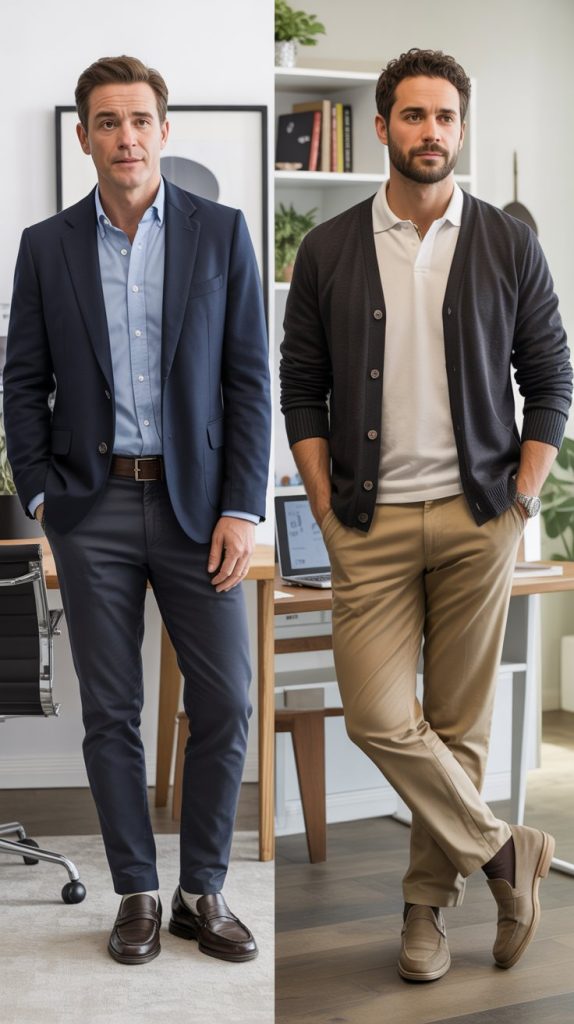
Cardigans provide a comfortable alternative to blazers while maintaining business casual appropriateness. This versatile layering piece offers warmth and style without the structure of traditional outerwear.
Cardigan Selection:
- Choose cardigans in fine-gauge knits that maintain their shape without sagging or stretching throughout the day.
- Opt for button-front or zip cardigans in neutral colors that coordinate with your existing wardrobe pieces.
- Ensure the cardigan length falls at or just below the hip for proper proportions with trousers.
- Layer over dress shirts with collars visible for a polished business casual presentation.
- Pair with dress trousers or chinos rather than jeans unless your workplace is particularly casual.
- Select cardigans with minimal branding or patterns for maximum versatility and professional appropriateness.
11. Monochromatic Business Casual

Monochromatic dressing creates a streamlined, sophisticated appearance that demonstrates advanced style awareness. This approach uses varying shades of the same color family for cohesive visual impact.
Monochrome Strategy:
- Select pieces in different shades and textures of the same color to create depth and visual interest.
- Incorporate varying fabric weights and finishes to prevent the outfit from appearing flat or one-dimensional.
- Use accessories in complementary tones to break up the monochrome without disrupting the color story.
- Ensure excellent fit across all pieces, as monochromatic dressing highlights silhouette more dramatically.
- Choose neutral color families like grey, navy, or beige that work well in professional environments.
- Add subtle pattern through texture rather than contrasting colors to maintain the monochromatic effect.
12. The Smart-Casual Blazer with Sweater
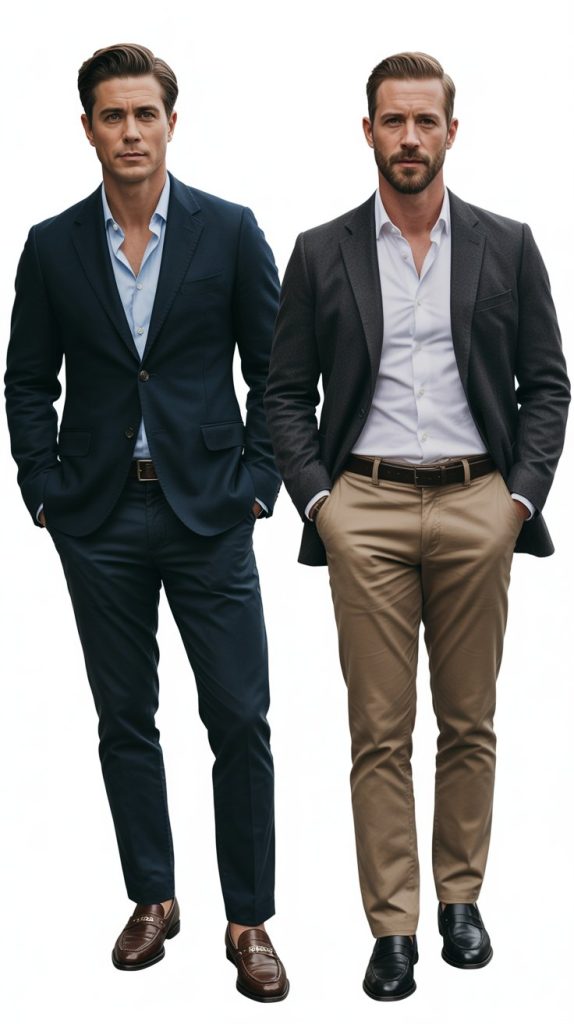
Combining a blazer with a fine-knit sweater underneath creates a sophisticated layered look suitable for cooler months. This pairing offers the structure of a blazer with the comfort of knitwear.
Layering Technique:
- Choose lightweight, fine-gauge sweaters that won’t create bulk under the blazer’s shoulders and arms.
- Select sweaters with simple necklines like crew or V-neck that sit cleanly within the blazer’s lapels.
- Ensure the blazer fits properly with the added sweater layer without pulling or restricting movement.
- Coordinate colors between blazer and sweater for cohesive looks, using complementary rather than matching tones.
- Pair with dress trousers in neutral colors that ground the layered top without competing visually.
- Keep the sweater hem from extending beyond the blazer hem for clean, intentional proportions.
13. Button-Down with Tie, No Jacket
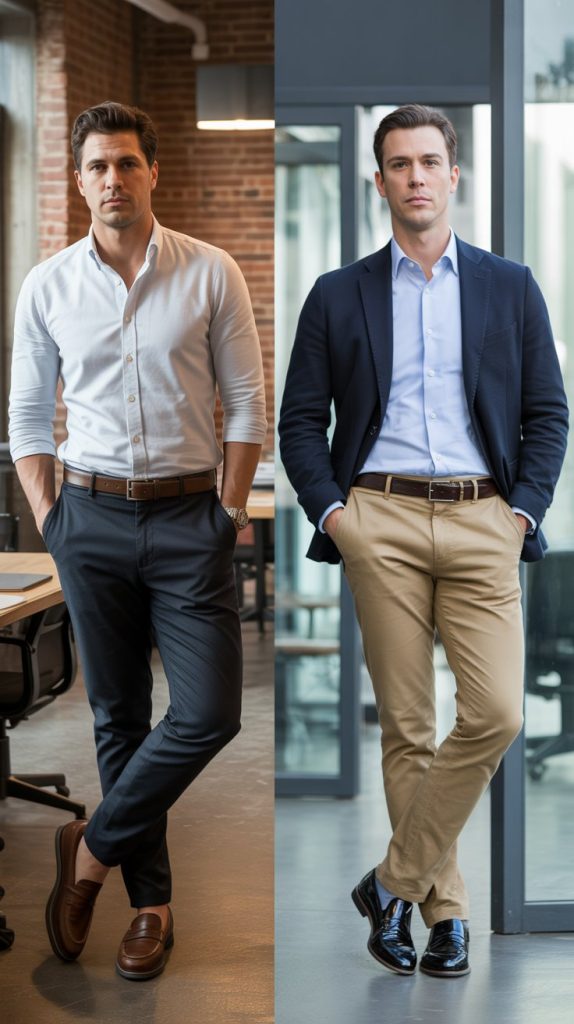
Wearing a dress shirt and tie without a jacket represents a middle ground in business casual dressing.
This combination works well for offices transitioning from formal to business casual or on days when jackets feel too heavy.
Tie-Without-Jacket Guidelines:
- Choose dress shirts that fit impeccably since there’s no jacket to conceal fit issues or wrinkles.
- Select ties that complement your shirt without creating overly matchy or boring combinations.
- Ensure shirt sleeves are the proper length, ending where your wrist meets your hand.
- Keep tie accessories like clips or bars subtle and positioned properly between the third and fourth buttons.
- Pair with dress trousers that fit well at the waist, as belts or suspenders become more visible.
- Consider adding a vest for additional structure and polish when wearing a tie without a jacket.
14. Linen Shirt for Warmer Offices

Linen shirts offer breathable comfort for warm weather while maintaining business casual standards. This natural fabric provides texture and visual interest while keeping you cool in heated office environments.
Linen Considerations:
- Accept that linen naturally wrinkles as part of its character, though excessive wrinkles appear sloppy.
- Choose linen shirts in lighter colors that reflect heat and show wrinkles less prominently than darker shades.
- Pair with lightweight chinos or dress trousers in breathable fabrics for head-to-toe comfort.
- Select slightly looser fits in linen shirts to allow air circulation without appearing oversized.
- Keep linen shirts clean and pressed at the start of the day for the most professional presentation.
- Layer with lightweight blazers or jackets when needed, though linen works best as a standalone piece.
15. The Quarter-Zip Sweater Look

Quarter-zip sweaters provide a sporty yet refined alternative to traditional button-front cardigans. This modern piece works well in casual office environments and creative industries.
Quarter-Zip Styling:
- Choose quarter-zips in fine-gauge merino wool or cotton blends rather than fleece for professional appearance.
- Wear over collared shirts with the collar visible above the quarter-zip neckline for proper layering.
- Select solid colors or subtle patterns that work within business casual parameters.
- Ensure the fit is tailored but comfortable, avoiding athletic or oversized fits that appear too casual.
- Pair with chinos or dress trousers rather than athletic pants or sweatpants.
- Keep the zipper at an appropriate height, neither fully zipped nor pulled too far down.
16. Checked Shirt Combinations

Checked or plaid shirts add visual interest and pattern to business casual wardrobes. When styled appropriately, these patterns demonstrate personality while maintaining professional standards.
Pattern Guidelines:
- Choose checks and plaids in smaller, subtler patterns rather than large, bold designs for professional settings.
- Pair checked shirts with solid-colored trousers to avoid pattern clashing and visual chaos.
- Select checks in traditional color combinations like blue and white, grey and white, or burgundy and navy.
- Layer under solid blazers or cardigans for occasions requiring additional polish and formality.
- Ensure checked shirts fit properly, as patterns can emphasize poor fit more than solid colors.
- Keep the rest of your outfit simple when wearing patterned shirts to maintain visual balance.
17. The Dress Shirt and Sweater Vest
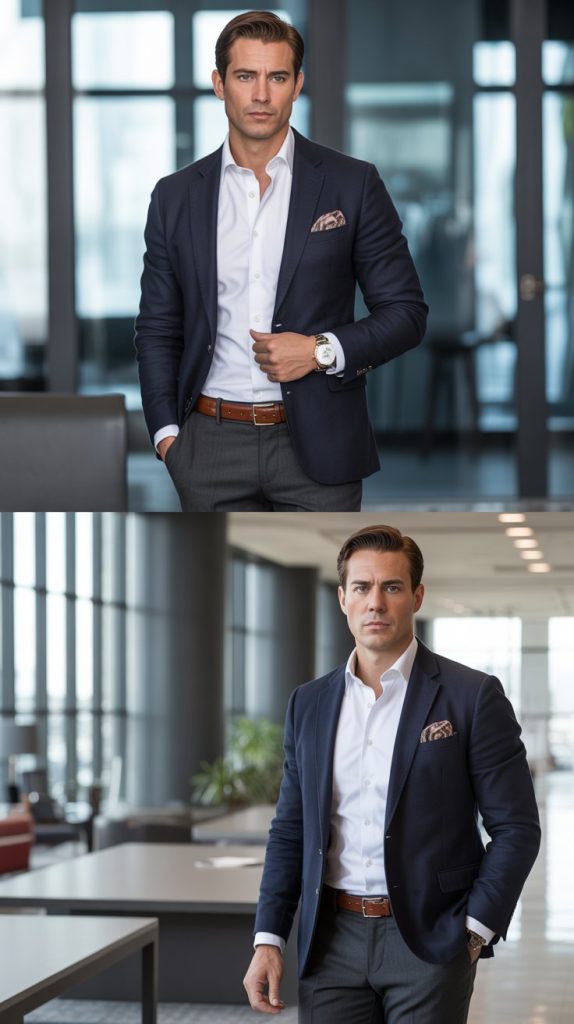
Sweater vests create a distinguished, scholarly appearance while providing practical warmth. This classic layering piece has experienced renewed popularity in modern menswear.
Sweater Vest Execution:
- Choose fitted sweater vests that follow your torso’s lines without pulling across the chest or back.
- Select V-neck sweater vests when wearing ties, or crew neck styles for tie-free business casual looks.
- Pair with long-sleeve dress shirts in complementary colors, ensuring the collar and cuffs remain visible.
- Coordinate sweater vest colors with your overall outfit palette for cohesive styling.
- Add dress trousers and leather shoes to complete the traditional business casual aesthetic.
- Keep sweater vests smooth and pill-free, maintaining them properly to prevent worn appearances.
18. Smart Chinos with Casual Blazer

Combining well-fitted chinos with an unstructured blazer creates an approachable yet polished business casual look. This pairing works across various industries and office environments.
Chino and Blazer Pairing:
- Select chinos with a modern, tailored fit that sits properly at your waist and tapers slightly to the ankle.
- Choose blazers in textured fabrics or casual colors like tan, olive, or light grey rather than formal navy or charcoal.
- Ensure color coordination between chinos and blazer without matching them identically for more sophisticated styling.
- Pair with button-down shirts, polo shirts, or fine-knit sweaters depending on your office’s dress code.
- Complete with leather loafers, monk straps, or minimalist leather sneakers for contemporary appeal.
- Keep the blazer’s styling casual with patch pockets or suede fabrics rather than traditional business features.
19. The Henley Under Blazer

Henley shirts paired with blazers create a smart-casual look that balances relaxation with professionalism. This combination works particularly well in creative fields and modern office environments.
Henley Integration:
- Choose henley shirts in solid neutral colors with minimal branding or graphics for professional credibility.
- Select long-sleeve henleys rather than short-sleeve versions for better proportions under blazers.
- Ensure the henley fits close to the body without being tight, creating clean lines under the blazer.
- Pair with dark jeans or chinos rather than dress trousers for appropriate casualness balance.
- Layer with unstructured or casual blazers rather than formal suit jackets for cohesive styling.
- Keep the henley’s button placket neat, with buttons fastened or left open intentionally rather than randomly.
20. Classic White Shirt Variations

The white dress shirt remains the most versatile piece in business casual wardrobes. Different collar styles and fabric choices create variety while maintaining professional standards.
White Shirt Diversity:
- Invest in multiple white shirts with varying collar styles like spread, point, button-down, and cutaway.
- Choose different fabric weights and weaves including oxford cloth, poplin, twill, and broadcloth for seasonal variety.
- Ensure impeccable fit across the shoulders, chest, and sleeve length as white shirts show fit issues clearly.
- Pair with virtually any trouser color and style, from navy dress pants to khaki chinos.
- Maintain white shirts carefully, addressing stains immediately and keeping them crisp and bright.
- Layer white shirts under sweaters, vests, or blazers or wear them standalone depending on occasion requirements.
21. Earth Tones Ensemble
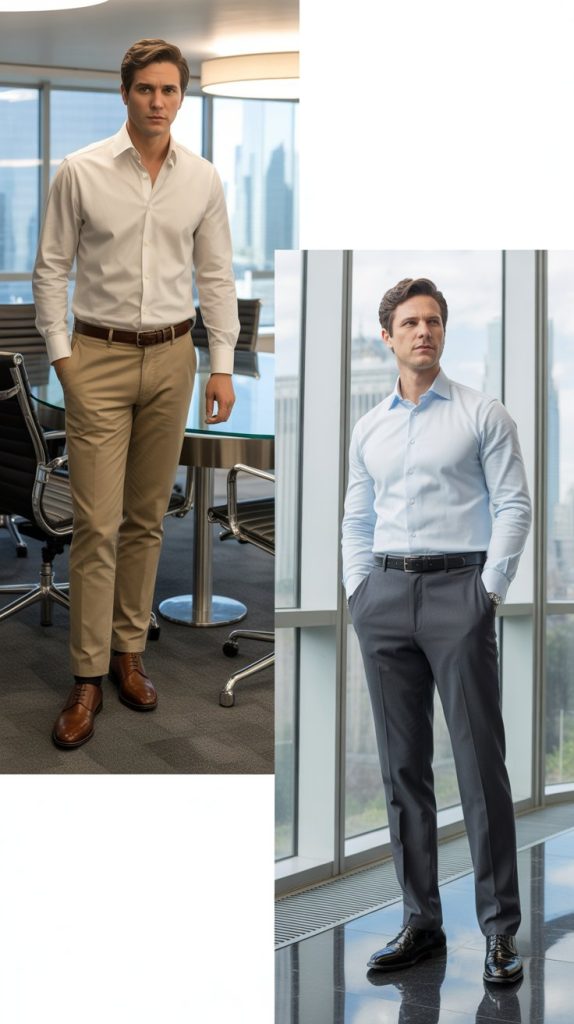
Earth tone color palettes create warm, approachable business casual outfits.
These natural colors work particularly well in fall and winter, providing sophisticated alternatives to standard navy and grey.
Earth Tone Coordination:
- Build outfits using colors like tan, brown, olive, rust, camel, and cream for cohesive earth-tone palettes.
- Combine different textures in similar color families to create depth and visual interest.
- Pair earth-tone trousers with complementary tops and outerwear in the same color spectrum.
- Add brown leather accessories like belts, shoes, and watches that naturally complement earth tones.
- Incorporate earth tones gradually if you’re accustomed to cooler color palettes like navy and grey.
- Layer pieces in varying earth tones for sophisticated monochromatic or analogous color combinations.
22. The Blazer and Tee Combination
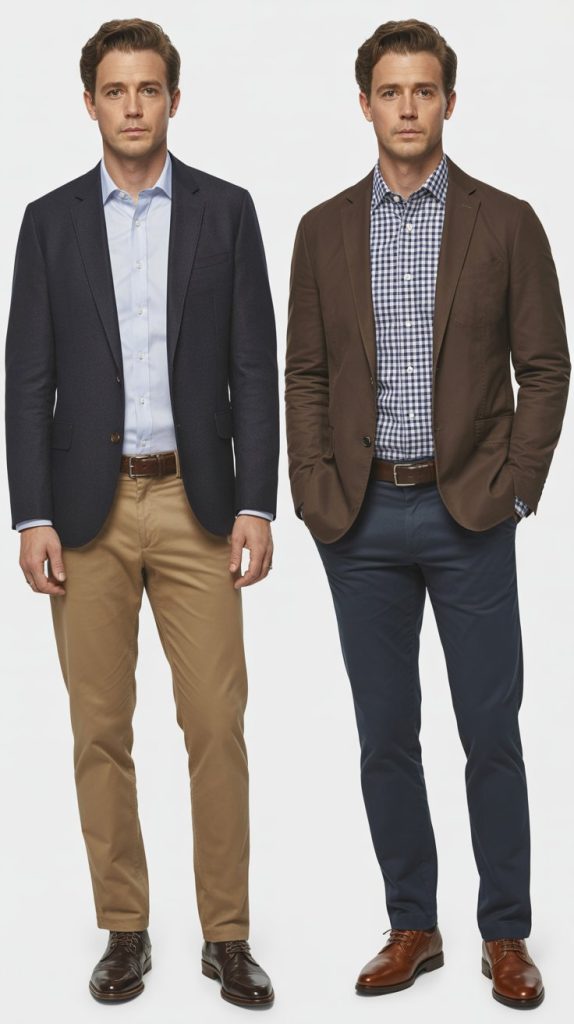
Pairing a quality blazer with a premium t-shirt creates a contemporary business casual look for modern workplaces. This combination requires careful execution to maintain professional standards.
Blazer-Tee Balance:
- Select premium t-shirts in thick, substantial fabrics that hold their shape rather than thin, casual tees.
- Choose t-shirts in solid neutral colors without graphics, logos, or obvious branding for professional credibility.
- Ensure the t-shirt fits properly with sleeves hitting mid-bicep and the hem hitting at the hip.
- Pair with unstructured blazers in casual fabrics rather than formal suit jackets for appropriate style balance.
- Complete with dark jeans or chinos and leather shoes to elevate the casual t-shirt element.
- Reserve this combination for workplaces with explicitly casual dress codes or creative industries.
23. Corduroy Pants Styling
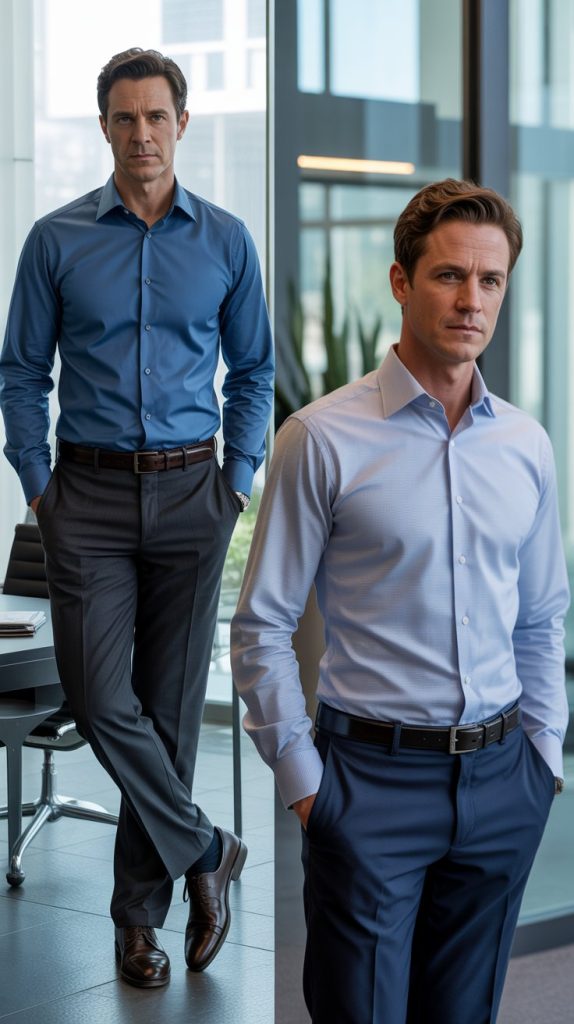
Corduroy trousers add texture and visual interest to business casual wardrobes, particularly during fall and winter months. This classic fabric has returned to popularity in contemporary menswear.
Corduroy Guidelines:
- Choose fine-wale corduroy for dressier applications or wider-wale varieties for more casual business settings.
- Select corduroy colors like navy, charcoal, brown, olive, or burgundy that work within professional color palettes.
- Pair corduroy pants with smooth-fabric tops like cotton shirts or fine-knit sweaters for texture contrast.
- Ensure proper fit with corduroys sitting at your natural waist and breaking slightly at the shoe.
- Complete looks with leather shoes in brown or burgundy tones that complement corduroy’s casual sophistication.
- Layer with blazers or sport coats for added polish when wearing corduroy in more formal business casual settings.
24. The Layered Look with Three Pieces

Three-piece layering creates visual depth and demonstrates advanced styling capability. This approach works particularly well in transitional weather or climate-controlled offices.
Layering Strategy:
- Start with a fitted base layer like a dress shirt that sits smoothly without bunching under additional layers.
- Add a middle layer like a sweater, vest, or cardigan that coordinates with both the shirt and outer layer.
- Complete with a blazer or sport coat as the outer layer, ensuring all pieces fit together without excessive bulk.
- Choose complementary colors across all three layers, using varying tones and textures for visual interest.
- Ensure each layer is visible and intentional rather than completely hidden by the layer above it.
- Keep fabrics lightweight enough to layer comfortably without restricting movement or creating unflattering bulk.
25. Seasonal Color Adaptations
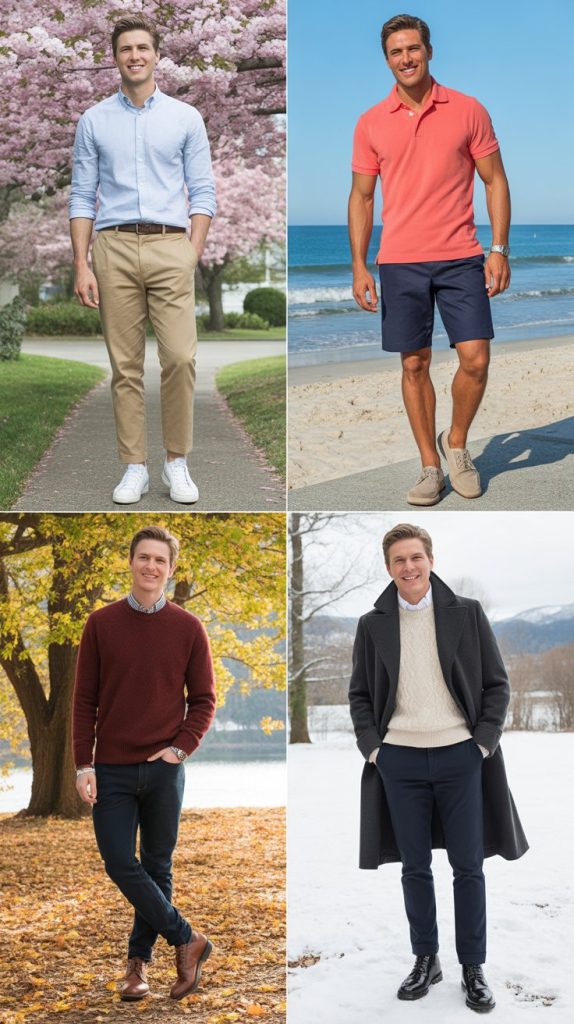
Adjusting your business casual wardrobe colors by season demonstrates style awareness and keeps your professional appearance fresh. Different seasons call for different color palettes and fabric choices.
Seasonal Color Strategy:
- Embrace lighter colors like white, light blue, tan, and pastels during spring and summer months.
- Transition to earth tones, burnt oranges, deep greens, and warm browns during fall seasons.
- Incorporate rich darks like charcoal, navy, burgundy, and forest green during winter months.
- Return to brighter, optimistic colors including light greys, soft blues, and fresh greens for spring.
- Adjust fabric weights seasonally while maintaining color-appropriate choices for cohesive seasonal dressing.
- Build a versatile core wardrobe in neutrals that works year-round, then add seasonal color through accessories and accent pieces.
26. The Smart Leather Jacket Alternative
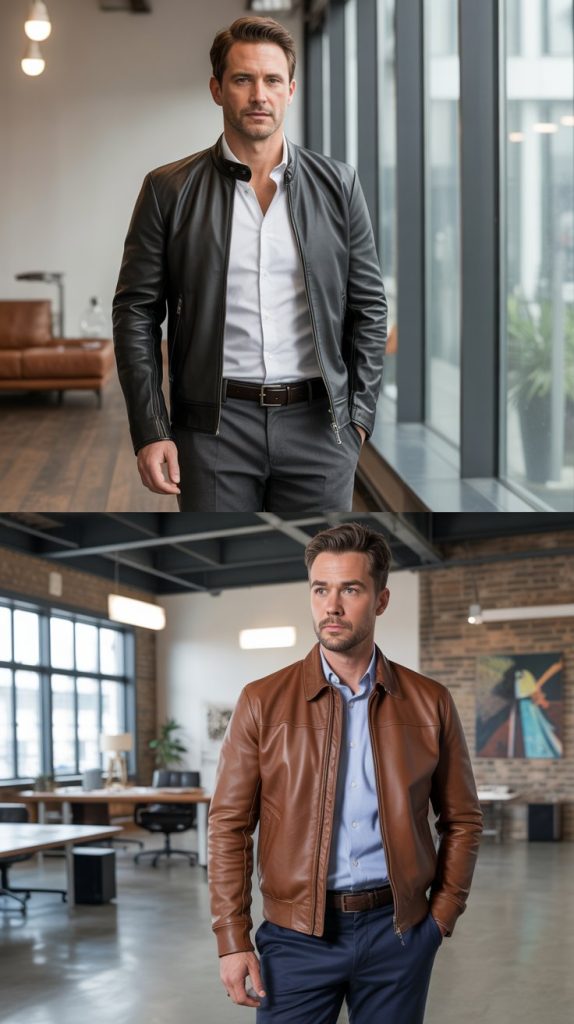
Leather jackets can replace traditional blazers in casual business environments, offering edge and personality while maintaining professional structure.
This requires selecting the right leather jacket style and pairing it appropriately.
Leather Jacket Selection:
- Choose minimalist leather jacket styles in black, brown, or navy without excessive hardware or embellishments.
- Select fitted leather jackets with clean lines rather than oversized or heavily detailed motorcycle styles.
- Pair leather jackets with button-down shirts or fine-knit sweaters rather than casual t-shirts for professional balance.
- Complete outfits with dark chinos or dress trousers instead of jeans unless your workplace is particularly casual.
- Opt for quality leather in smooth finishes rather than distressed or heavily textured options for work settings.
- Reserve leather jackets for workplaces with explicitly casual or creative dress codes where they’re culturally appropriate.
27. Pattern Mixing Techniques
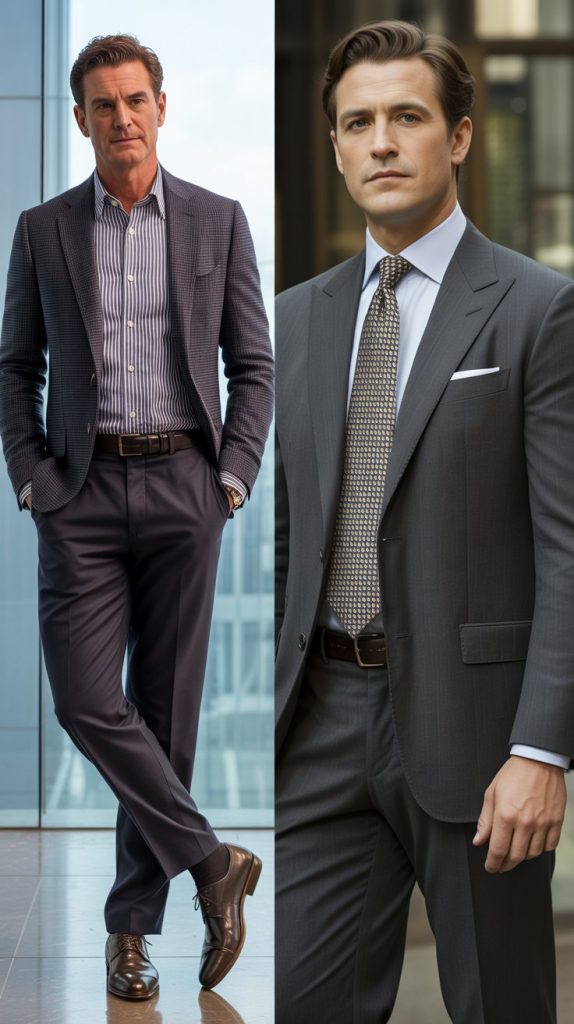
Sophisticated pattern mixing demonstrates advanced style knowledge when executed properly. Combining different patterns requires understanding scale, color coordination, and pattern types.
Pattern Mixing Rules:
- Vary pattern scales by pairing small patterns with larger patterns rather than similar-sized patterns that compete visually.
- Connect patterns through shared colors that create cohesion across different pattern types.
- Limit pattern mixing to two or three patterns maximum to avoid visual chaos and maintain professionalism.
- Balance busy patterns with solid-colored pieces to ground the outfit and prevent overwhelming viewers.
- Start with conservative pattern mixing like subtle stripe shirts with small check ties before attempting bolder combinations.
- Ensure excellent fit across all patterned pieces, as patterns emphasize fit issues more than solid colors.
28. The Business Casual Shoe Guide

Footwear choices significantly impact overall business casual presentation.
Understanding which shoe styles work for different business casual situations ensures appropriate professional appearance.
| Shoe Type | Formality Level | Best Paired With | Workplace Suitability |
|---|---|---|---|
| Oxford Dress Shoes | Most Formal | Dress trousers, suits | Traditional offices |
| Derby Shoes | Formal | Trousers, chinos | Most business settings |
| Loafers | Moderate | Chinos, dress pants | Smart-casual offices |
| Monk Straps | Moderate | Chinos, trousers | Contemporary offices |
| Chelsea Boots | Moderate | Jeans, chinos, trousers | Modern workplaces |
| Minimalist Sneakers | Casual | Chinos, dark jeans | Creative industries |
Shoe Selection Principles:
- Invest in quality leather shoes that can be maintained and resoled rather than cheap alternatives requiring frequent replacement.
- Match shoe color to belt color for cohesive, intentional styling rather than mismatched accessories.
- Keep shoes clean, polished, and well-maintained as worn or dirty shoes undermine otherwise professional outfits.
- Choose appropriate formality levels based on your specific workplace culture and daily activities.
- Build a core collection including brown oxfords, black derbys, and penny loafers for maximum versatility.
- Ensure proper fit with adequate toe room and heel support for all-day comfort without sacrificing style.
29. Accessorizing Business Casual Outfits
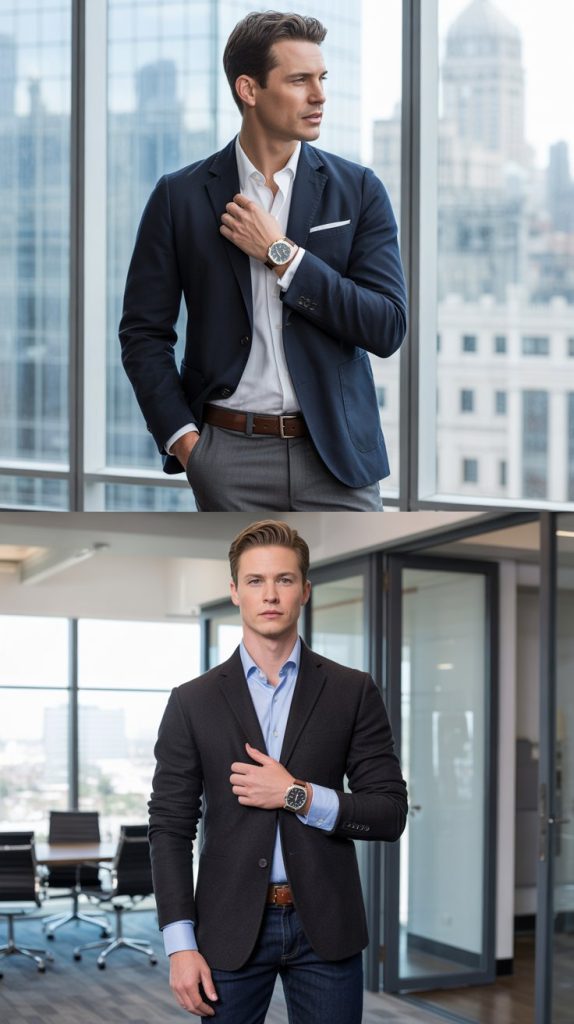
Accessories add personality and polish to business casual looks when chosen thoughtfully. The right accessories demonstrate attention to detail and style awareness.
Accessory Guidelines:
- Select quality leather belts in brown and black that match your shoe colors for cohesive styling.
- Invest in classic watches with leather or metal bands rather than sports watches or smart watches when possible.
- Add subtle pocket squares to blazers for color pops and personality without overwhelming professional appearance.
- Choose minimalist jewelry like simple wedding bands or classic signet rings rather than bold statement pieces.
- Incorporate leather briefcases or structured messenger bags instead of backpacks for professional credibility.
- Keep accessories understated and functional, avoiding excessive or flashy pieces that distract from overall presentation.
30. Building a Versatile Business Casual Capsule
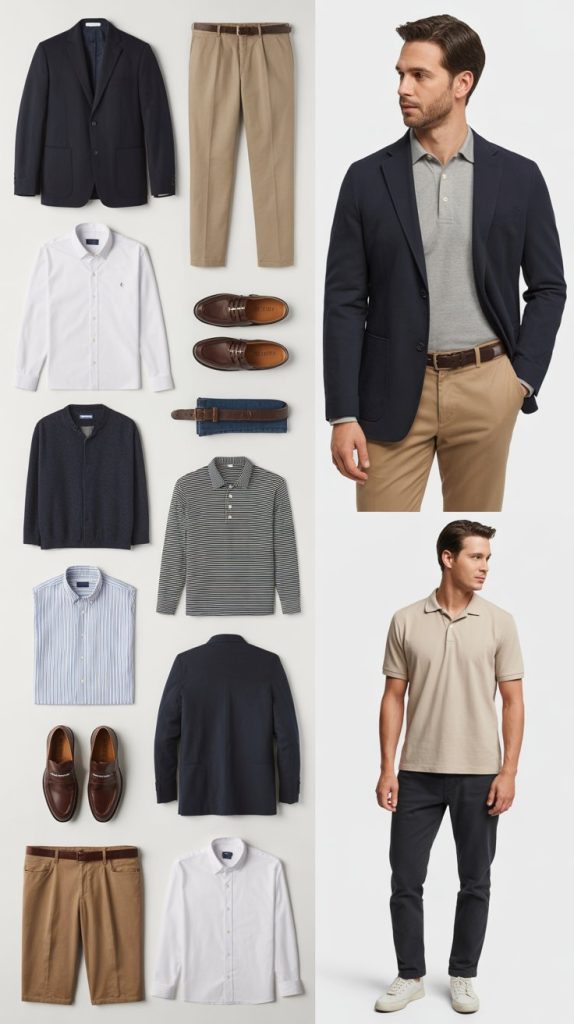
Creating a streamlined business casual capsule wardrobe ensures you always have appropriate outfits available. This strategic approach maximizes outfit combinations while minimizing wardrobe clutter.
Capsule Wardrobe Essentials:
| Category | Essential Items | Color Recommendations |
|---|---|---|
| Blazers | Navy blazer, grey sport coat | Navy, charcoal, tan |
| Trousers | Dress pants (2), chinos (2) | Charcoal, navy, khaki, grey |
| Shirts | Oxford shirts (3), dress shirts (3) | White, light blue, pink |
| Knitwear | V-neck sweater, cardigan | Navy, grey, charcoal |
| Shoes | Oxfords, loafers | Brown, black |
| Accessories | Leather belts (2), watch | Matching shoe colors |
Capsule Building Strategy:
- Start with versatile neutral pieces in navy, grey, white, and khaki that mix easily across multiple outfits.
- Invest in quality over quantity, choosing well-made pieces that last rather than trendy fast-fashion items.
- Ensure excellent fit across all pieces, as proper fit matters more than brand names or price points.
- Add personality through accessories and accent pieces while keeping foundational items classic and versatile.
- Build gradually over time rather than purchasing everything at once, focusing on filling actual wardrobe gaps.
- Maintain your capsule carefully through proper cleaning, storage, and timely repairs to maximize longevity.
Conclusion
Mastering business casual dress codes empowers you to navigate professional environments with confidence and style.
These 30 Men’s Business Casual Looks Perfect for Work provide a comprehensive foundation for building a versatile, appropriate, and personally expressive work wardrobe.
From classic blazer combinations to contemporary smart-casual ensembles, you now have the knowledge to dress professionally while showcasing your individual style.
Remember that business casual success comes from understanding your specific workplace culture, investing in quality pieces that fit properly, and maintaining your wardrobe thoughtfully.
Whether you’re updating your entire professional wardrobe or refining your existing collection, these styling strategies will ensure you always look polished, professional, and ready for workplace success.

