Having a prominent forehead doesn’t mean compromising on style—it’s an opportunity to discover haircuts and techniques that enhance your natural features and boost your confidence.
In “How to Style Hair with a Big Forehead: Men’s Guide 2026,” you’ll find expert strategies for selecting the perfect hairstyle, using styling products effectively, and learning professional techniques that create balance and proportion.
This comprehensive guide covers everything from understanding your face shape to choosing the right barber, exploring trending haircuts specifically designed for larger foreheads, and mastering daily styling routines that work.
Whether you’re dealing with a receding hairline, naturally high forehead, or simply want to create visual harmony in your appearance, this article provides actionable solutions backed by modern hairstyling expertise.
You’ll discover how texture, length, volume placement, and strategic cutting techniques can transform your look while embracing your unique facial structure with pride.
1. Understanding Your Face Shape and Forehead Proportion

Before selecting any hairstyle, understanding the relationship between your forehead size and overall face shape creates the foundation for making informed styling decisions that truly work.
- Men’s faces typically fall into oval, square, round, heart-shaped, or oblong categories, and identifying yours helps narrow down flattering hairstyle options.
- A larger forehead occupies more than one-third of your total face length when measured from hairline to chin, creating specific styling considerations.
- Oval faces with big foreheads benefit from nearly any hairstyle but excel with textured crops and forward-styled fringes.
- Square-faced men should soften angular jawlines while addressing forehead size through layered cuts with side-swept elements.
- Round faces require height and volume on top to elongate proportions while keeping sides shorter to avoid widening the appearance.
- Heart-shaped faces naturally feature wider foreheads, making side-parted styles and textured quiffs particularly effective for creating balance.
- Oblong faces need width rather than height, so hairstyles with horizontal volume and fringe work better than tall, vertical styles.
- Stand in front of a mirror and measure your forehead width compared to your cheekbones and jawline to determine if it’s proportionally larger.
- Take photos from multiple angles in natural lighting to objectively assess your face shape without the bias of mirror familiarity.
- Understanding these proportions prevents choosing trendy styles that might look great on others but don’t suit your specific facial structure.
2. Best Haircut Styles for Large Foreheads

Certain haircut styles naturally minimize forehead prominence while maximizing your overall aesthetic appeal and personal style preferences.
- The textured fringe brings hair forward across the forehead, creating a horizontal line that visually reduces forehead height and adds youthful energy.
- Side-parted hairstyles draw the eye diagonally across the face, disrupting the vertical emphasis that large foreheads can create.
- Layered cuts with movement prevent hair from lying flat against the head, which can actually emphasize forehead size rather than minimize it.
- The classic side-swept undercut combines shorter sides with longer top sections styled forward and to one side for balanced proportions.
- Textured crops with choppy, piecey layers create visual interest and dimension that redirects attention from the forehead to the overall style.
- French crop haircuts feature short, textured fringes that sit forward on the forehead, providing excellent coverage without appearing heavy.
- Caesar cuts with forward-brushed bangs have concealed large foreheads since Roman times and remain timelessly effective in modern variations.
- Avoid slicked-back styles, high fades that expose more forehead, or cuts that add excessive height on top without forward coverage.
- Medium-length hairstyles between 2-4 inches on top provide versatility for styling forward, sideways, or with partial fringe coverage.
- Consult with an experienced barber who can customize these foundational styles to your hair texture, density, and growth patterns.
3. Strategic Fringe and Bang Techniques

Fringes and bangs serve as the most direct method for covering forehead space while creating diverse style options that suit various occasions.
- Blunt fringes cut straight across create a definitive horizontal line that significantly reduces visible forehead area.
- Textured, choppy bangs offer a more casual, contemporary look while still providing forehead coverage without appearing too structured.
- Side-swept fringes angle across the forehead diagonally, creating asymmetry that breaks up the forehead’s prominence naturally.
- Curtain bangs parted in the middle frame the face on both sides, drawing eyes toward the center and away from the upper face.
- Longer fringes that reach eyebrow level or slightly below provide maximum coverage while requiring regular trims to maintain effectiveness.
- Avoid fringes that are too thin or wispy, as they can emphasize rather than conceal by creating contrast with the exposed forehead.
- Style fringes with slight movement and texture rather than perfectly straight or rigid positioning for a more natural appearance.
- Use a blow dryer with a round brush to direct fringe hair forward and slightly downward for optimal coverage and natural flow.
- Apply lightweight styling products to fringes to maintain position throughout the day without creating stiffness or unnatural shine.
- Consider seasonal adjustments, wearing fringes longer in cooler months and slightly shorter with more texture during summer for comfort.
4. Volume and Texture Placement Strategy

Strategic volume placement redirects visual attention and creates proportional balance that minimizes forehead prominence while enhancing overall style.
- Concentrate volume in the front and mid-sections of your hair rather than at the crown to avoid elongating the face vertically.
- Textured, matte finishes create dimension that catches light differently than smooth styles, adding visual complexity that distracts from forehead size.
- Forward-directed volume specifically pushes hair toward the forehead area, providing natural coverage without obvious styling.
- Avoid flat, slicked-down styles that remove all texture and volume, as these expose maximum forehead area and create stark contrasts.
- Use sea salt spray or texturizing powder on damp hair before blow-drying to build foundational volume and grip.
- Blow-dry hair in the opposite direction of how you’ll ultimately style it to create lift at the roots before directing it forward.
- Layer products strategically, starting with volumizing mousse at roots, followed by texturizing spray mid-lengths, and finishing cream at ends.
- Create intentional messiness and piece-y separation rather than uniform smoothness to multiply visual focal points beyond the forehead.
- Consider perms or body wave treatments for men with naturally straight, fine hair that struggles to hold volume and texture.
- Refresh volume throughout the day by running fingers through hair from back to front, then repositioning with minimal additional product.
5. Hair Color and Highlight Techniques

Color variation creates depth and dimension that strategically redirects attention while adding contemporary style to your overall appearance.
- Subtle highlights throughout the top sections create visual interest that draws eyes to the hair itself rather than the forehead beneath.
- Darker roots with gradually lighter ends (ombre or balayage) create vertical dimension that distracts from horizontal forehead width.
- Adding lowlights (darker streaks) among natural color creates shadow effects that add depth and make hair appear fuller and more textured.
- Avoid single-process all-over color that creates uniform flatness, as dimension matters more than specific color choice for minimizing forehead focus.
- Natural-looking highlights in shades only 1-2 levels lighter than your base color maintain professionalism while adding dimension.
- Face-framing highlights near the hairline and fringe area specifically create brightness that becomes the visual focal point.
- Consult professional colorists rather than attempting complex highlighting at home, as placement precision significantly impacts effectiveness.
- Maintain colored hair with sulfate-free shampoos and conditioning treatments to prevent premature fading and maintain dimensional appearance.
- Schedule color refresh appointments every 6-8 weeks to maintain vibrancy and prevent demarcation lines that create unintended visual breaks.
- Consider semi-permanent or demi-permanent color options first if you’re new to coloring, as these fade gradually and allow experimentation.
6. Essential Hair Products for Styling
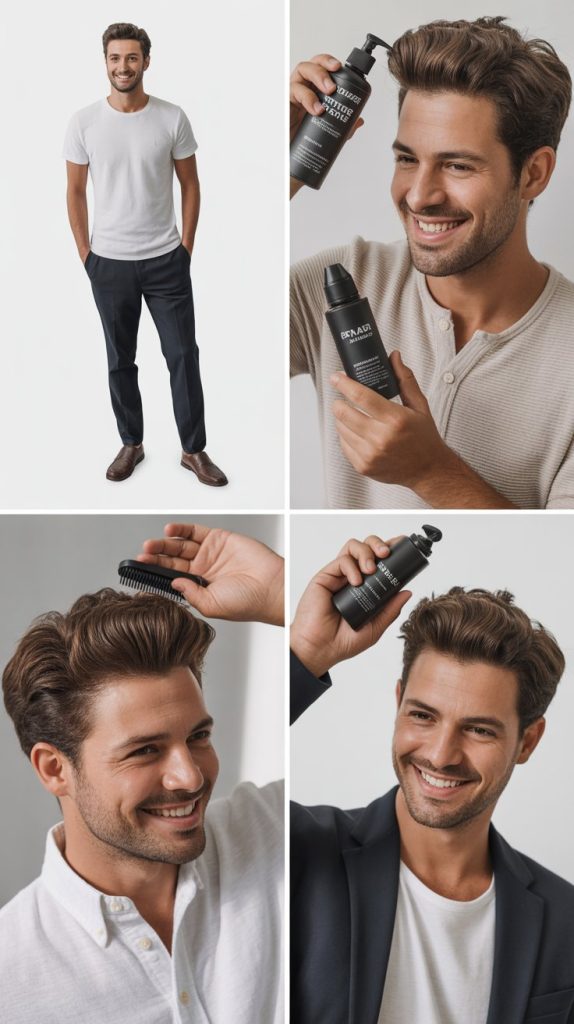
The right products provide hold, texture, and manageability necessary for maintaining styles that effectively minimize forehead prominence throughout your day.
| Product Type | Primary Benefit | Best For | Application |
|---|---|---|---|
| Matte Paste | Natural texture, medium hold | Textured crops, messy styles | Damp or dry hair, work through with fingers |
| Sea Salt Spray | Volume, beach texture | Fine hair needing body | Spray on damp hair before blow-drying |
| Pomade | Shine, strong hold | Side-parted, classic styles | Apply to damp hair, comb through |
| Texturizing Powder | Maximum volume, grip | Thin hair, flat roots | Sprinkle at roots of dry hair |
| Clay | Matte finish, firm hold | Structured styles with natural look | Work through dry or slightly damp hair |
- Begin with small amounts of any product, as adding more is easier than removing excess that weighs hair down.
- Water-based products wash out easily and allow restyling, while oil-based products provide longer-lasting hold but require thorough shampooing.
- Layer different product types for maximum effectiveness: volumizer at roots, texturizer mid-lengths, and finishing cream at ends.
- Matte finishes generally look more modern and natural than high-shine products, which can appear dated or overly groomed.
- Warm product between your palms before application to ensure even distribution and prevent clumping or uneven coverage.
- Focus product application on the top and front sections where styling matters most for forehead coverage.
- Invest in quality professional-grade products rather than drugstore alternatives, as concentration and performance differ significantly.
- Replace products every 12-18 months, as they degrade over time and lose effectiveness even when sealed.
- Experiment with different brands and formulations to find what works best with your specific hair texture and density.
- Check product ingredients for your hair type: fine hair needs lightweight formulas, while thick hair handles heavier creams and pastes.
7. Daily Styling Routine and Techniques

Establishing a consistent styling routine ensures your hairstyle consistently minimizes forehead prominence while remaining manageable and time-efficient.
- Begin by washing hair with lukewarm water, as hot water strips natural oils and can make hair harder to style.
- Apply volumizing mousse or spray to towel-dried hair, focusing on roots where lift originates.
- Blow-dry hair using medium heat while directing airflow forward and downward across the forehead area.
- Use a round brush or your fingers to guide hair into position while blow-drying for better control and intentional shaping.
- Allow hair to cool completely after blow-drying before applying styling products, as warm hair doesn’t hold shape as effectively.
- Apply your primary styling product (paste, clay, or pomade) by working it through hair from back to front with fingers.
- Create texture and separation by pinching small sections of hair and pulling gently to create piece-y definition.
- Use a comb or brush minimally, as fingers create more natural, textured results that work better for forehead minimization.
- Direct fringe or bangs forward and slightly to your preferred side, ensuring adequate forehead coverage without appearing forced.
- Finish with a light hairspray if needed for all-day hold, but avoid overuse that creates stiffness or unnatural appearance.
- The entire routine should take 5-10 minutes once you’ve practiced and identified products and techniques that work for your hair.
- Adjust your routine based on weather conditions: use more product in humid climates, less in dry environments.
8. Hairstyle Maintenance and Barber Visits

Regular maintenance keeps your hairstyle effective at minimizing forehead prominence while preventing overgrown, unkempt appearances that draw unwanted attention.
- Schedule haircuts every 3-4 weeks to maintain shape, length, and the strategic lines that minimize forehead appearance.
- Communicate clearly with your barber about your forehead concerns so they can customize cuts with appropriate fringe length and forward styling.
- Bring reference photos of styles you like to ensure you and your barber have aligned expectations about the desired result.
- Establish a relationship with one skilled barber who learns your hair patterns, growth directions, and styling preferences over time.
- Request slightly longer lengths on top during cuts to allow flexibility in styling forward for maximum forehead coverage.
- Ask your barber to demonstrate styling techniques during your appointment so you can replicate results at home.
- Between full cuts, consider fringe trims every 2 weeks to maintain optimal length without committing to full haircut frequency.
- Invest in quality scissors for home maintenance of stray hairs, but avoid attempting significant cutting yourself.
- Discuss seasonal style adjustments with your barber, as hair behaves differently in various humidity and temperature conditions.
- Request product recommendations from your barber based on your specific hair type and the style they’ve created.
- Tip appropriately (15-20%) to build positive relationships that often result in better service and attention to detail.
- Research barbers through online reviews, social media portfolios, and recommendations rather than choosing based solely on convenience or price.
9. Lifestyle Factors Affecting Hair Health

Overall hair health directly impacts your ability to achieve and maintain styles that effectively minimize forehead prominence and look professionally groomed.
- Adequate protein intake (50-60 grams daily for most men) provides the building blocks for strong, healthy hair growth and structure.
- Biotin, zinc, iron, and omega-3 fatty acids specifically support hair health and can be obtained through diet or supplementation.
- Hydration affects hair texture and manageability, so aim for 8-10 glasses of water daily for optimal results.
- Chronic stress elevates cortisol levels that can weaken hair, cause thinning, and make styling more difficult over time.
- Quality sleep (7-9 hours nightly) allows your body to repair and regenerate hair follicles for healthier growth.
- Regular exercise improves circulation to the scalp, delivering nutrients and oxygen that support hair health and growth.
- Smoking restricts blood flow to follicles and introduces toxins that damage hair structure and slow growth.
- Excessive alcohol consumption dehydrates the body and depletes nutrients necessary for healthy hair maintenance.
- Protect hair from sun damage with hats during extended outdoor exposure, as UV rays weaken and dry hair.
- Avoid excessive heat styling beyond your daily routine, and always use heat protectant products when blow-drying.
- Harsh chemical treatments (bleaching, perming) can damage hair structure, so space these treatments appropriately and use professional services.
- Address underlying health conditions like thyroid disorders or hormonal imbalances that affect hair quality through proper medical care.
10. Confidence and Styling Mindset

Your psychological approach to styling hair with a big forehead significantly influences how you present yourself and how others perceive your appearance.
- Confidence comes from accepting your natural features while using styling techniques to enhance rather than hide or compensate.
- Many successful actors, models, and public figures have prominent foreheads and embrace them as distinctive features rather than flaws.
- Focus on your overall presentation including clothing, grooming, posture, and personality rather than fixating on a single facial feature.
- Experiment with different styles until you find what makes you feel most confident rather than blindly following trends.
- Recognize that others notice your forehead far less than you do, as we’re typically our own harshest critics.
- Document your styling journey with photos to objectively track what works and build confidence in your appearance improvements.
- Surround yourself with positive influences who appreciate your overall character rather than critique specific physical features.
- Practice self-compassion when styling doesn’t go perfectly, understanding that even professionals have difficult hair days.
- Consider that distinctive features often become memorable and recognizable assets in both professional and social contexts.
- Invest in your overall grooming routine beyond just hair, including skincare, beard maintenance, and wardrobe choices.
- Seek professional help if concerns about your forehead significantly impact your self-esteem or daily functioning.
- Remember that personal style evolves over time, so remain open to trying new approaches as trends, preferences, and life stages change.
Conclusion
Mastering “How to Style Hair with a Big Forehead: Men’s Guide 2026” empowers you with knowledge and techniques to transform how you approach your appearance with confidence and creativity.
Throughout this guide, you’ve discovered that a prominent forehead isn’t a limitation but rather an opportunity to explore strategic haircuts, smart product choices, and professional styling techniques that create visual balance and enhance your natural features.
From understanding your face shape and selecting the right fringe style to implementing daily routines and maintaining optimal hair health, each strategy works together to help you look and feel your best.
The key lies not in hiding your forehead but in choosing styles that create proportion, draw attention to your best features, and reflect your personal aesthetic.
By working with skilled barbers, investing in quality products, and maintaining consistency in your grooming routine, you can achieve a polished, contemporary look that minimizes forehead prominence naturally.
Embrace your unique facial structure as part of what makes you distinctive, and use these expert techniques to present yourself with the confidence that comes from knowing you look your absolute best every single day.
