Having a larger forehead is a beautiful feature that countless celebrities and style icons proudly showcase, yet many people feel self-conscious about it and struggle to find the perfect hairstyle.
The truth is, with the right cut, styling technique, and a bit of confidence, you can create stunning looks that either beautifully balance your facial proportions or make your forehead a standout feature you’ll love.
This comprehensive guide explores ten expertly curated hairstyles specifically designed to flatter those with bigger foreheads, covering everything from classic bangs and layered cuts to modern textured styles and strategic parting techniques.
Whether you’re looking for a dramatic transformation or subtle adjustments to your current look, these hairstyles offer practical solutions that work for various hair types, lengths, and personal styles.
You’ll discover detailed styling tips, maintenance advice, and professional insights that will help you choose the perfect hairstyle to boost your confidence and showcase your unique beauty.
By the end of this article on “Big Forehead? 10 Hairstyles That Look Instantly Better,” you’ll have a complete roadmap to finding your most flattering look and embracing your features with pride.
1. Side-Swept Bangs
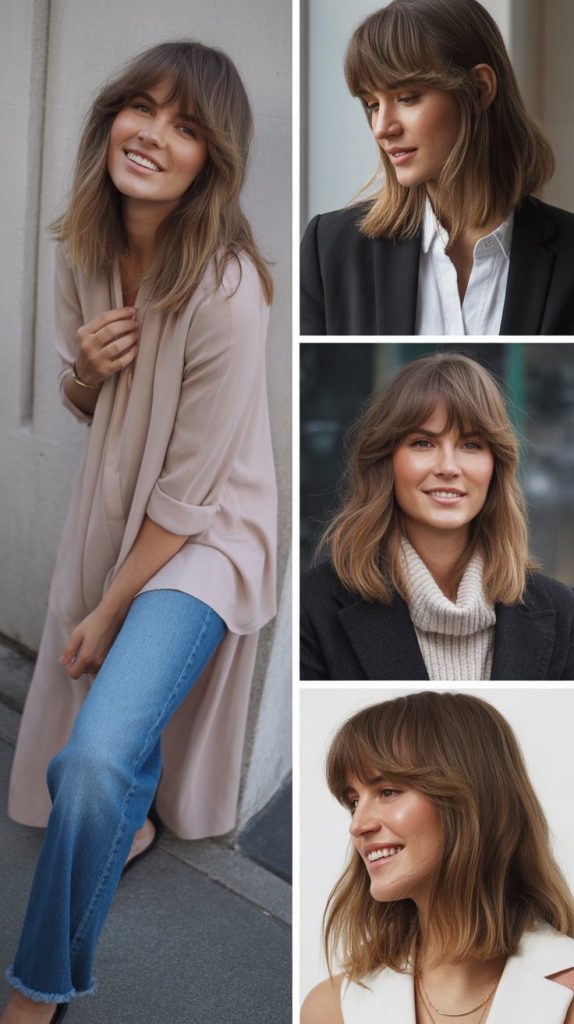
Side-swept bangs are one of the most universally flattering options for minimizing forehead appearance while adding softness and movement to your overall look.
This versatile style works across different face shapes and hair textures, making it a safe yet stylish choice for anyone looking to balance their proportions.
Why Side-Swept Bangs Work:
- They create a diagonal line across the forehead that breaks up the vertical space and draws attention across rather than up and down.
- The asymmetrical nature adds visual interest and prevents the face from looking too uniform or balanced.
- Side bangs are incredibly versatile and can be styled sleek and polished or tousled and casual depending on the occasion.
- They require less maintenance than full straight-across bangs since they blend more naturally into your hair as they grow out.
Styling Tips:
- Use a round brush while blow-drying to create volume and the perfect swooping motion across your forehead.
- Apply a lightweight styling cream or mousse to damp hair before drying to ensure the bangs hold their shape throughout the day.
- For extra hold in humid conditions, finish with a light mist of flexible-hold hairspray.
- Adjust the length based on your comfort level—longer side bangs offer more coverage while shorter ones create a more dramatic, edgy look.
Best Hair Types:
- Works exceptionally well with straight to wavy hair textures that naturally fall smoothly.
- Can be adapted for curly hair by keeping the bangs slightly longer and allowing natural texture to create the sweep.
- Fine hair benefits from this style as the angle creates the illusion of more volume.
- Thick hair should be properly thinned by a professional to prevent the bangs from looking too heavy.
2. Textured Shaggy Layers
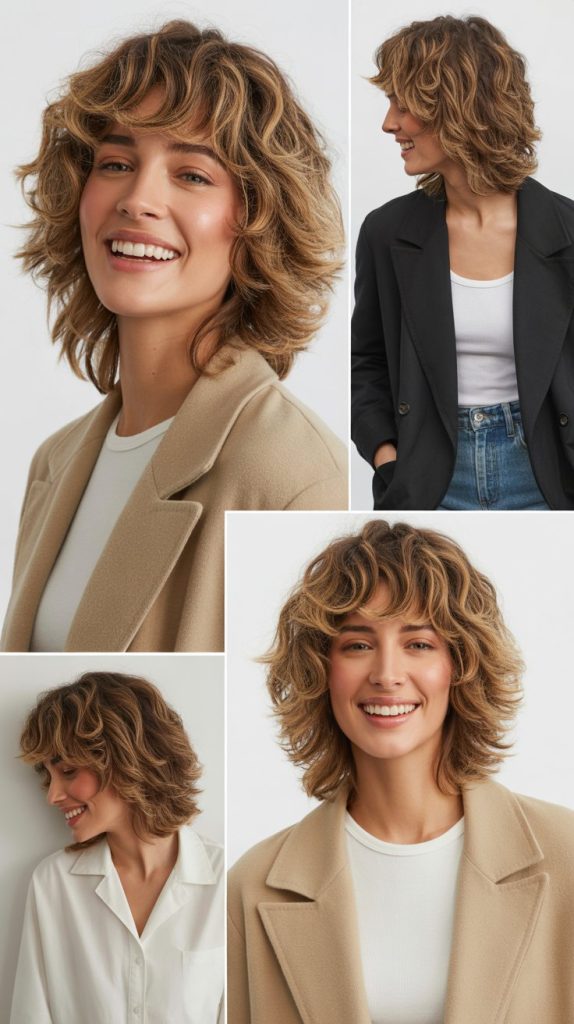
A textured shaggy cut with strategically placed layers throughout creates movement and dimension that naturally draws the eye away from the forehead area.
This modern, low-maintenance style has experienced a major resurgence and works beautifully for those wanting an effortless, cool-girl vibe.
The Power of Strategic Layering:
- Layers beginning around the cheekbone and eye level create horizontal lines that break up the forehead space.
- The choppy, piece-y texture adds dimension and prevents hair from lying flat against the head, which can emphasize forehead size.
- Shaggy layers work with your hair’s natural texture rather than against it, reducing styling time.
- This cut adds volume throughout the crown and sides, balancing out the proportions of your face.
Styling Approach:
- Embrace your natural texture by applying a texturizing spray or sea salt spray to damp hair and air-drying or diffusing.
- Use a flat iron or curling wand on random sections to enhance the piece-y, undone look.
- Work a small amount of pomade or styling paste through the ends to separate and define individual layers.
- Avoid over-brushing, which can eliminate the intentional texture and make the style look flat.
Maintenance Considerations:
- This style requires regular trims every 6-8 weeks to maintain the shape and prevent layers from looking grown-out and stringy.
- The intentionally messy nature means minor imperfections won’t be as noticeable as with sleeker styles.
- Color techniques like balayage or highlights can enhance the textured, dimensional effect.
3. Full Blunt Bangs
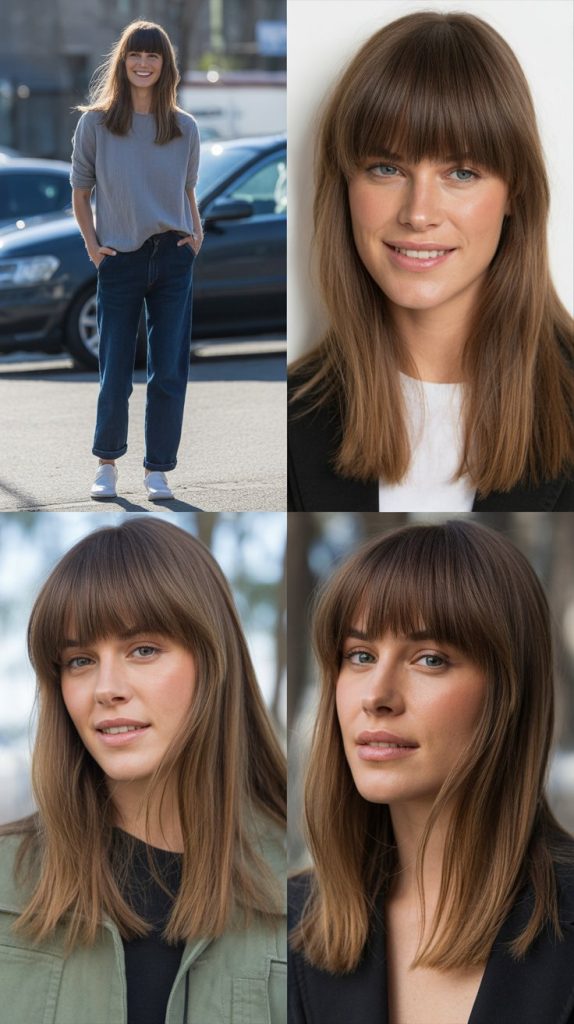
While it might seem counterintuitive, full blunt bangs cut straight across can actually be incredibly flattering by providing complete forehead coverage and creating a bold, fashion-forward statement.
This classic style has remained popular for decades precisely because of its effectiveness.
Why Blunt Bangs Are Effective:
- They provide maximum coverage of the forehead area, immediately reducing its visible size.
- The strong horizontal line creates a striking focal point that draws attention to the eyes rather than the forehead.
- Blunt bangs give any hairstyle an instant edge and modern, stylish appearance.
- They work particularly well for those with naturally straight or easily straightened hair.
Critical Styling Requirements:
- Blow-dry bangs with a round brush, directing hair downward and slightly forward to prevent them from separating or flipping up.
- Use a flat iron on the lowest effective heat setting to ensure a perfectly smooth, straight finish.
- Apply a tiny amount of smoothing serum to combat frizz without weighing down the hair.
- Consider using dry shampoo at the roots of your bangs to absorb oil and maintain volume throughout the day.
Important Considerations:
- Blunt bangs require the most maintenance of any bang style, typically needing trims every 3-4 weeks.
- They work best for those comfortable with a higher-maintenance styling routine.
- Oily skin types may find that bangs require daily washing to prevent looking greasy.
- Face shape matters—blunt bangs are particularly flattering on oval, heart-shaped, and long faces.
4. Deep Side Part with Volume
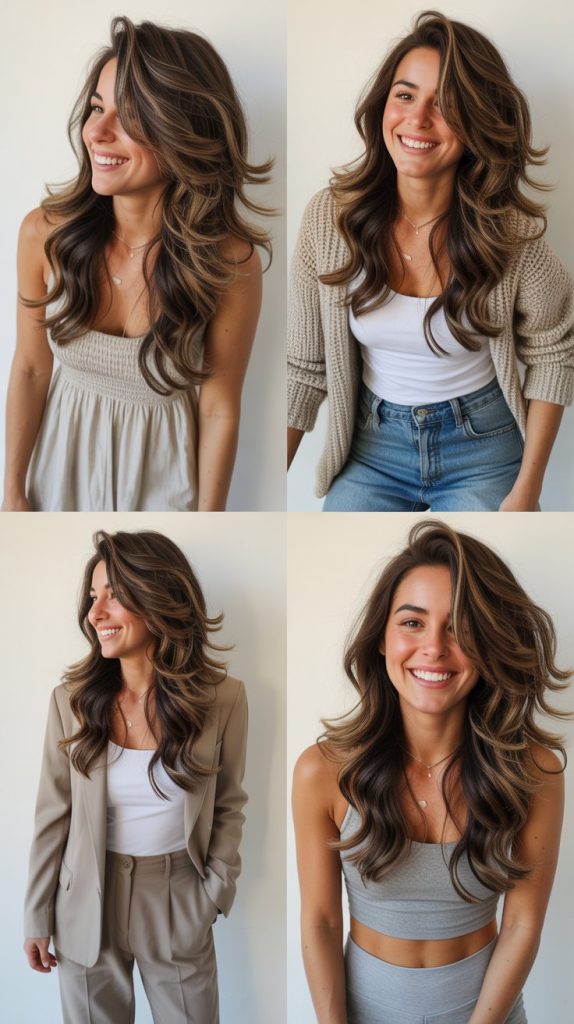
Creating a deep side part positioned far from the center line instantly redirects visual focus and adds dramatic volume that balances facial proportions.
This simple technique requires no cutting and can transform your look in seconds.
The Science Behind the Side Part:
- A deep part creates asymmetry that prevents the eye from focusing on any single feature, including the forehead.
- The volume created on the heavier side draws attention sideways rather than vertically.
- This technique elongates the face slightly while adding width at the temples, creating better balance.
- The dramatic sweep of hair across the forehead provides partial coverage without committing to bangs.
Creating Maximum Impact:
- Part hair when it’s completely dry to ensure the part stays in place rather than migrating back to its natural position.
- Use a tail comb to create a clean, precise part line approximately 2-3 inches from your natural center part.
- Apply volumizing mousse or root-lifting spray to damp hair at the roots on the heavier side before blow-drying.
- Use a round brush to lift hair at the roots while directing it away from your face for maximum volume.
- Set the part with hairspray or use bobby pins for the first 10 minutes after styling to train hair to fall in the new direction.
Versatility and Variations:
- Switch which side you part on to change your look and prevent hair from becoming too trained in one direction.
- Combine with loose waves or curls for added dimension and movement.
- Works equally well with both long and short hair lengths.
5. Curtain Bangs
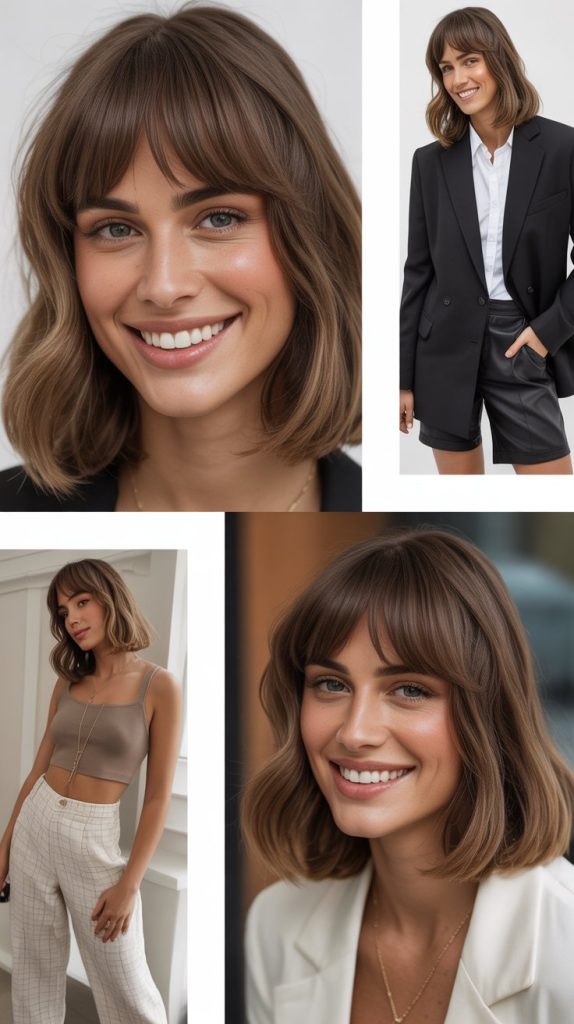
Curtain bangs have become one of the most requested hairstyles in salons worldwide, offering a perfect middle ground between full bangs and no bangs at all.
This 70s-inspired style parts down the center and frames the face on both sides, creating a soft, romantic look.
What Makes Curtain Bangs Special:
- The center part and outward sweep create a narrowing effect on the forehead while maintaining an open, face-framing quality.
- They’re more forgiving than blunt bangs, requiring less frequent trims and styling.
- The style works harmoniously with virtually any hair length from short bobs to long layers.
- Curtain bangs enhance cheekbones and eyes by drawing focus to the center of the face.
Styling for Different Occasions:
- For a casual, effortless look, simply blow-dry with fingers while directing bangs away from the center.
- Create a more polished appearance by using a small round brush to add a gentle curve outward.
- Use a flat iron or small curling iron to add a subtle flip or bend at the ends of the bangs.
- Apply a small amount of texturizing spray for piece-y separation and a more modern finish.
Length and Customization:
- Shorter curtain bangs (ending at the cheekbone) provide more forehead coverage and a bolder statement.
- Longer versions (ending at the jaw) blend seamlessly with the rest of your hair for a subtle effect.
- The density can be adjusted—thicker bangs offer more coverage while wispy bangs create a softer, more delicate look.
- Ask your stylist to customize the shape based on your face proportions and hair texture.
6. Voluminous Crown with Pulled-Back Sides
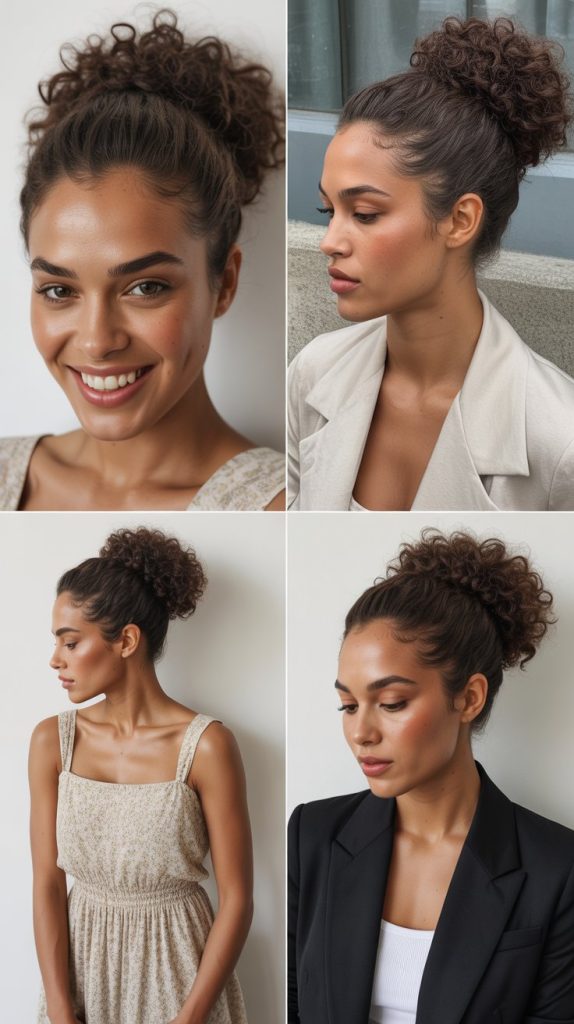
Creating height at the crown while pulling hair back at the temples provides an elegant solution that elongates the overall face shape and minimizes forehead prominence.
This sophisticated style works for both everyday wear and special occasions.
The Balancing Effect:
- Added height at the crown creates vertical elongation that makes the forehead appear proportionally smaller.
- Pulling hair back at the temples creates width at eye level, balancing out the upper face.
- The style draws the eye upward to the volume rather than focusing on the forehead itself.
- This technique works exceptionally well for formal events, professional settings, or whenever you want an elevated look.
Creating Lasting Volume:
- Start with clean, dry hair or hair that’s been properly prepped with volumizing products.
- Backcomb or tease hair at the crown in small sections, working from the mid-lengths toward the roots.
- Smooth the top layer over the teased sections to create a polished finish while maintaining volume underneath.
- Secure sides back with bobby pins, small clear elastics, or decorative clips positioned just above and behind the ears.
- Set the entire style with a medium to strong hold hairspray to ensure it lasts throughout the day.
Style Variations:
- Create a full pompadour for maximum height and vintage glamour.
- Try a half-up, half-down style that maintains volume while leaving length flowing down the back.
- Incorporate braids along the pulled-back sides for added interest and texture.
- Add accessories like decorative pins, clips, or headbands to enhance the overall look.
7. Long Layers with Face-Framing Pieces
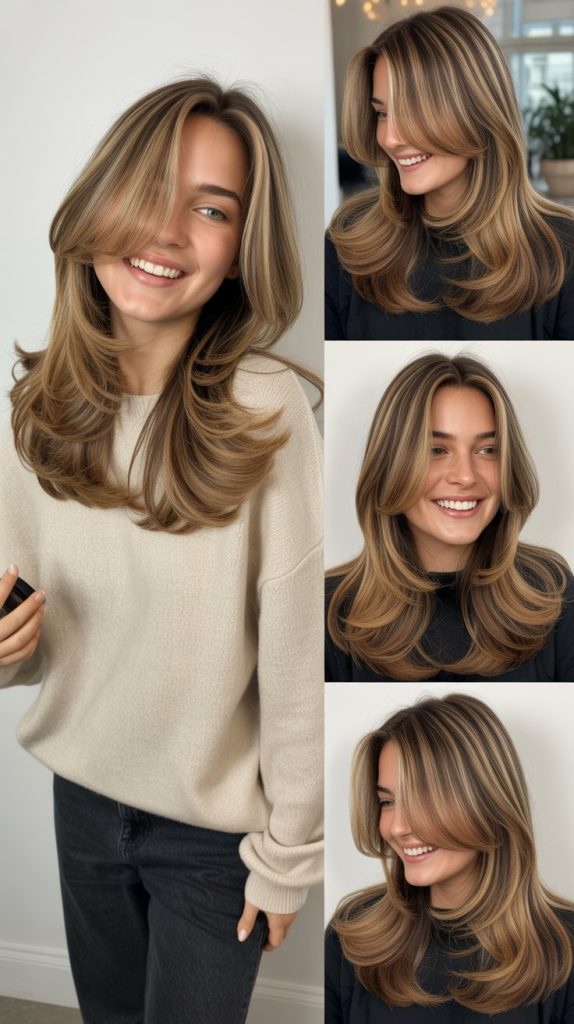
Long, flowing hair with strategically cut face-framing layers provides movement and dimension that naturally softens and balances facial features.
This timeless style remains popular because it’s flattering, versatile, and relatively low-maintenance.
Strategic Layer Placement:
- Layers beginning at chin or collarbone length create horizontal lines that break up vertical space.
- Face-framing pieces that graze the cheekbones draw attention to the center and lower portions of the face.
- The graduated length adds movement that prevents hair from looking heavy or pulling flat against the head.
- Longer lengths create an overall elongating effect that makes the forehead appear proportionally smaller.
Styling Techniques:
- Use a large barrel curling iron or wand to create soft waves that enhance the layered effect.
- Blow-dry with a round brush, focusing on directing the shortest face-framing pieces away from the face.
- Apply a heat protectant before any hot tool use to maintain hair health and shine.
- Finish with a lightweight oil or shine serum on the ends to prevent frizz and add polish.
Customization Options:
- Request longer or shorter face-framing pieces based on your comfort level and desired effect.
- Add highlights or lowlights to the front sections to further draw attention to the framing effect.
- Adjust the overall length based on lifestyle—longer layers offer more styling versatility.
- Combine with any of the bang options mentioned earlier for additional forehead coverage.
8. Messy Textured Pixie Cut
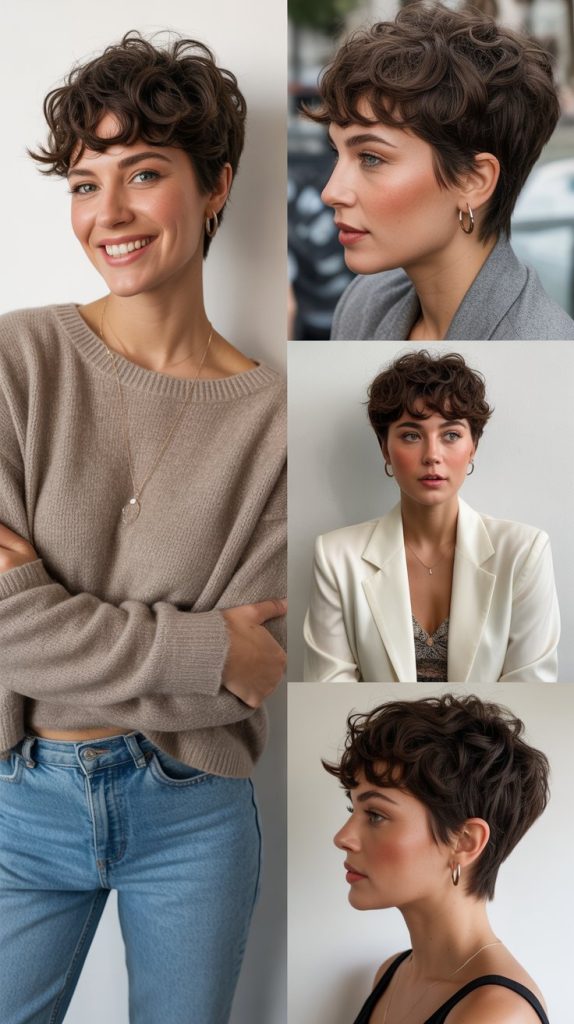
Short hair can absolutely work for those with larger foreheads when cut and styled correctly, and the textured pixie is a perfect example.
This bold, confident style uses strategic volume and texture to create balance and draw attention to facial features rather than forehead size.
Why Pixies Can Work:
- Significant volume and height on top creates vertical interest that elongates the face shape.
- Wispy, piece-y texture across the forehead provides soft coverage without the commitment of bangs.
- The overall short length draws attention to eyes, cheekbones, and other facial features.
- A well-cut pixie can actually make the face appear smaller and more delicate overall.
Essential Cutting Techniques:
- Request longer layers on top that can be styled upward and forward for maximum versatility.
- Ask for piece-y, textured bangs or a longer front section that can be swept across the forehead.
- Keep sides and back slightly shorter to create the contrast needed for the voluminous top.
- Ensure the cut is customized to your face shape—a skilled stylist will adjust proportions accordingly.
Styling for Daily Wear:
- Apply a volumizing mousse or styling paste to damp hair, focusing on the roots and top sections.
- Use your fingers to direct hair upward and slightly forward while blow-drying.
- Add texture with a small amount of pomade or wax, working it through the ends and piece-ing out individual sections.
- Finish with a light hairspray if needed, though many pixie styles look best with a more natural, undone finish.
9. Asymmetrical Bob
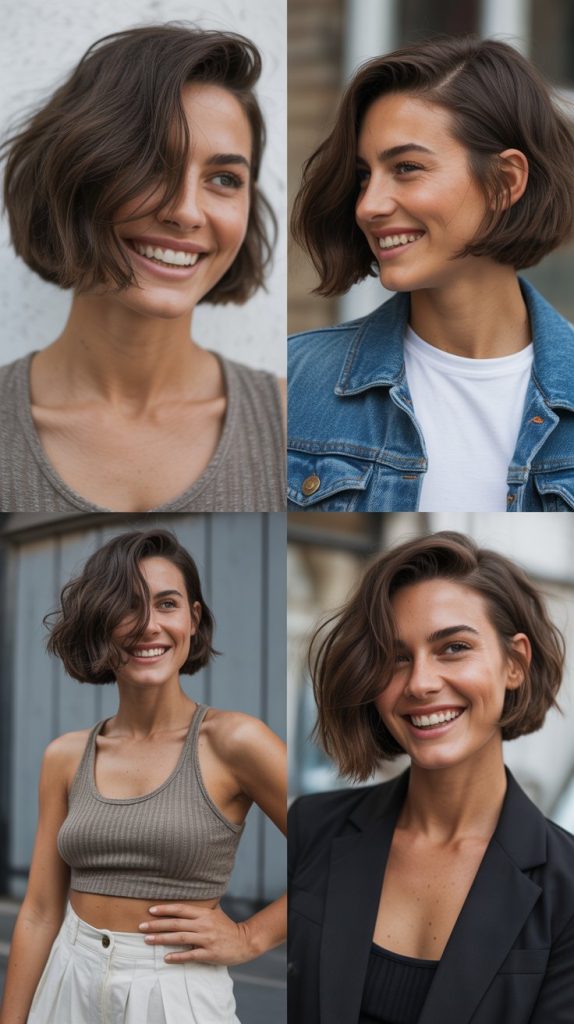
An asymmetrical bob features one side longer than the other, creating dynamic angles and visual interest that shifts focus away from the forehead.
This modern, edgy style makes a statement while providing the flattering benefits of strategic length and movement.
The Power of Asymmetry:
- The dramatic difference in length creates a strong diagonal line that the eye follows, diverting attention from any single facial feature.
- The longer side can be swept forward to provide partial forehead coverage when desired.
- Asymmetry adds visual intrigue and a fashion-forward edge that makes the overall look more about style than any specific feature.
- The angled cut typically includes layers that add movement and prevent the hair from looking too blunt or heavy.
Styling Considerations:
- Use a flat iron to create sleek, smooth lines that emphasize the precision of the cut.
- Alternatively, add loose waves for a softer, more romantic interpretation of the asymmetrical shape.
- Apply a smoothing cream before styling to control frizz and enhance shine.
- The longer side can be tucked behind the ear or worn forward depending on your preference and the occasion.
Maintenance Requirements:
- This style requires regular trims every 4-6 weeks to maintain the precise asymmetrical shape.
- The dramatic nature means grow-out is more noticeable than with symmetrical styles.
- Consider this cut if you enjoy making style statements and keeping up with regular salon appointments.
10. Low Bun or Chignon with Soft Tendrils
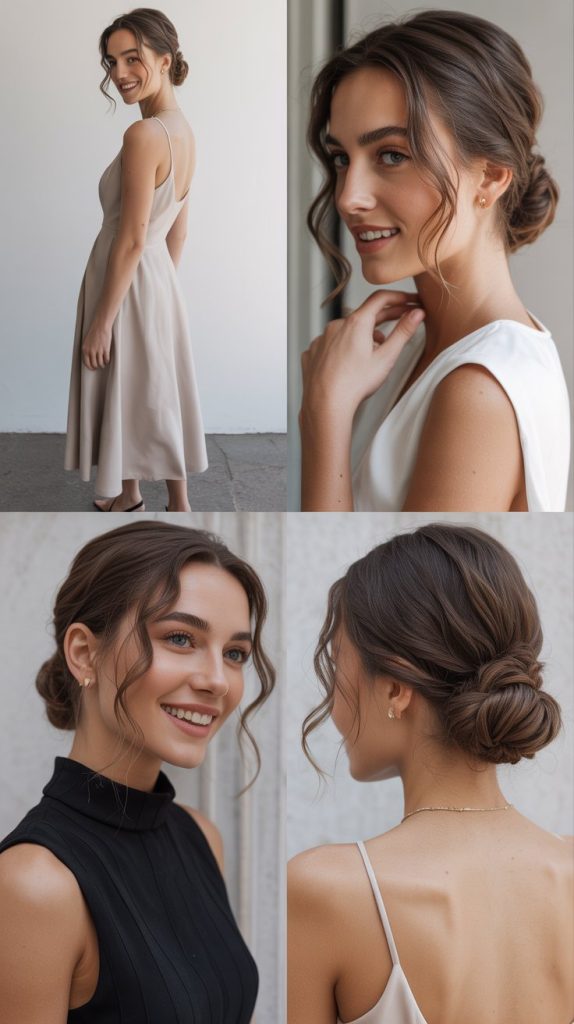
Pulling hair back into a low bun or chignon while leaving soft, face-framing tendrils loose creates an elegant, sophisticated look that minimizes forehead focus.
This classic updo works beautifully for formal occasions and professional settings while being surprisingly easy to achieve.
Why This Style Flatters:
- The low positioning of the bun keeps visual weight at the base of the neck rather than drawing the eye upward.
- Soft tendrils and pieces around the face provide gentle coverage and frame the forehead area.
- The overall look is polished and put-together while remaining soft and feminine.
- This style works across different hair types and can be adapted for various occasions.
Creating the Perfect Low Bun:
- Start with second-day hair or apply dry shampoo to clean hair for better grip and texture.
- Gather hair at the nape of the neck, leaving out face-framing pieces and the hairline area.
- Twist or braid the ponytail before wrapping it into a bun shape, securing with bobby pins.
- Gently pull and loosen the bun slightly for a softer, more romantic appearance rather than a tight, severe look.
- Use your fingers or a curling iron to add gentle waves to the loose tendrils around your face.
Customization and Variations:
- Create a sleek, polished version for professional settings or formal events.
- Add braids, twists, or other textural elements for more intricate special occasion styles.
- Position the bun slightly off-center for an asymmetrical, modern twist.
- Incorporate accessories like decorative pins, flowers, or hair jewelry to enhance the overall look.
| Hairstyle | Maintenance Level | Best Hair Type | Styling Time |
|---|---|---|---|
| Side-Swept Bangs | Medium | Straight to Wavy | 10-15 minutes |
| Textured Shaggy Layers | Low to Medium | All Types | 5-15 minutes |
| Full Blunt Bangs | High | Straight | 15-20 minutes |
| Deep Side Part | Low | All Types | 5-10 minutes |
| Curtain Bangs | Medium | All Types | 10-15 minutes |
| Voluminous Crown | Medium to High | All Types | 15-25 minutes |
| Long Face-Framing Layers | Low to Medium | All Types | 10-20 minutes |
| Messy Textured Pixie | Medium | Straight to Wavy | 10-15 minutes |
| Asymmetrical Bob | High | All Types | 15-20 minutes |
| Low Bun with Tendrils | Medium | All Types | 10-20 minutes |
Conclusion
Your forehead size is simply one unique aspect of your overall appearance, and with the right hairstyle approach, you can either minimize its appearance or celebrate it as part of your distinctive look.
The ten hairstyles featured in “Big Forehead? 10 Hairstyles That Look Instantly Better” offer diverse options ranging from commitment-free styling techniques like the deep side part to more dramatic transformations like the asymmetrical bob or textured pixie cut.
The key to finding your perfect style lies in understanding your hair type, lifestyle, maintenance preferences, and comfort level with different looks, then working with a skilled stylist who can customize any of these approaches to suit your individual features.
Remember that confidence is the most important element of any hairstyle—when you feel good about how you look, that positive energy radiates outward and makes any style more attractive.
Experiment with different options, don’t be afraid to step outside your comfort zone, and most importantly, embrace the features that make you uniquely beautiful.
Whether you choose soft curtain bangs, dramatic layers, or an elegant updo with face-framing tendrils, the right hairstyle has the power to transform not just your appearance but how you feel about yourself every single day.
