Let’s be honest—business casual can feel like a style trap. You want to look professional without drowning in a sea of khakis and bland button-downs that make you blend into the office furniture.
The good news? Mastering How to Dress Business Casual Without Looking Boring (Men’s Guide) is easier than you think, and it doesn’t require a complete wardrobe overhaul or a fashion degree.
This comprehensive guide will walk you through everything from understanding the fundamentals of business casual to incorporating unexpected details, choosing the right fabrics, mastering color coordination, accessorizing with intention, and selecting footwear that makes a statement.
You’ll discover how to build a versatile wardrobe that lets your personality shine through while maintaining that polished, professional edge.
Whether you’re new to the business casual dress code or looking to elevate your current style, these practical strategies will transform your approach to workplace dressing and help you create looks that are both appropriate and genuinely interesting.
1. Understanding Modern Business Casual Fundamentals
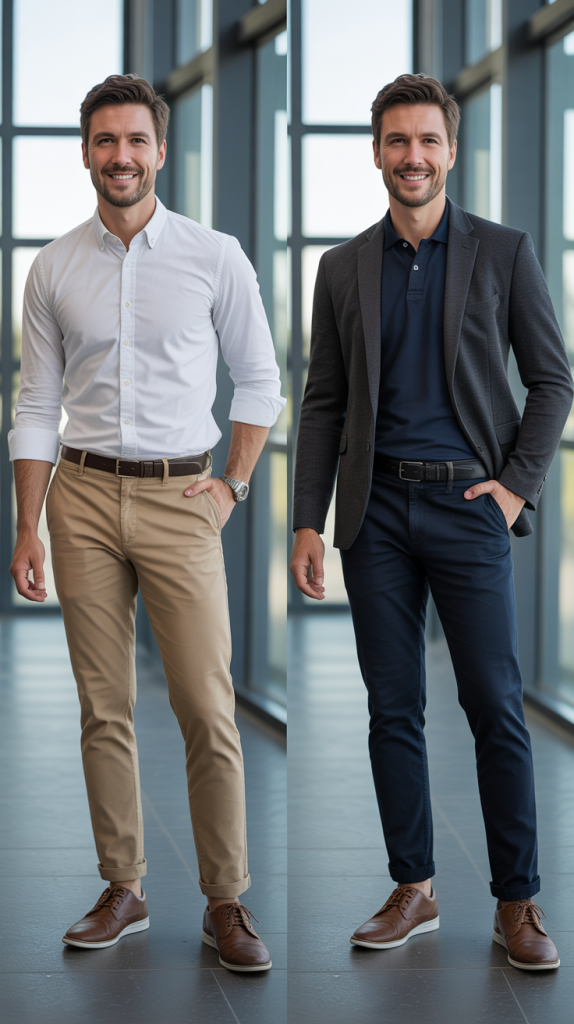
Before you can break the rules effectively, you need to understand what business casual actually means in today’s workplace.
The definition has evolved significantly over the past decade, shifting away from rigid formality toward a more flexible interpretation that balances professionalism with personal expression.
Business casual sits comfortably between full business formal (suits and ties) and casual wear (jeans and sneakers), creating a sweet spot where you can showcase your style while respecting workplace expectations.
Key points about modern business casual:
- The core foundation includes well-fitted chinos or dress pants, collared shirts (both dress shirts and polo shirts), and closed-toe shoes that aren’t athletic sneakers.
- Unlike traditional business wear, ties are typically optional, and blazers can be swapped for smart sweaters or quarter-zips depending on your office culture.
- The modern interpretation allows for more texture, pattern, and color variation than ever before, giving you room to experiment without crossing professional boundaries.
- Different industries have different standards—creative fields tend to be more relaxed while finance and law still lean conservative.
- “Casual Friday” doesn’t mean throw out all the rules; it simply means you can dial back one notch on the formality scale.
- The fit of your clothing matters more than the brand or price tag—properly tailored affordable pieces will always look better than expensive items that don’t fit well.
- Context is everything: what works for a typical Tuesday might not be appropriate for client meetings or presentations.
2. Strategic Color Coordination Beyond the Basics

Color is your secret weapon for avoiding the business casual boredom trap, yet most men stick to safe neutrals that wash them out.
Strategic color coordination means understanding which colors complement your skin tone, how to create visual interest through intentional combinations, and when to introduce bolder choices that still maintain professionalism.
Essential color strategies:
- Start by identifying your undertone (warm, cool, or neutral) to determine which colors make you look vibrant versus washed out—warm undertones suit earth tones and warm colors, while cool undertones shine in blues, grays, and jewel tones.
- Build your wardrobe around a neutral base (navy, charcoal, khaki, or olive) that serves as your foundation, then add personality through secondary and accent colors.
- Use the 60-30-10 rule for outfit composition: 60% dominant color (usually pants or main piece), 30% secondary color (shirt or sweater), and 10% accent (pocket square, watch strap, or shoes).
- Monochromatic dressing in varying shades of the same color family creates sophisticated, put-together looks without the risk of clashing.
- Don’t fear deeper, richer colors like burgundy, forest green, burnt orange, or deep purple—these add dimension without screaming for attention.
- Consider seasonal color palettes: lighter, brighter colors work for spring and summer, while deeper, muted tones suit fall and winter.
- Pay attention to color psychology in professional settings—blue conveys trust and competence, while certain shades of red can project confidence or aggression depending on context.
3. Fabric and Texture Variations That Add Depth
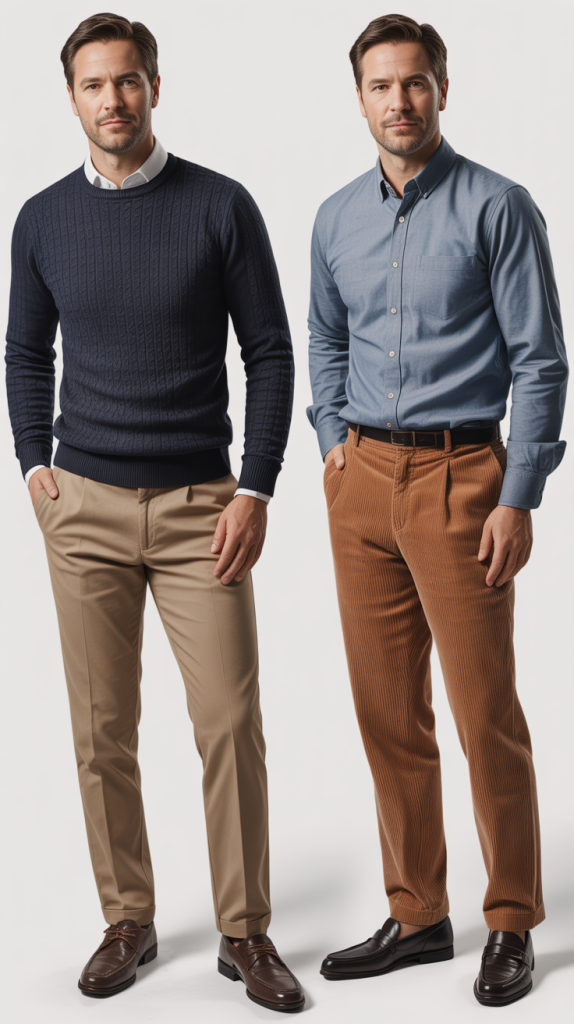
One of the most overlooked aspects of avoiding boring business casual is playing with fabric and texture, which adds visual interest even when you’re wearing simple, classic pieces.
Different textures catch light differently, create subtle contrast, and signal attention to detail that elevates your entire look.
Texture and fabric considerations:
- Oxford cloth button-downs offer more texture and visual interest than standard broadcloth dress shirts, making them perfect for business casual settings.
- Incorporate knits like merino wool sweaters, cashmere cardigans, or textured cotton polos that provide tactile variety compared to standard woven fabrics.
- Chinos come in different weights and weaves—twill offers subtle diagonal ribbing, while canvas provides a more substantial, textured appearance.
- Layer different fabric weights to create dimension: a lightweight dress shirt under a medium-weight sweater creates visual and textural contrast.
- Corduroy pants or blazers add sophisticated texture without being overly casual, especially in fall and winter months.
- Consider fabric patterns beyond solid colors: chambray, brushed cotton, slub knits, and micro-patterns all add subtle interest.
- Avoid overly shiny or synthetic-looking fabrics that can appear cheap—natural fibers like cotton, wool, and linen generally photograph and appear more professional.
| Fabric Type | Best Season | Formality Level | Texture Benefit |
|---|---|---|---|
| Oxford Cotton | Year-round | Medium | Subtle basket weave adds visual interest |
| Merino Wool | Fall/Winter | Medium-High | Soft texture, drapes well, naturally wrinkle-resistant |
| Linen Blend | Spring/Summer | Medium | Casual sophistication with natural texture |
| Twill Cotton | Year-round | Medium | Diagonal weave creates subtle pattern |
| Corduroy | Fall/Winter | Medium | Vertical ribbing adds vintage-inspired texture |
| Chambray | Spring/Summer | Medium-Low | Denim-like appearance with dress shirt structure |
4. Pattern Integration for Visual Interest
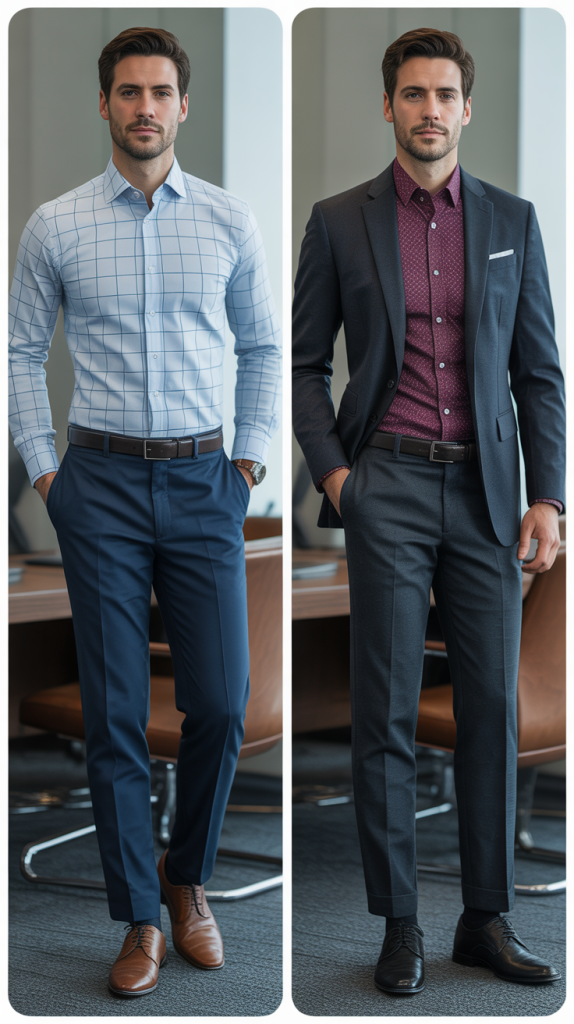
Patterns are the fastest way to transform business casual from bland to interesting, but they require a strategic approach to avoid looking chaotic or unprofessional.
The key is understanding pattern scale, mixing patterns thoughtfully, and knowing which patterns work best in professional environments.
Pattern implementation guidelines:
- Start with classic patterns that have stood the test of time: pinstripes, windowpane checks, gingham, subtle plaids, and small-scale geometric prints.
- Follow the pattern-mixing rule of scale variation—pair a large-scale pattern with a small-scale pattern rather than competing patterns of similar size.
- When mixing patterns, ensure they share at least one common color to create visual cohesion across your outfit.
- Vertical stripes in shirts or pants create a lengthening effect and add visual interest without overwhelming your silhouette.
- Micro-patterns like pin dots, small checks, or subtle herringbone read as textured solids from a distance but reveal interesting detail up close.
- Reserve louder patterns (bold plaids, large checks) for singular statement pieces rather than multiple items in one outfit.
- Consider pattern placement strategically—a patterned shirt under a solid sweater or blazer allows you to control how much pattern is visible.
5. The Art of Layering Without Bulk
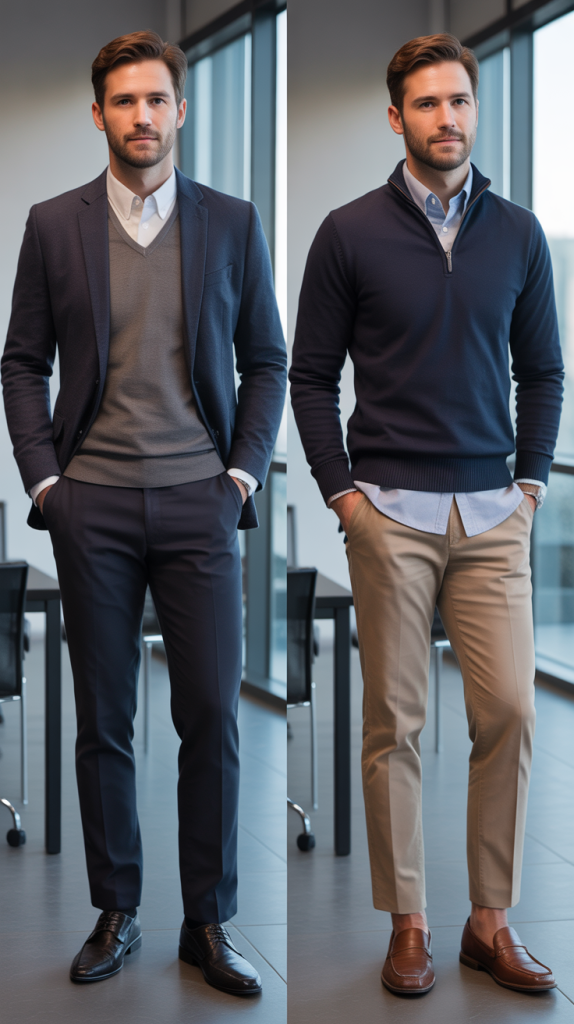
Layering is essential for creating dimensional, interesting business casual outfits, but poor layering creates bulk and looks sloppy rather than sophisticated.
Mastering the art of layering means understanding proportions, choosing the right pieces for each layer, and maintaining a streamlined silhouette.
Smart layering techniques:
- Follow the thin-to-thick principle: start with your thinnest layer (undershirt or dress shirt) and progressively add slightly thicker layers (sweater, then blazer or jacket).
- Ensure each layer is slightly shorter or longer than the layer beneath it to avoid bunching—your shirt collar should extend beyond your sweater, which should extend beyond your blazer.
- V-neck sweaters work better for layering over collared shirts than crew necks, as they showcase the shirt collar and create clean lines.
- Quarter-zip sweaters offer a sporty alternative to traditional sweaters while maintaining business casual appropriateness, especially in tech and creative industries.
- Lightweight merino wool or cashmere sweaters provide warmth without bulk, making them ideal middle layers.
- Blazers or sport coats should fit properly in the shoulders with enough room to comfortably layer a thin sweater underneath without pulling or restricting movement.
- Remove at least one layer when indoors if you’re wearing three or more pieces to avoid looking overdressed or uncomfortable.
6. Footwear Choices That Make a Statement

Your shoes can make or break a business casual outfit, yet many men default to the same boring brown or black leather shoes every day.
Expanding your footwear rotation with strategic choices adds personality to your look while maintaining professionalism.
Footwear selection strategies:
- Invest in quality leather shoes in diverse styles: oxfords, derbies, loafers, monk straps, and Chelsea boots each bring different energy to business casual outfits.
- Suede shoes in navy, brown, or gray add texture and visual interest compared to smooth leather while remaining appropriately professional in most business casual environments.
- The color of your shoes should generally be darker than your pants, though this rule can be bent with intention for more fashion-forward looks.
- Leather sneakers in minimalist designs (solid colors, simple silhouettes, quality materials) bridge the gap between casual and professional in modern workplaces.
- Seasonal rotation matters: lighter browns and suedes for spring/summer, darker leathers and heavier boots for fall/winter.
- Shoe maintenance is crucial—scuffed, dirty, or worn-out shoes undermine even the best outfit, so regular cleaning and conditioning are essential.
- Match your shoe formality to your outfit formality: save relaxed loafers for casual Fridays and reserve polished oxfords for more formal business casual occasions.
7. Accessorizing with Purpose and Restraint
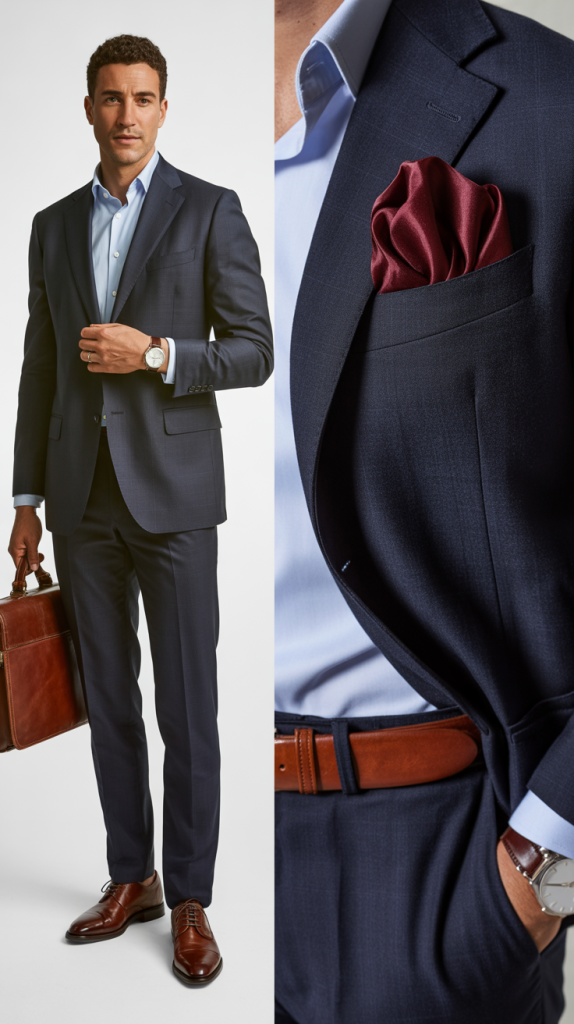
Accessories are the finishing touches that transform standard business casual into personally distinctive style, but the line between refined and overdone is thin.
Strategic accessorizing means selecting pieces that enhance rather than overwhelm your outfit.
Thoughtful accessory choices:
- A quality watch is the single most important accessory for men—choose styles appropriate for your industry, ranging from minimalist dress watches to sporty chronographs for more casual environments.
- Leather belts should match your shoes in color (or at least in warmth/coolness) and formality level—casual braided belts with casual shoes, sleek leather with dressier options.
- Pocket squares add personality to blazers without being mandatory—fold them casually rather than in perfect geometric patterns for business casual settings.
- Ties are optional in business casual, but when worn, choose interesting textures (knit ties, wool ties) or subtle patterns rather than boring solid silk.
- Minimize jewelry to professional pieces: a wedding band, one quality watch, perhaps simple cufflinks if wearing French cuff shirts—skip the bracelets and multiple rings for conservative workplaces.
- Quality leather bags (briefcases, messenger bags, or modern backpacks in leather or high-quality technical fabric) elevate your entire look and signal attention to detail.
- Sunglasses matter even though they’re typically removed indoors—classic styles like wayfarers or aviators are safe professional choices.
8. Fit Optimization and Tailoring Essentials
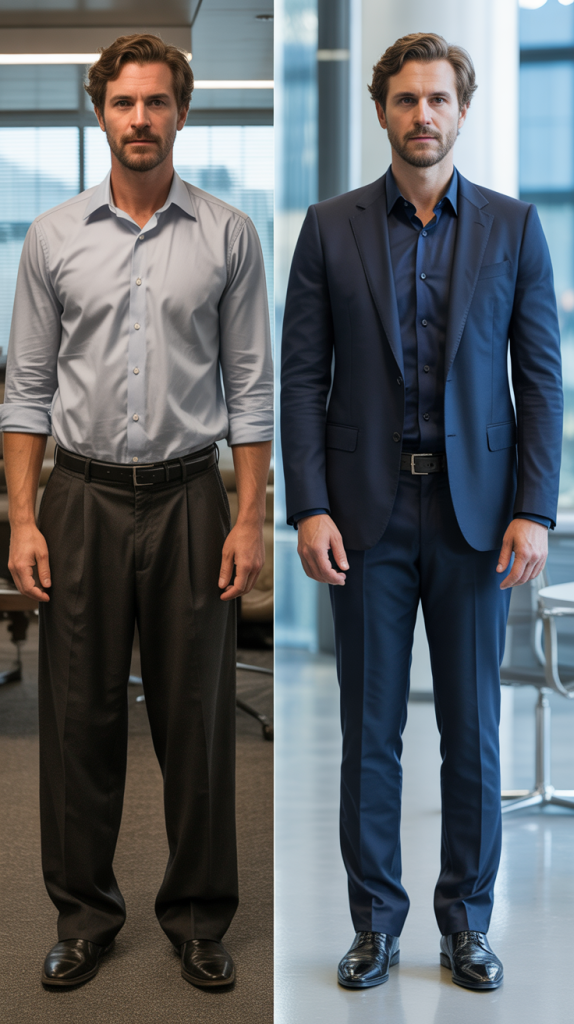
No matter how expensive or stylish your clothing is, poor fit immediately broadcasts “boring” or worse, “sloppy.”
Understanding fit standards and investing in basic tailoring transforms off-the-rack clothing into pieces that look custom-made for your body.
Fit fundamentals that matter:
- Shoulders are the most important fit point on jackets and shirts—seams should sit at the edge of your shoulder, not drooping down your arm or pulling across your back.
- Sleeve length on dress shirts should allow about half an inch of cuff to show beyond your jacket sleeve; on casual shirts, sleeves should end at your wrist bone.
- Pants should sit at your natural waist (not your hips) without requiring a belt to stay up, with enough room in the seat and thighs to move comfortably without excess fabric.
- Pant break (where pants meet shoes) should be minimal for modern looks—a slight break or no break creates cleaner lines than traditional full breaks.
- Shirts should taper slightly from chest to waist rather than billowing out, creating a clean silhouette without being skin-tight.
- Common tailoring alterations include hemming pants, tapering pant legs, taking in shirt sides, shortening sleeves, and adjusting jacket sleeves—most cost under $20-30 per alteration.
- A good tailor is worth their weight in gold—finding one you trust allows you to buy sale items knowing they can be adjusted to fit perfectly.
9. Seasonal Adaptation Strategies

Business casual should evolve with the seasons, incorporating different fabrics, colors, and styling approaches that keep your look fresh throughout the year while adapting to weather conditions appropriately.
Seasonal style adjustments:
- Spring business casual embraces lighter colors (pastels, light blues, soft grays), breathable fabrics like cotton and linen blends, and the return of unlined jackets.
- Summer requires the lightest fabrics available—cotton, linen, seersucker, and tropical wool—in breathable weaves with lighter colors that reflect rather than absorb heat.
- Fall allows richer, deeper colors (burgundy, forest green, burnt orange, chocolate brown) and the introduction of layering pieces like sweaters and vests.
- Winter business casual incorporates heavier fabrics (flannel, wool, corduroy), darker colors, substantial layering, and warmer outerwear that doesn’t compromise your professional appearance.
- Transitional pieces like lightweight sweaters, blazers, and versatile chinos work across multiple seasons, maximizing your wardrobe investment.
- Consider climate-appropriate details: unlined jackets for warm months, thermal linings for winter, water-resistant fabrics for rainy seasons.
- Rotate your entire wardrobe seasonally rather than mixing summer and winter pieces randomly—this naturally refreshes your look throughout the year.
| Season | Ideal Fabrics | Color Palette | Key Pieces |
|---|---|---|---|
| Spring | Cotton, light wool, cotton-linen blends | Pastels, light blues, soft grays, navy | Unlined blazers, lightweight chinos, Oxford shirts |
| Summer | Linen, seersucker, tropical wool, cotton | White, light blue, tan, pale pink | Short-sleeve shirts, lightweight pants, loafers |
| Fall | Flannel, medium-weight wool, corduroy | Burgundy, olive, brown, orange | Sweaters, layering pieces, boots |
| Winter | Heavy wool, flannel, cashmere | Charcoal, navy, black, deep colors | Blazers, thick sweaters, leather shoes, overcoats |
10. Building a Versatile Capsule Wardrobe
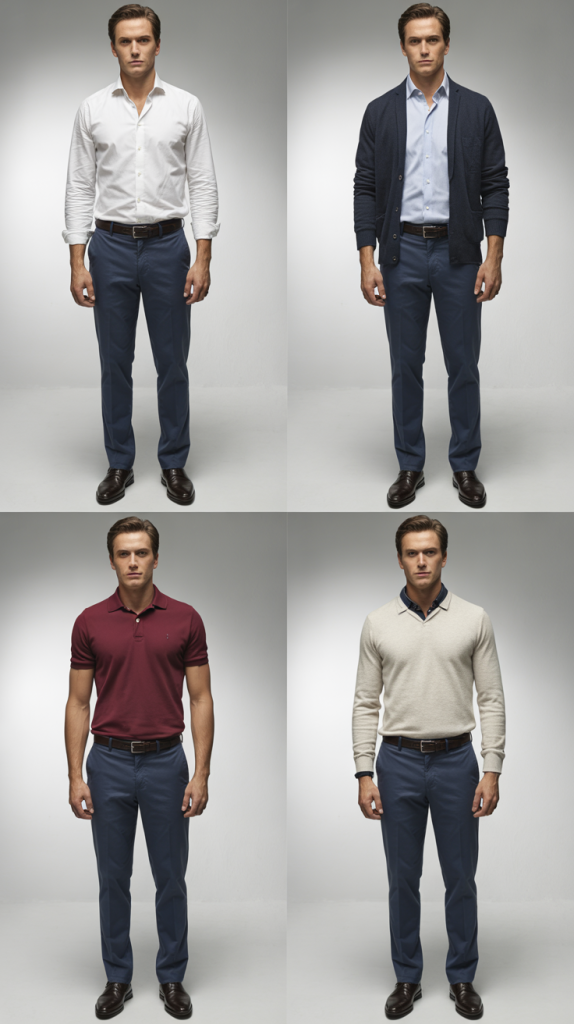
Rather than accumulating random pieces that don’t work together, a strategic capsule wardrobe approach ensures everything coordinates, maximizes outfit combinations, and eliminates the “nothing to wear” problem while maintaining visual interest.
Capsule wardrobe construction principles:
- Start with 5-7 foundational neutral pieces: 2-3 pants in different colors (navy, charcoal, khaki), 2-3 shirts in versatile colors, and 1-2 layering pieces.
- Add 5-7 secondary pieces that introduce color, pattern, or texture: patterned shirts, colored sweaters, or textured blazers that coordinate with your foundations.
- Include 3-4 pairs of shoes that cover different formality levels: dress shoes, casual leather shoes, loafers, and potentially minimalist leather sneakers.
- Ensure every new piece works with at least three existing items in your wardrobe before purchasing to avoid orphan pieces.
- Stick to a consistent color palette (either warm or cool tones) so everything naturally coordinates without constant deliberation.
- Replace the lowest-quality or least-worn piece when adding something new to prevent closet bloat and maintain quality standards.
- A well-planned 20-piece capsule wardrobe can create 50+ distinct outfits through strategic mixing and matching.
11. Industry-Specific Considerations

Different industries have vastly different business casual expectations, and understanding your specific workplace culture prevents both under-dressing and over-dressing while allowing appropriate personal expression.
Industry-specific guidelines:
- Tech and creative industries offer the most flexibility—well-fitted jeans, casual blazers, sneakers, and bolder colors are often acceptable and even encouraged.
- Finance, law, and consulting require conservative business casual—stick to traditional colors, minimal patterns, leather dress shoes, and consider ties for client-facing situations.
- Healthcare and education fall in the middle—professional but approachable, with polo shirts, chinos, and clean sneakers sometimes acceptable depending on role.
- Retail and hospitality business casual often includes company-specific requirements but generally allows more color and pattern variation than traditional corporate environments.
- Startups and small businesses vary wildly—observe senior leadership and long-tenured employees to gauge appropriate standards.
- When in doubt, dress slightly more formally than you think necessary for the first few weeks, then adjust based on observation.
- Client-facing roles require more conservative choices than behind-the-scenes positions even within the same company.
12. Common Business Casual Mistakes to Avoid
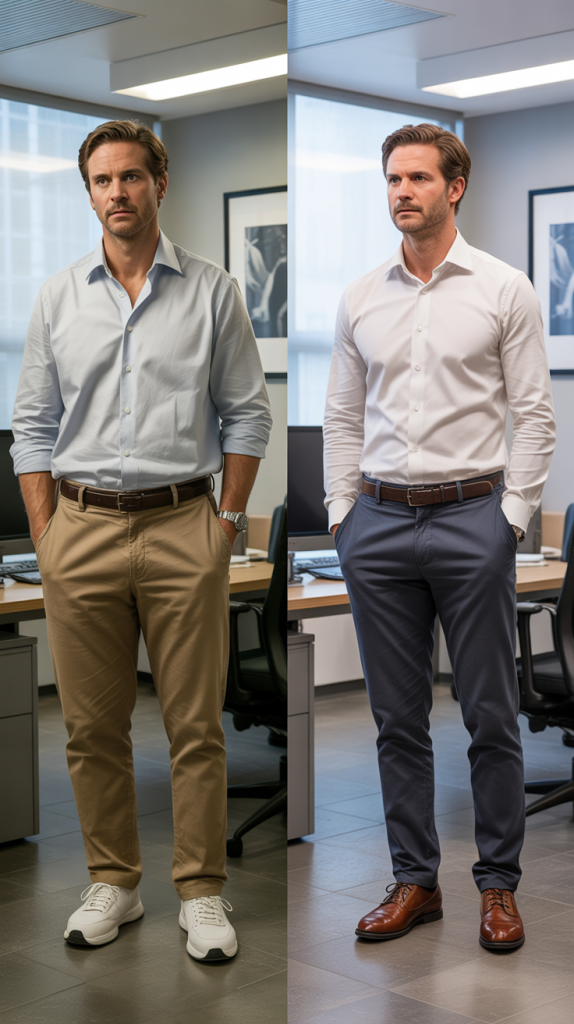
Recognizing and avoiding common pitfalls prevents you from undermining your style efforts and ensures your business casual always projects professionalism and intention.
Critical mistakes to sidestep:
- Wearing athletic or running sneakers with business casual unless they’re minimal leather sneakers specifically designed to bridge casual and professional.
- Choosing shirts or pants that are too loose or too tight—both extremes look unprofessional and uncomfortable.
- Neglecting grooming details like untrimmed nails, unkempt facial hair, or scuffed shoes that contradict your otherwise polished appearance.
- Over-accessorizing with multiple bracelets, rings, or statement pieces that compete for attention rather than complement your outfit.
- Wearing clothes with visible wrinkles, stains, or damage—business casual still requires well-maintained clothing.
- Defaulting to the same outfit formula every day without variation, which is literally the definition of boring.
- Ignoring proportion—wearing baggy pants with a fitted shirt or vice versa creates visual imbalance.
- Attempting trends that don’t align with your personal style or body type just because they’re currently popular.
- Forgetting that fit trumps brand—expensive clothes that don’t fit properly always look worse than affordable well-fitted alternatives.
- Mixing too many patterns or colors without a unifying element, creating visual chaos rather than intentional style.
Conclusion
Mastering How to Dress Business Casual Without Looking Boring (Men’s Guide) comes down to understanding the fundamentals while thoughtfully incorporating elements that reflect your personality—strategic color choices, varied textures, intentional patterns, smart layering, quality footwear, purposeful accessories, and proper fit.
Business casual doesn’t have to mean sacrificing style for professionalism; instead, it’s an opportunity to showcase attention to detail and personal taste within appropriate boundaries.
By building a versatile wardrobe foundation, adapting to seasonal changes, understanding your industry’s specific expectations, and avoiding common mistakes, you’ll create a business casual style that’s distinctly yours without compromising workplace appropriateness.
Remember that consistency matters more than perfection—showing up daily in well-fitted, thoughtfully coordinated outfits builds a professional reputation and personal brand that extends far beyond clothing.
Start with small changes, incorporate new elements gradually, and pay attention to what makes you feel confident and authentic.
The investment in elevating your business casual wardrobe pays dividends in how you’re perceived professionally and, more importantly, how you feel about yourself every single day you walk into the office.
