Having a larger forehead doesn’t mean your styling options are limited—in fact, it opens up a world of strategic haircuts and techniques that can completely transform your look.
Many men worry unnecessarily about their forehead size, not realizing that with the right approach, it can become one of their most distinguished features.
Professional barbers have spent decades perfecting methods to balance facial proportions, and their insider knowledge can help you discover styles that enhance your natural features while boosting your confidence.
This comprehensive guide on How to Style Hair with a Big Forehead for Men (Barber-Approved Tips) will walk you through everything from understanding your face shape to selecting the perfect cut, styling products, and daily maintenance routines.
You’ll discover which hairstyles work best for larger foreheads, which ones to avoid, and how to work with your barber to achieve magazine-worthy results.
Whether you prefer classic cuts or modern trends, you’ll find expert-backed solutions that fit your lifestyle and personal style.
Get ready to transform how you think about your hair and unlock styling possibilities you never knew existed.
1. Understanding Your Forehead and Face Shape

Before diving into specific hairstyles, you need to understand how your forehead relates to your overall facial structure and proportions.
Recognizing your face shape and forehead size helps you make informed decisions about which styles will naturally complement your features rather than fighting against them.
- Your forehead is considered larger if it measures more than four fingers in width when placed horizontally across it.
- Face shapes typically fall into categories like oval, square, round, diamond, heart, or oblong, and each works differently with forehead size.
- An oval face with a larger forehead is often the easiest to style because of its balanced proportions.
- Square faces with big foreheads benefit from styles that soften angular jawlines while managing forehead prominence.
- Round faces need length and volume to create the illusion of a longer face, which can help balance a larger forehead.
- Diamond-shaped faces with prominent foreheads should focus on styles that add width at the temples and forehead area.
- Heart-shaped faces naturally have wider foreheads, so the goal is to create balance with the narrower chin area.
- Understanding your hairline type (straight, widow’s peak, receding, M-shaped) is equally important as it affects which styles will work best.
- Take front-facing photos in natural light to accurately assess your face shape and forehead proportion.
- Your barber can provide professional insight into your face shape during a consultation before any cutting begins.
2. Best Haircuts for Men with Big Foreheads
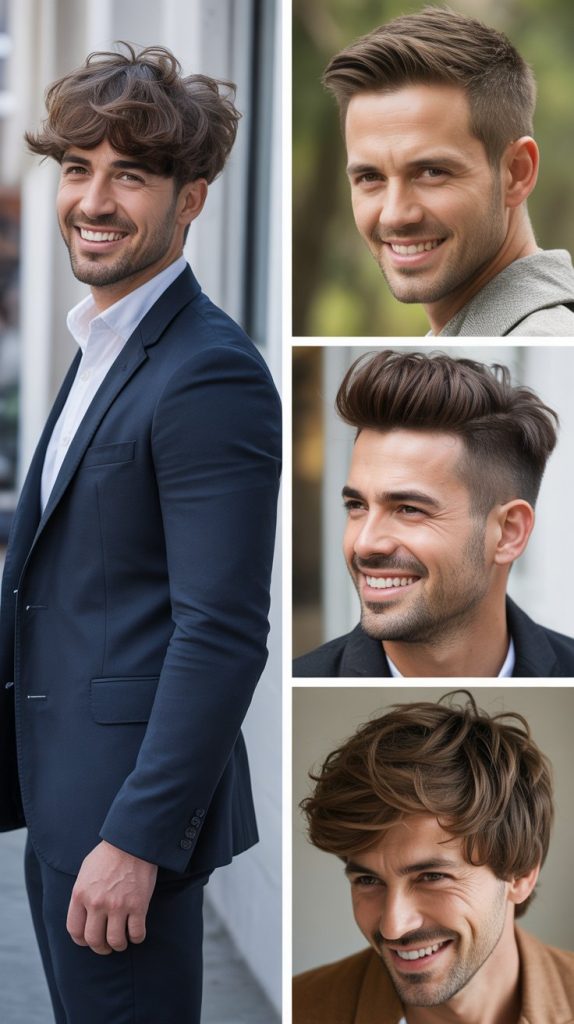
Choosing the right haircut is the foundation of successfully styling hair when you have a larger forehead.
These barber-approved cuts strategically use length, texture, and positioning to create visual balance and draw attention to your best features.
- The textured fringe or crop cut brings hair forward onto the forehead, creating immediate coverage while maintaining a modern edge.
- Side-swept hairstyles redirect visual attention horizontally across the face rather than emphasizing forehead height.
- Medium-length styles with forward movement allow for versatile styling that can be adjusted based on the occasion.
- The Caesar cut features a short, horizontal fringe that’s been a classic solution for larger foreheads since ancient Roman times.
- Layered cuts with volume on top create vertical interest that balances forehead proportions without requiring fringe.
- The French crop combines a blunt fringe with short sides, offering a contemporary look that minimizes forehead appearance.
- Quiff hairstyles, when styled forward rather than back, can provide coverage while adding fashionable height.
- Messy, textured styles with piece-y bangs offer a casual, modern approach that naturally falls across the forehead.
- Asymmetrical cuts with longer sections on one side create visual intrigue that distracts from forehead size.
- Ask your barber to leave enough length in the front (at least 2-3 inches) to give you styling flexibility and forehead coverage options.
3. Hairstyles to Avoid with a Larger Forehead

Understanding which styles to avoid is just as important as knowing which ones work well.
Certain cuts and styling approaches can actually emphasize a larger forehead rather than balance it, making strategic avoidance crucial.
- Slicked-back hairstyles pull all hair away from the forehead, creating maximum exposure and emphasizing its size.
- Very short buzz cuts or crew cuts offer no coverage or framing, making the forehead the dominant facial feature.
- High and tight military cuts remove all hair from the sides and front, directing all attention to the forehead area.
- Extreme pompadours with height but no forward coverage can elongate the face and make the forehead appear even larger.
- Center parts tend to frame the forehead symmetrically, often highlighting its width rather than minimizing it.
- Completely shaved heads eliminate all possibility of using hair to balance facial proportions.
- Tight, pulled-back man buns or ponytails have the same effect as slicked-back styles, offering zero forehead coverage.
- Styles with too much volume on the sides without corresponding top coverage can make the forehead look disproportionately large.
- Ultra-clean, precise hairlines can draw attention to where the hair starts, emphasizing forehead height.
- Overly symmetrical styles without texture or movement can create a static look that doesn’t distract from forehead size.
4. The Importance of Fringe and Bangs

Fringe and bangs are perhaps the most powerful tools in managing the appearance of a larger forehead.
Understanding the different types and how to style them gives you maximum control over your look.
- A textured, piece-y fringe offers the most natural-looking coverage while maintaining a contemporary, lived-in aesthetic.
- Blunt-cut bangs provide maximum coverage but require regular maintenance to prevent them from looking too heavy or severe.
- Side-swept fringe creates diagonal lines across the forehead, which are more flattering than harsh horizontal divisions.
- Longer, eye-grazing bangs offer versatility since they can be styled forward for coverage or swept aside for variation.
- Choppy, uneven fringe with varying lengths creates movement and visual interest while naturally falling across the forehead.
- The key to natural-looking fringe is ensuring it’s not too thick or heavy, which can look artificial and dated.
- Fringe should typically start 2-3 inches back from the hairline to avoid creating a “bowl cut” effect.
- Regular trims every 3-4 weeks keep fringe at the optimal length and prevent it from becoming too long and unmanageable.
- Ask your barber to point-cut or texturize the ends of your fringe rather than cutting it straight across for a softer appearance.
- Styling fringe with a light product and blow-dryer helps create natural movement rather than a flat, stuck-down look.
5. Using Hair Texture to Your Advantage

Hair texture plays a significant role in how effectively you can style for a larger forehead.
Working with your natural texture rather than against it creates better, longer-lasting results with less daily effort.
- Naturally wavy or curly hair provides built-in volume and texture that can be directed forward to create forehead coverage.
- Straight hair allows for precise styling and clean lines but may require more product to maintain forward-styled looks throughout the day.
- Thick, coarse hair holds styles better and creates more substantial coverage when styled toward the forehead.
- Fine or thin hair benefits from texturizing products and cutting techniques that create the illusion of more density and movement.
- Men with curly hair should avoid having it cut too short on top, as maintaining length allows curls to fall forward naturally.
- Wavy textures work exceptionally well with the French crop, Caesar cut, and textured fringe styles.
- Adding texture through strategic layering prevents hair from lying too flat against the head, which can emphasize forehead size.
- Salt spray and texturizing powders enhance natural texture and create the piecey, movable styles that work best for forehead coverage.
- Embrace your natural texture rather than constantly fighting it with straightening or excessive product use.
- Your barber can adjust cutting techniques based on your texture to maximize styling potential and minimize daily effort.
6. Strategic Use of Hair Color and Highlights

Color techniques can create visual interest and dimension that draws attention away from forehead size.
Strategic highlighting and coloring add depth that makes your overall hairstyle more engaging and balanced.
- Subtle highlights around the front hairline and fringe area create dimension that catches light and draws the eye to hair rather than forehead.
- Lowlights add depth and shadow throughout the hair, creating a multi-dimensional look that’s more visually complex and interesting.
- Avoid single-process color that’s too uniform, as flat color can make hair look one-dimensional and less effective at framing the face.
- Babylights (very fine, delicate highlights) create natural-looking brightness that enhances texture and movement in forward-styled hair.
- Balayage techniques provide a graduated color effect that adds movement and prevents hair from looking flat or heavy.
- Darker colors at the roots with lighter ends create depth while keeping the focus on the styled portions of your hair.
- Cool-toned colors can create a modern, edgy look while warm tones offer a more natural, sun-kissed appearance.
- Consult with a professional colorist about shades that complement your skin tone while enhancing your chosen hairstyle.
- Color treatments require maintenance every 6-8 weeks to keep the look fresh and prevent obvious root growth.
- Even subtle color changes can dramatically improve how your hairstyle frames your face and manages forehead appearance.
7. Essential Styling Products and Tools

Having the right products and tools makes the difference between a hairstyle that works all day and one that falls flat within hours.
Barbers recommend specific product types for achieving and maintaining styles that minimize forehead appearance.
| Product Type | Best For | Hold Strength | Finish |
|---|---|---|---|
| Matte Clay | Textured, natural styles | Medium to Strong | Matte |
| Pomade | Slick, controlled styles | Medium to Strong | Shine to Matte |
| Texture Spray | Volume and movement | Light to Medium | Matte |
| Sea Salt Spray | Wavy, beachy texture | Light | Matte |
| Styling Cream | Soft, natural looks | Light to Medium | Natural |
| Hair Powder | Volume at roots | Medium | Matte |
- Matte clay products provide hold and texture without shine, creating modern, natural-looking styles with forward movement.
- A quality blow dryer is essential for directing hair forward and creating volume that lasts throughout the day.
- Round brushes help create lift and direction when blow-drying, especially useful for styling fringe and forward-swept looks.
- Pre-styling sprays or heat protectants add texture and protect hair when using heat tools regularly.
- Pomades work well for sleeker forward-swept styles but choose matte formulas to avoid an overly greasy appearance.
- Texture powders applied at the roots create lift and volume that prevents hair from lying flat against the forehead.
- Light-hold hairspray sets your style without making it stiff, crunchy, or unnatural-looking.
- A vented brush helps distribute product evenly and creates natural-looking texture when styling.
- Start with small amounts of product (about a dime-sized portion) and add more if needed to avoid weighing hair down.
- Store products properly and replace them every 12-18 months as they lose effectiveness over time.
8. Daily Styling Routine and Techniques

Establishing a consistent styling routine ensures your hair looks its best every day while minimizing the time and effort required.
These barber-approved techniques work specifically for managing larger foreheads.
- Start with clean, towel-dried hair that’s still slightly damp for maximum styling control and product absorption.
- Apply a pre-styling product or heat protectant spray evenly through damp hair before blow-drying.
- Blow-dry hair forward and slightly downward, using your fingers or a brush to direct hair toward the forehead area.
- Focus the blow-dryer on the roots first to create lift, then work through mid-lengths and ends for overall shape.
- Once hair is about 80% dry, apply your main styling product (clay, pomade, or cream) by rubbing it between palms first.
- Work product through hair from back to front, using fingers to create texture and direct hair into the desired position.
- Use your fingertips to create separation and piece-y texture in the fringe area rather than combing it smooth.
- Style the front section last, carefully positioning fringe or forward-swept hair to achieve optimal forehead coverage.
- A light mist of texture spray or hairspray helps set the style without making it stiff or immovable.
- Total styling time should be 5-10 minutes once you’ve mastered the technique and developed your routine.
9. Working with Your Barber for Best Results

Your relationship with your barber is crucial for achieving and maintaining the perfect hairstyle for your larger forehead.
Clear communication and regular appointments ensure consistent results that match your expectations.
- Schedule a thorough consultation before your first cut to discuss your forehead concerns and styling goals openly.
- Bring reference photos of hairstyles you like, but be prepared for your barber to adapt them to your specific features.
- Ask your barber about their experience styling hair for larger foreheads and request examples of their work.
- Discuss your daily routine, styling abilities, and time constraints so your barber can recommend realistic, maintainable styles.
- Request that your barber show you how to style your hair before you leave the chair, including product recommendations.
- Book appointments every 3-4 weeks to maintain optimal shape and length, especially for fringe-based styles.
- Be honest about what’s working and what isn’t at each appointment so adjustments can be made progressively.
- Ask about different styling options for the same cut to maximize versatility between appointments.
- Discuss how your hairstyle might need to change seasonally due to weather, humidity, or lifestyle changes.
- Build a relationship with one barber who learns your hair and preferences rather than seeing different people each time.
- Tip appropriately (15-20%) to show appreciation for personalized service and encourage your barber to continue giving you special attention.
10. Lifestyle Factors That Affect Your Hairstyle

Your daily activities, environment, and personal habits significantly impact how well your hairstyle holds up and how much maintenance it requires.
Understanding these factors helps you choose styles that fit your real life.
- High-activity lifestyles or gym routines require low-maintenance styles that look good even after sweating or showering.
- Office environments with professional dress codes may require more polished, conservative styling approaches.
- Outdoor work or activities in windy, humid conditions need styles with stronger hold that resist environmental disruption.
- Frequent helmet wearing (cycling, motorcycling, construction) can flatten styles, requiring quick refresh techniques.
- Swimming or water sports necessitate styles that look acceptable when wet and can be quickly restyled afterward.
- Climate matters significantly—humid environments cause fringe to curl or frizz while dry climates can create static and flyaways.
- Travel frequency affects how portable your styling routine needs to be and whether you can maintain complex styles on the road.
- Social schedules influence whether you need styles that transition from day to evening or remain consistent.
- Budget considerations affect how often you can afford professional haircuts, coloring services, and premium styling products.
- Hair growth rate varies individually and determines how quickly your styled look grows out and needs refreshing.
- Consider all these factors when choosing a hairstyle to ensure it fits your actual life rather than an idealized version.
11. Building Confidence Beyond Hairstyle

While the right hairstyle makes a tremendous difference, true confidence comes from accepting and embracing your features as part of what makes you unique.
Your larger forehead is just one aspect of your overall appearance and personality.
- Many successful actors, models, and public figures have larger foreheads and wear them confidently as distinctive features.
- Confidence in your appearance influences how others perceive you far more than any specific facial feature does.
- Grooming extends beyond hair to include skincare, facial hair maintenance, and overall presentation.
- Well-fitting clothes, good posture, and genuine smiles draw attention to your whole presence rather than isolated features.
- A larger forehead is often associated with intelligence and is considered distinguished in many cultures.
- Focus on developing your personality, skills, and character rather than obsessing over physical features you can’t change.
- If someone comments negatively on your forehead, it says more about their insecurity than any flaw in your appearance.
- Experiment with different styles until you find what makes you feel most confident, then own that look completely.
- Remember that most people are far more focused on their own insecurities than they are on analyzing your features.
- The right hairstyle is a tool for confidence, but authentic self-acceptance is the foundation that makes everything else work.
12. Adapting Your Style as You Age

Your hair and styling needs will change over time due to aging, hormonal shifts, and lifestyle evolution. Planning for these changes helps you maintain a great look throughout different life stages.
- Hair typically becomes thinner and finer with age, which may require adjusting products and cutting techniques.
- Receding hairlines are common and may change your optimal style from what worked in your twenties.
- Gray hair has different texture and behavior than pigmented hair, often becoming coarser or wavier.
- Professional advancement may call for more sophisticated, refined versions of youthful styles.
- Maintenance requirements often need to decrease as responsibilities increase with age and family commitments.
- Facial features change with age, and a style that balanced proportions at 25 may need adjustment by 40.
- Shorter styles often become more practical and age-appropriate while still managing forehead appearance effectively.
- Work with your barber to evolve your look gradually rather than making drastic changes that feel uncomfortable.
- Stay current with modern trends but adapt them to age-appropriateness rather than copying them exactly from younger men.
- Embrace the maturity and character that comes with aging rather than desperately clinging to youthful styles that no longer suit you.
- Quality over quantity becomes more important—invest in better cuts and products rather than frequent experimentation.
Conclusion
Styling hair when you have a larger forehead isn’t about hiding a flaw—it’s about understanding proportions and using professional techniques to create balanced, attractive looks that enhance your natural features.
Throughout this guide on How to Style Hair with a Big Forehead for Men (Barber-Approved Tips), you’ve discovered that the right combination of strategic cuts, smart styling, quality products, and confident attitude can completely transform your appearance.
The textured fringes, forward-swept styles, and dimensional cuts recommended by experienced barbers have helped countless men embrace their foreheads as distinguished features rather than concerns.
Remember that consistency matters more than perfection, and working closely with a skilled barber creates results that improve over time as they learn your hair and preferences.
Your larger forehead is simply one characteristic among many that make you unique, and with the knowledge you’ve gained here, you now have the tools to style it with confidence and expertise.
Whether you choose a classic Caesar cut, a modern textured crop, or a versatile medium-length style, you’re equipped to make informed decisions that result in a look you’ll love.
Take these barber-approved tips into your next appointment, experiment with the techniques that resonate with you, and most importantly, wear whatever style you choose with the confidence that comes from knowing you look your absolute best.
