Having a larger forehead doesn’t mean compromising on style—it’s an opportunity to discover hairstyles that highlight your best features and create perfect facial balance.
Professional barbers have spent decades mastering techniques specifically designed to complement prominent foreheads, turning what many consider a challenge into a defining style statement.
In this comprehensive guide on How to Style Hair with Big Forehead Men: Barber Secrets Revealed, you’ll discover expert-approved haircuts, styling methods, and insider tips that barbers use to create flattering looks for clients with larger foreheads.
We’ll explore everything from strategic fringe placements and texturizing techniques to product recommendations and daily styling routines that professional stylists swear by.
Whether you prefer classic cuts or modern trends, this article reveals the professional secrets that will transform your approach to hairstyling and boost your confidence with every look.
1. Understanding Face Proportions and Forehead Types
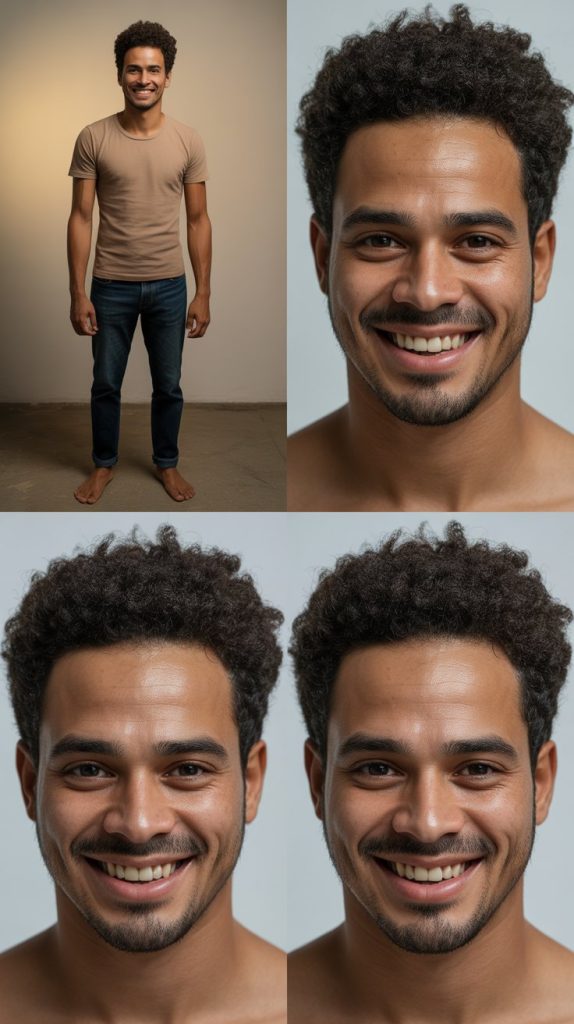
Before selecting any hairstyle, understanding your specific forehead type and overall face proportions is crucial for achieving the most flattering results.
Barbers always assess these features first to create customized styles that work with your natural characteristics rather than against them.
Forehead Measurement Basics
- Professional barbers measure foreheads from the hairline to the eyebrow line, with anything above 2.8 inches typically considered larger than average.
- The ideal forehead proportion should occupy approximately one-third of your total face length for balanced facial harmony.
- Taking accurate measurements helps you communicate effectively with your barber about which styles will work best for your specific dimensions.
- Different ethnicities naturally have varying forehead sizes, so understanding your baseline is essential before making style decisions.
Identifying Your Forehead Shape
- High foreheads extend significantly upward with a standard width, requiring vertical reduction through strategic hair placement.
- Wide foreheads span broadly across the face and benefit from styles that add width at the jawline to create balance.
- Rounded foreheads curve gently without sharp angles and work beautifully with softer, textured hairstyles.
- Angular or square foreheads feature defined edges at the temples and pair well with styles that soften these strong lines.
2. The Fringe Advantage: Strategic Bang Placements

Strategic fringe placement remains the most powerful tool in any barber’s arsenal for styling men with larger foreheads.
The right bang style can instantly minimize forehead appearance while adding personality and edge to your overall look.
Textured Forward Fringe
- Textured forward fringes create natural movement that draws eyes away from forehead size while maintaining a modern, effortless appearance.
- This style works by cutting hair to eyebrow length with point-cutting techniques that remove bulk and add dimension.
- Apply texturizing products like clay or matte paste to enhance the piecey, lived-in look that defines this contemporary style.
- The textured approach prevents the heavy, dated appearance of blunt-cut bangs while providing excellent forehead coverage.
Side-Swept Bangs
- Side-swept bangs offer versatility and sophistication while strategically covering portions of the forehead without completely hiding it.
- Barbers create this look by cutting longer lengths on top and directing hair to sweep across from a deep side part.
- This diagonal line breaks up the forehead’s horizontal expanse and creates visual interest that flatters most face shapes.
- Maintenance requires regular trimming every 3-4 weeks to prevent bangs from growing past the ideal length.
Messy Fringe with Volume
- Messy, voluminous fringes combine height and forward movement to dramatically reduce visible forehead space.
- Creating this style involves layering techniques that build volume at the crown while keeping weight toward the front.
- Sea salt spray or volumizing mousse applied to damp hair before blow-drying creates the perfectly tousled texture.
- This casual, contemporary look works exceptionally well for men with thick, naturally wavy hair textures.
3. Optimizing Hair Length for Forehead Balance

Hair length dramatically impacts how your forehead appears in relation to your overall facial proportions.
Understanding which lengths work best creates the foundation for any successful hairstyle.
Short to Medium Length Advantages
- Short to medium lengths (2-4 inches on top) provide the perfect canvas for creating strategic volume and forward movement.
- These lengths remain manageable for daily styling while offering enough hair to manipulate into forehead-flattering shapes.
- Barbers can create multiple styling options with medium lengths, from textured crops to side-swept styles.
- Maintenance becomes simpler with these lengths, requiring haircuts every 4-6 weeks to maintain the optimal shape.
The Long Hair Consideration
- Longer hair can work for larger foreheads when styled with layers that frame the face and create strategic coverage.
- Without proper layering and styling, long hair pulled back can actually emphasize forehead size rather than minimize it.
- Men choosing longer styles should commit to regular conditioning treatments and styling routines to maintain healthy, manageable hair.
- Consultation with an experienced barber is essential before growing hair long to ensure your face shape supports this style choice.
Why Very Short Cuts May Not Work
- Buzz cuts, crew cuts, and similar ultra-short styles eliminate the possibility of using hair to balance forehead proportions.
- These styles can make foreheads appear even more prominent by removing any softening elements around the face.
- If you prefer shorter styles, barbers recommend leaving slightly more length on top while keeping sides shorter for contrast.
- Very short cuts work best for men with naturally balanced facial proportions who don’t need coverage strategies.
4. Top Professional Haircut Styles for Large Foreheads

Certain haircut styles have proven consistently effective for men with larger foreheads, becoming go-to recommendations among professional barbers worldwide.
These cuts combine technical precision with aesthetic appeal.
The Modern Caesar Cut
- The Caesar cut features short, horizontally cut bangs that create a defined line across the forehead, immediately reducing visible space.
- This classic style works exceptionally well for men with thinning hair or receding hairlines combined with larger foreheads.
- Barbers cut this style with uniform length all around (typically 1-2 inches) with slightly longer textured fringe in front.
- Minimal styling is required—simply apply light pomade and brush forward for a polished, professional appearance.
Textured Crop with Fringe
- The textured crop combines short, disconnected sides with longer, textured hair on top that falls forward naturally.
- This contemporary style creates dimension through choppy layers and strategic texturizing that adds movement and interest.
- Barbers achieve this look using point-cutting and razor techniques to remove weight while maintaining length.
- Daily styling takes just minutes with matte clay or fiber, working product through damp hair and directing it forward.
The Classic Quiff
- Quiff styles lift hair upward and slightly back while maintaining volume that draws attention away from the forehead.
- This versatile style can be adapted from conservative business looks to edgy, dramatic statements depending on height and texture.
- Creating a quiff requires blow-drying hair upward and back while sides remain shorter for clean contrast.
- Strong-hold pomade or gel maintains the shape throughout the day while adding sophisticated shine.
Messy Textured Style
- Deliberately messy, textured styles create visual complexity that distracts from forehead size through controlled chaos.
- This carefree look works particularly well for men with naturally wavy or curly hair textures.
- Barbers layer extensively throughout the top, creating varying lengths that move independently for organic texture.
- Application of texturizing spray or sea salt spray enhances natural texture without creating stiffness or unnatural appearance.
5. The Power of Strategic Hair Parts
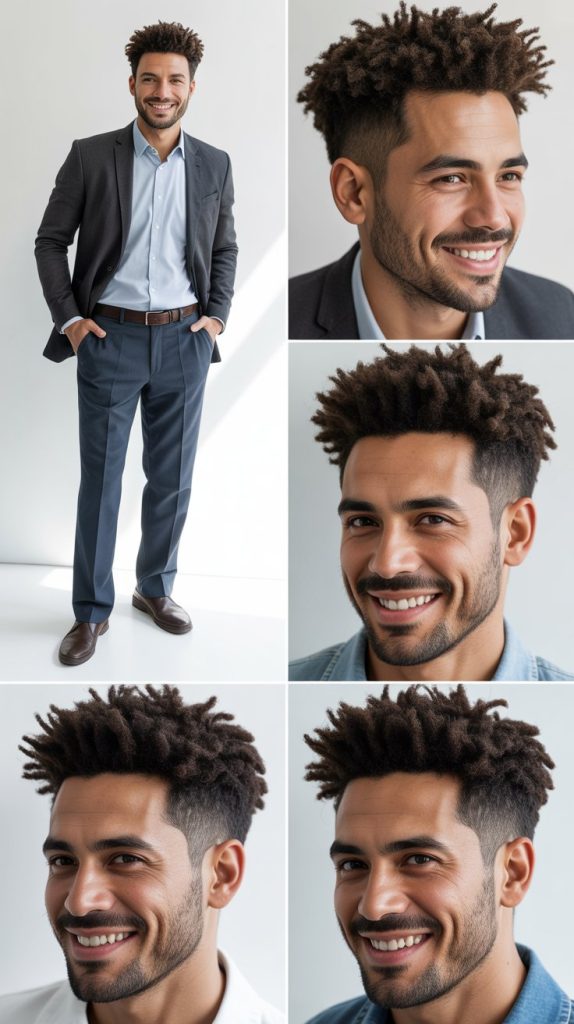
Where you position your hair part significantly influences how your forehead appears and how your overall style complements your facial structure.
Barbers use parting strategies as subtle but powerful styling tools.
Deep Side Part Benefits
- Deep side parts create dramatic diagonal lines that interrupt the horizontal expanse of a large forehead.
- Positioning the part 2-3 inches from the center creates maximum volume on the heavier side while the swept portion covers forehead area.
- This classic technique adds sophistication and works beautifully for professional and formal settings.
- Using a comb on damp hair creates the sharpest, most defined part that holds throughout the day.
Off-Center Versus Center Parts
- Slightly off-center parts (1-2 inches from middle) offer subtle asymmetry without the dramatic contrast of deep side parts.
- Center parts rarely work well for larger foreheads as they emphasize vertical length rather than creating balancing diagonal lines.
- Off-center placement provides versatility, allowing you to style hair in multiple directions depending on the occasion.
- Testing different part positions with your barber helps identify which angle most flatters your specific features.
No-Part Styling Approaches
- Eliminating a defined part creates organic, flowing movement that softens structured facial features.
- This technique works best with naturally wavy or curly hair that has inherent movement and texture.
- Styling without a part requires applying product to damp hair and directing it forward or to the side without creating linear divisions.
- The resulting casual, contemporary look suits creative professionals and relaxed environments.
6. Mastering Product Selection and Application

Professional barbers understand that even perfect haircuts fail without proper products and application techniques.
The right styling products transform good haircuts into exceptional, forehead-flattering styles.
| Product Type | Best For | Application Method | Hold Strength |
|---|---|---|---|
| Matte Clay | Textured, messy styles | Work through dry or slightly damp hair | Medium to Strong |
| Pomade | Sleek, polished looks | Apply to damp hair, comb through | Medium to Strong |
| Sea Salt Spray | Natural texture and volume | Spray on damp hair before styling | Light |
| Texturizing Paste | Piecey, defined styles | Emulsify in hands, distribute evenly | Medium |
| Volumizing Mousse | Creating lift and body | Apply to roots of damp hair | Light to Medium |
Choosing the Right Product
- Men with fine hair benefit most from lightweight mousses and sprays that create volume without weighing hair down.
- Thick, coarse hair requires stronger holding products like clays and waxes to maintain shape throughout the day.
- Consider your desired finish—matte products create modern, natural looks while pomades offer traditional shine and control.
- Always start with minimal product (dime-sized amount) and add more gradually to avoid greasy, over-styled appearance.
Professional Application Techniques
- Warm product thoroughly between palms before application to ensure even distribution and prevent clumping.
- Apply product from back to front, working it through roots first before addressing ends and surface.
- Use fingers to create texture and direction rather than combs for more natural, contemporary styling results.
- Blow-drying with product already in hair sets the style and creates longer-lasting hold than air-drying allows.
Common Product Mistakes to Avoid
- Using too much product creates stiff, unnatural-looking hair that draws negative attention rather than flattering your features.
- Applying product to completely dry hair makes even distribution difficult and can create patchy results.
- Choosing high-shine products for casual styles creates disconnect between intended look and final appearance.
- Neglecting to wash hands after application leads to transferring product to face, potentially causing breakouts.
7. Daily Styling Routines from Professional Barbers

Establishing consistent daily styling routines ensures your haircut maintains its forehead-flattering shape between barber visits.
Professional stylists emphasize that execution matters as much as the initial cut.
Morning Styling Steps
- Begin with slightly damp hair—towel-dried but not dripping wet—for optimal product absorption and styling control.
- Apply pre-styling products like heat protectant or volumizing mousse before using any heating tools.
- Blow-dry using a brush or your fingers to direct hair forward and create volume at the roots.
- Once 80% dry, apply your primary styling product and shape hair into desired position using fingers or comb.
- Finish with light-hold hairspray or texture spray for extra staying power without stiffness.
Quick Styling for Busy Mornings
- Men short on time can wet hair completely, apply styling product, and push forward into place without blow-drying.
- Keeping a travel-sized styling product at work allows for quick touch-ups throughout the day as needed.
- Overnight refreshers involve spritzing hair lightly with water and reshaping without full washing.
- Pre-planning your style the night before by discussing low-maintenance options with your barber saves valuable morning minutes.
Evening and Maintenance Care
- Wash hair every 2-3 days rather than daily to preserve natural oils that promote healthy hair growth and styling hold.
- Use quality shampoo and conditioner designed for your hair type to maintain optimal texture and manageability.
- Apply leave-in conditioner or light oils to ends if dealing with dryness or damage from frequent styling.
- Sleep on silk or satin pillowcases to reduce friction that creates unwanted tangles and disrupts styled hair.
8. Facial Hair Strategies for Enhanced Balance

Strategic facial hair placement works synergistically with hairstyles to create overall facial balance for men with larger foreheads.
Barbers often recommend beard styles as part of comprehensive styling consultations.
Beard Styles That Create Proportion
- Fuller beards add visual weight to the lower face, creating balance when upper face features are more prominent.
- Keeping beard length between 1-3 inches provides substantial coverage without overwhelming facial features.
- Well-groomed, shaped beards that follow natural jawline create structure and draw eyes downward from forehead.
- Regular trimming and maintenance ensure beards enhance rather than detract from overall appearance.
Mustache and Stubble Options
- Prominent mustaches create horizontal lines that balance vertical forehead length through opposing visual movement.
- Stubble (1-3mm length) adds subtle definition without commitment to full beard maintenance routines.
- Connecting mustaches to beard growth creates continuous visual flow that naturally guides attention across entire face.
- Men unable to grow full beards benefit from maintaining consistent stubble that adds texture and dimension.
Clean-Shaven Considerations
- Without facial hair, hairstyle becomes solely responsible for creating facial balance and forehead proportion management.
- Clean-shaven faces require more strategic hair styling with emphasis on fringe coverage and volume creation.
- Some men alternate between facial hair and clean-shaven looks depending on professional requirements and personal preference.
- Discussing comprehensive styling plans with barbers helps coordinate hair and facial hair for optimal results.
9. Color and Highlighting Techniques

Strategic hair coloring and highlighting creates depth and dimension that naturally draws attention away from forehead size toward hair texture and movement.
Professional colorists use these techniques specifically for facial balancing.
Dimensional Coloring Benefits
- Multi-toned hair color creates visual interest that distracts from single focal points like prominent foreheads.
- Highlights placed strategically around the face frame features and add brightness that draws eyes to hair rather than forehead.
- Subtle lowlights add depth and make hair appear thicker and more textured, enhancing styling results.
- Natural-looking color variation prevents flat, one-dimensional appearance that can emphasize structural features.
Highlight Placement Strategies
- Face-framing highlights placed around hairline and fringe area create brightness that attracts attention to styled hair.
- Avoiding highlights directly at the hairline prevents drawing unwanted attention to forehead positioning.
- Balayage techniques create gradual, natural-looking color transitions that add sophisticated dimension.
- Consultation with experienced colorists ensures color placement enhances your specific face shape and features.
Maintenance and Care
- Colored hair requires specialized shampoos and conditioners to prevent fading and maintain vibrancy.
- Regular toning appointments every 4-6 weeks keep highlights looking fresh and prevent brassy discoloration.
- Limiting heat styling and using heat protectants preserves color integrity and prevents damage.
- Professional color correction fixes at-home coloring mistakes that could draw unwanted attention to features.
10. Accessories and Additional Styling Tools
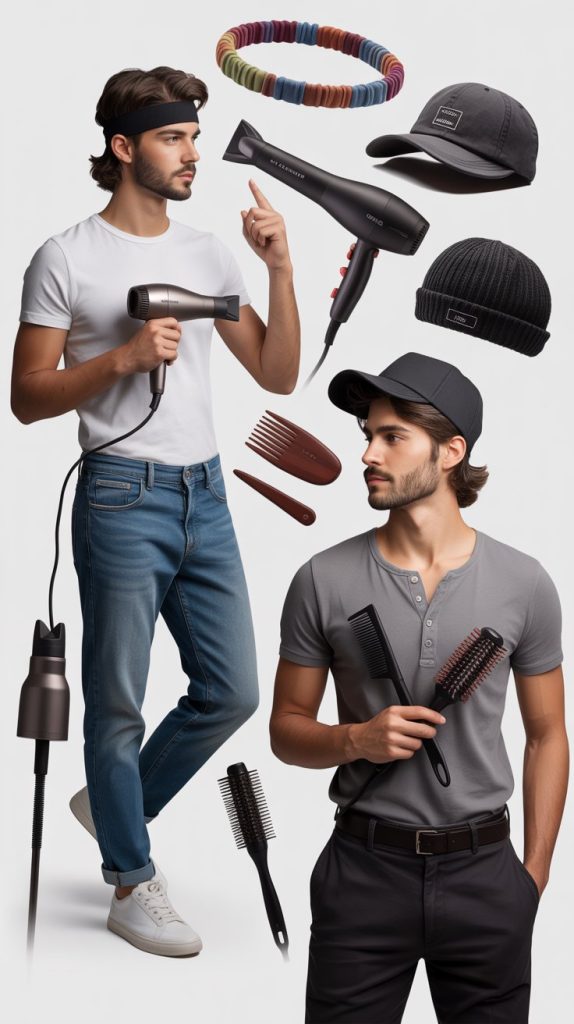
Beyond haircuts and products, accessories and specialized tools offer additional options for managing and styling hair to complement larger foreheads.
Professional barbers incorporate these elements into comprehensive styling strategies.
Hat and Cap Strategies
- Wearing hats strategically can provide style variety while offering temporary forehead coverage for casual settings.
- Baseball caps, beanies, and fedoras should fit properly without disrupting carefully styled hair underneath.
- Removing hats throughout the day requires keeping styling products accessible for quick hair refreshing.
- Choose hat styles that complement your face shape—avoid styles that sit too high and add vertical length.
Professional Styling Tools
- Quality blow dryers with concentrator nozzles direct airflow precisely for maximum volume and control.
- Round brushes create lift at roots while directing hair forward into forehead-covering positions.
- Flat irons smooth unruly hair and create sleek styles when texture isn’t desired.
- Diffusers preserve natural curl pattern while adding volume for men with wavy or curly hair.
Headbands and Fashion Accessories
- Sports headbands keep hair back during athletic activities while maintaining style integrity.
- Fashion headbands create trendy, contemporary looks when incorporated thoughtfully into overall style.
- Avoid wearing headbands pushed back onto forehead area, which emphasizes rather than minimizes prominence.
- Experiment with different accessory styles during downtime to discover what works best for your lifestyle.
11. When to Embrace Your Forehead

Sometimes the best styling strategy involves embracing your natural features rather than constantly trying to minimize them.
Many successful men have turned prominent foreheads into signature style elements.
Confident Style Approaches
- Slicked-back styles showcase foreheads while emphasizing strong facial features and projecting confidence.
- Some men find that once they stop focusing on forehead size, others rarely notice or care about this feature.
- Building overall grooming habits—quality skincare, facial hair maintenance, and fitness—creates comprehensive attractiveness beyond single features.
- Confidence in your appearance naturally attracts more positive attention than self-consciousness about specific characteristics.
Celebrity Style Inspiration
- Many successful actors, athletes, and public figures have prominent foreheads and use them as distinguishing features.
- Studying how confident public figures style their hair provides real-world examples of effective approaches.
- Professional styling isn’t about hiding features but creating overall harmony and personal style expression.
- Your barber can help identify celebrity style inspirations that work for your specific hair type and lifestyle.
Psychological Benefits
- Accepting natural features reduces daily stress and anxiety related to appearance management.
- Focusing energy on overall health, grooming, and style development creates more sustainable confidence.
- Many men report increased self-assurance once they stop obsessing over specific facial proportions.
- Professional therapy or counseling can help if appearance concerns significantly impact daily life and wellbeing.
12. Finding the Right Barber and Communication Tips

The relationship with your barber determines long-term styling success more than any single technique or product.
Finding experienced professionals who understand facial proportions transforms your grooming routine.
Selecting a Skilled Barber
- Research barbers specializing in men’s styling with portfolios showcasing diverse face shapes and forehead proportions.
- Read online reviews focusing on barbers who listen carefully and provide personalized consultations.
- Visit potential barbershops for consultations before committing to full haircuts to assess expertise and communication style.
- Experienced barbers should discuss your facial features, lifestyle, and styling commitment before suggesting specific cuts.
Effective Communication Strategies
- Bring reference photos showing styles you like from multiple angles to provide clear visual examples.
- Discuss your daily routine honestly—barbers need to know how much time and effort you’ll invest in styling.
- Ask questions about maintenance requirements, product recommendations, and styling techniques during appointments.
- Provide feedback during cuts so barbers can adjust techniques to achieve results matching your expectations.
Building Long-Term Relationships
- Consistency with the same barber allows them to understand your hair growth patterns and style preferences deeply.
- Schedule regular appointments every 4-6 weeks to maintain optimal shape and prevent style deterioration.
- Tip appropriately (15-20%) to show appreciation for quality service and build positive professional relationships.
- Follow barbers on social media and engage with their content to stay updated on new techniques and style trends.
Conclusion
Styling hair for men with larger foreheads doesn’t require hiding or feeling self-conscious about your natural features—it’s about discovering professional techniques that create facial harmony and express your personal style.
Throughout this guide on How to Style Hair with Big Forehead Men: Barber Secrets Revealed, we’ve explored the insider strategies that professional barbers use daily to help clients look their absolute best, from strategic fringe placements and optimal hair lengths to product selection and daily styling routines.
Remember that the most important elements are finding an experienced barber who understands facial proportions, choosing styles that fit your lifestyle and maintenance commitment, and building confidence in your appearance through consistent grooming habits.
Your forehead is just one feature among many that contribute to your overall look, and with the right approach, you can create hairstyles that not only flatter your face shape but also make you feel confident and authentic.
Implement these professional secrets gradually, experiment with different techniques to discover what works best for you, and most importantly, embrace the journey toward finding your signature style that showcases your best features while reflecting your unique personality.
