Having a larger forehead doesn’t mean limiting your hairstyle options—in fact, it opens up a world of strategic styling possibilities that can completely transform your appearance.
Many men mistakenly believe they’re stuck with unflattering cuts, but the truth is that with the right techniques, you can create balance, draw attention to your best features, and feel confident in your look.
This comprehensive guide on Style Hair with Big Forehead Men: 8 Easy Fixes That Work will walk you through proven methods that barbers and stylists use to minimize forehead prominence while maximizing your overall aesthetic.
From fringe techniques to textured crops, side-swept styles to angular cuts, you’ll discover practical solutions that work for different hair types, face shapes, and personal preferences.
Whether you’re dealing with a receding hairline or simply working with your natural proportions, these eight easy fixes provide actionable strategies you can discuss with your barber or even attempt at home.
You’ll learn how to use length, volume, and strategic placement to create the illusion of a more proportionate face, plus styling tips that make maintenance simple and results long-lasting.
1. The Classic Fringe Cut
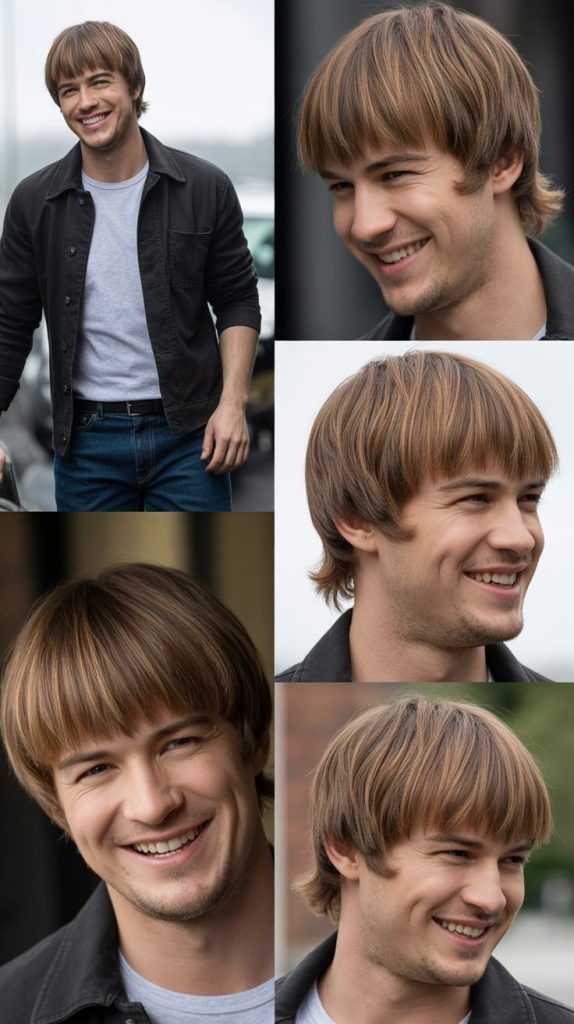
The fringe cut remains one of the most effective solutions for men with larger foreheads because it literally covers the area you want to minimize.
This timeless style works by bringing hair forward onto the forehead, creating a natural curtain that shortens the appearance of your upper face while adding youthful energy to your overall look.
The beauty of the fringe lies in its versatility—you can customize the length, thickness, and angle to suit your face shape, hair texture, and personal style.
How to Style:
- Ask your barber to cut your fringe between your eyebrows and mid-forehead, depending on how much coverage you want.
- Keep the sides shorter (typically a 2-4 guard) to create contrast and draw eyes away from the forehead.
- Use a lightweight styling cream or mousse to add texture without weighing down the fringe.
- Blow-dry the fringe forward and slightly to the side for a natural, effortless appearance.
- Avoid making the fringe too heavy or blunt, as this can look juvenile—opt for textured, piece-y ends instead.
Maintenance Tips:
- Trim your fringe every 3-4 weeks to prevent it from getting too long and covering your eyes.
- Wash your hair regularly to prevent oil buildup that can make the fringe look flat and greasy.
- Use dry shampoo on days between washes to maintain volume and freshness.
- Experiment with different fringe angles—straight across, side-swept, or slightly diagonal—to find what flatters your face shape best.
2. Textured Crop with Forward Movement

The textured crop is a modern, low-maintenance style that creates volume and movement in the front, effectively drawing attention away from a prominent forehead.
This cut works particularly well for men with thicker hair who want a contemporary, effortlessly cool aesthetic that doesn’t require extensive daily styling.
The key principle behind this fix is using texture and strategic length placement to create visual interest exactly where you need it most.
Styling Approach:
- Request a crop cut with longer length on top (approximately 2-3 inches) that gradually tapers to shorter sides.
- Have your barber use point-cutting or razor techniques to create choppy, irregular texture throughout the top section.
- Apply a matte clay or fiber product to damp hair for maximum hold and natural finish.
- Use your fingers to push hair forward and slightly upward at the front, creating lift and coverage simultaneously.
- The textured, messy finish makes this style perfect for casual and professional settings alike.
Why It Works:
- The forward movement naturally covers more forehead area without looking like you’re deliberately hiding anything.
- Texture breaks up the visual line between your hairline and forehead, making the transition less noticeable.
- The contrast between longer top and shorter sides creates a balanced silhouette that proportions your face better.
- This style suits oval, square, and diamond face shapes particularly well.
3. Side-Swept Undercut
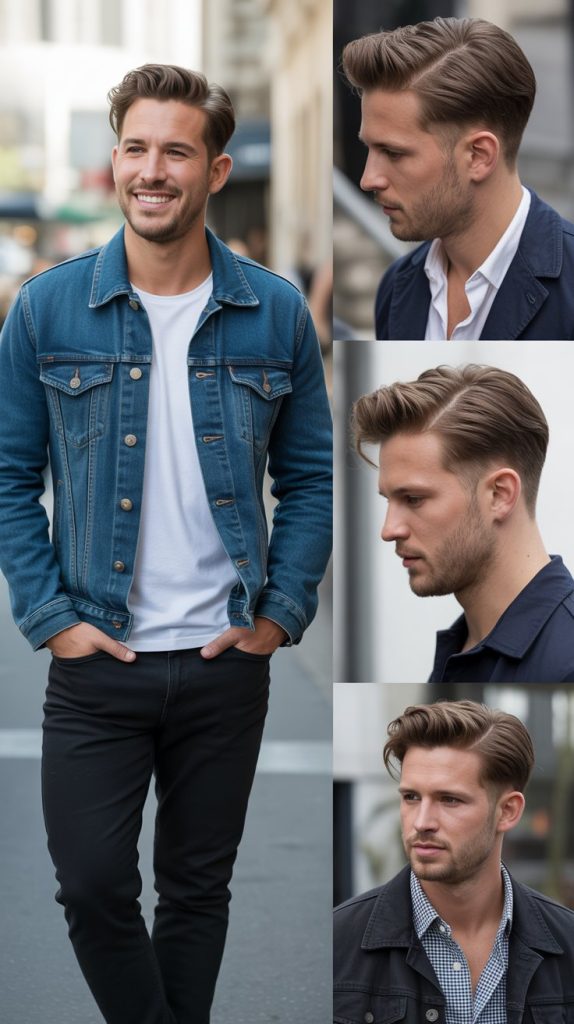
The side-swept undercut combines the coverage benefits of angled hair with the modern edge of disconnected lengths, creating a style that’s both functional and fashion-forward.
This approach strategically redirects attention from the forehead to the side profile while maintaining a masculine, structured appearance.
The dramatic contrast between the longer top and shaved or closely cropped sides also creates visual interest that distracts from forehead size.
Key Elements:
- Keep 4-6 inches of length on top to allow for substantial sweeping across the forehead.
- Fade or undercut the sides to a 1 or 2 guard for maximum contrast and definition.
- Create a defined part (hard or soft, depending on preference) on one side of your head.
- Sweep the longer section across your forehead at an angle, covering approximately one-third to one-half of the forehead area.
- Use a strong-hold pomade or gel to keep the sweep in place throughout the day.
Styling Instructions:
- Apply product to towel-dried hair, focusing on the roots for lift.
- Use a comb to create your part and direct hair across your forehead in your desired direction.
- Blow-dry while combing to set the style and add volume.
- Finish with a light hairspray if you need all-day hold, especially in humid conditions.
- The asymmetry created by the side sweep naturally draws eyes across your face rather than focusing on forehead height.
4. The Caesar Cut
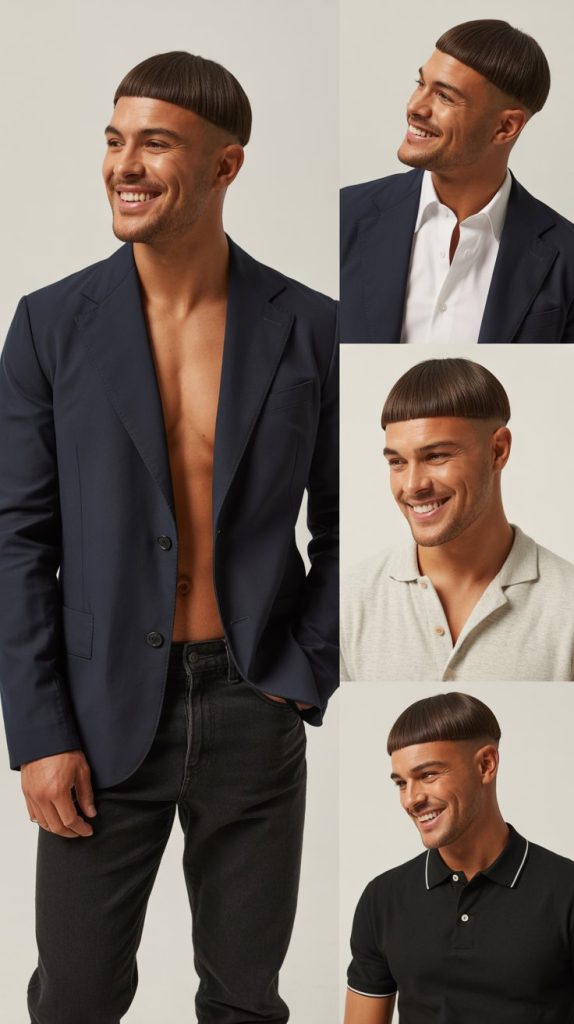
Named after Julius Caesar, who reportedly wore this style to conceal his receding hairline, the Caesar cut remains one of the most reliable options for minimizing forehead appearance.
This classic style features short, horizontally straight-cut bangs that create a strong horizontal line across the forehead, effectively shortening its visible length.
The Caesar cut works exceptionally well for men with fine to medium hair density and delivers a clean, masculine aesthetic.
Cut Specifications:
- Request an even length of 1-2 inches throughout the top and front of your head.
- The fringe should be cut straight across, falling just above or at the eyebrow level.
- Sides and back are typically tapered or faded to maintain a clean, military-inspired silhouette.
- Modern variations incorporate texture into the fringe rather than keeping it completely blunt.
- This style can be adapted with different side lengths—from skin fades to longer tapered sides—depending on your preference.
Advantages:
- Extremely low maintenance compared to styles requiring daily blow-drying and product application.
- Works well for men with thinning hair or receding hairlines in addition to large foreheads.
- Professional appearance suitable for conservative workplace environments.
- The horizontal fringe line creates a visual break that makes foreheads appear shorter.
- Can be styled with minimal product or worn completely natural for active lifestyles.
| Caesar Cut Variation | Best For | Styling Time |
|---|---|---|
| Classic Caesar | Fine hair, professional settings | 2-3 minutes |
| Textured Caesar | Thicker hair, casual style | 5-7 minutes |
| Faded Caesar | Modern look, all hair types | 3-5 minutes |
5. Messy Quiff with Volume
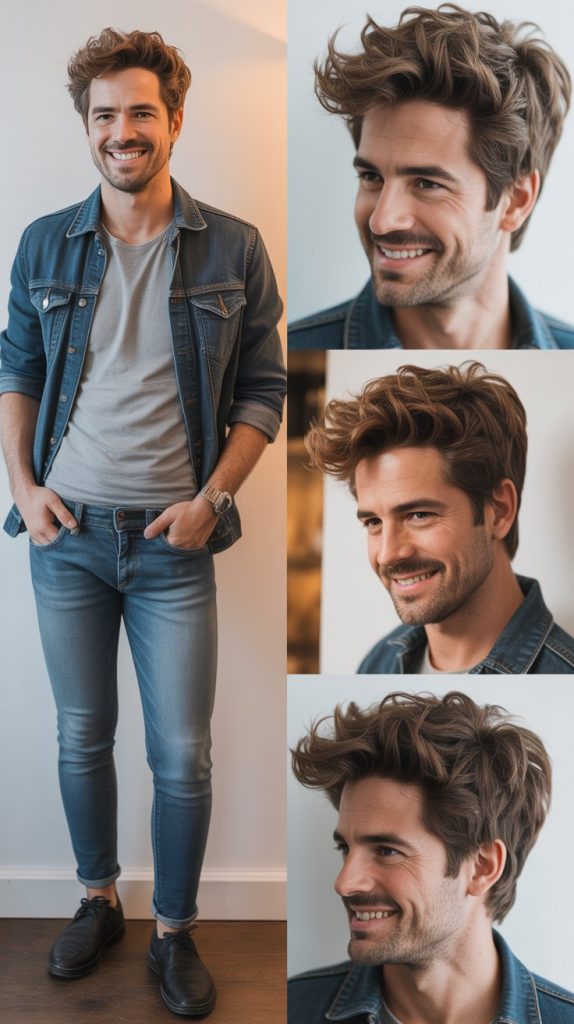
The messy quiff leverages vertical volume and forward texture to create a balanced proportion between your forehead and the rest of your face.
Unlike slicked-back styles that expose and emphasize forehead size, the quiff builds height and forward movement that draws attention upward and provides subtle coverage at the hairline.
This style projects confidence and contemporary fashion awareness while serving a functional purpose.
Creating the Look:
- Grow your top section to 3-4 inches minimum to achieve adequate height and volume.
- Keep sides shorter (fade or tapered) to emphasize the volume contrast on top.
- Apply a volumizing mousse to damp hair, focusing on the roots.
- Blow-dry hair upward and slightly forward using a round brush or your fingers.
- Use a matte clay or texture paste to define pieces and create the intentionally messy finish.
Styling Strategy:
- The key is creating height at the front without pushing all hair completely backward.
- Allow some pieces to fall forward naturally onto your forehead for partial coverage.
- The textured, disheveled appearance makes this style appear effortless even though it requires deliberate styling.
- This works best for men with naturally thick or wavy hair that holds volume well.
- Adjust the degree of “messiness” based on your environment—slightly neater for professional settings, more tousled for casual occasions.
Pro Tips:
- Use a blow-dryer on medium heat to avoid damaging hair while building volume.
- Less product is often more effective—start with a small amount and add more only if needed.
- Sleep with your hair slightly damp and styled to wake up with natural volume.
- Consider getting a perm or body wave if you have very straight hair that won’t hold volume naturally.
6. Angular Fringe with Hard Part
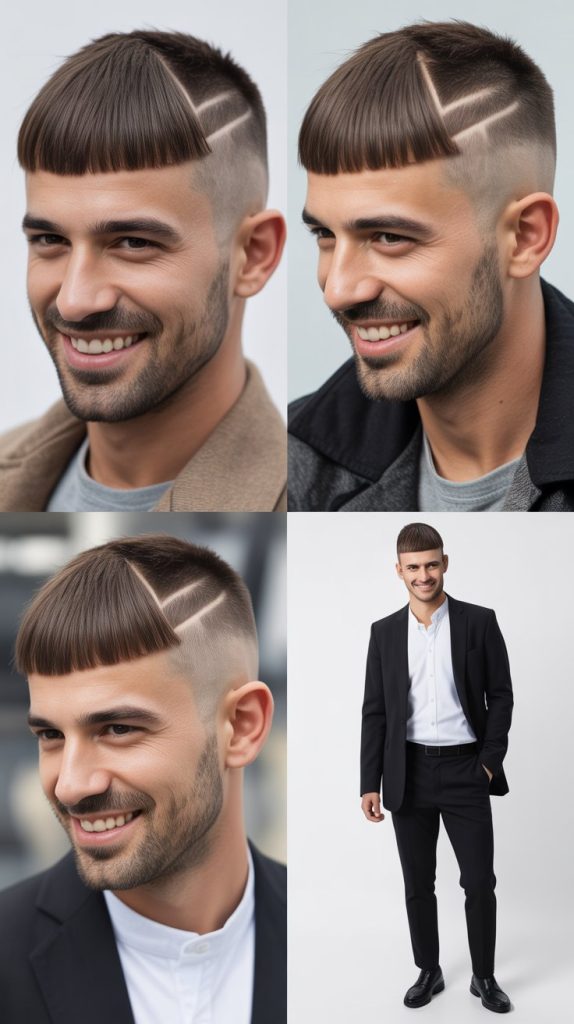
The angular fringe with hard part combines geometric precision with strategic coverage, creating a modern, edgy style that distracts from forehead proportions through sharp lines and deliberate asymmetry.
This sophisticated approach works particularly well for men with strong facial features who want a bold, fashion-forward appearance.
The hard part creates a defined separation that becomes a focal point, while the angular fringe provides functional coverage.
Technical Details:
- The hard part is a shaved line (typically created with a razor or trimmer) that defines where your hair parts.
- Place the hard part approximately 2-3 inches from your natural center part, on whichever side you prefer.
- Cut the fringe at a diagonal angle so it’s longer on one side, sweeping across your forehead.
- The angular cut creates movement and direction that guides eyes away from forehead size.
- Fade the sides from a 0 or 1 at the bottom to blend into the longer top section.
Maintenance Requirements:
- The hard part will need touch-ups every 1-2 weeks to maintain its crisp appearance.
- Regular trims every 3-4 weeks prevent the angular fringe from losing its shape.
- This style requires daily styling with product to maintain the intended look.
- Use a strong-hold pomade or gel to keep the swept fringe in position.
- The geometric nature of this cut means it shows growth and lack of maintenance more obviously than looser, textured styles.
Best Suited For:
- Men with thick, straight hair that holds shape well.
- Those who enjoy spending time on their appearance and daily grooming routine.
- Professional creative fields or style-conscious environments.
- Individuals with square or rectangular face shapes who can handle the additional angularity.
7. Long Layered Top with Short Sides
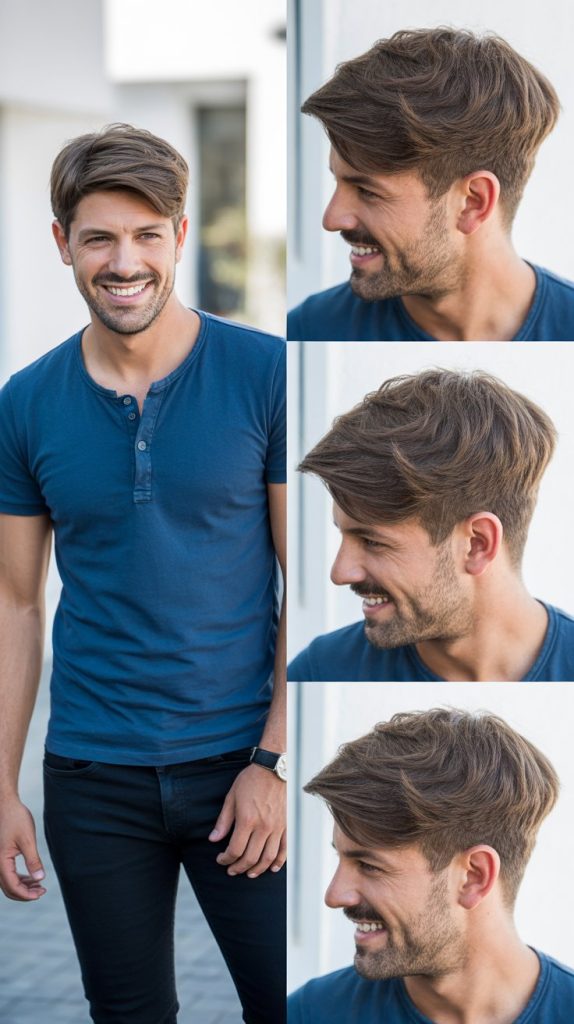
The long layered top with short sides creates a versatile canvas that allows multiple styling options, all of which can help minimize forehead appearance through strategic hair placement.
This modern cut maintains substantial length on top (typically 4-6 inches) while keeping sides and back much shorter, creating a contemporary silhouette that’s both trendy and functional.
The layers provide movement and texture that can be styled forward, to the side, or in multiple directions for coverage.
Cutting Technique:
- Request long layers on top with the longest pieces at the front (near your hairline).
- Interior layers should be cut to create texture and remove bulk without sacrificing length.
- Sides can be faded, tapered, or kept at a consistent short length depending on your preference.
- The front pieces should be long enough to reach at least your eyebrows when pulled forward.
- Blending between the long top and short sides should be seamless unless you prefer a more disconnected, edgy look.
Styling Versatility:
- Forward Style: Push all top hair forward for maximum forehead coverage on casual days.
- Side Sweep: Create a deep side part and sweep hair across your forehead diagonally.
- Textured Mess: Style hair in multiple directions with some pieces falling forward naturally.
- Slick Back: For occasions when you want to expose your forehead, you have this option too.
- Half-Up Style: Pull some hair back while leaving front pieces forward for a trendy, balanced look.
Product Recommendations:
- Sea salt spray for beachy, textured styles with natural movement.
- Matte clay for defined, piece-y looks with strong hold.
- Light pomade for shinier, more controlled styles.
- Dry shampoo to add volume and refresh styles between washes.
8. Buzz Cut with Designed Hairline
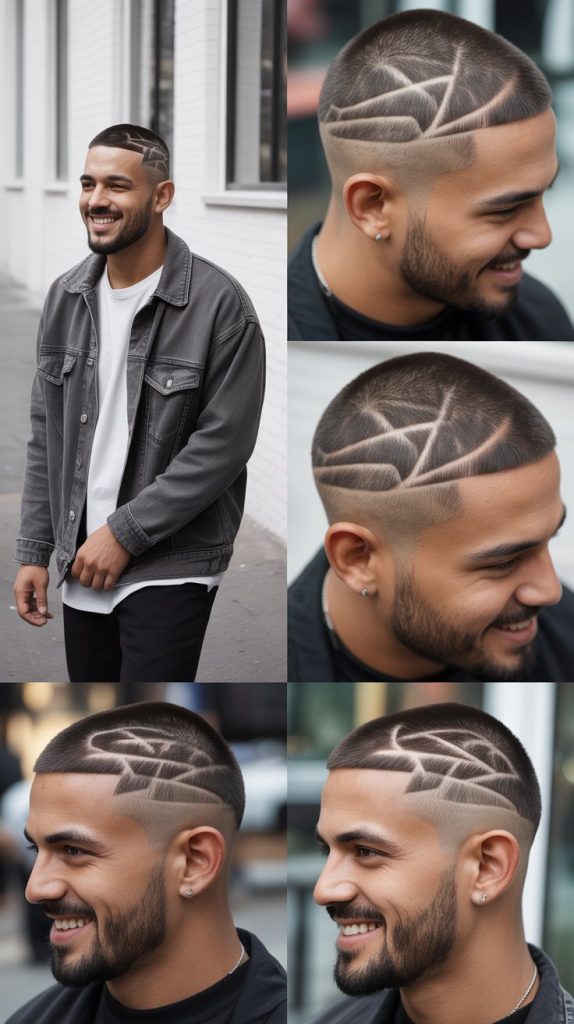
While it might seem counterintuitive, a well-executed buzz cut with a strategically designed hairline can actually minimize the appearance of a large forehead by creating clean lines and balanced proportions.
This approach involves using different guard lengths to create shadows and dimension, plus potentially adding a shape-up or line-up to redefine your hairline.
The buzz cut removes the possibility of “hiding” your forehead, but it compensates by creating such clean, masculine proportions that the forehead becomes part of a balanced, confident aesthetic.
Implementation Strategy:
- Choose a buzz cut length between a 3 and 5 guard on top for some visible texture.
- Fade the sides from a 1 to your chosen top length for dimension.
- Get a professional shape-up or edge-up to create clean, defined lines at your hairline.
- Consider a slightly rounded or straighter hairline design rather than a deep widow’s peak, which can emphasize forehead height.
- Keep facial hair (beard or stubble) to create balance and draw attention to the lower half of your face.
Why This Works:
- Extreme simplicity creates confidence—you’re not trying to hide anything, which is inherently attractive.
- Clean lines and fades create structure that balances all facial features proportionally.
- The masculine aesthetic of a buzz cut draws attention to strong facial features rather than forehead size.
- Regular maintenance (weekly shape-ups) keeps the style looking intentional and sharp.
- This option is perfect for men with active lifestyles, thinning hair, or those who prefer minimal styling routines.
Enhancement Techniques:
- Add a hard part or design (lines, patterns) to create additional visual interest.
- Use a darker pomade on the hairline before shape-ups to help your barber see the edge more clearly.
- Maintain your shape-up weekly with clippers at home or biweekly at the barbershop.
- Consider beard growth to balance the overall head-to-face proportion.
- The confidence with which you wear this minimalist style often matters more than the style itself.
| Buzz Cut Length | Maintenance Frequency | Best Hair Type |
|---|---|---|
| #1-2 (Very Short) | Every 1-2 weeks | All types, especially thinning |
| #3-4 (Medium) | Every 2-3 weeks | Medium to thick hair |
| #5-6 (Longer) | Every 3-4 weeks | Thick, coarse hair |
General Styling Tips for All Fixes
Regardless of which specific style you choose from the eight fixes above, certain universal principles and techniques will help you maximize the forehead-minimizing effect while maintaining a healthy, attractive appearance.
Product Application:
- Always apply styling products to damp (not soaking wet) hair for better distribution and hold.
- Start with a small amount of product—you can always add more, but using too much creates a greasy, heavy appearance.
- Distribute product evenly by rubbing it between your palms before working it through your hair.
- Focus product application on areas where you need the most hold or control, typically the front sections.
- Use different products in combination for optimal results (volumizing spray at roots, clay for texture, light hairspray for hold).
Blow-Drying Technique:
- Direct airflow in the direction you want your hair to fall (forward for coverage, upward for volume).
- Use medium heat rather than high heat to prevent damage and maintain hair health.
- Blow-dry hair about 80% dry, then finish styling with your hands and product while it’s still slightly damp.
- A round brush can help create volume at the roots and smooth texture through the lengths.
- Let hair cool in the styled position before touching it to set the shape.
Color and Highlights Considerations:
- Adding subtle highlights or lowlights creates dimension that makes your overall look more interesting.
- Strategic highlighting around the face draws attention to your eyes and away from your forehead.
- Avoid harsh, single-tone colors that can make your hairline and forehead transition more obvious.
- Consult with a professional colorist about face-framing techniques specifically designed to balance proportions.
Regular Maintenance:
- Schedule haircuts every 3-6 weeks depending on how quickly your hair grows and how precise your style is.
- Maintain consistent communication with your barber about what’s working and what isn’t.
- Take photos of your hair when it looks great so you can show your barber exactly what you want.
- Don’t be afraid to adjust your style seasonally—different weather conditions may require different approaches.
Choosing the Right Style for Your Face Shape
Understanding your face shape is crucial for selecting which of the eight fixes will work best for your specific proportions and features.
Oval Face Shape:
- Most versatile face shape that can pull off virtually any of the eight styles.
- Fringe cuts and side-swept styles particularly complement the natural balance of oval faces.
- Avoid adding too much height on top, as this can elongate an already-long face.
- Focus on styles that add width at the temples if needed.
Square Face Shape:
- Angular fringe with hard part accentuates the strong jawline positively.
- Textured crops and messy quiffs soften the overall angular appearance.
- Avoid blunt, straight-across fringes that emphasize the squareness.
- Styles with movement and texture work better than slicked, severe looks.
Round Face Shape:
- Messy quiff and textured crop add vertical height that lengthens the face.
- Side-swept styles create angles that counter roundness.
- Avoid styles that add width at the sides, which can make your face appear rounder.
- The Caesar cut can work but should incorporate some texture rather than being completely blunt.
Diamond Face Shape:
- Long layered top with short sides balances narrow forehead and chin with wider cheekbones.
- Side-swept undercut adds width at the forehead area where diamond faces need it.
- Fringe cuts can work well to broaden the forehead visually.
- Avoid styles that add volume at the cheekbones or remove too much from the sides.
Heart Face Shape:
- Caesar cut and classic fringe balance a wider forehead with a narrower chin.
- Keep volume moderate rather than excessive on top.
- Textured styles that add some width at the jaw level create better proportion.
- Forward-moving styles work particularly well for this face shape.
Common Mistakes to Avoid
Even with the right style choice, certain errors can undermine your efforts to minimize forehead appearance or create an unflattering overall look.
Styling Errors:
- Over-applying product: This weighs hair down, eliminates volume, and creates a greasy appearance that draws negative attention.
- Ignoring hair texture: Trying to force straight hair into styles designed for wavy hair (or vice versa) leads to frustration and poor results.
- Inconsistent maintenance: Letting your cut grow out too long between appointments causes the style to lose its shape and effectiveness.
- Wrong product choice: Using heavy pomades when you need light texture, or matte products when you want shine, produces suboptimal results.
- Excessive heat styling: Daily use of high-heat blow-dryers or straighteners damages hair, making it harder to style over time.
Cut Selection Mistakes:
- Choosing trends over suitability: Not every trending style will work for your specific forehead size, face shape, and hair type.
- Going too short: While buzz cuts can work (as covered in fix #8), random short cuts without strategy can emphasize rather than minimize forehead prominence.
- Avoiding professional help: Attempting complex cuts at home usually results in uneven, unflattering styles.
- Not communicating clearly: Failing to explain your concerns and goals to your barber often leads to cuts that don’t address your forehead concerns.
Maintenance Neglect:
- Skipping regular trims: Most styles need professional maintenance every 3-6 weeks to maintain their shape.
- Improper washing routine: Washing too frequently strips natural oils; washing too infrequently causes buildup.
- Using wrong shampoo/conditioner: Products not suited to your hair type can cause problems ranging from dryness to excess oil.
- Sleeping on wet hair: This creates awkward shapes and breakage that make morning styling more difficult.
Working with Your Barber
Your barber is your most valuable partner in achieving and maintaining a style that minimizes your forehead appearance while looking natural and attractive.
Communication Tips:
- Bring reference photos showing styles you like from multiple angles (front, side, back).
- Explicitly mention that you want to minimize forehead prominence—barbers are professionals who understand this common concern.
- Ask for their honest opinion about which of your preferred styles will work best with your hair type and face shape.
- Don’t be afraid to ask questions about why they’re recommending certain techniques or cuts.
- Request specific instructions on how to style your hair at home to maintain the look between appointments.
Questions to Ask:
- “Which of these styles do you think would work best with my hair texture and face shape?”
- “How often will I need to come back for maintenance on this particular cut?”
- “What products do you recommend for achieving this look at home?”
- “Can you show me how to style this while you’re cutting it?”
- “Are there any modifications we can make to this style to better suit my forehead proportions?”
Building a Relationship:
- Find a barber you trust and stick with them for consistency.
- Regular appointments with the same professional allow them to understand your hair’s growth patterns and preferences.
- Provide feedback honestly—tell them what you liked and what you’d like adjusted next time.
- Respect their professional expertise while also expressing your personal preferences.
- Consider tipping well for excellent service, which encourages continued great results.
Lifestyle Factors Affecting Your Hair
Beyond cuts and styling, various lifestyle factors significantly impact your hair’s health, appearance, and how well it responds to styling efforts.
Nutrition and Hair Health:
- Protein intake: Hair is primarily composed of protein (keratin), so adequate protein consumption supports strong, healthy growth.
- Biotin and vitamins: B-vitamins, particularly biotin, support hair health and can improve texture and strength.
- Hydration: Drinking sufficient water keeps your scalp and hair properly hydrated from the inside out.
- Omega-3 fatty acids: Found in fish, nuts, and seeds, these support scalp health and can improve hair shine and strength.
- Iron levels: Iron deficiency can lead to hair loss and poor hair quality, especially in men with dietary restrictions.
Stress Management:
- Chronic stress contributes to hair loss and poor hair quality through hormonal disruptions.
- High cortisol levels can push hair follicles into resting phase, reducing growth and density.
- Stress management through exercise, meditation, or other techniques supports overall hair health.
- Adequate sleep (7-9 hours nightly) allows your body to repair and maintain healthy hair growth.
Environmental Protection:
- Sun exposure: UV rays damage hair protein structure, leading to dryness and brittleness—wear hats in extended sun exposure.
- Chlorine and salt water: Both can dry out and damage hair—rinse immediately after swimming and use protective leave-in conditioners.
- Pollution: Urban pollution can deposit particles on hair and scalp—regular washing removes these irritants.
- Hard water: Mineral deposits from hard water can build up on hair—consider a shower filter or clarifying shampoo treatments.
Hair-Damaging Habits to Avoid:
- Excessive heat styling without heat protectant products.
- Tight hats or headwear that creates constant tension on the hairline.
- Over-washing or under-washing based on your specific hair type and oil production.
- Using products with harsh sulfates or alcohols that strip natural oils.
- Roughly towel-drying hair instead of gently squeezing out excess water.
Conclusion
Mastering how to Style Hair with Big Forehead Men: 8 Easy Fixes That Work is entirely achievable with the right approach, consistent maintenance, and confidence in your chosen style.
Whether you opt for the classic coverage of a fringe cut, the modern edge of an angular style with hard part, the versatility of a long layered top, or the bold simplicity of a strategic buzz cut, each of these eight fixes offers a proven solution for minimizing forehead prominence while maximizing your overall attractiveness.
Remember that the most important factors are choosing a style that suits your hair type and face shape, maintaining it properly through regular barber visits, and styling it correctly with appropriate products and techniques.
Your forehead size is just one aspect of your overall appearance, and with these strategic approaches, you can create a balanced, confident look that highlights your best features while downplaying concerns.
Experiment with different options, work closely with a trusted barber, and maintain the lifestyle factors that support healthy hair—you’ll discover that having a larger forehead is no obstacle to looking and feeling your absolute best.
The confidence you project through proper grooming and style choices will always outweigh any perceived physical proportions, making these eight fixes not just about appearance but about embracing and optimizing who you are.
