Having a larger forehead is simply a natural feature that many men share, and the good news is that the right hairstyle can completely transform how you look and feel.
If you’ve been searching for ways to balance your facial proportions and boost your confidence, you’re in exactly the right place.
This comprehensive guide on “Big Forehead? Here’s How Men Can Style Their Hair Better” will walk you through proven haircut techniques, styling methods, and expert tips that work specifically for men with prominent foreheads.
From choosing the perfect fringe to understanding which styles to avoid, you’ll discover practical solutions that celebrities and everyday men use to create a more balanced, attractive appearance.
Whether you prefer short, medium, or long hair, there’s a flattering option waiting for you in the pages ahead.
1. Understanding Your Forehead and Face Shape

Before diving into specific hairstyles, it’s essential to understand how your forehead relates to your overall face shape, as this knowledge forms the foundation for choosing the most flattering cuts.
Recognizing whether you have an oval, round, square, or oblong face will help you select styles that create visual harmony rather than emphasizing disproportion.
Key points about forehead and face shape relationship:
- A high forehead is typically defined as one that measures more than four fingers in width from eyebrows to hairline.
- Men with larger foreheads often have oval or oblong face shapes, which are actually considered ideal for most hairstyles.
- The goal isn’t to hide your forehead completely but to create better proportion and balance across your entire face.
- Understanding your hairline type (straight, widow’s peak, receding, or M-shaped) is equally important as it influences which styles will work best.
- Face shape and forehead size should be considered together when consulting with your barber or stylist for optimal results.
2. The Power of Fringe and Bangs

Fringe or bangs represent the most direct and effective solution for men looking to minimize the appearance of a large forehead, as they create an immediate visual break that shortens the forehead’s perceived length.
This classic technique has been used by stylists for decades and continues to be one of the most reliable methods for achieving facial balance.
Benefits and styling options for fringe:
- Textured fringe offers a modern, casual look that naturally falls forward to cover part of the forehead without appearing too structured or formal.
- Side-swept bangs create diagonal lines across the forehead, which are more flattering than horizontal lines and add movement to your overall style.
- The length of your fringe should typically reach somewhere between your eyebrows and mid-forehead for optimal coverage without obstructing vision.
- Regular trims every 3-4 weeks are essential to maintain the proper length and prevent your fringe from becoming too long or unruly.
- Use a lightweight styling product like sea salt spray or texturizing cream to keep fringe looking natural rather than heavy or greasy.
- Avoid blunt, straight-across bangs as they can look too harsh and draw more attention to the forehead line rather than minimizing it.
3. Messy and Textured Styles

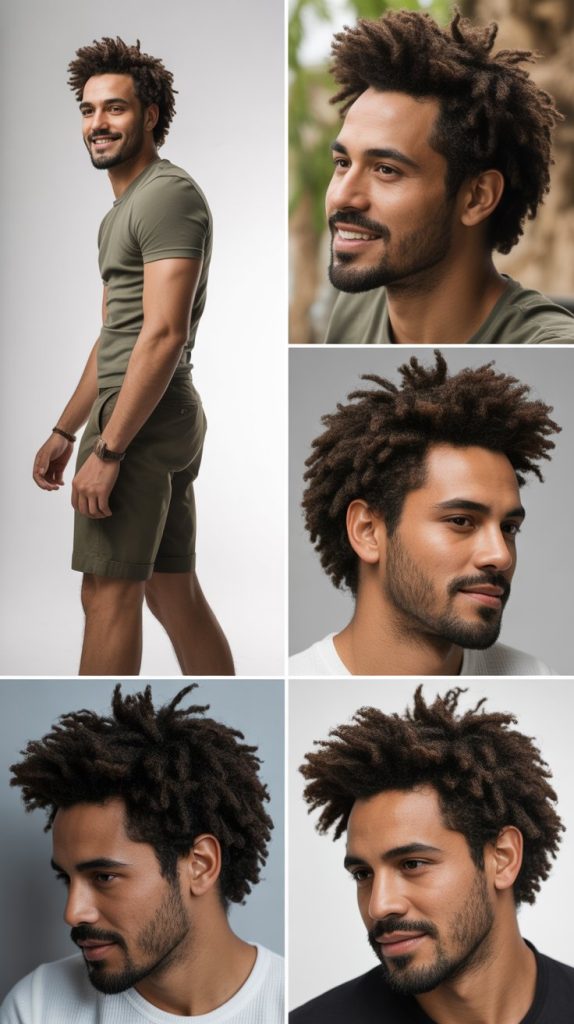
Messy, textured hairstyles work exceptionally well for men with larger foreheads because they create visual interest and volume that draws attention away from the forehead and toward the overall style.
The deliberate “undone” look adds dimension and makes your hair the focal point rather than your forehead.
Creating and maintaining textured styles:
- Textured crops with choppy, uneven layers create natural shadows and depth that break up the visual line between hair and forehead.
- Adding volume at the front and top of your head helps balance a large forehead by creating proportion with the lower half of your face.
- Matte finish products like clay, paste, or fiber work best for achieving that effortlessly messy look without appearing greasy or overly styled.
- The key to pulling off messy styles is controlled chaos—your hair should look naturally tousled, not neglected or unkempt.
- Work product through damp (not wet) hair using your fingers rather than a comb to maintain that textured, piece-y appearance.
- This style works particularly well for men with thicker hair, though men with finer hair can achieve similar results with the right cutting technique and products.
- Consider asking your barber for point-cutting or razor-cutting techniques that create natural texture within the haircut itself.
4. Strategic Part Placement

The position of your hair part might seem like a small detail, but it can significantly impact how your forehead appears and how balanced your overall look becomes.
Moving your part strategically creates asymmetry that naturally draws the eye across your face rather than focusing on forehead height.
Optimizing your hair part:
- A deep side part creates diagonal lines that visually shorten the forehead while adding sophistication and style to your overall appearance.
- Avoid center parts if you have a large forehead, as they emphasize symmetry and can make your forehead appear even more prominent.
- The ideal part position is typically about two inches from your natural center line, though this can vary based on your specific face shape.
- Switching your part position occasionally can prevent your hair from developing permanent cowlicks or splitting patterns in unwanted areas.
- Use a comb on damp hair to establish your part, then blow-dry in the direction you want your hair to lay for lasting hold.
- Men with natural cowlicks should work with these growth patterns rather than against them when determining optimal part placement.
5. Medium Length Hairstyles
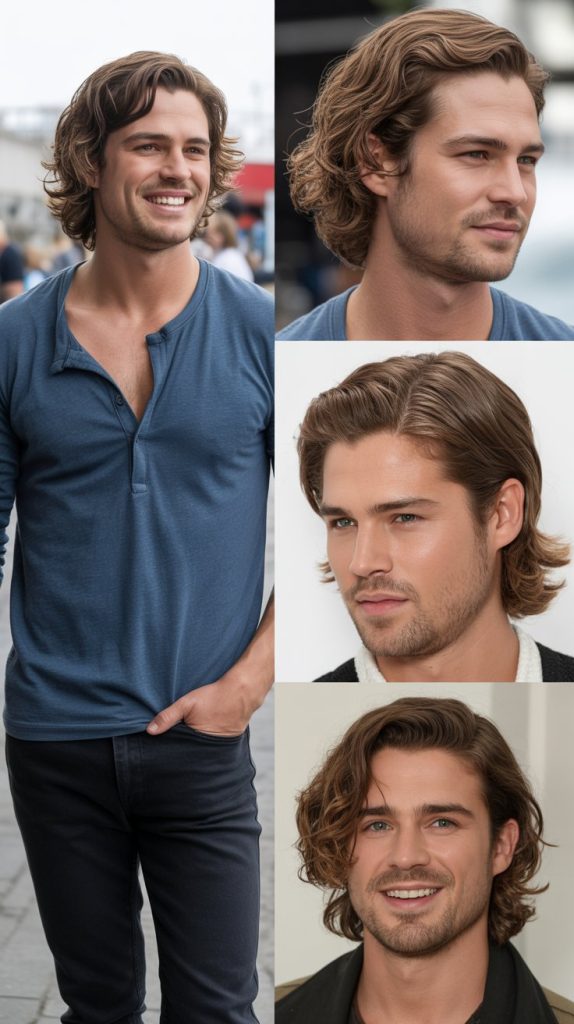
Medium-length hair offers tremendous versatility for men with larger foreheads, providing enough length to create coverage and style variation while maintaining a masculine, manageable appearance.
These styles hit the sweet spot between short crops and long locks.
Medium-length options and styling tips:
- The classic medium-length quiff combines height at the front with swept-back sides, creating vertical emphasis that balances horizontal forehead space.
- Shoulder-grazing or collar-length styles can be worn with a forward sweep or side part to naturally cover portions of the forehead.
- Layered medium cuts prevent hair from lying flat against your head, which is crucial for creating the volume needed to balance facial proportions.
- This length requires more maintenance and styling time than shorter cuts but offers greater flexibility in how you wear your hair day-to-day.
- Invest in quality styling tools including a good blow dryer and round brush for creating volume and direction in medium-length hair.
- Regular conditioning treatments keep medium-length hair healthy and manageable, preventing the frizz and flyaways that can ruin your style.
- Consider the commitment required for medium-length hair, including more frequent washing, conditioning, and styling compared to shorter options.
6. Short Hair Solutions
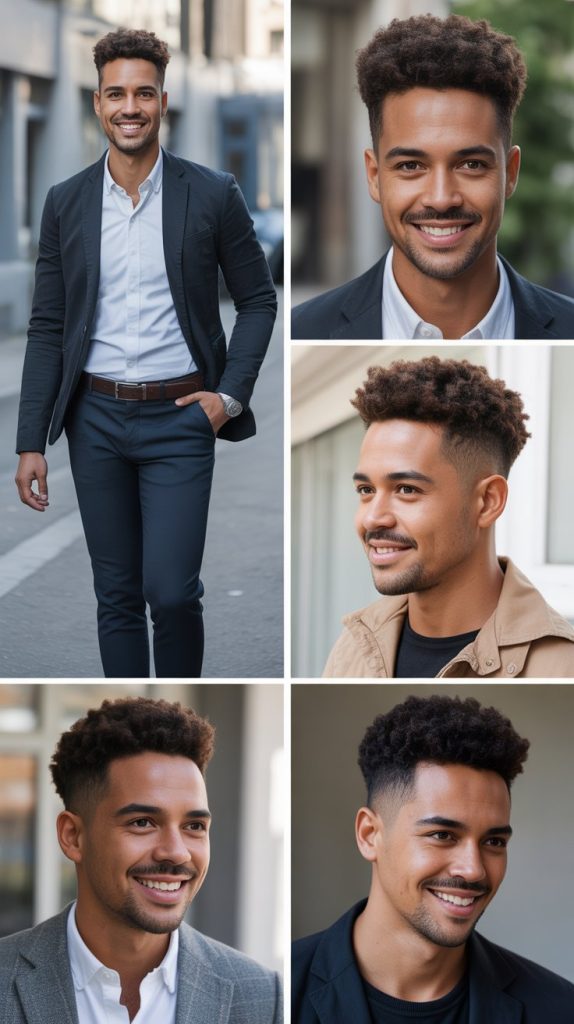
Contrary to popular belief, short hairstyles can work wonderfully for men with big foreheads when cut and styled correctly, focusing on texture, proper proportions, and strategic length variation.
The key lies in avoiding styles that are too short or too uniform in length.
Short hairstyle strategies:
- The French crop features a short fringe that sits forward on the forehead, providing coverage while maintaining a clean, modern aesthetic.
- Textured crew cuts with slightly longer hair at the front create a subtle fringe effect without requiring extensive daily styling.
- Avoid buzz cuts or very short all-over styles as they provide no coverage and can actually emphasize a large forehead.
- Short sides with a longer top create vertical lines that draw eyes upward and make your face appear more proportionate overall.
- The Caesar cut, popularized by ancient Romans and modern celebrities alike, features a short horizontal fringe that works exceptionally well for larger foreheads.
- Ask your barber to leave at least 1-2 inches on top even in short styles to provide enough length for forward styling and texture.
- Short styles require more frequent haircuts (every 2-3 weeks) to maintain their shape and the proper proportions that flatter your features.
7. Hairstyles to Avoid
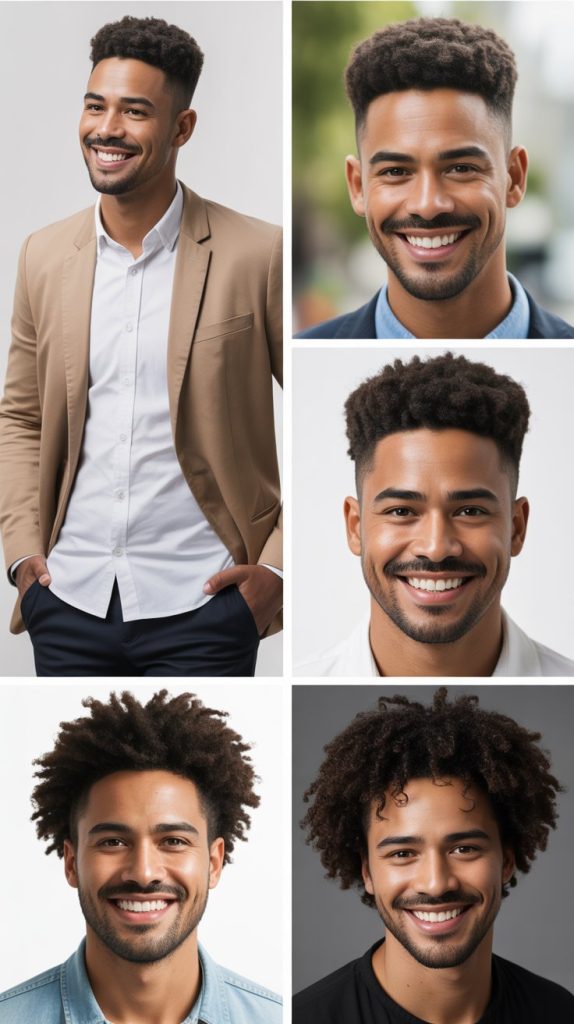
Understanding which hairstyles accentuate rather than minimize a large forehead is just as important as knowing what works, as avoiding these common mistakes will save you time, money, and potential styling disappointment.
Some cuts can inadvertently draw more attention to the very feature you’re trying to balance.
Styles that emphasize large foreheads:
- Slicked-back styles that pull all hair away from the face remove any coverage and create an uninterrupted view of the entire forehead.
- Extremely short buzz cuts or skin fades offer zero coverage and can make the forehead appear even more prominent by comparison.
- High and tight military cuts that feature very short sides and back with minimal top length create too much contrast and vertical emphasis.
- Pompadours with excessive height can elongate the face further and draw attention upward, emphasizing forehead size rather than minimizing it.
- Perfectly symmetrical center parts create a vertical line that divides the forehead and can make it appear wider than it actually is.
- Any style that involves pulling hair tightly back into a ponytail or man bun eliminates all strategic coverage of the forehead area.
- Hairstyles with blunt, horizontal lines across the forehead tend to create harsh contrasts rather than the soft, natural transitions that flatter larger foreheads.
8. Styling Products and Tools
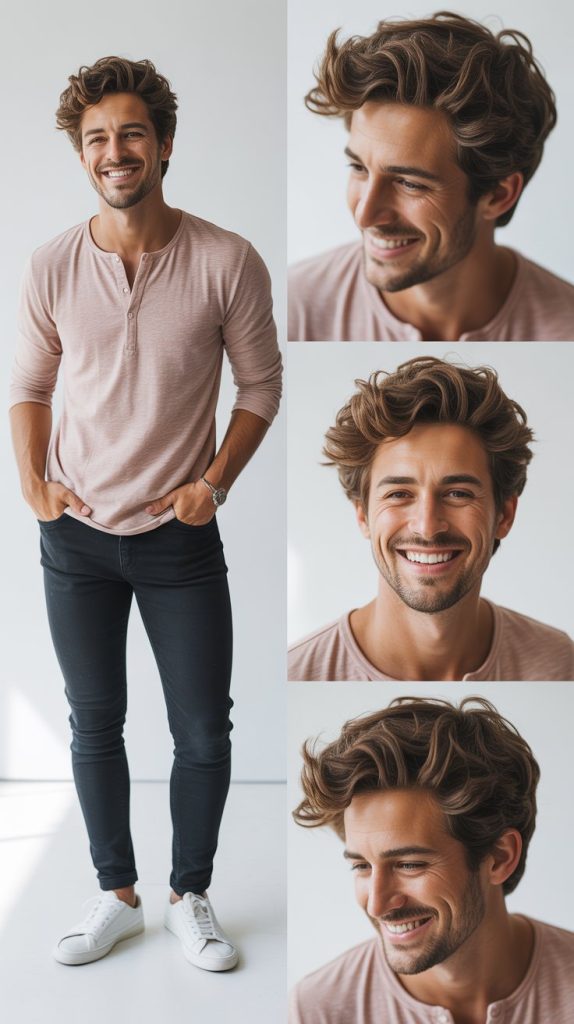
The right hair products and styling tools can make the difference between a hairstyle that falls flat and one that provides all-day coverage and confidence, especially when working with styles designed to minimize forehead appearance.
Investing in quality products tailored to your hair type and desired style pays dividends in results.
| Product Type | Best For | Key Benefits | Application Tips |
|---|---|---|---|
| Matte Clay/Paste | Textured, messy styles | Strong hold without shine, adds thickness | Work through damp hair, use sparingly |
| Sea Salt Spray | Natural texture and volume | Lightweight hold, beachy texture | Spray on damp hair before styling |
| Pomade | Slick, polished looks | High shine, flexible hold | Use on dry hair for maximum shine |
| Styling Cream | All styles, especially medium length | Medium hold, natural finish | Apply to damp hair, distribute evenly |
| Hair Fiber/Powder | Adding volume and thickness | Instant volume, absorbs oil | Apply to dry hair at roots |
Essential styling tools and techniques:
- A quality blow dryer with multiple heat settings allows you to add volume at the roots and direct hair forward for optimal forehead coverage.
- Round brushes in various sizes help create lift and shape, particularly useful for men with medium-length hair who want to add volume.
- Wide-tooth combs prevent damage while distributing product evenly and are ideal for creating parts and general styling.
- Invest in a good-quality hairdryer with a concentrator nozzle attachment for precise airflow direction and smoother styling results.
- Pre-styling products like heat protectant sprays safeguard your hair from heat damage while improving the longevity of your style.
- The order of product application matters: start with pre-styling products on damp hair, blow-dry, then finish with holding products on dry or mostly dry hair.
9. Celebrity Inspiration and Examples

Many successful actors, musicians, and public figures have larger foreheads and have mastered the art of choosing flattering hairstyles that enhance their appearance rather than hiding their natural features.
Drawing inspiration from these style icons can help you visualize what works and adapt these looks to your personal style.
Celebrity hairstyle analysis:
- Ryan Gosling frequently wears textured, forward-swept styles that create coverage while maintaining a masculine, effortlessly cool appearance.
- Jude Law has successfully worn various lengths throughout his career, often opting for slightly longer styles with forward movement and texture.
- Tom Hanks demonstrates that classic, well-groomed styles with subtle forward direction work excellently for mature men with larger foreheads.
- Many male models in fashion campaigns sport messy, textured styles with strategic fringe placement that you can reference when visiting your barber.
- Professional athletes often choose practical short styles like textured crops or Caesar cuts that provide coverage without requiring extensive daily maintenance.
- Look for celebrities who share your face shape and hair type, not just forehead size, for the most applicable style inspiration.
- Save photos of styles you like on your phone to show your barber, as visual references communicate your desired look more effectively than verbal descriptions alone.
10. Working with Your Barber or Stylist

Communicating effectively with your hair professional is absolutely crucial for achieving a hairstyle that genuinely flatters your features, as even the best style concepts can fail without proper execution and understanding between client and stylist.
Building a relationship with a skilled barber who understands your specific needs makes all the difference.
Maximizing your barbershop experience:
- Be honest and upfront about your concerns regarding your forehead size so your barber can specifically address this in their cutting and styling approach.
- Bring multiple reference photos showing different angles of your desired style, as visual aids eliminate miscommunication and set clear expectations.
- Ask about the maintenance requirements of any recommended style, including how often you’ll need trims and what daily styling commitment is required.
- A skilled barber will assess your hair type, growth patterns, and face shape before making recommendations rather than simply cutting what you request.
- Don’t be afraid to ask questions during the cutting process about styling techniques, product recommendations, and how to recreate the look at home.
- Building rapport with a regular barber means they’ll learn your preferences over time and can make adjustments based on what has and hasn’t worked previously.
- Schedule consultations at less busy times when your barber can dedicate more attention to discussing your options without feeling rushed.
- Consider investing in a slightly more expensive but highly skilled stylist for your initial consultation and cut, as getting the foundation right is essential.
11. Maintenance and Long-term Hair Health
Maintaining your chosen hairstyle requires consistent care, proper products, and attention to overall hair health, as the best cut in the world will lose its effectiveness if your hair becomes damaged, unhealthy, or improperly maintained.
Long-term success with any hairstyle depends on your commitment to proper hair care.
Hair health and maintenance priorities:
- Wash your hair 3-4 times per week maximum, as over-washing strips natural oils that keep hair healthy, manageable, and easier to style.
- Use a quality conditioner after every shampoo to maintain moisture, prevent breakage, and keep hair soft enough to style effectively.
- Schedule regular trims every 3-6 weeks depending on your style, as maintaining proper length and shape is essential for styles that minimize forehead appearance.
- Protect your hair from excessive heat damage by using heat protectant products and avoiding unnecessarily high temperatures on styling tools.
- Consider your diet and hydration levels, as healthy hair growth starts from within through proper nutrition, adequate water intake, and sufficient protein consumption.
- Avoid touching or running your hands through your styled hair throughout the day, as this breaks down products and disrupts your carefully created style.
- Invest in a silk or satin pillowcase to reduce friction while sleeping, which minimizes bedhead and helps preserve your style overnight.
- Address any underlying scalp conditions like dandruff or excessive oiliness with appropriate treatments, as scalp health directly impacts hair appearance and manageability.
12. Confidence and Mindset

While the right hairstyle can certainly help balance your features and enhance your appearance, true confidence comes from accepting and embracing your natural characteristics rather than viewing them as flaws that need to be hidden.
A large forehead is simply a feature, not a defect, and countless successful, attractive men share this trait.
Building genuine confidence:
- Remember that you likely notice and focus on your forehead far more than anyone else does, as we’re always our own harshest critics.
- A well-groomed, confident man with a large forehead appears far more attractive than an insecure man with “perfect” proportions hiding behind a lack of self-assurance.
- Style is about enhancing your best features and feeling good about yourself, not achieving some arbitrary standard of physical perfection.
- Many of the world’s most handsome and successful men have larger foreheads, proving that this feature doesn’t limit attractiveness or success in any way.
- Focus on developing your overall style, including clothing, grooming, fitness, and personality, rather than obsessing over one facial feature.
- The right hairstyle is a tool that supports your confidence, but it shouldn’t be a crutch you depend on for self-worth or self-esteem.
- Accept that some days your hair will look better than others, and that’s completely normal and acceptable for everyone regardless of forehead size.
- Surround yourself with positive influences and avoid social media content that promotes unrealistic beauty standards or triggers insecurity about your appearance.
Conclusion
Finding the perfect hairstyle when you have a larger forehead isn’t about concealing who you are—it’s about presenting your best self with confidence and style.
Throughout this guide on “Big Forehead? Here’s How Men Can Style Their Hair Better,” we’ve explored numerous practical solutions from strategic fringe placement to textured styles, from understanding face shapes to working effectively with your barber.
The most important takeaway is that your forehead size doesn’t limit your styling options; rather, it simply guides you toward specific cuts and techniques that create visual balance and enhance your overall appearance.
By implementing the strategies covered here—whether you choose a textured crop, medium-length style, or strategic side part—you’ll discover that the right haircut can transform not just how you look, but how you feel about yourself.
Remember that confidence, proper maintenance, and finding a skilled barber who understands your needs are just as important as the hairstyle itself.
Embrace your features, experiment with these proven techniques, and step forward with the assurance that you’re putting your best face forward every single day.
