Having a prominent forehead is a distinctive facial feature that many men share, and it’s time to embrace it with confidence.
Whether you were born with a naturally high hairline or have noticed changes over the years, understanding how to style yourself effectively can transform your entire appearance.
This comprehensive guide on Men with Big Foreheads: Styling Tips That Work will walk you through proven hairstyling techniques, grooming strategies, fashion choices, and confidence-building approaches that complement your facial structure.
From selecting the perfect haircut to choosing accessories that balance your proportions, you’ll discover practical solutions that work in real life.
We’ll explore how facial hair, glasses, and even clothing necklines can create visual harmony, along with celebrity examples who’ve mastered their look.
By the end of this article, you’ll have a complete toolkit of styling strategies tailored specifically for men with larger foreheads, helping you look sharp, feel confident, and present your best self to the world.
1. Understanding Your Face Shape and Proportions

Before diving into specific styling tips, it’s essential to understand how your forehead relates to your overall facial structure.
Recognizing your face shape helps you make informed decisions about hairstyles, facial hair, and accessories that create balance.
- The average forehead measures between 2 to 2.8 inches in height, but variations are completely normal and often hereditary.
- A larger forehead typically pairs with face shapes like oval, oblong, or rectangular structures.
- Understanding proportions means measuring the relationship between your forehead, cheekbones, and jawline.
- Men with prominent foreheads often have well-defined features that can be accentuated strategically.
- Your forehead size doesn’t define attractiveness—many successful actors, models, and public figures have larger foreheads.
- Taking front-facing and profile photos in natural light helps you assess your facial proportions objectively.
- Consulting with a professional hairstylist who understands facial geometry can provide personalized insights.
- Balance is the key principle—the goal isn’t to hide your forehead but to create visual harmony across your entire face.
2. Best Haircuts for Men with Big Foreheads

The right haircut can dramatically change how your forehead appears and boost your overall confidence. Strategic cuts work with your natural features rather than against them.
- Textured fringe haircuts create volume and coverage across the forehead without looking like you’re hiding anything.
- Side-swept styles naturally draw attention across rather than up and down, minimizing forehead emphasis.
- Layered cuts add dimension and movement, preventing flat hair that accentuates forehead height.
- Short to medium length hair (2-4 inches on top) provides the most versatility for styling.
- Avoid slicked-back styles or very short buzz cuts that expose the entire forehead prominently.
- Adding texture through point cutting or razor techniques creates natural-looking volume.
- Pompadours and quiffs can work if balanced with volume on the sides to maintain proportion.
- Ask your barber for a “textured crop” or “forward-styled fringe” when booking your appointment.
- Regular trims every 3-4 weeks maintain the shape and prevent awkward growing-out phases.
- Leaving some length at the hairline allows for strategic styling that softens the forehead’s appearance.
3. Hairstyling Products and Techniques
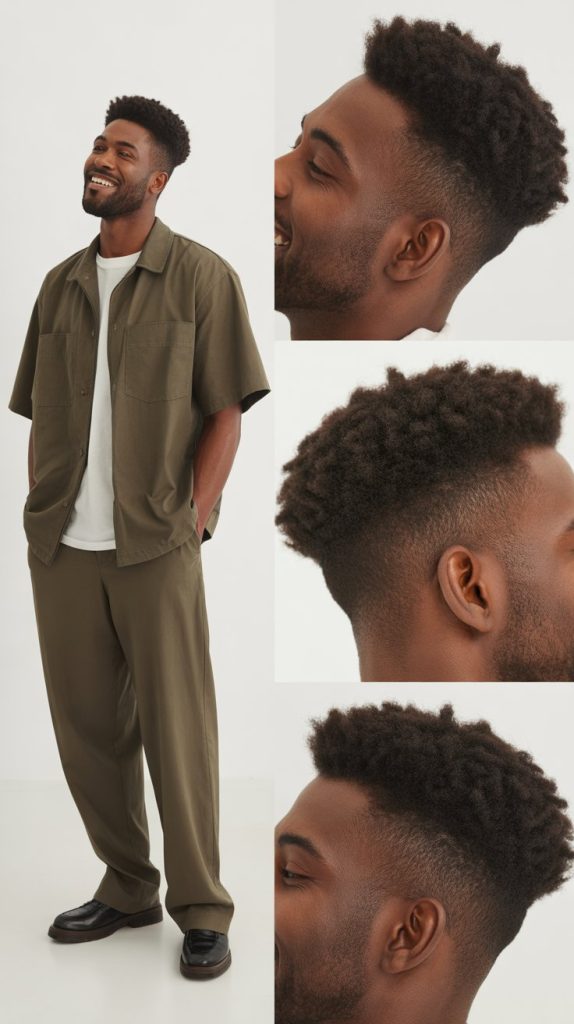
Having the right products and knowing how to use them makes the difference between a good haircut and a great everyday look.
Proper styling techniques enhance your hair’s natural texture while creating the coverage you want.
- Matte clay and paste products provide hold without shine, creating a natural, textured appearance.
- Apply styling products to damp (not wet) hair for better distribution and hold.
- Blow-drying hair forward while it’s damp sets the direction and creates volume at the hairline.
- Use a round brush to lift hair at the roots while directing it toward your forehead.
- Sea salt spray adds texture and volume to finer hair types before styling.
- Avoid heavy gels or pomades that weigh hair down and flatten it against your head.
- Work products from back to front, using your fingers to create natural-looking texture.
- A pre-styler or volumizing mousse applied to roots creates lift that lasts throughout the day.
- Finish with a light-hold hairspray to maintain your style without making it stiff or crunchy.
- Experiment with different products to find what works best with your hair type and thickness.
4. The Power of Facial Hair
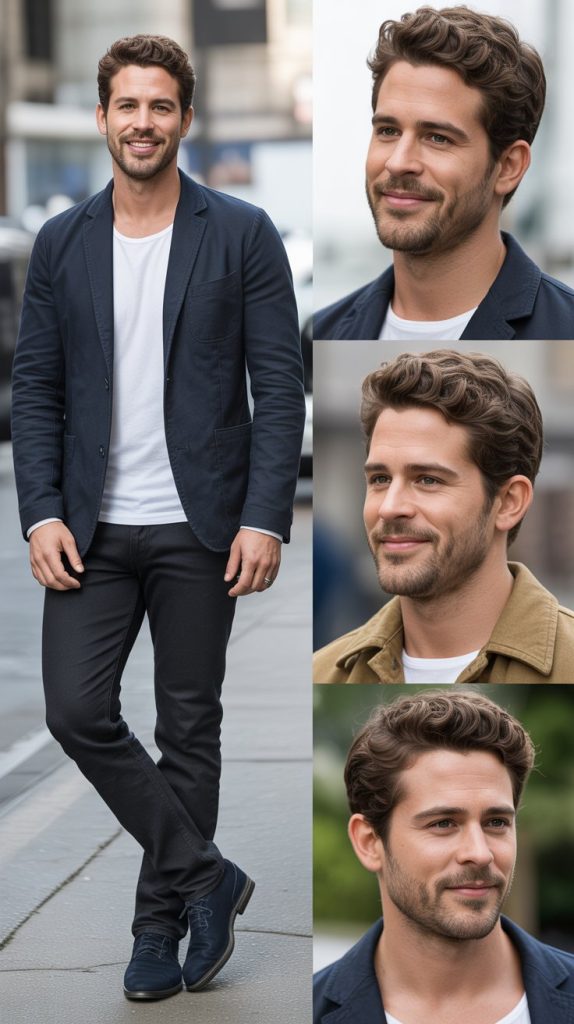
Facial hair is one of the most effective tools for balancing facial proportions when you have a larger forehead. The right beard or mustache style draws the eye downward and creates visual equilibrium.
- A well-groomed beard adds length to the lower portion of your face, balancing a tall forehead.
- Full beards work particularly well for creating this visual balance and adding definition.
- Even a few days of stubble can add texture and draw attention to the lower face.
- Mustaches alone can work but are most effective when paired with some chin hair.
- Keep facial hair neat and shaped—unkempt beards create the opposite effect you want.
- The beard should be proportional; if you have a very prominent forehead, a fuller beard creates better balance.
- Regular trimming every few days maintains sharp lines and prevents scraggly growth.
- Use beard oil or balm to keep facial hair healthy, soft, and well-groomed.
- If you can’t grow a full beard, strategic stubble along the jawline still adds definition.
- Experiment with different lengths and styles to find what complements your face shape best.
5. Choosing the Right Glasses and Eyewear

Glasses are more than vision correction—they’re a powerful styling tool that can dramatically affect how your facial proportions appear.
The right frames create balance and draw attention to your eyes rather than your forehead.
- Thick-rimmed glasses add visual weight to the middle of your face, creating better proportion.
- Rectangular or square frames work better than round frames for most men with larger foreheads.
- Browline glasses (like Ray-Ban Clubmasters) are particularly flattering as they add definition at the brow.
- Avoid tiny frames that make your forehead appear even larger by comparison.
- The top of your frames should roughly align with your eyebrows for optimal balance.
- Colored or patterned frames can draw attention away from your forehead and toward your eyes.
- Larger lenses provide more coverage and create a focal point in the center of your face.
- Wayfarers and similar angular styles work well for creating horizontal visual interest.
- If you wear sunglasses, choose styles with substantial frames rather than minimalist designs.
- Consider prescription glasses as a styling accessory even if you only need mild correction.
6. Hats and Accessories That Flatter

Accessories like hats can be tricky territory for men with prominent foreheads, but when chosen correctly, they become powerful styling tools.
The key is selecting pieces that add proportion rather than emphasize height.
- Baseball caps worn slightly forward create coverage while maintaining a casual, confident look.
- Avoid wearing caps too high on your head, which increases visible forehead space.
- Wide-brim hats like fedoras add horizontal visual interest that balances vertical forehead height.
- Beanies should be worn comfortably on your head, not pushed back, which exposes more forehead.
- Flat caps and newsboy caps add texture and dimension at the top while creating flattering shadows.
- Choose hats with structured brims rather than floppy, unstructured styles.
- The color and pattern of your hat can draw attention away from your forehead.
- Avoid tiny hats or caps that perch on top of your head—they emphasize rather than balance.
- Sun hats with wider brims work well for outdoor activities while providing functional protection.
- Confidence is essential—wear hats as a style choice, not as something you’re hiding behind.
7. Clothing Necklines and Color Strategies

What you wear below your face significantly impacts how your facial features are perceived. Strategic clothing choices create visual flow and draw attention to different areas.
- V-neck shirts and sweaters create downward visual lines that elongate your overall appearance.
- Crew necks work well but should be balanced with other styling elements like facial hair or glasses.
- Avoid high, tight collars that create a stopping point and emphasize vertical face length.
- Open collared shirts create a relaxed, balanced look that doesn’t draw the eye upward.
- Wearing scarves or necklaces adds visual interest at the chest level, drawing attention downward.
- Horizontal stripes on shirts create width rather than height, balancing your proportions.
- Choose colors strategically—darker colors near your face create shadows that soften features.
- Patterned shirts provide visual complexity that takes attention away from any single facial feature.
- Well-fitted clothing that sits properly at your shoulders creates better overall proportion.
- Layering pieces like jackets, vests, or cardigans add dimension and create multiple focal points.
8. Confidence and Body Language

Style goes far beyond physical appearance—how you carry yourself determines how others perceive you. Confidence transforms any feature into an asset rather than something to hide.
- Your posture significantly affects how others perceive your entire appearance, including your face.
- Standing tall with shoulders back projects confidence that overshadows any perceived physical imperfection.
- Eye contact shows self-assurance and naturally draws attention to your eyes rather than your forehead.
- Smiling genuinely creates positive energy that makes people focus on your expression, not your features.
- Many successful celebrities have prominent foreheads and own their look with complete confidence.
- Self-consciousness often draws more attention to features than the features themselves do.
- Working on inner confidence through personal development, fitness, or therapy improves outer presentation.
- Remember that people notice your overall vibe and personality far more than individual facial features.
- Accepting your natural features removes the anxiety that can make you appear uncomfortable.
- Confidence makes any styling choice work better—it’s the foundation of good appearance.
9. Celebrity Examples and Inspiration

Looking at public figures who share your facial structure provides real-world proof that prominent foreheads can be incredibly attractive.
These men have built successful careers while embracing their natural features.
- Jude Law has always embraced his hairline with confidence and impeccable styling.
- Peyton Manning built an iconic career without his forehead size affecting his public image.
- William, Prince of Wales, maintains a polished appearance with short, well-groomed hairstyles.
- These men demonstrate that success and attractiveness aren’t determined by forehead size.
- Study how these public figures style their hair—many use textured, forward-styled cuts.
- Notice that most pair their hairstyles with well-groomed facial hair or strong fashion choices.
- Confidence and personal style matter far more than having “perfect” proportions.
- Many leading men in Hollywood have prominent foreheads and are considered highly attractive.
- Use these examples not to copy exactly, but to see what principles work on similar face shapes.
- Remember that these men are celebrated for their talents, achievements, and overall presence, not despite their features.
10. Common Mistakes to Avoid

Understanding what doesn’t work is just as important as knowing what does. Avoiding these common styling errors saves time, money, and frustration.
- Slicking all your hair straight back exposes your entire forehead and emphasizes height.
- Very short buzzcuts or shaved heads eliminate the strategic coverage that hair provides.
- Wearing your hair flat without any volume or texture draws attention to forehead prominence.
- Letting your hair grow too long without shape creates imbalance and looks unkempt.
- Constantly wearing hats can signal insecurity rather than confidence in your appearance.
- Using too much product makes hair look greasy, flat, and unnatural.
- Choosing frames that are too small or delicate makes your forehead appear larger by contrast.
- Neglecting facial hair when it would significantly improve your facial balance.
- Wearing high, tight collars that create a visual stop-point at your chin.
- Obsessing over your forehead size—the anxiety shows and draws more attention than the feature itself.
Conclusion
Mastering your personal style when you have a prominent forehead is entirely achievable with the right approach and mindset.
Throughout this guide on Men with Big Foreheads: Styling Tips That Work, we’ve explored comprehensive strategies from haircuts and styling products to facial hair, eyewear, and clothing choices that create visual balance and enhance your natural features.
The key takeaway is that your forehead isn’t a flaw to hide but a feature to work with strategically through smart styling decisions.
By implementing these proven techniques—whether it’s choosing a textured fringe haircut, growing a well-groomed beard, selecting the right glasses frames, or simply carrying yourself with confidence—you can create a polished, attractive appearance that feels authentically you.
Remember that many successful, attractive men share this facial characteristic and have turned it into part of their signature look.
Your confidence, personality, and how you present yourself matter infinitely more than any single physical feature.
Embrace these styling tips, experiment with what works best for your unique face shape and lifestyle, and step forward with the assurance that you can look absolutely great exactly as you are.
