Having a prominent forehead is not a flaw—it’s simply a distinctive feature that deserves the right hairstyle to complement your overall look.
Many men feel self-conscious about their larger foreheads, but the truth is that with the right cut, styling technique, and confidence, you can turn what you perceive as a challenge into your greatest asset.
This comprehensive guide on Game-Changing Hairstyles for Men with Big Foreheads will walk you through expert-approved styles, practical tips, and professional insights that will transform how you approach your hair.
From textured fringe cuts to strategic side parts, from modern quiffs to classic pompadours, you’ll discover multiple options that create balance, draw attention to your best features, and make you feel incredibly confident.
Whether you have straight, wavy, or curly hair, whether you prefer low-maintenance styles or are willing to invest time in daily styling, this article covers everything you need to know about choosing and maintaining the perfect hairstyle for your face shape and forehead size.
1. Understanding Face Shape and Forehead Proportions

Before diving into specific hairstyles, understanding your unique face shape and forehead proportions is essential for making informed styling decisions.
Your forehead size relative to the rest of your facial features determines which cuts will create the most flattering balance and harmony.
- The average male forehead measures approximately 2 to 2.8 inches in height from eyebrow to hairline.
- A forehead is generally considered “large” when it measures more than four fingers in width or occupies more than one-third of your total face length.
- Face shapes are typically categorized as oval, round, square, rectangular, diamond, or heart-shaped, with each requiring different hairstyling approaches.
- Men with larger foreheads often have rectangular or oblong face shapes, which benefit from styles that add width rather than height.
- Proportion matters more than actual size—a forehead that appears large may simply need better balance with the rest of your features.
- Professional hairstylists use the “rule of thirds” where the face is divided into three equal sections: forehead to eyebrows, eyebrows to nose tip, and nose tip to chin.
- Understanding your hairline type (straight, widow’s peak, receding, or M-shaped) is equally important as it influences which styles will work best.
- Taking front and side profile photos can help you objectively assess your proportions before choosing a new hairstyle.
- Consulting with an experienced barber who understands facial geometry can provide personalized insights specific to your features.
- Your forehead size can actually be an advantage when styled correctly, as many classic masculine hairstyles were designed with prominent foreheads in mind.
2. The Textured Fringe Cut

The textured fringe cut has become one of the most popular and versatile options for men seeking to minimize forehead visibility while maintaining a modern, stylish appearance.
This cut works by bringing hair forward onto the forehead in a natural, piece-y manner that creates coverage without looking like you’re trying to hide anything.
- The textured fringe typically features hair length of 2 to 4 inches on top with shorter, faded sides for contrast and definition.
- This style works exceptionally well for men with straight to slightly wavy hair textures that can be easily manipulated forward.
- The key to a successful textured fringe is the choppy, uneven cutting technique that prevents the bangs from looking too blunt or juvenile.
- Point-cutting and razor techniques create the signature piece-y texture that makes this style look effortlessly cool rather than deliberately concealing.
- Styling requires a lightweight product like texturizing paste, clay, or sea salt spray applied to damp hair and worked through with fingers.
- The fringe can be styled straight down, swept slightly to one side, or even split in the middle depending on your preference and face shape.
- This cut requires maintenance every 4 to 6 weeks to prevent the fringe from becoming too long and covering your eyes.
- The textured fringe pairs well with various fade styles including low, mid, or high fades on the sides and back.
- This hairstyle has been popularized by celebrities and athletes, making it a contemporary choice that doesn’t sacrifice style for function.
- For men with cowlicks or natural hair patterns that resist forward styling, additional styling time and stronger hold products may be necessary.
3. The Side-Swept Undercut

The side-swept undercut combines strategic hair placement with dramatic contrast to create visual interest while naturally reducing forehead prominence.
This bold style draws the eye horizontally across your face rather than vertically, which helps balance out a larger forehead.
- The undercut features significantly shorter sides (often clipper-cut to #1-3 guard) with longer hair on top that’s swept to one side.
- This dramatic contrast between short and long sections creates a strong visual line that diverts attention from forehead size.
- The top section typically ranges from 3 to 6 inches in length, providing enough hair to create a substantial side sweep.
- Styling begins with applying volumizing mousse or cream to damp hair, then blow-drying the hair to one side using a round brush or your hands.
- A medium to strong hold pomade, wax, or gel is essential for keeping the swept hair in place throughout the day.
- The side part can be created with a comb for a more defined, classic look, or left soft and natural for a contemporary aesthetic.
- This style works best for men with straight to wavy hair that holds direction well; very curly hair may resist the side-sweep.
- The undercut requires regular maintenance on the sides (every 2-3 weeks) while the top can grow out longer between trims.
- Face shape considerations are important—this style particularly flatters men with square or rectangular faces who want to soften angular features.
- The side-swept undercut has remained popular for over a decade due to its versatility and ability to transition from casual to professional settings.
4. The Modern Quiff

The modern quiff is a sophisticated hairstyle that combines volume, height, and forward movement to create a balanced look that works exceptionally well for men with prominent foreheads.
This style adds dimension and draws attention upward while the front sweep provides subtle forehead coverage.
- The quiff features hair that’s swept upward and back from the forehead, creating volume and height while the front portion comes slightly forward.
- This style typically requires 3 to 5 inches of length on top, with gradually shorter sides that can be faded or tapered.
- The modern quiff differs from vintage versions by being less structured and more textured, with a natural rather than slicked-back appearance.
- Creating the quiff involves blow-drying hair upward and back while it’s damp, using a round brush or your fingers to direct airflow.
- Pre-styling products like volumizing mousse or heat protection spray provide the foundation for lasting height and body.
- Once dried, a medium-hold styling product like fiber, clay, or cream is worked through the hair to create texture and separation.
- The front portion should sweep slightly forward or to the side rather than straight back, creating the flattering forehead coverage.
- This versatile style can be adjusted in height and volume depending on the occasion—higher and more dramatic for evening events, lower and more subtle for professional settings.
- Men with fine or thin hair can achieve this look with proper product selection and blow-drying technique that creates the illusion of fuller hair.
- The quiff requires daily styling but becomes quicker with practice, typically taking 5 to 10 minutes once you’ve mastered the technique.
5. The Caesar Cut with Fringe

The Caesar cut with fringe is a timeless, low-maintenance hairstyle that provides excellent forehead coverage while maintaining a clean, masculine appearance.
Named after Julius Caesar who allegedly wore this style to conceal his receding hairline, it remains a practical and stylish choice for modern men.
- The Caesar cut features short hair all around (typically 1 to 2 inches) with a horizontal fringe that comes forward onto the forehead.
- This style is characterized by its even length throughout, creating a consistent, uniform appearance that’s easy to maintain.
- The fringe can be cut blunt for maximum forehead coverage or textured for a softer, more contemporary look.
- Unlike longer fringe styles, the Caesar cut’s shorter length means it won’t fall into your eyes or require constant adjustment throughout the day.
- Styling is minimal—simply towel-dry hair and apply a small amount of light-hold product, then brush or comb the fringe forward.
- This cut works particularly well for men with straight or slightly wavy hair; curly hair will require more styling effort to achieve the forward direction.
- The Caesar cut is ideal for active lifestyles, professional environments, and men who prefer spending minimal time on hair care.
- Variations include the French crop (a modern iteration with more texture) and the textured Caesar (featuring choppy, piece-y fringe).
- This style requires trimming every 3 to 4 weeks to maintain the clean lines and prevent the fringe from becoming too long.
- The Caesar cut suits virtually all face shapes and is particularly flattering on men with strong jawlines and angular features.
6. The Messy Crop

The messy crop embraces texture, movement, and intentional dishevelment to create a youthful, contemporary look that strategically minimizes forehead prominence through casual fringe coverage.
This style is perfect for men who want a modern edge without high-maintenance styling requirements.
- The messy crop features short to medium length hair (2 to 3 inches) on top with textured, choppy layers that create natural movement and volume.
- Sides are typically kept shorter through fading or tapering, creating contrast that emphasizes the textured top section.
- The “messiness” is carefully crafted through specific cutting techniques including point-cutting, razor work, and texturizing shears.
- This style provides forehead coverage through a casual fringe that can be styled forward, to the side, or in multiple directions for a piece-y effect.
- Styling involves applying a matte-finish product like clay, fiber, or texturizing paste to dry or slightly damp hair.
- Working the product through with your fingers (rather than a comb) creates the desired messy, undone texture.
- The beauty of this cut is its versatility—it can look equally good whether you spend 30 seconds or 5 minutes styling it.
- This style particularly suits men with naturally wavy or slightly curly hair, as the texture enhances the messy aesthetic.
- The messy crop has become increasingly popular among younger men and those in creative industries due to its relaxed, confident vibe.
- Maintenance is reasonable, with trims needed every 5 to 7 weeks to maintain the shape and prevent the style from losing its structure.
7. The Faux Hawk with Forward Texture

The faux hawk with forward texture offers an edgy, distinctive look that creates vertical interest while incorporating forward-moving hair that provides natural forehead coverage.
This style strikes a balance between bold and balanced, making it suitable for men who want to stand out while addressing forehead proportions.
- The faux hawk features a strip of longer hair down the center of the head (3 to 5 inches) with progressively shorter sides.
- Unlike a traditional mohawk, the faux hawk maintains some length on the sides rather than shaving them completely, making it more versatile and work-appropriate.
- The key to this style’s effectiveness for larger foreheads is angling the front portion forward rather than straight up, creating coverage while maintaining the style’s signature shape.
- Styling requires blow-drying the hair upward and toward the center while it’s damp, using fingers or a brush to direct the hair.
- Strong-hold products like pomade, gel, or fiber are essential for maintaining the faux hawk’s distinctive shape throughout the day.
- The front section should be styled with slight forward movement, creating a textured fringe effect that softens the forehead line.
- This style can be adjusted in height and drama—wear it higher for social events and lower, more relaxed for everyday or professional situations.
- The faux hawk works best on men with straight to wavy hair; very curly hair may require straightening to achieve the clean central ridge.
- Face shape considerations include ensuring the vertical element doesn’t make an already long face appear longer—adding width through the styling can counter this.
- Maintenance involves regular side trims every 2 to 3 weeks while the top can grow longer, with complete reshaping needed every 6 to 8 weeks.
8. The Ivy League Cut

The Ivy League cut offers a refined, classic American style that provides subtle forehead coverage while maintaining a polished, professional appearance.
This versatile cut works in virtually any setting, from corporate boardrooms to casual weekend activities.
- The Ivy League cut is essentially a longer crew cut with enough length on top (1.5 to 3 inches) to create a side part and slight forward sweep.
- This style features gradually shorter hair on the sides and back, typically tapered or faded, creating a clean, well-groomed appearance.
- The length on top allows for the hair to be combed to the side with a slight forward angle, providing subtle forehead coverage without obvious concealment.
- Styling is straightforward—apply a small amount of pomade, cream, or light wax to damp hair and comb into place with a side part.
- The Ivy League works exceptionally well in professional environments where more dramatic or edgy styles might be inappropriate.
- This cut suits men of all ages and has remained popular for decades due to its timeless, clean-cut aesthetic.
- The style can be adapted for different hair types, though straight to wavy hair achieves the classic look most easily.
- Maintenance is moderate, requiring trims every 4 to 5 weeks to maintain the tapered sides and proper proportions.
- The Ivy League is an excellent choice for men transitioning from longer styles or those seeking a mature, responsible appearance.
- This hairstyle gained its name from being popular among students at prestigious Ivy League universities in the mid-20th century and continues to convey intelligence and refinement.
9. The Long Layered Sweep
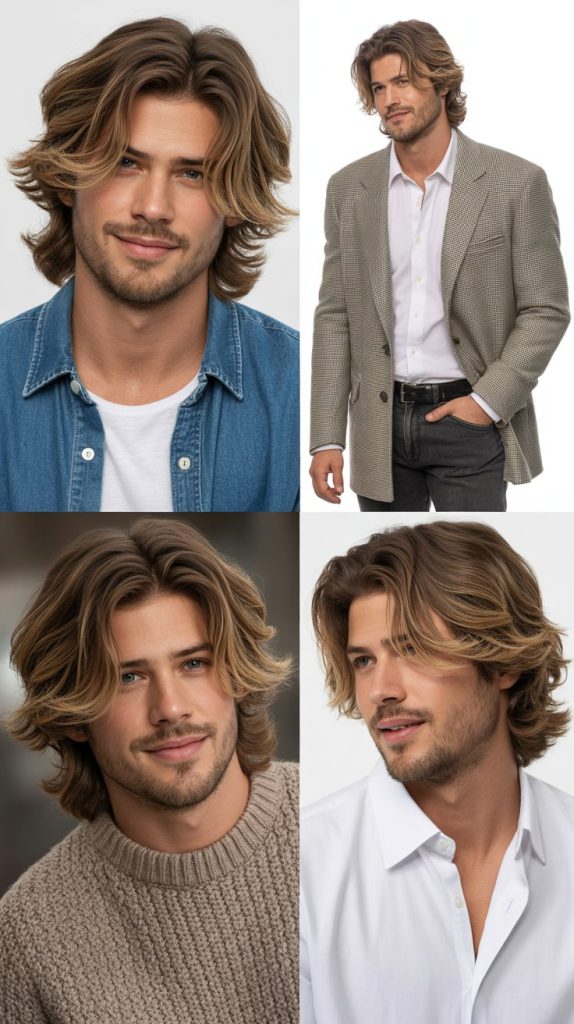
The long layered sweep embraces length to create dramatic forehead coverage while adding movement, dimension, and contemporary style.
This option is ideal for men willing to grow their hair longer and commit to more involved styling routines in exchange for maximum coverage and versatility.
- This style features hair that’s typically 4 to 8 inches long on top with layers cut throughout to prevent bulk and create natural movement.
- The layering technique ensures the hair doesn’t appear heavy or triangular but instead has shape, texture, and flow.
- Hair is styled to sweep across the forehead from a deep side part, creating substantial coverage while the length draws attention away from forehead size.
- The sides can be kept longer for a fully grown-out look or cut shorter for contrast, depending on personal preference and face shape.
- Styling begins with applying volumizing product to damp hair, then blow-drying with a paddle or round brush to create smoothness and direction.
- Finishing products like lightweight wax, serum, or styling cream add definition and hold without making the hair appear stiff or greasy.
- This style offers incredible versatility—wear it swept to one side for a polished look, pushed back for a casual vibe, or even in a small top knot for variation.
- Long hair requires more maintenance including regular conditioning treatments, occasional trims to maintain shape (every 6 to 8 weeks), and daily styling time.
- Men with naturally wavy or curly hair can embrace their texture with this style, using it to create additional volume and interest.
- The long layered sweep works particularly well for men with strong, angular faces as the softness of longer hair creates appealing contrast.
10. The Brushed Forward Pompadour

The brushed forward pompadour modernizes the classic pompadour by incorporating forward movement that provides forehead coverage while maintaining the style’s signature volume and height.
This sophisticated option combines the best of vintage and contemporary styling approaches.
- This style features significant height and volume at the front with hair that’s swept upward and then forward rather than straight back like traditional pompadours.
- Hair length requirements are substantial—typically 4 to 6 inches on top to create the necessary volume and forward sweep.
- The sides are usually faded or cut short to create contrast and emphasize the voluminous top section.
- Creating this style requires blow-drying skills—direct hair upward and forward using a round brush while applying heat to set the shape.
- Pre-styling products like volumizing spray or mousse provide the foundation for lasting height without collapse throughout the day.
- Strong-hold pomade, gel, or paste is essential for maintaining the structure, applied to hair that’s been blow-dried into the desired shape.
- The forward sweep at the front creates a natural arc of hair over the forehead, providing coverage while maintaining the pompadour’s dramatic presence.
- This style transitions well from day to night and from casual to formal settings, making it highly versatile despite the styling effort required.
- Men with thick, straight to wavy hair achieve this look most easily, while fine hair may require more product and teasing for adequate volume.
- The brushed forward pompadour has experienced a major resurgence in popularity, influenced by vintage barbering trends and modern adaptations seen on celebrities and influencers.
11. The Crew Cut with Front Texture

The crew cut with front texture offers a military-inspired, low-maintenance foundation enhanced with contemporary texturing techniques that provide subtle forehead coverage.
This practical style appeals to men who want minimal styling requirements without sacrificing style or balance.
- The traditional crew cut features very short sides with slightly longer hair on top (0.5 to 1.5 inches), creating a clean, practical look.
- Adding front texture involves leaving the front section slightly longer (1.5 to 2 inches) and cutting it with texturing shears for piece-y movement.
- This modern adaptation maintains the crew cut’s easy maintenance while adding visual interest and subtle forehead coverage through the textured front.
- Styling is minimal—apply a small amount of matte paste or fiber to dry hair and use your fingers to direct the front portion forward or slightly to the side.
- The textured front creates just enough coverage to balance forehead proportions without requiring the commitment of a full fringe.
- This style is ideal for men with active lifestyles, those in military or law enforcement careers, or anyone who prefers spending minimal time on grooming.
- The crew cut with front texture works well with virtually all hair types, though straight hair shows the texture most clearly.
- Maintenance requires frequent trims every 2 to 3 weeks to prevent the style from losing its shape and clean lines.
- This cut particularly suits men with strong facial features and athletic builds, as it emphasizes masculine structure.
- The style offers easy versatility—add more product for a styled look or wear it product-free for a natural, effortless appearance.
12. Styling Products and Techniques for Large Foreheads

Understanding which products and techniques work best for styling hair when you have a prominent forehead is essential for achieving and maintaining your desired look.
The right combination of products and application methods can mean the difference between a style that works all day and one that falls flat within hours.
| Product Type | Hold Strength | Finish | Best For | Application Method |
|---|---|---|---|---|
| Pomade | Medium to Strong | Shiny to Medium | Slicked styles, pompadours | Apply to damp hair, comb through |
| Clay/Paste | Medium | Matte | Textured, natural looks | Apply to dry or slightly damp hair, work with fingers |
| Wax | Medium to Strong | Medium | Defined styles, piece-y texture | Warm between palms, apply to dry hair |
| Gel | Strong | Shiny | Maximum hold, wet looks | Apply to damp hair, comb or style into place |
| Fiber | Medium | Matte to Low Shine | Flexible hold, re-styleable | Apply to dry hair, work through with fingers |
| Sea Salt Spray | Light | Matte | Volume, beachy texture | Spray on damp hair before blow-drying |
| Mousse | Light to Medium | Natural | Volume, blow-dry foundation | Apply to damp hair before heat styling |
- Product selection should be based on your hair type, desired finish, and the specific style you’re creating—fine hair needs lighter products while thick hair can handle heavier formulations.
- Blow-drying is a game-changing technique for creating volume and directing hair forward to provide forehead coverage.
- Always blow-dry in the direction you want the hair to lay, using medium heat and keeping the dryer moving to avoid heat damage.
- The cool shot button on your blow dryer sets the style by closing the hair cuticle, making your style last significantly longer.
- Layering products—starting with a pre-styling product, adding a primary styling product, and finishing with a light hold spray—creates professional results.
- Less is more when it comes to product application—start with a small amount (about a nickel to quarter size) and add more if needed.
- Emulsifying product between your palms before application ensures even distribution and prevents clumping or greasy spots.
- Applying product from the roots to ends provides all-over hold, while applying only to ends creates a more natural look with volume at the roots.
- Finger styling creates a more textured, modern appearance while comb styling produces cleaner, more defined looks.
- Refreshing your style mid-day can be done by slightly dampening hair with water and reactivating existing product rather than adding more.
13. Common Mistakes to Avoid

Knowing what not to do is just as important as knowing the right techniques when styling hair to complement a larger forehead.
Many men unknowingly make choices that actually emphasize rather than balance their forehead proportions.
- Slicking hair completely back with no fringe or forward movement is one of the most common mistakes, as it fully exposes the forehead and can make it appear even larger.
- Cutting hair too short all over eliminates styling options and leaves no hair to provide any type of coverage or balance.
- Using too much product creates a heavy, greasy appearance that draws attention to itself and by extension, the forehead area.
- Ignoring hair texture and fighting against natural growth patterns leads to frustration and styles that don’t hold throughout the day.
- Choosing styles based solely on trends rather than what actually complements your face shape often results in unflattering looks.
- Avoiding regular trims causes styles to lose their shape, eliminating the intentional lines and proportions that create balance.
- Blow-drying hair straight up without any forward direction adds vertical height that can make the face appear longer and the forehead more prominent.
- Using the wrong part location for your face shape can throw off facial proportions—parts should generally be placed where the head naturally wants to separate.
- Neglecting to consider your hairline type when choosing styles can lead to selections that highlight receding areas or widow’s peaks rather than working with them.
- Comparing yourself to hairstyle inspiration photos without accounting for differences in hair type, density, or face shape leads to unrealistic expectations and disappointing results.
14. Maintenance and Long-Term Hair Care

Maintaining your chosen hairstyle and ensuring your hair remains healthy enough to style effectively requires consistent care and attention.
Proper maintenance extends beyond just getting regular haircuts to include daily care practices and seasonal adjustments.
- Establishing a regular trim schedule based on your specific style’s needs keeps your haircut looking intentional rather than grown-out and messy.
- Washing hair 3 to 4 times per week rather than daily prevents stripping natural oils while keeping hair clean enough for styling.
- Using a quality shampoo formulated for your hair type (fine, thick, oily, dry) addresses specific needs and prevents common problems.
- Conditioning hair, especially the ends, prevents dryness and damage that can make styling difficult and cause hair to look unhealthy.
- Scalp care through gentle massage and occasional exfoliation promotes healthy hair growth and addresses issues like dandruff or buildup.
- Protecting hair from heat damage by using heat protectant products before blow-drying or using hot tools preserves hair health long-term.
- Sleeping on a silk or satin pillowcase reduces friction that causes frizz and helps styled hair last longer between washes.
- Adjusting your styling routine seasonally accounts for humidity in summer (which may require stronger hold products) and dryness in winter (which needs more moisture).
- Communicating clearly with your barber or stylist about what you like and don’t like after each cut helps them refine your style over time.
- Investing in quality tools including a good blow dryer, the right brushes or combs for your style, and professional-grade products produces noticeably better results than drugstore alternatives.
15. Consulting with Professionals

Working with experienced barbers and hairstylists who understand facial proportions, hair behavior, and current techniques can transform your hair game and help you discover options you might never have considered on your own.
- Bringing reference photos to your appointment provides a concrete starting point for discussion, though your stylist can adapt ideas to suit your specific hair type and face shape.
- Professional stylists can assess your hair’s density, texture, natural growth patterns, and condition to recommend styles that will actually work for you.
- A good barber will honestly tell you if a style you want won’t suit your features and suggest alternatives that achieve a similar aesthetic while flattering you.
- Building a relationship with one stylist over time means they learn your preferences, remember what’s worked and what hasn’t, and can suggest new ideas that fit your established style.
- Professional consultations should include discussing your lifestyle, styling time commitment, and maintenance willingness to ensure recommended styles are practical.
- Many high-quality barbershops offer complimentary consultations separate from cuts, allowing you to have in-depth discussions without pressure.
- Stylists can teach you their techniques during your appointment, demonstrating how they blow-dry or style your hair so you can replicate it at home.
- Professional product recommendations from your stylist are valuable since they’ve seen how products perform on thousands of clients with various hair types.
- Booking appointments during less busy times (weekday mornings or early afternoons) often allows for more attention and consultation time.
- Following your stylist on social media can keep you updated on new techniques they’re learning and style trends that might suit you as your trusted professional evolves their skills.
Conclusion
Finding the perfect style when you have a prominent forehead is not about hiding or being ashamed of your natural features—it’s about strategic styling that creates balance, proportion, and confidence.
Throughout this comprehensive guide on Game-Changing Hairstyles for Men with Big Foreheads, we’ve explored fifteen distinct approaches ranging from textured fringes and side-swept undercuts to modern quiffs and classic Ivy League cuts.
Each style offers unique advantages depending on your hair type, lifestyle, maintenance commitment, and personal aesthetic preferences.
The key takeaways include understanding your face shape and proportions, choosing styles that bring hair forward or create horizontal visual lines,
working with quality products and proper techniques, avoiding common mistakes that emphasize rather than balance your forehead, maintaining consistent care and regular trims, and consulting with professional stylists who can provide personalized guidance.
Remember that confidence is the ultimate accessory to any hairstyle—when you feel good about how you look, that self-assurance becomes evident to everyone you encounter.
Experiment with different options from this guide, give each style a fair trial period, and don’t be afraid to adapt techniques to suit your individual needs.
Your larger forehead is simply one of many features that make you unique, and with the right hairstyle, it becomes just another well-styled aspect of your overall appearance rather than something that holds you back.
