Having a larger forehead is a completely natural physical trait that many men share, yet it often becomes a source of unnecessary concern when choosing the right hairstyle.
The good news is that with the right cut, styling technique, and a bit of confidence, you can completely transform how your forehead appears and create a balanced, attractive look that highlights your best features.
This comprehensive guide on “Big Forehead? These Men’s Hairstyles Fix It Fast” will walk you through proven hairstyle solutions, from textured fringes and side-swept bangs to strategic layering and modern quiff variations that work specifically for larger foreheads.
You’ll discover expert styling tips, product recommendations, and maintenance advice that professional barbers use to create flattering proportions for their clients.
Whether you prefer short, medium, or long hair, classic or contemporary styles, you’ll find multiple options that suit your face shape, hair texture, and personal style while effectively minimizing forehead prominence and boosting your overall confidence.
1. Textured Fringe Hairstyles
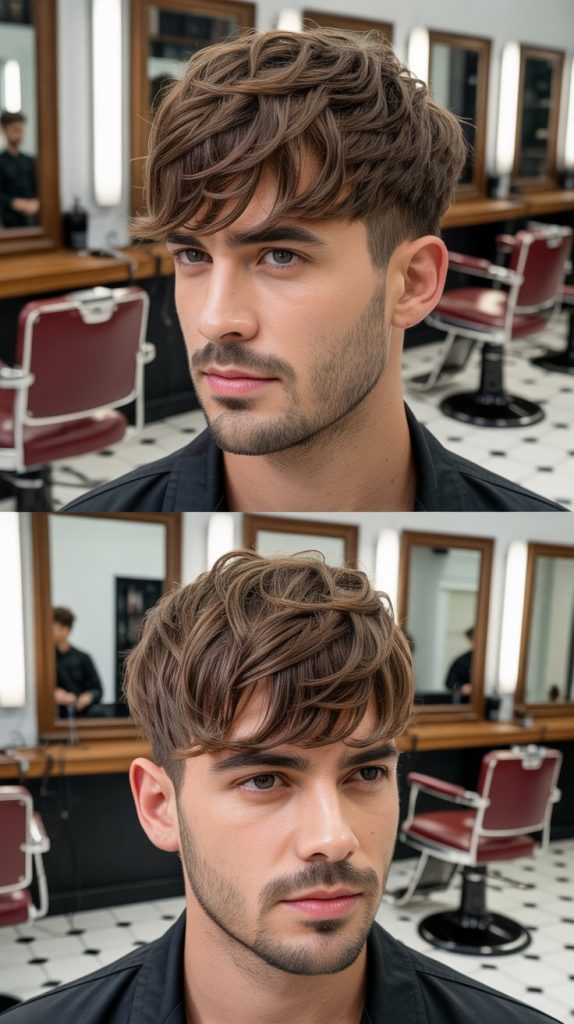
The textured fringe is one of the most effective and versatile solutions for men looking to balance a larger forehead with a modern, stylish appearance. This hairstyle works by creating strategic coverage across the forehead area while maintaining a natural, effortless look that doesn’t appear forced or overly styled.
How Textured Fringes Work:
- The fringe falls forward across the forehead, creating immediate visual reduction of the exposed forehead area.
- Texture prevents the hair from looking flat or heavy, which can draw unwanted attention rather than deflect it.
- The randomized, piece-y nature of textured fringes creates movement and interest that shifts focus to the hairstyle itself.
- This style works exceptionally well with various hair types, from straight to wavy textures.
Styling Techniques:
- Apply a texturizing cream or sea salt spray to damp hair for enhanced separation and definition.
- Blow-dry the fringe forward using a round brush or your fingers to create natural movement.
- Use a small amount of matte clay or paste to piece out individual strands for that coveted “undone” look.
- Avoid over-styling, as the beauty of this cut lies in its casual, lived-in appearance.
Best Face Shapes:
- Oval faces benefit most as the fringe adds width without overwhelming facial proportions.
- Rectangular face shapes gain balance as the fringe shortens the vertical appearance.
- Heart-shaped faces find harmony as the fringe adds weight to the upper portion of the face.
2. Side-Swept Bangs and Side Parts
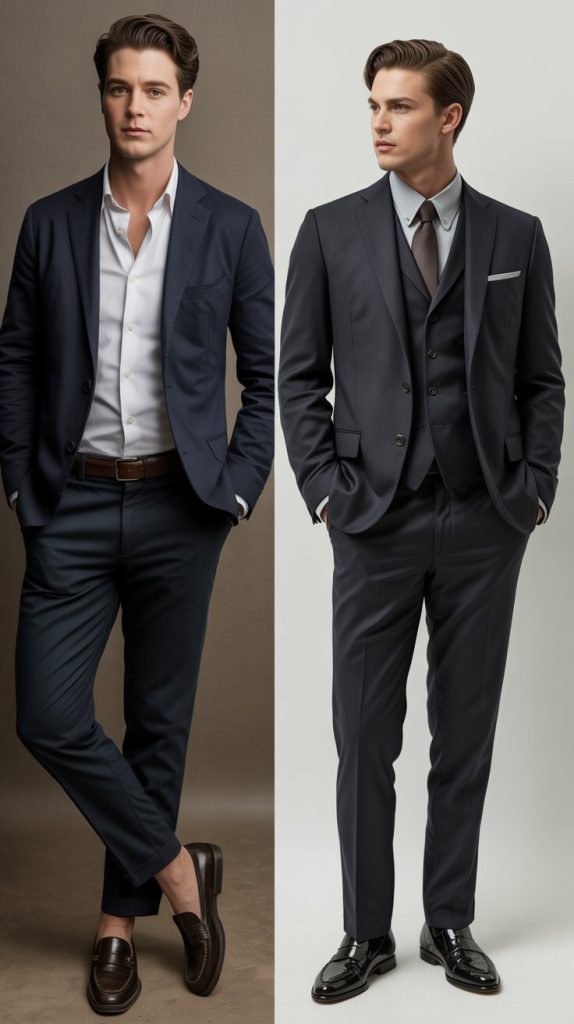
Side-swept bangs represent a classic yet timeless approach to addressing forehead concerns while maintaining a sophisticated, professional appearance. This diagonal coverage creates an optical illusion that breaks up the forehead’s expanse without completely hiding it.
The Science Behind Side-Swept Styles:
- Diagonal lines naturally draw the eye across the face rather than up and down, creating horizontal visual flow.
- The asymmetry introduced by side-swept hair adds interest and dimension to your overall look.
- This style maintains versatility, working equally well in casual and formal settings.
- Side parts create a natural division that reduces the perceived width and height of the forehead.
Creating the Perfect Side Sweep:
- Start with damp hair and apply a volumizing mousse or heat protectant spray.
- Use a blow dryer with a concentrator nozzle to direct hair to your preferred side.
- Create a deep side part (approximately 70/30 ratio) for maximum forehead coverage.
- Finish with a light-hold pomade or styling cream to maintain the sweep without stiffness.
- For fine hair, backcomb slightly at the roots for added volume and staying power.
Maintenance Requirements:
- Regular trims every 3-4 weeks keep the length optimal for proper sweeping.
- Daily styling takes approximately 5-10 minutes once you master the technique.
- Invest in quality styling products that provide hold without making hair look greasy or heavy.
3. Messy Quiff and Pompadour Variations

The quiff and pompadour styles might seem counterintuitive for larger foreheads, but when executed with the right proportions and texture, they create a balanced silhouette that actually draws attention away from forehead size. The key lies in creating volume without excessive height.
Modern Quiff Adaptations:
- Keep the front height moderate (2-3 inches maximum) rather than extremely tall to avoid elongating the face.
- Incorporate texture throughout rather than slicking everything back smoothly.
- Allow some pieces to fall forward slightly, creating partial forehead coverage.
- The messy, deconstructed quiff feels current while providing strategic concealment.
Pompadour Considerations:
- Opt for a shorter, wider pompadour rather than a tall, narrow one.
- Push hair up and slightly forward instead of straight back for better forehead balance.
- Combine with tapered or faded sides to create proportion and draw eyes to the overall shape.
- Use matte products for a modern finish rather than high-shine traditional pomades.
Styling Process:
- Apply pre-styler to towel-dried hair for heat protection and volume foundation.
- Blow-dry hair upward and slightly forward using a round brush for shape.
- Work through a medium-hold styling product, focusing on the front sections.
- Use your fingers to create texture and break up uniformity.
- Finish with a light mist of flexible-hold hairspray to maintain shape without crunchiness.
4. Caesar Cut and Short Fringe Styles
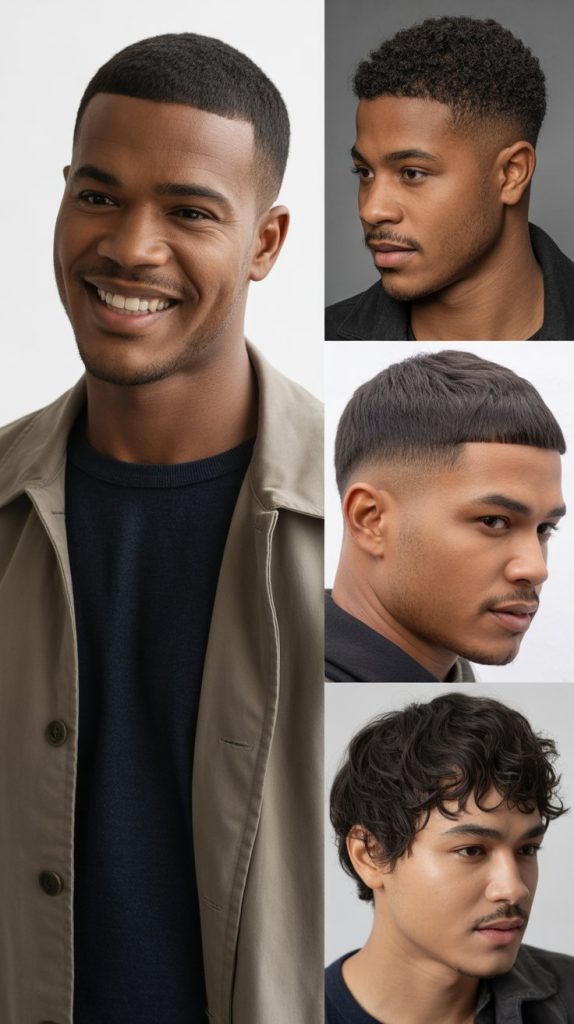
The Caesar cut has experienced a major resurgence in recent years, and for good reason—it’s one of the most low-maintenance yet effective styles for men with larger foreheads. This short, forward-swept cut provides immediate forehead coverage while looking sharp and intentional.
Caesar Cut Fundamentals:
- Hair is cut to a uniform short length (typically 0.5 to 2 inches) all around the head.
- The fringe is brushed or styled forward horizontally across the forehead.
- This creates a clean, straight line that minimizes forehead exposure.
- The style originated with Roman Emperor Julius Caesar, who reportedly used it to hide his receding hairline.
Modern Caesar Variations:
- Textured Caesar: Adds choppy, piece-y texture to the fringe for a contemporary edge.
- French Crop: Similar concept but with slightly more length on top and a more pronounced fringe.
- Layered Caesar: Incorporates subtle layering for movement and dimension.
- Fade Caesar: Combines the classic Caesar top with modern fade techniques on the sides.
Why It Works:
- Provides maximum forehead coverage with minimum styling effort.
- The horizontal fringe line creates visual width, balancing facial proportions.
- Works exceptionally well with thinning hair or receding hairlines in addition to large foreheads.
- Requires minimal daily maintenance—often just a quick comb-through.
5. Medium-Length Layered Cuts
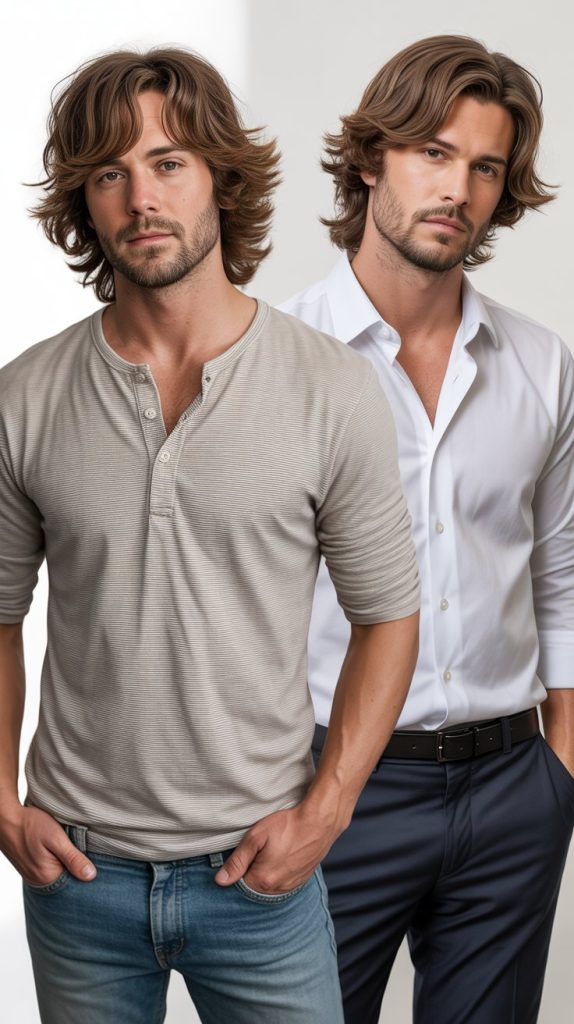
Medium-length hair offers tremendous versatility for men with larger foreheads, providing enough length to create strategic coverage while maintaining a masculine, contemporary appearance. Layering is the critical element that prevents medium-length hair from looking heavy or dated.
Benefits of Medium-Length Hair:
- Sufficient length to sweep across the forehead from various angles and directions.
- Creates natural coverage that moves with you rather than appearing static.
- Offers multiple styling options depending on occasion and personal preference.
- The weight of medium-length hair naturally falls forward, providing inherent forehead coverage.
Layering Strategies:
- Request graduated layers that are shorter in back and longer toward the front.
- Face-framing layers create dimension and draw attention to eyes and cheekbones.
- Internal layering removes bulk while maintaining length and coverage.
- Point-cutting techniques create softer, more natural edges rather than blunt lines.
Styling Versatility:
- Sweep hair forward and to the side for casual, everyday coverage.
- Push hair back with minimal product for a cleaner look when desired.
- Create a messy, tousled look with texturizing spray and air-drying.
- Use a blow dryer and round brush for more polished, controlled styling.
Product Recommendations:
- Lightweight creams and lotions work best for medium-length hair.
- Sea salt sprays enhance natural texture without weighing hair down.
- Argan oil or leave-in conditioner keeps longer hair healthy and manageable.
6. Curly and Wavy Hair Solutions

Men with naturally curly or wavy hair have unique advantages when addressing larger foreheads, as the inherent volume and texture of these hair types create natural camouflage and dimension that straight hair cannot replicate.
Curly Hair Advantages:
- Natural volume and body create visual interest that shifts focus from forehead size.
- Curls and waves naturally fall forward, providing organic coverage without obvious styling.
- The three-dimensional nature of textured hair creates depth and shadow that minimize forehead prominence.
- Curly hair allows for creative, individualized styling that celebrates your natural texture.
Optimal Curl Styles:
- Fringe curls: Allow the front curls to hang loosely over the forehead for effortless coverage.
- Curly Caesar: Combine the Caesar cut concept with natural curl texture for modern appeal.
- Side-swept curls: Direct curls to one side for asymmetrical coverage and style.
- Longer curly mop: Embrace shoulder-length or longer curls that naturally cascade forward.
Curl Care Essentials:
- Use sulfate-free shampoos to maintain moisture and curl definition.
- Apply leave-in conditioner and curl-defining cream to damp hair.
- Scrunch hair while drying to enhance curl formation and volume.
- Avoid brushing dry curls, which creates frizz and destroys curl pattern.
- Sleep on a silk or satin pillowcase to prevent friction and maintain curl integrity.
Wavy Hair Techniques:
- Enhance natural waves with sea salt spray for beachy, textured coverage.
- Use a diffuser attachment when blow-drying to amplify wave pattern.
- Style waves forward and to the side for maximum forehead concealment.
7. Facial Hair Integration
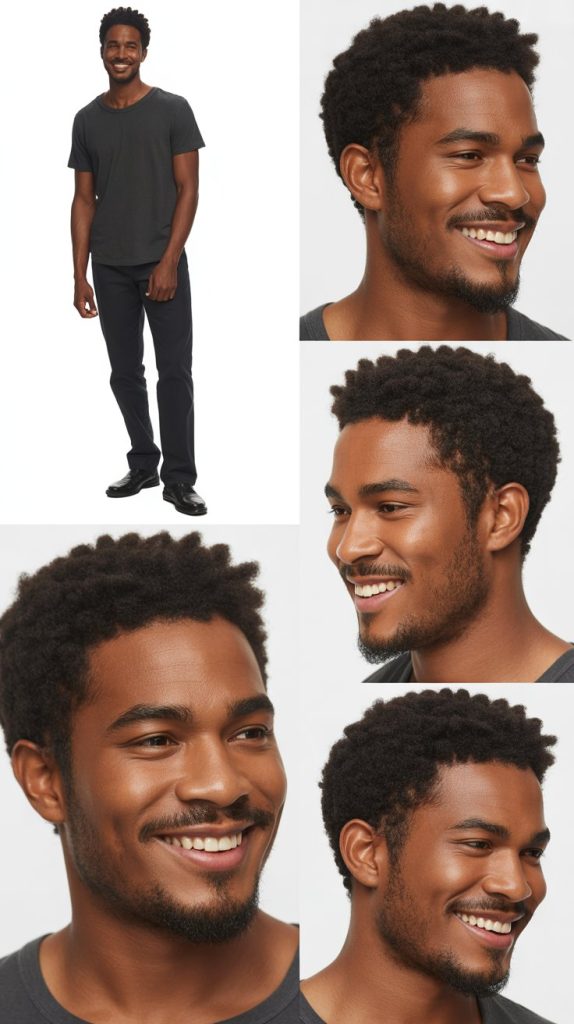
Strategic facial hair can dramatically shift visual focus away from the forehead by creating strong horizontal lines and additional focal points on the lower portion of the face. When combined with the right hairstyle, facial hair becomes a powerful tool in achieving balanced facial proportions.
How Facial Hair Balances Proportions:
- Creates visual weight in the lower third of the face, drawing eyes downward.
- Strong jawline definition from beards counterbalances upper facial features.
- The eye naturally travels to areas of contrast and interest, which facial hair provides.
- Full beards, in particular, add dimension that makes the face appear more proportionate overall.
Optimal Facial Hair Styles:
| Facial Hair Style | Best For | Forehead Balance Effect |
|---|---|---|
| Full Beard | Most face shapes | Maximum downward visual pull |
| Stubble | Professional settings | Subtle jawline enhancement |
| Goatee | Narrow faces | Adds width to lower face |
| Mustache & Beard Combo | Rectangular faces | Creates horizontal emphasis |
| Extended Goatee | Round faces | Adds length to lower face |
Coordination with Hairstyles:
- Combine a textured fringe with a well-groomed beard for comprehensive facial balance.
- Pair side-swept hair with stubble for a refined, masculine appearance.
- Match the maintenance level of your facial hair with your hairstyle complexity.
- Ensure your beard and hair color complement each other (dye if necessary for uniformity).
Maintenance Considerations:
- Trim beard regularly to maintain clean lines and intentional shape.
- Use beard oil or balm to keep facial hair soft, healthy, and styled.
- Brush or comb your beard daily to train growth patterns and remove debris.
- Visit a professional barber for beard shaping if you’re new to facial hair styling.
8. Hats and Accessories as Complementary Solutions

While hairstyles provide the primary solution for balancing larger foreheads, hats and accessories offer additional versatility and can be particularly useful during transitional periods between haircuts or when you want to change up your look.
Strategic Hat Selection:
- Baseball caps: Worn forward, they provide immediate forehead coverage while looking casual and athletic.
- Beanies: Create a horizontal line across the forehead while adding style during cooler months.
- Fedoras and trilbies: Offer sophisticated coverage for formal or dressy-casual occasions.
- Bucket hats: Provide full coverage with a contemporary, streetwear-inspired aesthetic.
Proper Hat Fitting:
- Choose hats that sit comfortably without being too tight or too loose.
- Position the hat to cover approximately two-thirds of the forehead while not obscuring your eyes.
- Ensure the hat complements your face shape—wider brims for narrow faces, shorter brims for wider faces.
- Match hat style to your overall aesthetic and the occasion.
Hair-Hat Coordination:
- Allow some front hair to peek out from under the hat for a natural, styled appearance.
- Style hair before putting on a hat to maintain volume and texture when you remove it.
- Use dry shampoo or texturizing powder to revive hair after removing a hat.
- Choose hats in colors and materials that coordinate with your wardrobe and hair color.
When to Use Accessory Solutions:
- During the awkward growth phase when transitioning between hairstyles.
- On bad hair days when your usual styling isn’t cooperating.
- In weather conditions that make hairstyling difficult (wind, rain, humidity).
- As a fashion statement that happens to provide forehead coverage as a bonus.
9. Professional Consultation and Custom Solutions
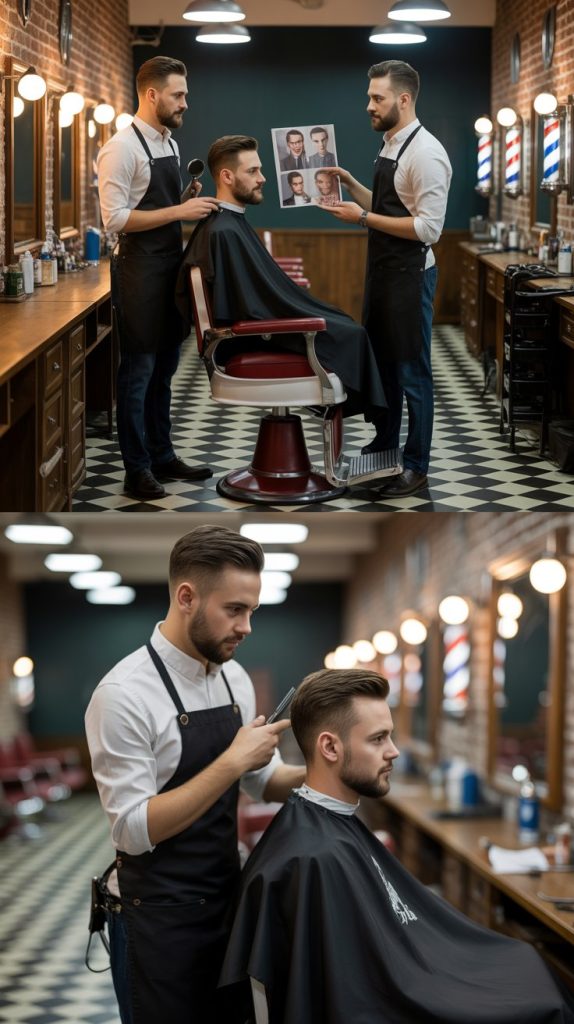
While general hairstyle guidelines provide excellent starting points, the most transformative results come from working with an experienced barber or hairstylist who can create customized solutions based on your unique facial features, hair characteristics, and lifestyle needs.
Benefits of Professional Consultation:
- Expert analysis of your face shape, forehead proportions, and overall bone structure.
- Personalized recommendations based on your hair texture, density, and growth patterns.
- Professional execution ensures clean lines, proper layering, and flattering proportions.
- Ongoing guidance for styling, maintenance, and product selection.
Finding the Right Professional:
- Research barbers and stylists who specialize in men’s cuts and have strong portfolios.
- Read reviews and look for mentions of consultations and personalized service.
- Schedule a consultation appointment before committing to a major cut.
- Bring reference photos of styles you like, but be open to professional modifications.
What to Discuss During Consultation:
- Your specific concerns about forehead size and facial balance.
- Your daily routine and how much time you can realistically dedicate to styling.
- Your professional requirements and any workplace grooming standards.
- Your comfort level with hair products and heat styling tools.
- Previous hairstyles you’ve tried and what worked or didn’t work.
Custom Cut Considerations:
- Your barber may suggest combining elements from multiple styles for optimal results.
- Custom layering and texturizing techniques can be tailored to your specific hair type.
- Gradual transitions allow you to test new styles without dramatic, potentially regrettable changes.
- Regular appointments (every 3-6 weeks) maintain the shape and effectiveness of your custom cut.
10. Styling Products and Daily Maintenance

Even the most perfectly cut hairstyle requires proper products and maintenance techniques to maintain its forehead-balancing properties between barbershop visits.
Understanding which products to use and how to use them makes the difference between a hairstyle that works and one that falls flat.
Essential Product Categories:
- Pre-stylers: Volumizing mousses, heat protectants, and sea salt sprays applied to damp hair.
- Styling products: Pomades, clays, pastes, creams, and gels that provide hold and texture.
- Finishing products: Hairsprays, shine serums, and powders for final touches.
- Maintenance products: Quality shampoos, conditioners, and treatments that keep hair healthy.
Product Selection Guide:
| Hair Type | Recommended Products | Application Tips |
|---|---|---|
| Fine/Thin Hair | Volumizing mousse, light paste, powder | Use sparingly; focus on roots |
| Thick Hair | Strong-hold clay, pomade | Distribute evenly through damp hair |
| Curly Hair | Curl cream, leave-in conditioner | Apply to soaking wet hair; scrunch |
| Wavy Hair | Sea salt spray, light cream | Enhance natural texture; air-dry when possible |
Daily Styling Routine:
- Start with clean or day-old hair depending on your style (some styles work better with slight natural oils).
- Apply pre-styler to damp hair if using heat tools or need volume foundation.
- Blow-dry in the desired direction, using brushes or fingers to shape as you dry.
- Allow hair to cool completely before applying styling products (heat makes products less effective).
- Use styling products sparingly—you can always add more, but removing excess is difficult.
- Work product from back to front, saving the fringe/bang area for last with minimal product.
Common Styling Mistakes:
- Using too much product, which weighs hair down and makes it look greasy.
- Applying product to wet rather than damp or dry hair (dilutes effectiveness).
- Neglecting the back and sides while over-focusing on the front.
- Touching and reworking hair throughout the day, which breaks down products and creates frizz.
- Using the wrong product type for your hair texture and desired style.
Product Recommendations by Style:
- Textured fringe: Matte clay or fiber paste for separation and hold.
- Side-swept styles: Medium-hold pomade or cream for controlled sweep.
- Quiff/Pompadour: Volumizing mousse plus medium-hold spray for height and staying power.
- Caesar cut: Light pomade or styling cream for sleek forward direction.
- Medium-layered cuts: Lightweight styling cream or oil for natural movement.
Conclusion
Finding the right hairstyle when you have a larger forehead is entirely achievable with the proper knowledge, techniques, and professional guidance outlined in this comprehensive guide on “Big Forehead? These Men’s Hairstyles Fix It Fast.”
From textured fringes and side-swept bangs to strategic layering, modern quiffs, and low-maintenance Caesar cuts, you now have multiple proven options to create balanced, attractive proportions that highlight your best features rather than drawing unwanted attention to your forehead.
Remember that the most successful approach combines a well-executed cut from a skilled barber, appropriate styling products for your hair type, and consistent daily maintenance that becomes second nature over time.
Don’t hesitate to experiment with different styles, consult with professionals who understand facial proportions and hair behavior, and integrate complementary elements like facial hair or accessories when they enhance your overall look.
The key is finding what makes you feel confident and comfortable while working with your natural features rather than against them.
With the strategies presented in this article, you’re now equipped to transform your appearance, boost your self-assurance, and present the best version of yourself to the world every single day.
